500+ tornadoes so far in 2026, but Tornado Alley is coming up short

This year has seen plenty of tornadoes, but not in the places you’d expect to see them
We’re more than halfway through meteorological spring and it’s been quite the unusual season for tornadoes across North America.
Hundreds of tornadoes have touched down south of the border this year, but not exactly where you’d expect to see them.
Canada still hasn’t confirmed any tornadoes so far in 2026.
DON’T MISS: Canada’s first tornado of the year is closer than you think
It’s been an active year for twisters across the United States, which is by far the most tornado-prone country in the world.
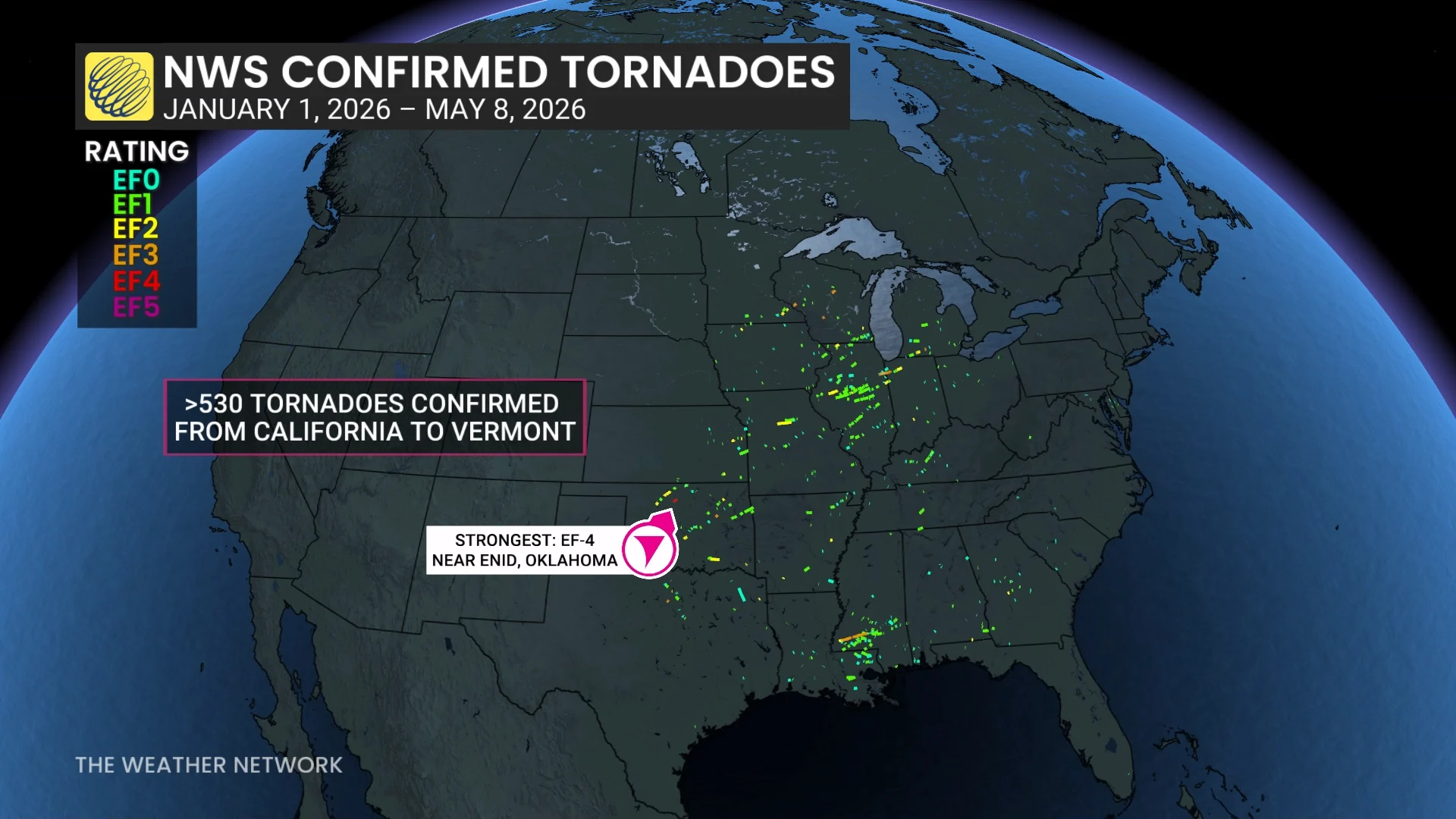
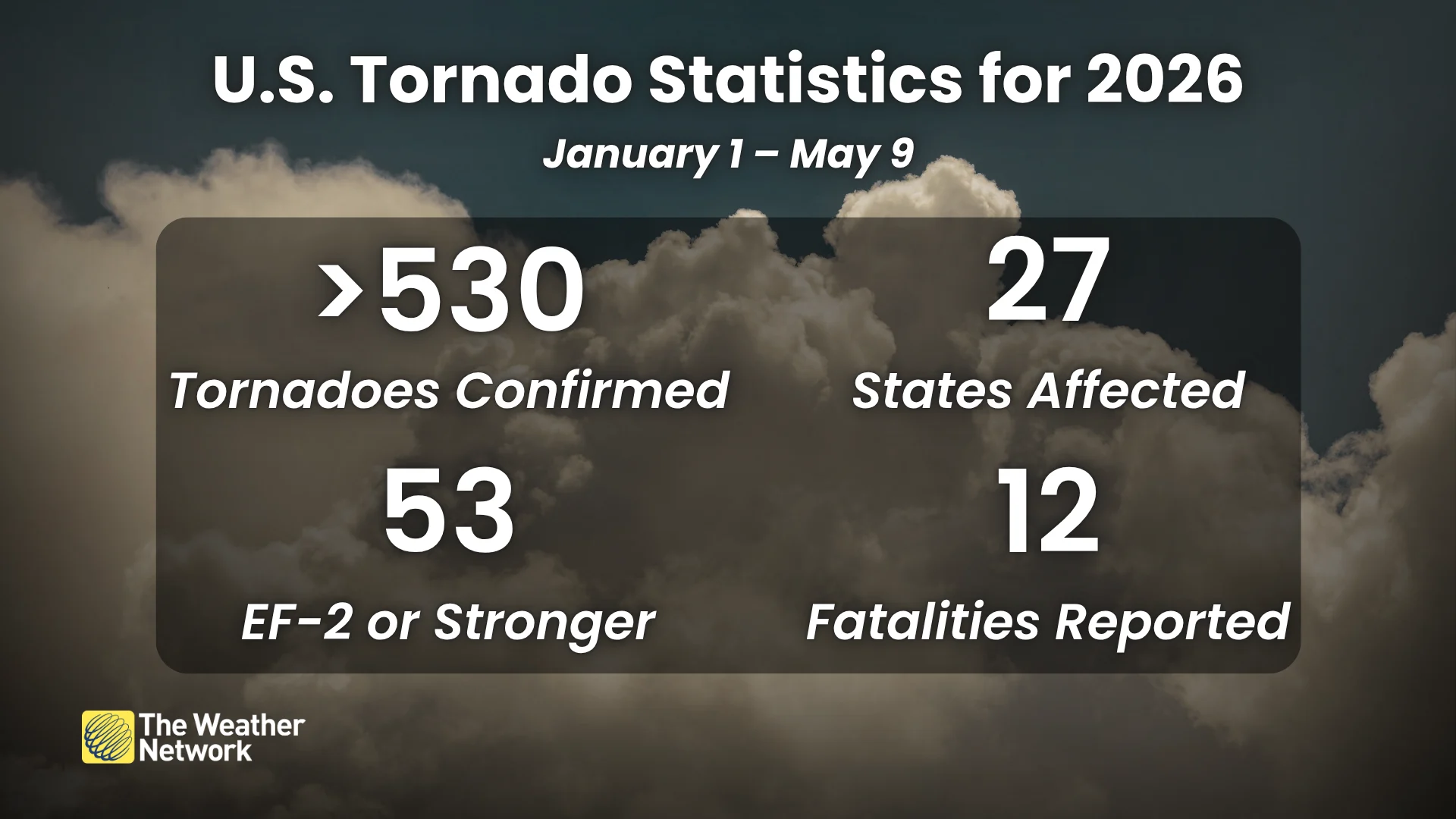
Meteorologists have confirmed more than 530 tornadoes across 27 states since the start of the year. This is slightly ahead of normal for this point in the year.
Most of those tornadoes were on the weaker side, though just over 50 were considered significant after producing damage rated EF-2 or worse on the Enhanced Fujita Scale.
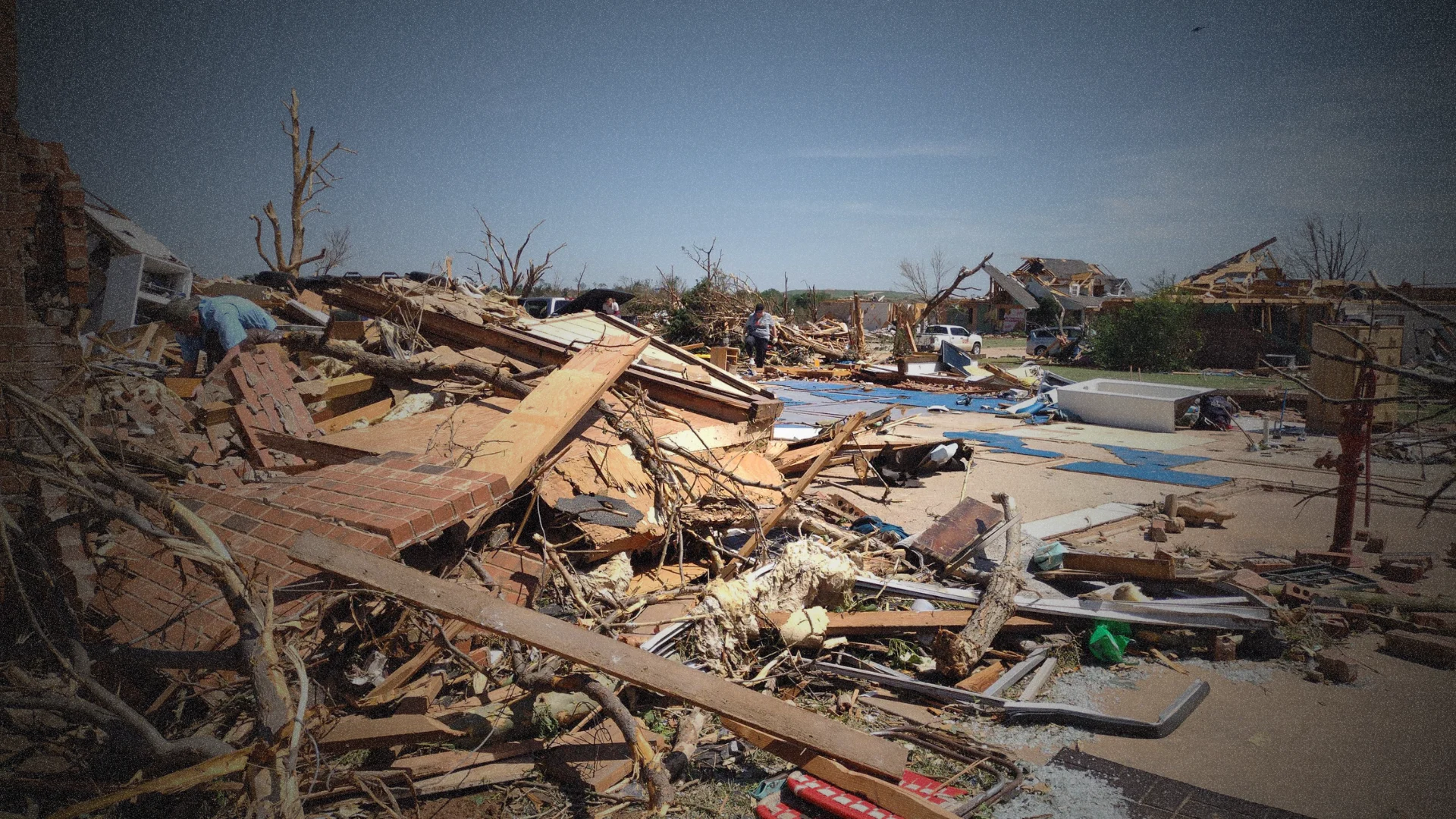
The year’s strongest confirmed tornado was an EF-4 that struck near Enid, Oklahoma, with maximum estimated winds of 275 km/h.
Officials have reported 12 direct fatalities as a result of this year’s tornadoes. Nine of those deaths occurred in mobile or manufactured homes, many of which aren’t strong enough to withstand even a relatively weak tornado.
Tornadoes have avoided Tornado Alley so far this year
Despite the fact that this year’s activity is keeping up with the pace of a usual spring season, the geographic pattern of those twisters is anything but typical.
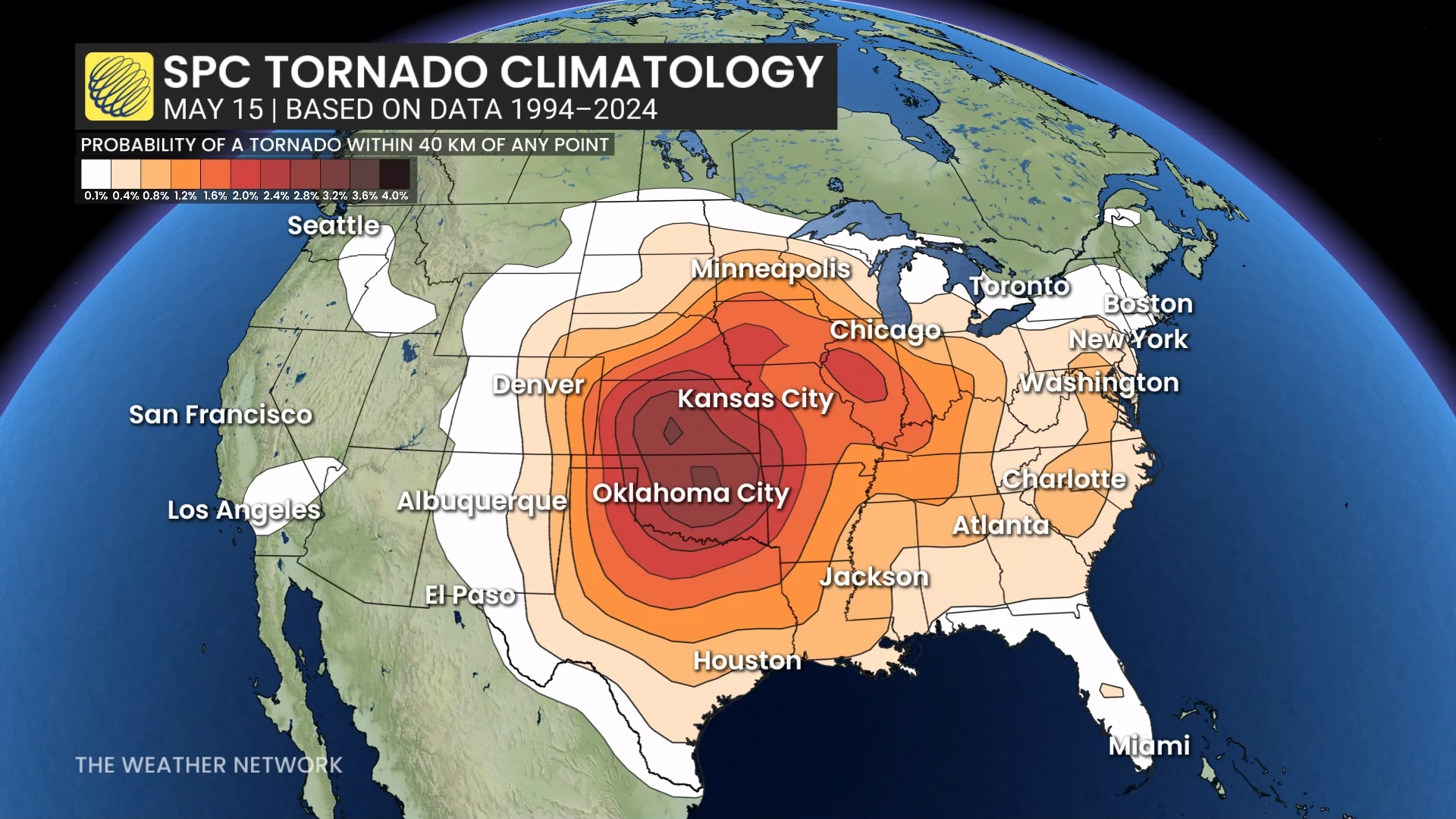
By this point in the year, we’d expect to see two bullseyes in tornado activity: one across Alabama, Mississippi, and Tennessee during the early spring, and another one building over states like Texas, Oklahoma, Kansas, and Missouri toward the second half of spring.
DON’T MISS: Scud clouds are scary tornado lookalikes – how to tell them apart
A significant percentage of this year’s tornadic storms have unfolded in the Midwest, especially around Illinois, as a result of an active storm track sending repeated rounds of severe thunderstorms across the region.
Historically, where we expect tornadoes to occur rapidly changes as spring fades to summer.
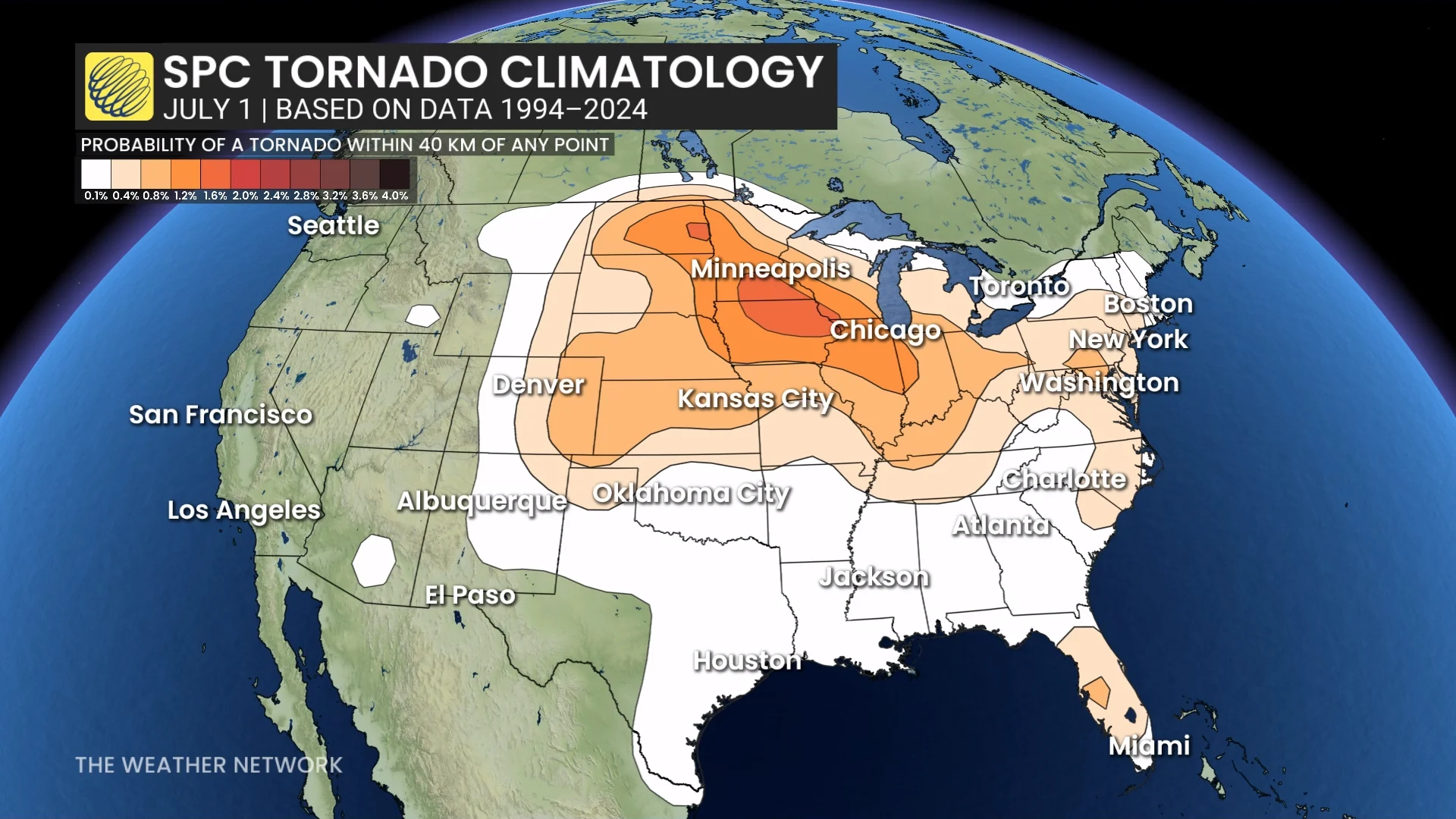
The jet stream steadily lifts north toward Canada as warmer temperatures settle over southern latitudes. Opportunities for severe thunderstorms follow this active storm track northward, pulling the risk for tornadoes closer to Canada as we head into summer.
We can see this change in the U.S. Storm Prediction Center’s climatology showing the daily probability for tornadoes by early July, with the main tornado risk lifting toward the northern Plains and the Canadian Prairies.
Header image of damage in Enid, Oklahoma, courtesy of NOAA.