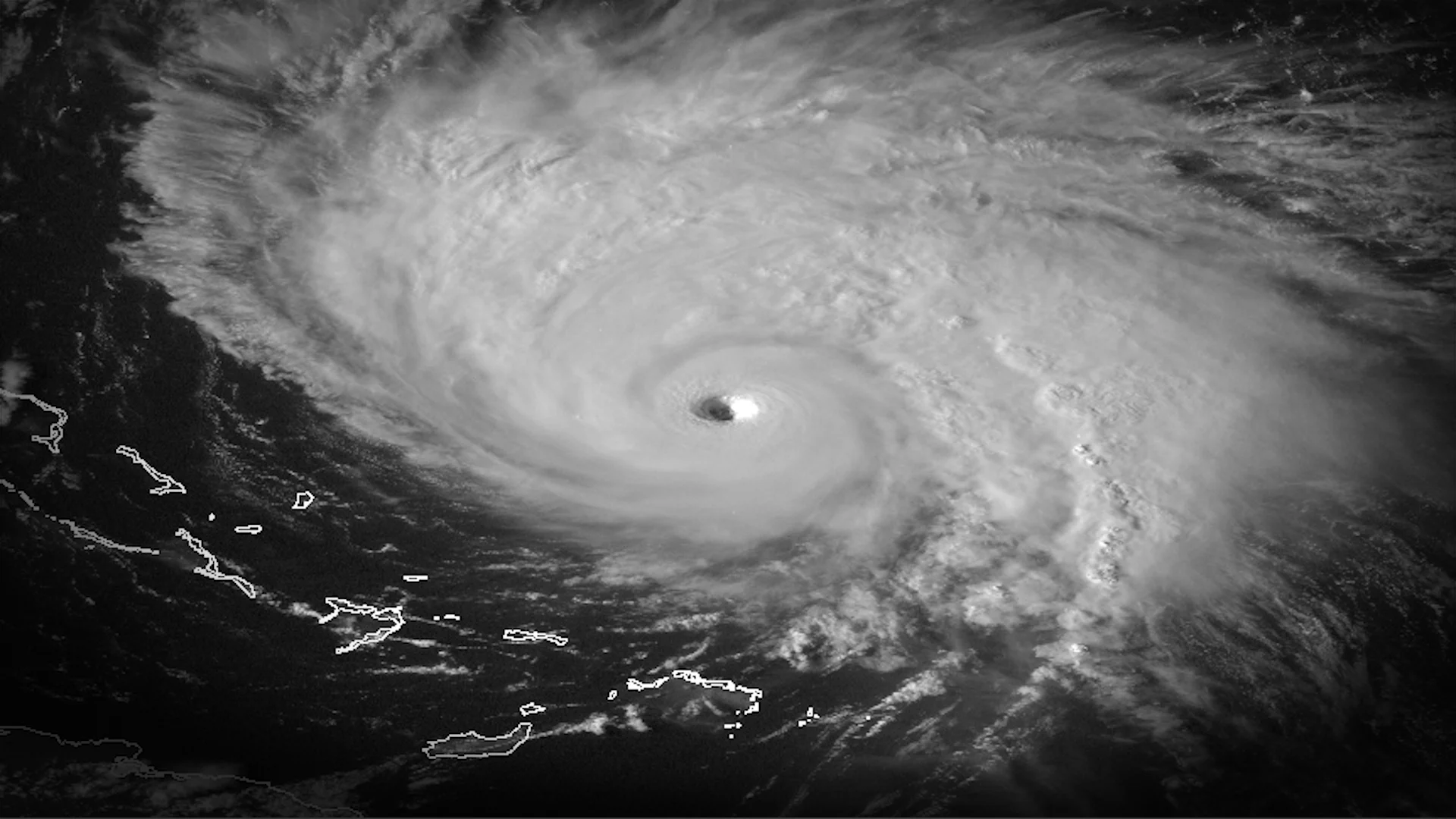
Hurricane Hortense brought wicked winds, floods to Atlantic Canada

The storm was the first hurricane to directly hit Nova Scotia since the 1970s
Hurricane Hortense proved that a storm doesn’t need to be a powerhouse in order to produce widespread damage.
The system left behind a trail of wind damage and flash flooding after striking parts of the Caribbean on its way to landfall in Nova Scotia late in the evening on Sept. 14, 1996.
DON’T MISS: Why focusing on a hurricane’s category is downright dangerous
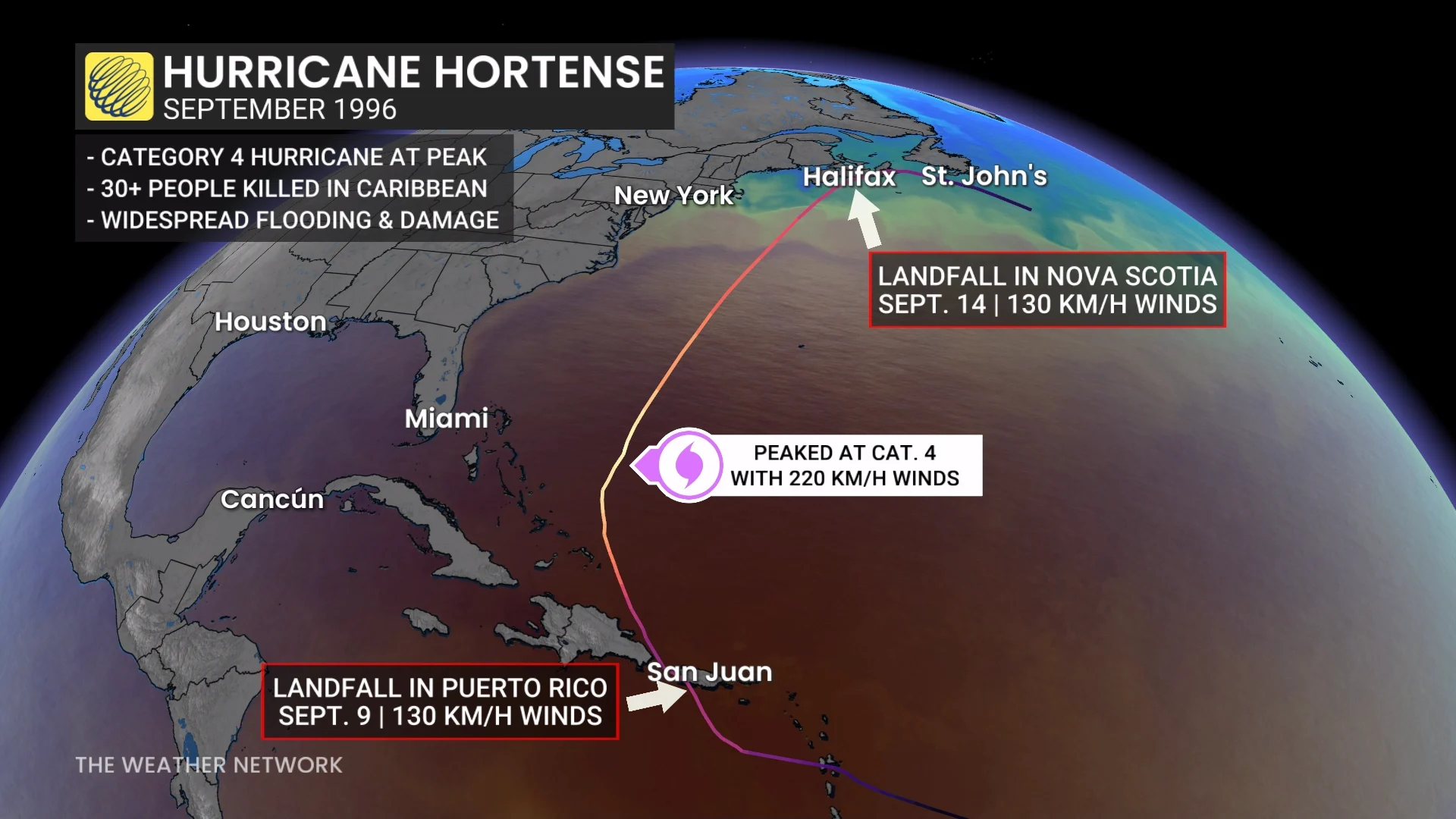
Hortense began as a classic tropical wave in early Sept. 1996. The wave gradually organized as it crossed the warm Atlantic, eventually making landfall in Puerto Rico late on Sept. 9 as a hurricane with 130 km/h winds.
Most of the damage occurred when Puerto Rico’s rugged mountains quickly wrung out more than 500 mm of rain from the system. Dozens of people died in the subsequent flash floods.
Hurricane Hortense rapidly intensified as it pulled away from the Antilles, growing into a formidable Category 4 storm with maximum sustained winds of 220 km/h by Sept. 12.
Cooler waters and an unfavourable atmosphere forced Hortense to lose steam as it accelerated north toward Atlantic Canada. Heavy rain began washing over the Maritimes ahead on Sept. 14 as the Category 1 storm approached landfall near Sheet Harbour, Nova Scotia.
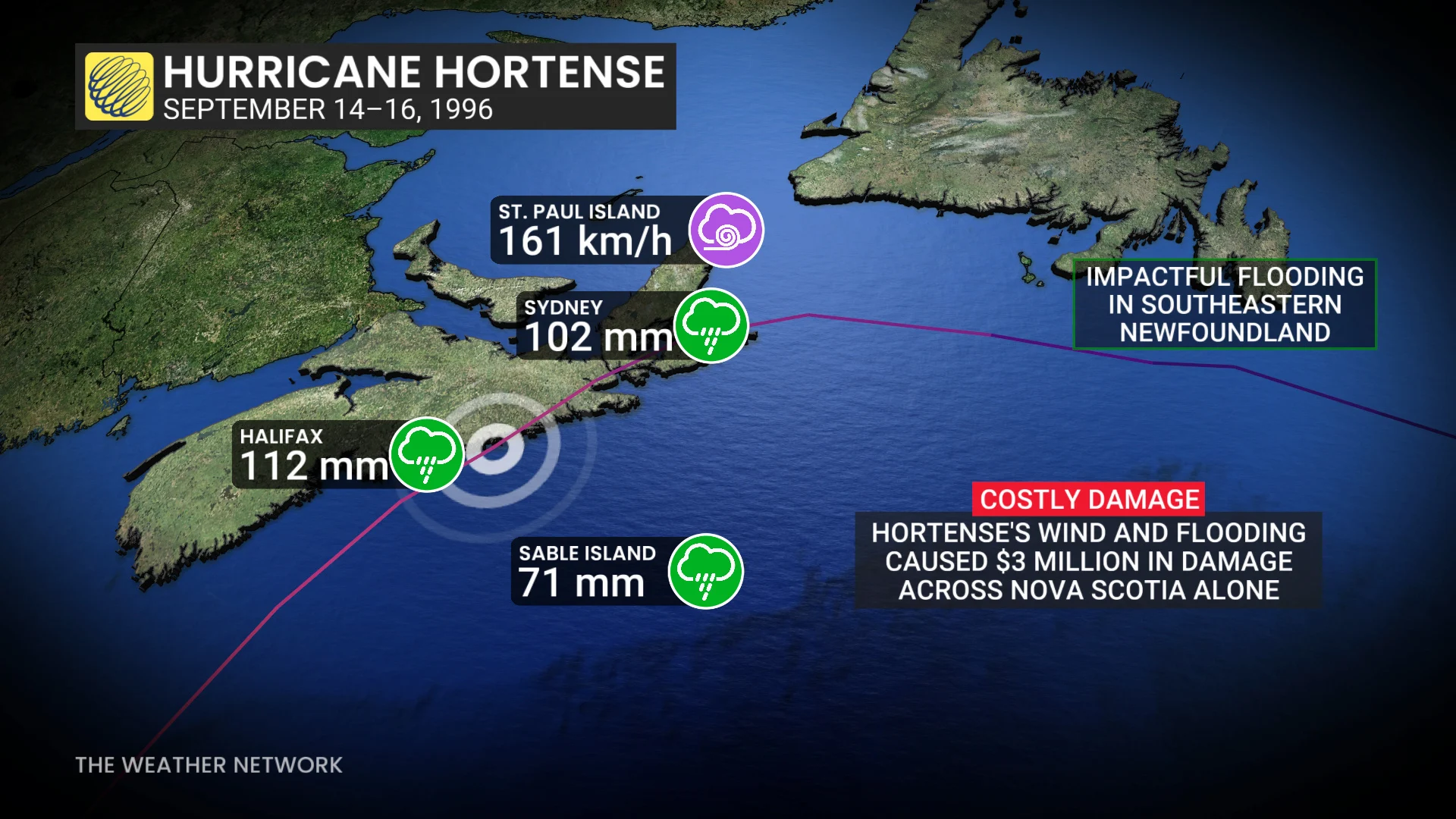
This was the first hurricane to make a direct landfall in the province since Hurricane Blanche hit near Shelburne in July 1975.
Wind gusts of 100+ km/h caused widespread damage across Nova Scotia. Landfall coincided with high tide to cause significant coastal flooding as Hortense’s storm surge pushed into the coast. Many areas saw 50-100+ mm of flooding rains.
The hurricane lost its tropical characteristics as it pulled away from Nova Scotia; gusty winds and as much as 75 mm of rain led to localized flooding, especially on the Avalon Peninsula.
Hortense was one of several tropical systems to affect Atlantic Canada during the busy 1996 hurricane season. Bertha, Fran, and Josephine also brought wind and rain impacts to the region that year.
Header image of Hortense at peak intensity courtesy of SSEC/Univ. of Wisconsin-Madison.