An ice storm is on the way. Here's how to prepare

Ice storms can cause prolonged power outages. Here's how to prepare.
Several hours of freezing rain is set to descend on parts of Ontario and Quebec beginning Tuesday night.

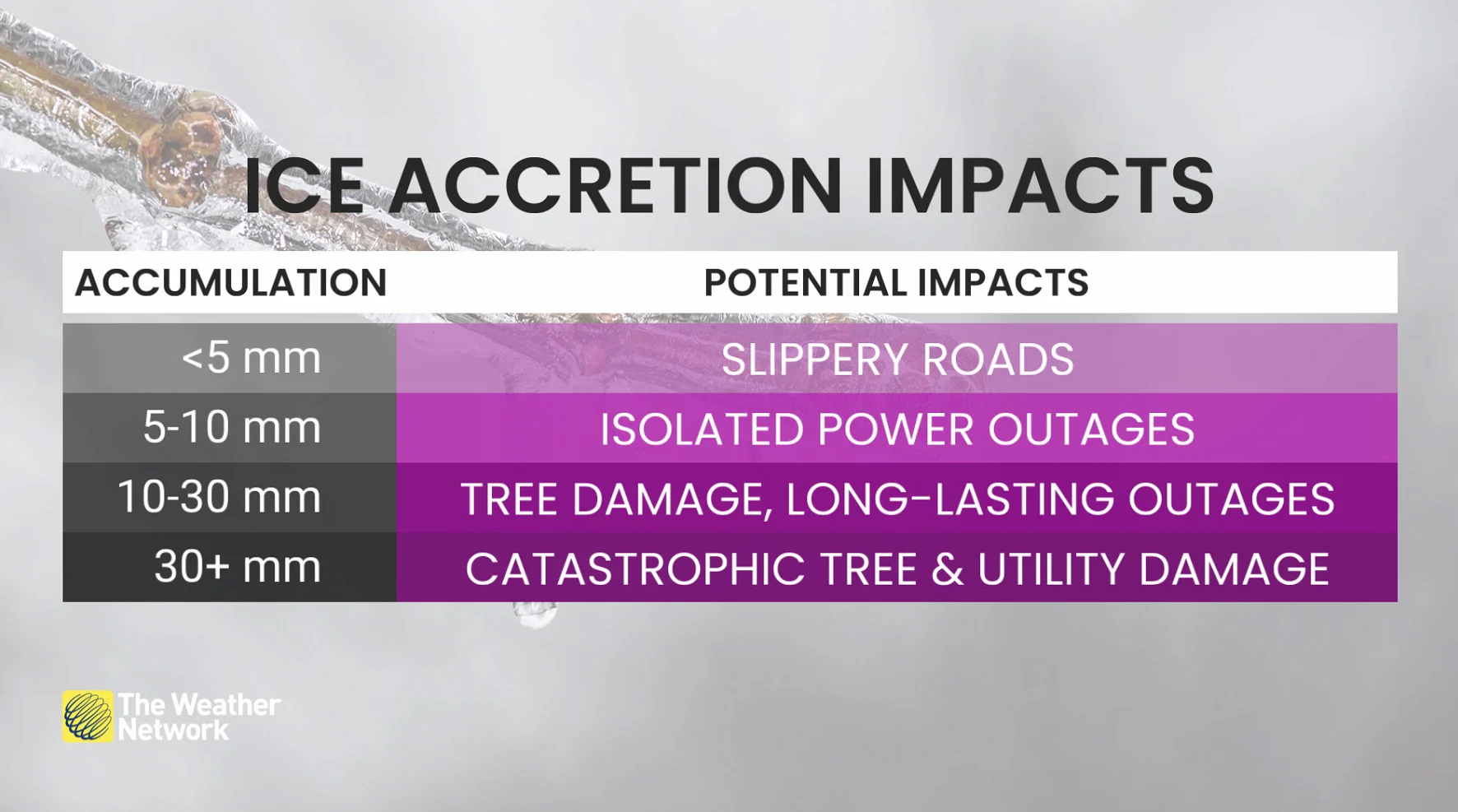
The Ottawa and Montreal areas are of particular note, with significant ice accretion expected — enough to potentially down power lines, cause widespread outages, and make travel extremely hazardous through Wednesday.
Then, on Thursday, strong winds are expected, which could cause further stress on already weighed-down powerlines, again raising the risk for power outages.
Power outages can last days
Ice buildup over several hours adds weight to trees and power lines, potentially leading to breakage or collapse, which can cause neighbourhoods to lose access to heat, electricity, and communication for several hours, sometimes days.
This isn't without precedent: The historic storm that hit parts of Quebec starting on January 5, 1998, for example, caused nearly 1.4 million people to lose power when 80 and 100 mm of freezing ice accumulated in some areas over several days -- but the outages began when ice buildup was around 34 mm, according to Hydro Quebec.
Crews worked as fast as safely possible to restore services, but by January 27, more than three weeks later, 62,000 customers were still without power. Service wasn’t completely restored to everyone until February 6, 1998, more than a month after the ice began to build up.
When any ice storm is in the forecast, experts recommend preparing to be self-sufficient for at least 72 hours.
How to prepare for an ice storm
Stock up on emergency supplies.
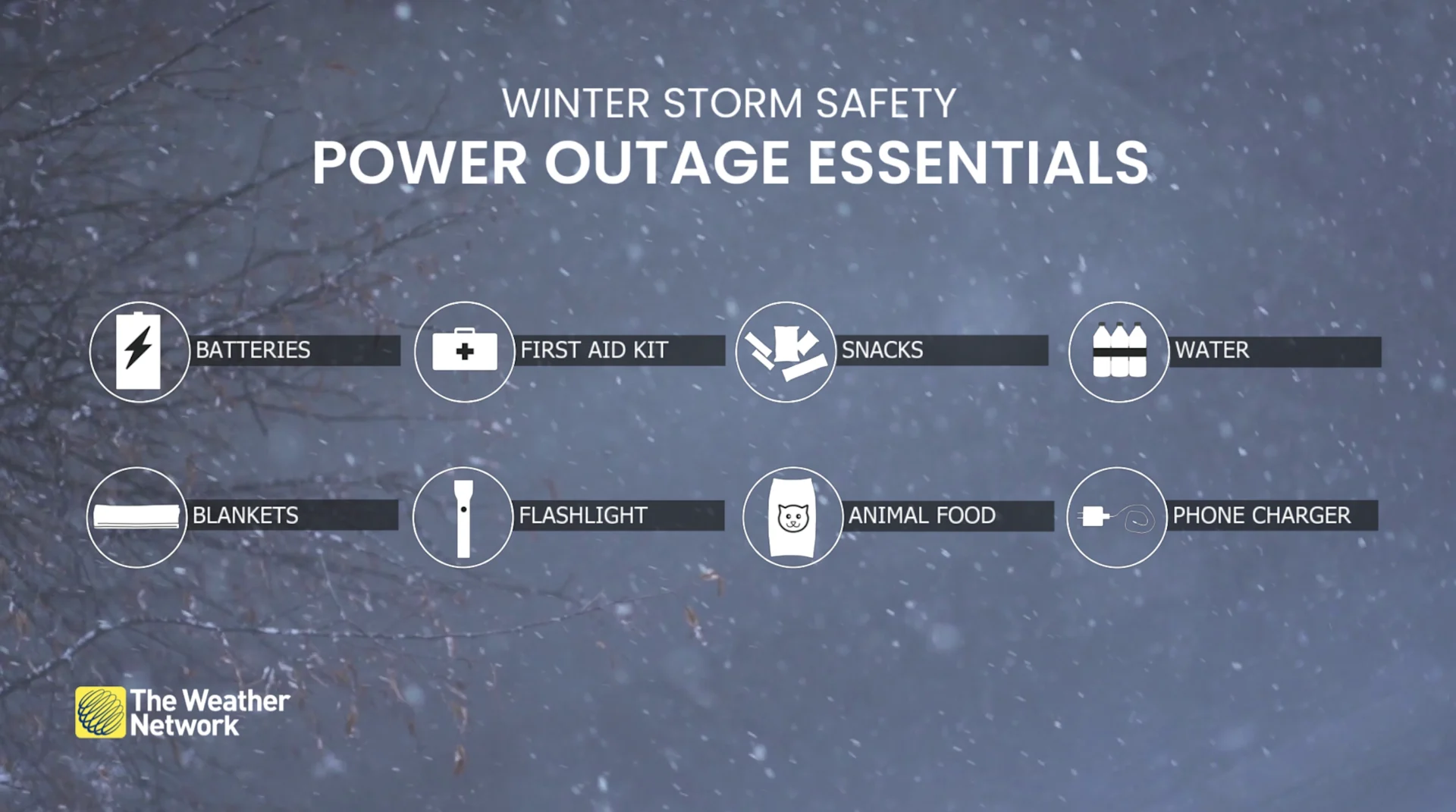
Assembling an emergency kit for your home will keep all the supplies you may need within arm’s reach.
The Government of Canada recommends stocking your kit with:
At least 4 litres of water per person per day for three days — i.e., two litres for drinking and two litres for food prep and hygiene.
Non-perishable foods like canned goods and shelf-stable snacks.
Enough pet food to last at least 72 hours.
A manual can opener.
Flashlights, headlamps, and extra batteries.
First aid supplies, prescription medications for people and pets, and extra diapers. Try to fill up prescriptions that are running low ahead of the storm.
A battery-powered or hand-crank radio.
Phone-charging power banks.
Cash, as ATM machines may not be working.
Warm blankets and extra clothing to layer.
Prepare your home.
According to Ontario Hydro, you can help prevent drafts and maximize efficiency during cold weather by:
Sealing windows and doors with weather stripping or caulk.
Testing heating systems to ensure everything works.
Replace air filters if necessary.
Other things to consider:
Ensure your smoke and carbon monoxide detectors are in working order.
Check that your fire extinguishers are accessible and working.
If you lose power, your fridge will keep food preserved for about four hours. Food Safety U.S. has a guide on what items you may be able to keep and what you may have to discard following a prolonged power outage.
Keep your freezer closed. A full freezer can keep food frozen for up to 36 hours after an outage if the door is tightly closed, the Government of Canada says.
Identify a safe heating source that is approved for indoor use, like a fireplace.
Never use ovens, barbecues, or camp stoves indoors for heat. Generators outdoors and away from windows. These devices produce carbon monoxide, which can be fatal in enclosed spaces.
Consider making a plan with your household, including how to communicate if phones or the internet fail.
What to do during a power outage
If power goes out during an ice storm:
Stay informed by listening to local news.
Avoid unnecessary driving or walking outdoors due to falling branches, ice buildup, and poor road conditions.
Conserve phone batteries by enabling power-saving modes and reducing unnecessary use.
Check if the issue is limited to your home. If it is, examine your circuit breaker or fuse box.
If the outage is affecting more than one home, contact your electric service provider.
Do not approach any broken or damaged power lines or wires.
Turn off all electrical appliances, lights, and tools to prevent surge damage when power is restored. Leave one light on, though, that's how you'll know when the issue has resolved.
RELATED: Power outage tips
Header image: File photo via Canva Pro.