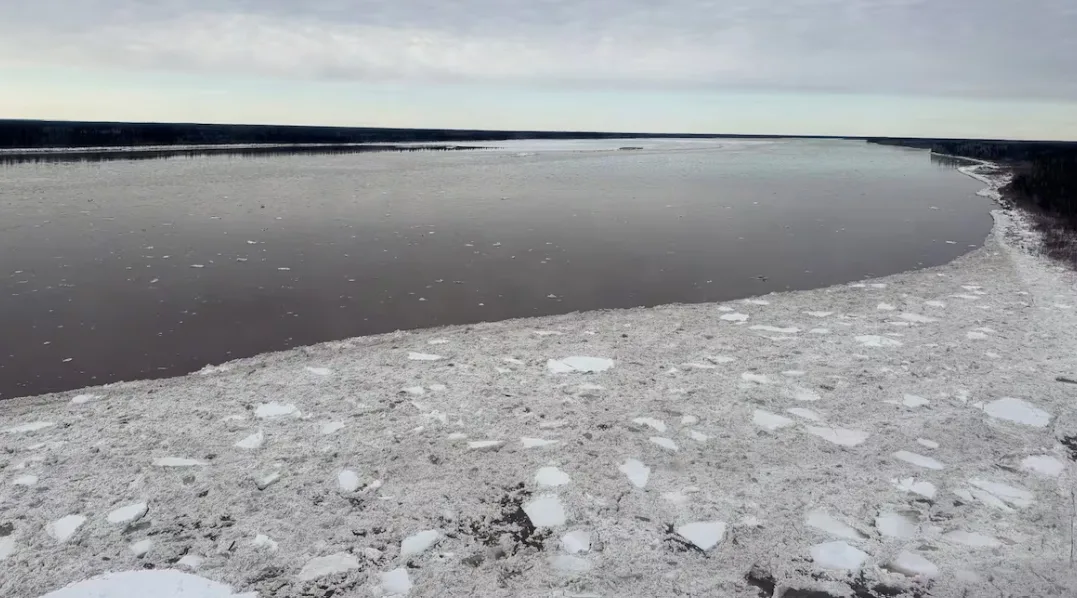
Quarter of Moose Cree First Nation members evacuate due to risk of flooding

Nearly 1,000 members of Moose Cree First Nation in Ontario’s far north have been evacuated from the community due to the pending risk of flooding from the Moose River.
Chief Peter Wesley told CBC News the evacuations are a precautionary measure due to higher than average snowfall during the winter months.
“We're concerned that all that snow that's south of us will eventually make its way to our community at some point,” he said.
RELATED: Tips to stay safe during a flash flood as peak season draws near
The Moose River flows north into the James Bay. Moose Cree First Nation, which includes Moose Factory island, is not normally at a high risk of flooding.
Around a quarter of the community’s 3,900 residents have been voluntarily evacuated to Toronto and Barrie, Ont.
Wesley said the annual spring break of the Moose River — when ice melts and sometimes creates jams along the river — has started south of the community.
The river widens as it approaches James Bay, and he said the hope is that this situation reduces the risk of ice jams, which can cause local flooding.
Kasheshewan First Nation, located around 130 kilometres north of Moose Factory, is also on alert due to the potential risk of flooding.
Kasheshewan is located in a flood plain and evacuates every spring due to that yearly flooding risk.
Most of the community is already displaced in communities across the province due to evacuations earlier in the year because of issues with the water treatment plant.
Repairs to the water treatment plant are currently due to be completed by late July, but could be delayed further if the community is flooded.
Tyson Wesley, Kasheshewan’s executive director, said crews are monitoring water levels along the Albany River, which borders the community.
He said the spring break up has slowly started, but no major issues have arisen so far.
WATCH BELOW: Three tips to protect against flooded basement damage
This article, written by Jonathan Migneault, was originally published for CBC News