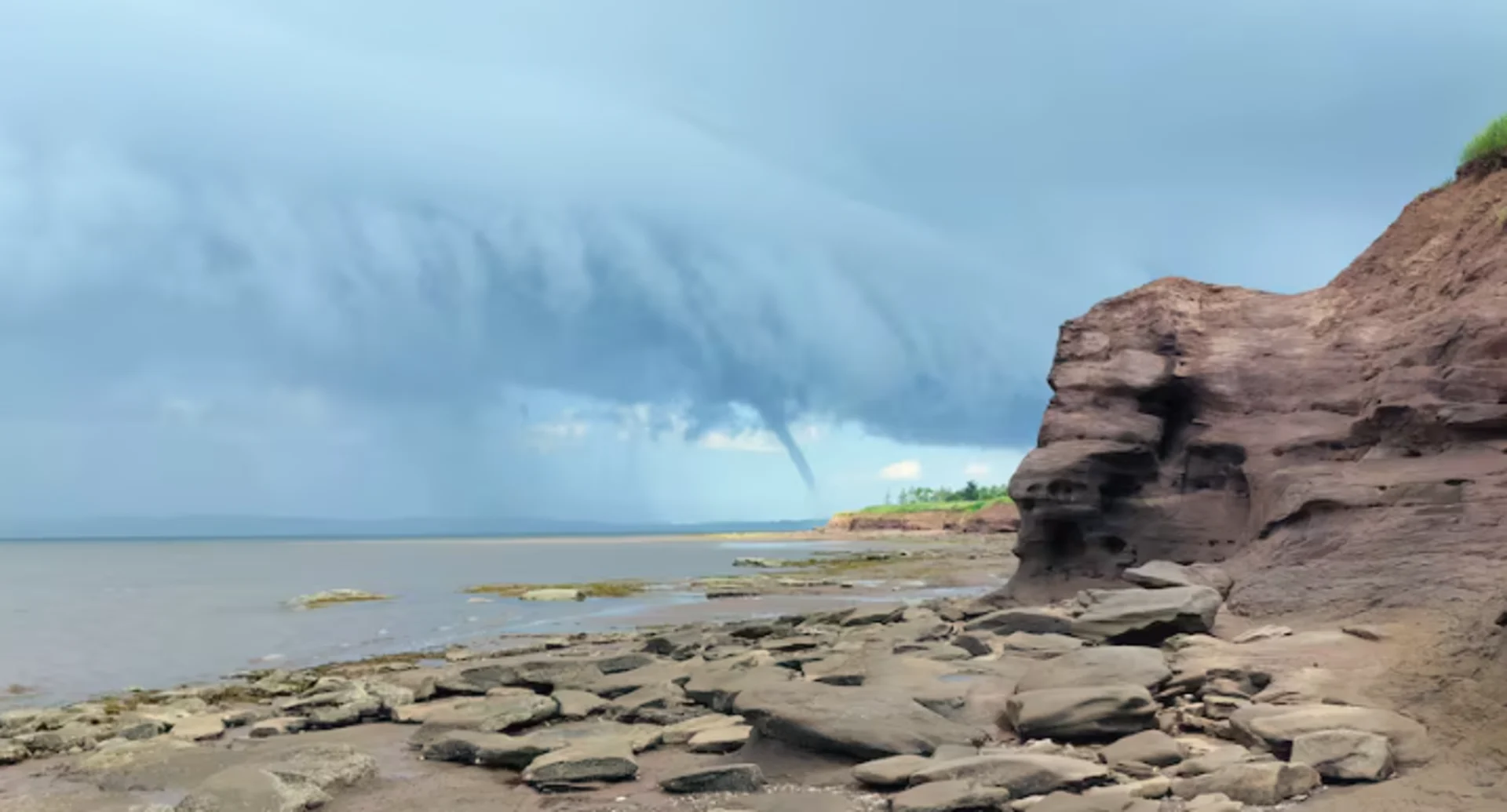
'Pure excitement': Islanders describe spotting tornado off coast of P.E.I.

Laura MacNeil has been running shoreline tours in the Vernon Bridge area of P.E.I. for six years.
While her tours typically highlight the Island's fossil sites and ancient history, MacNeil's group witnessed a very different kind of natural phenomenon on Saturday morning.
"We noticed that there were some really, really dark clouds in the distance, so we figured we had to rush back because we knew we were going to get poured on," MacNeil said.
SEE ALSO: Mini tornadoes: The difference between steam, snow, and dust devils
As the group turned past a cliff's edge on their way back to the parking lot, MacNeil spotted a waterspout in the distance. After it dissipated, a second one appeared farther out, which she estimated was about one to two kilometres from the shore.
"I started honestly freaking out, I thought it was so cool," MacNeil said. "I was just so excited to see such a cool natural phenomenon. It was all just pure excitement."
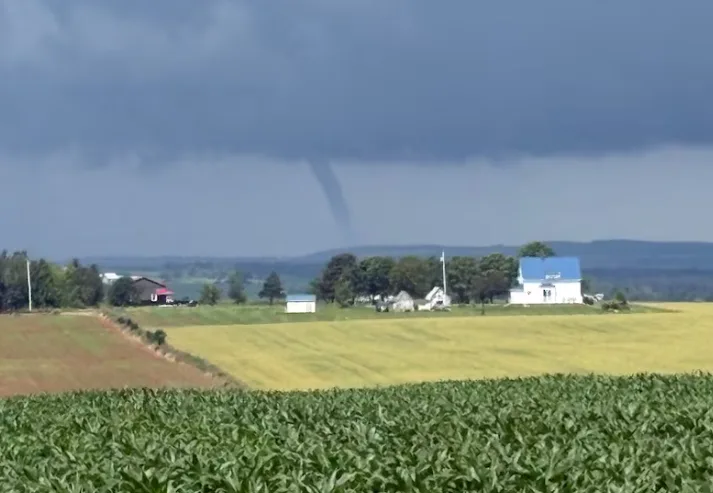
Islanders spotted the tornado on Saturday morning, just before noon. (Josh Coles/Submitted)
The Northern Tornadoes Project, a research group that tracks severe weather across Canada, confirmed the weekend event was a tornado. Because it formed over water, meteorologists classify it as a waterspout.
The group assigned the event an "EF0-Default" rating on the Enhanced Fujita scale, noting on its website that the designation applies because no structural damage was caused.
CBC meteorologist Jay Scotland said there are some differences between conventional tornadoes and the one that formed in P.E.I. on Saturday.
DON'T MISS: Tornadoes in Alberta already up more than 50 per cent from last year
"Unlike conventional tornadoes, waterspouts and landspouts are generally not associated with strong, rotating thunderstorms, so they tend to be weaker and shorter-lived," Scotland said.
He noted that landspouts can form even on seemingly fair-weather days due to localized atmospheric instability, such as a strong sea breeze or a shifting weather front. However, if they move onshore or form over land, they are officially considered tornadoes and can still cause damage.
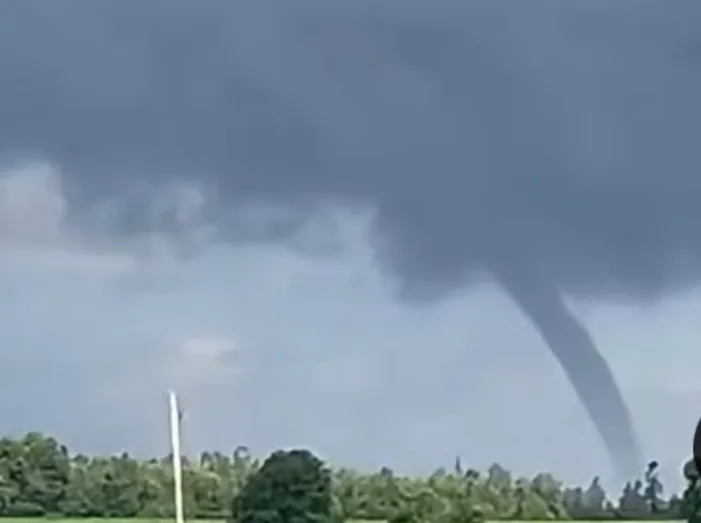
'Unlike conventional tornadoes, waterspouts and landspouts are generally not associated with strong, rotating thunderstorms, so they tend to be weaker and shorter-lived,' says CBC meteorologist Jay Scotland. (Lorelei Pauley/Submitted)
MacNeil remembers seeing waterspouts off the south shore of P.E.I. about 20 years ago, but they were much farther away from the shore.
Looking back at the photos and videos she took, MacNeil realized the twin funnels were closer than she initially thought.
"This is probably the closest I will ever be to some tornado-like cyclones, which is just absolutely amazing," she said.
"This is absolutely going to go down as one of the coolest tours I've ever done."
This article, written by Gwyneth Egan, was originally published for CBC News.
Thumbnail image credit to Laura MacNeil via CBC News.