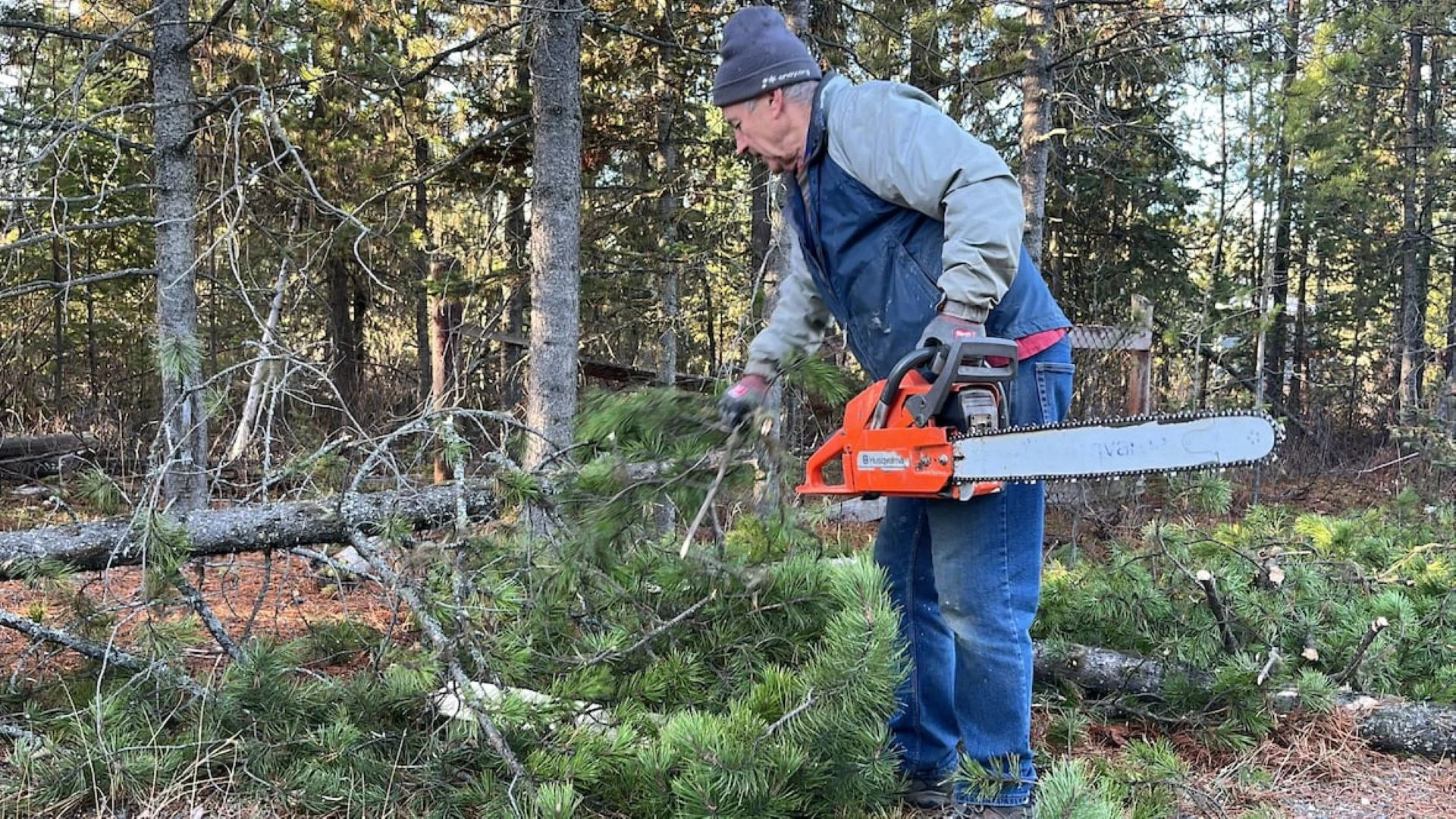
Prince George homeowners face long waits to get trees removed after windstorm

People in Prince George are facing a long cleanup following a Friday night windstorm that caused widespread damage throughout the city.
Olivia Power was in her living room in the North Nechako neighbourhood when the power went out and the trees around her started swaying, bringing one directly on top of her home.
"It was horrifying," she said. "The house felt like it was shaking. It was so loud."
Power said she's been told it will be Wednesday before the tree can be removed.
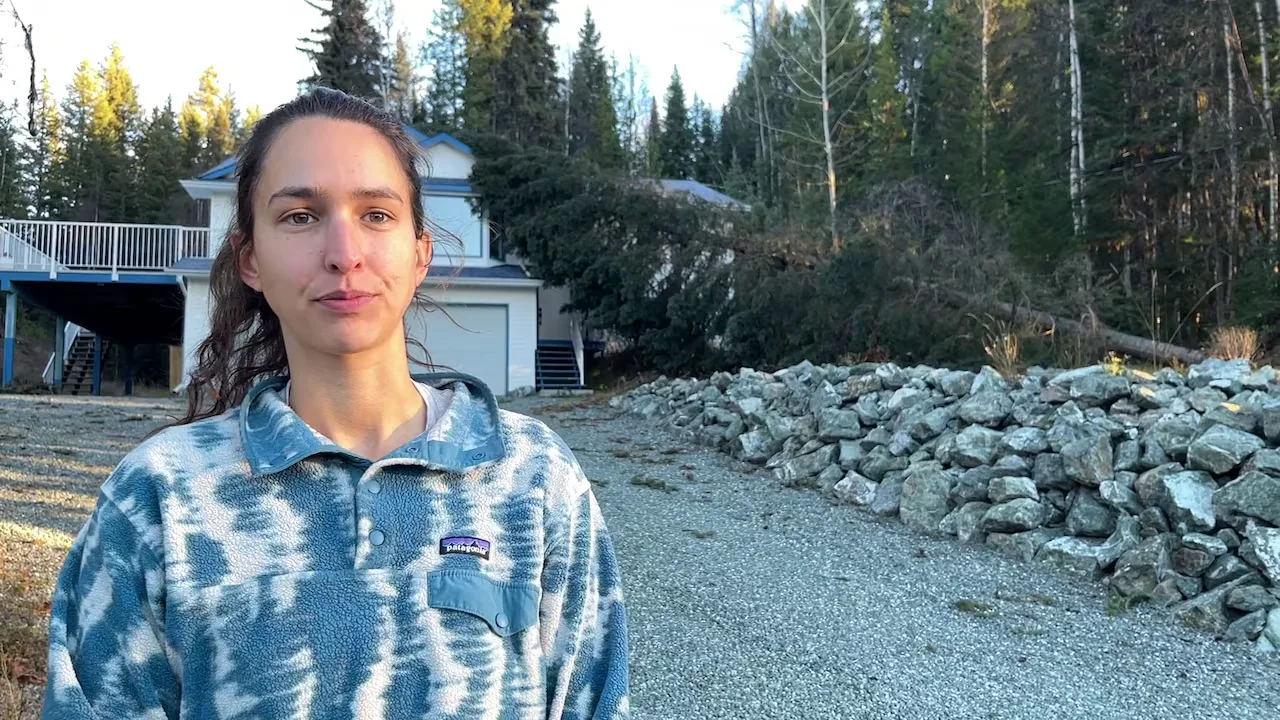
A tree came down on Olivia Power's home Friday night, but she's been told it will be Wednesday before it can be removed. (Andrew Kurjata/CBC)
She was one of more than 23,000 customers in B.C.'s central Interior to lose power Friday night, with several hundred still waiting for it to be restored. B.C. Hydro says although the power is back on for the majority of customers, challenging conditions mean delays in some areas could extend through Tuesday.
Spokesperson Bob Gammer said poles have been broken, trees are down across roads and multiple spans of wire need to be replaced.
He said hundreds of workers are repairing the damage across the province, including auxiliary crews and contractors.
"It is a lot of teams working together and coordination."
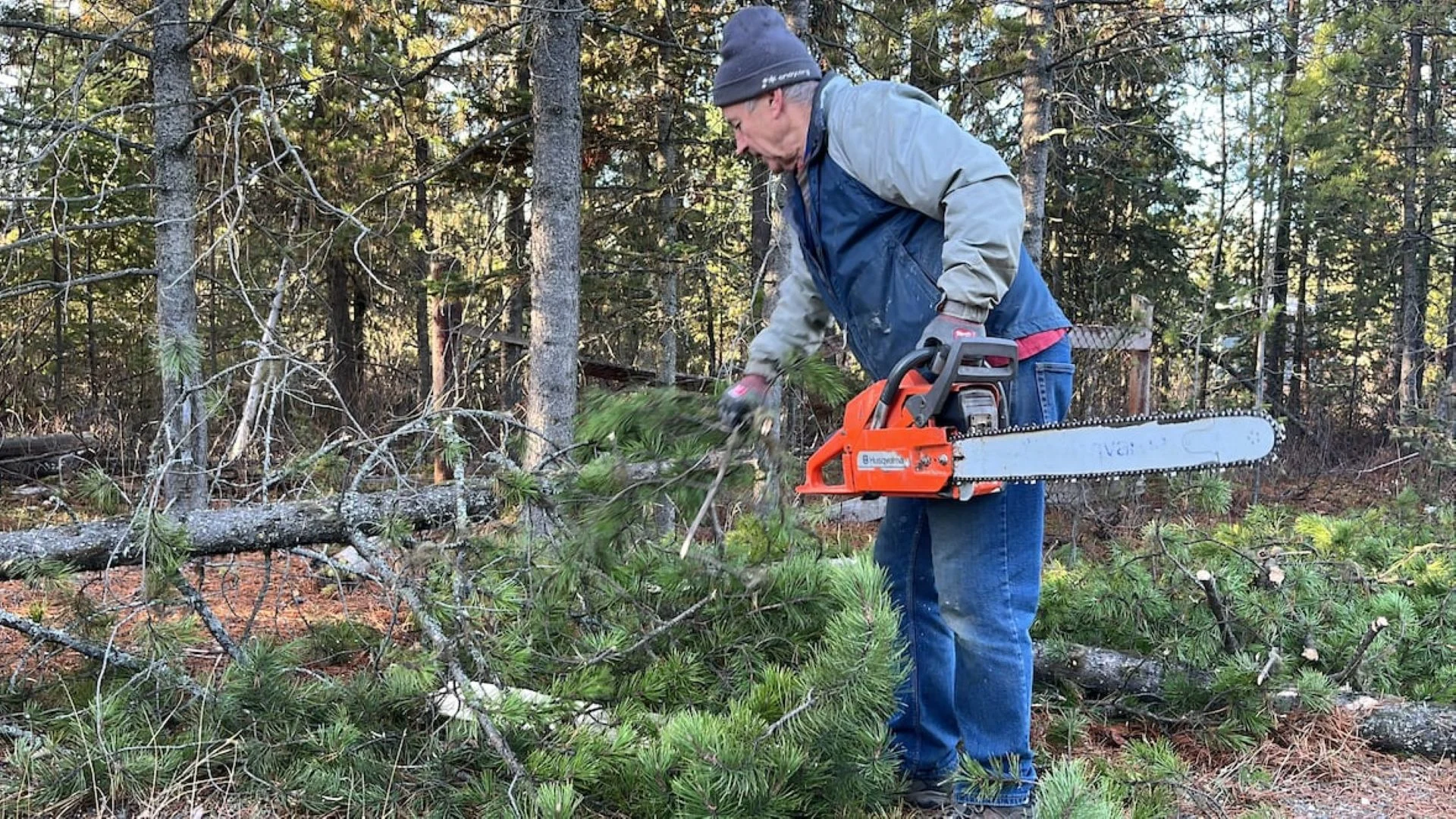
Gary Bage cleans up a downed tree from the road in his North Nechako neighbourhood in Prince George, following a stormy weekend. (Andrew Kurjata/CBC)
Gammer said it's still important for people to report damage or downed lines, as it's possible new problems are being discovered as existing ones are fixed.
With 40 crews in Prince George, he said the focus is on repairing the largest problems first before moving onto smaller ones, or those that require specialized equipment.
B.C. Hydro and the City of Prince George are reminding people of the importance of preparing an emergency kit that can last through extended outages.
The city says its park crews will be out all week cleaning up trees in various locations, starting with the most-damaged areas first.
Thumbnail courtesy of Andrew Kurjata/CBC.
The story was originally written by Andrew Kurjata and published for CBC News.