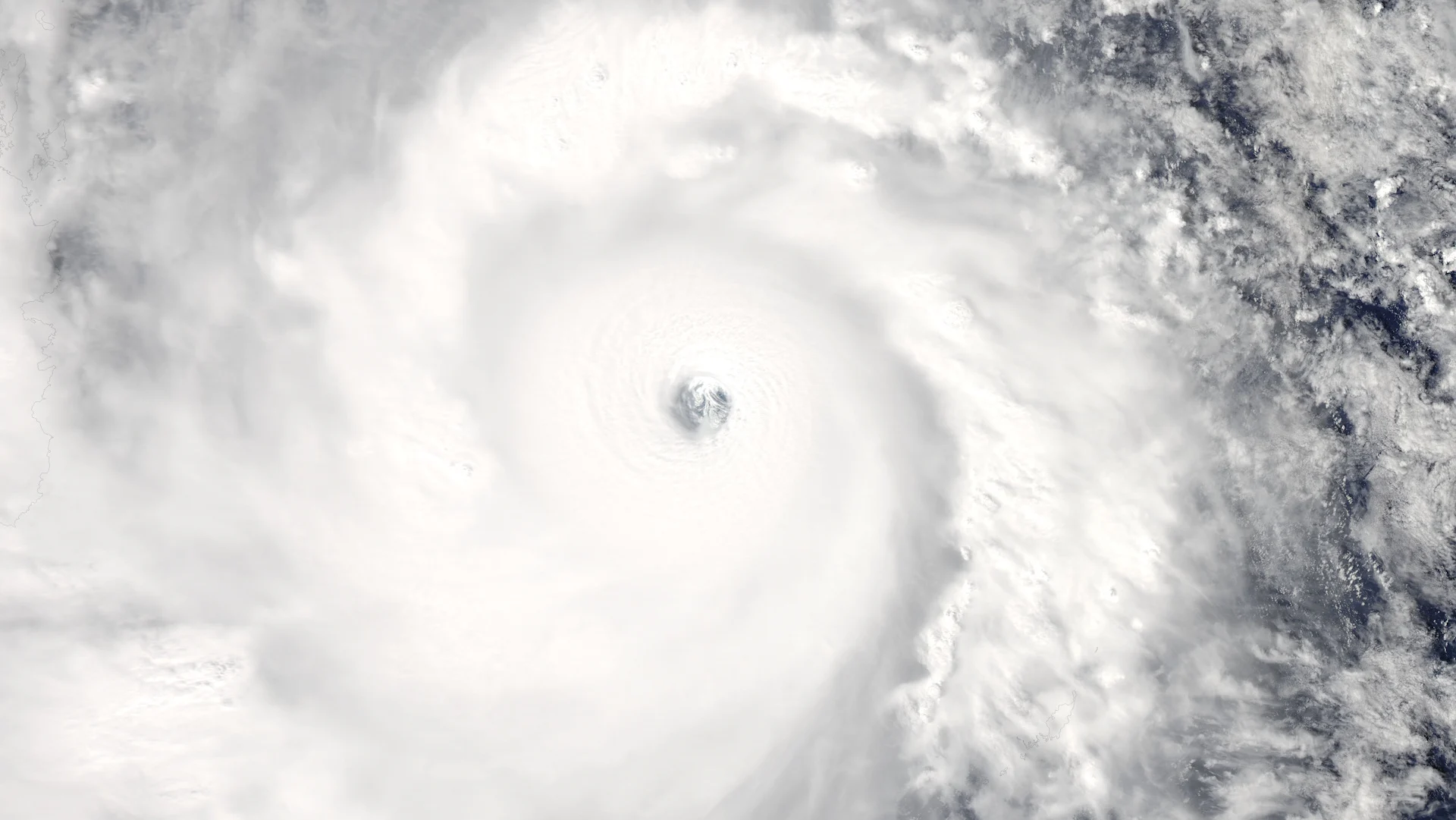
Super Typhoon Haiyan killed 6,000+ people when it hit The Philippines

The typhoon was one of the strongest storms ever recorded at landfall
One of the most powerful storms ever observed during the satellite era killed more than 6,300 people when it struck The Philippines in Nov. 2013.
Super Typhoon Haiyan packed maximum sustained winds of 315 km/h and an overwhelming storm surge when it made landfall in a densely populated area.
DON’T MISS: 345 km/h: Meet the world’s largest, strongest tropical cyclones
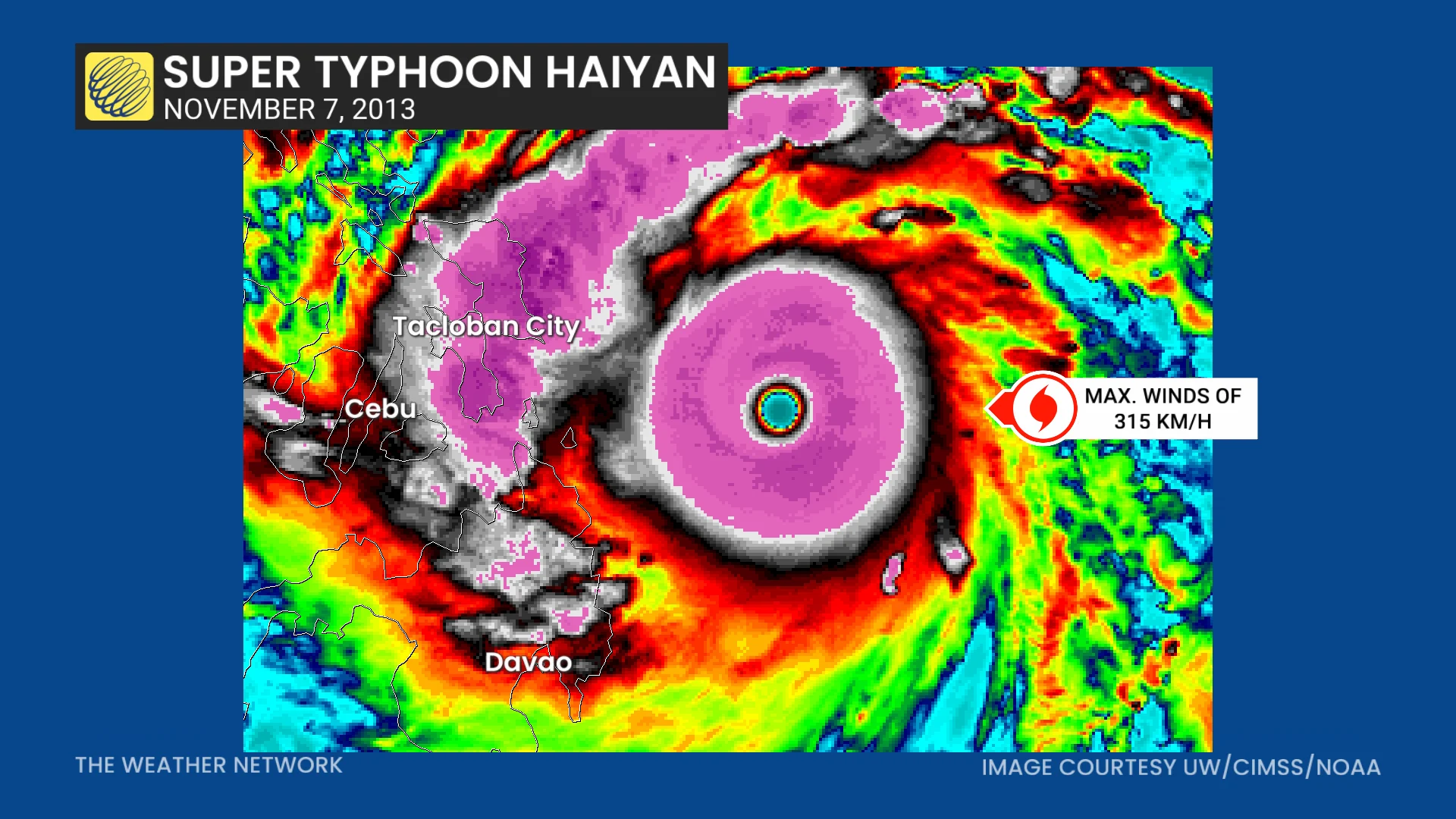
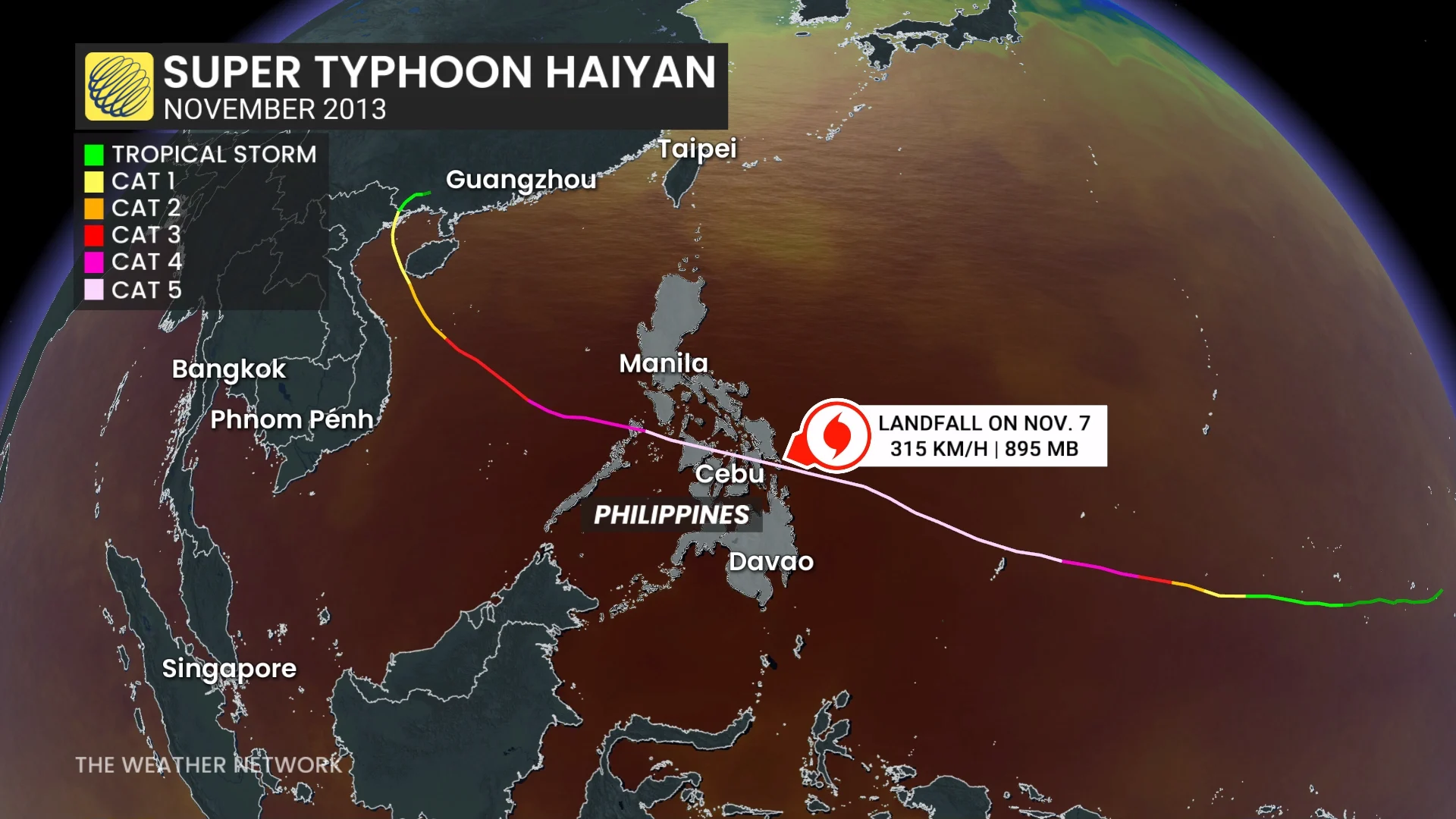
Favourable conditions led to a very active 2013 typhoon season. Numerous destructive storms made landfall throughout the western Pacific basin, and five typhoons reached the equivalent of Category 5 intensity.
Haiyan became a named storm on Nov. 4 as it steadily moved west toward The Philippines. The new typhoon rapidly intensified the following day, with its winds growing from 165 km/h to 280 km/h in just 24 hours.
The super typhoon intensified further as it approached the central Philippine coast. Haiyan achieved its maximum intensity of 315 km/h shortly before landfall, making it one of the most intense storms observed since the satellite era began in 1966.
Due to a lack of aircraft reconnaissance observations, we may never know exactly how strong Haiyan grew before landfall. Based on its jaw-dropping satellite presentation, it’s possible the storm was even stronger than estimated.
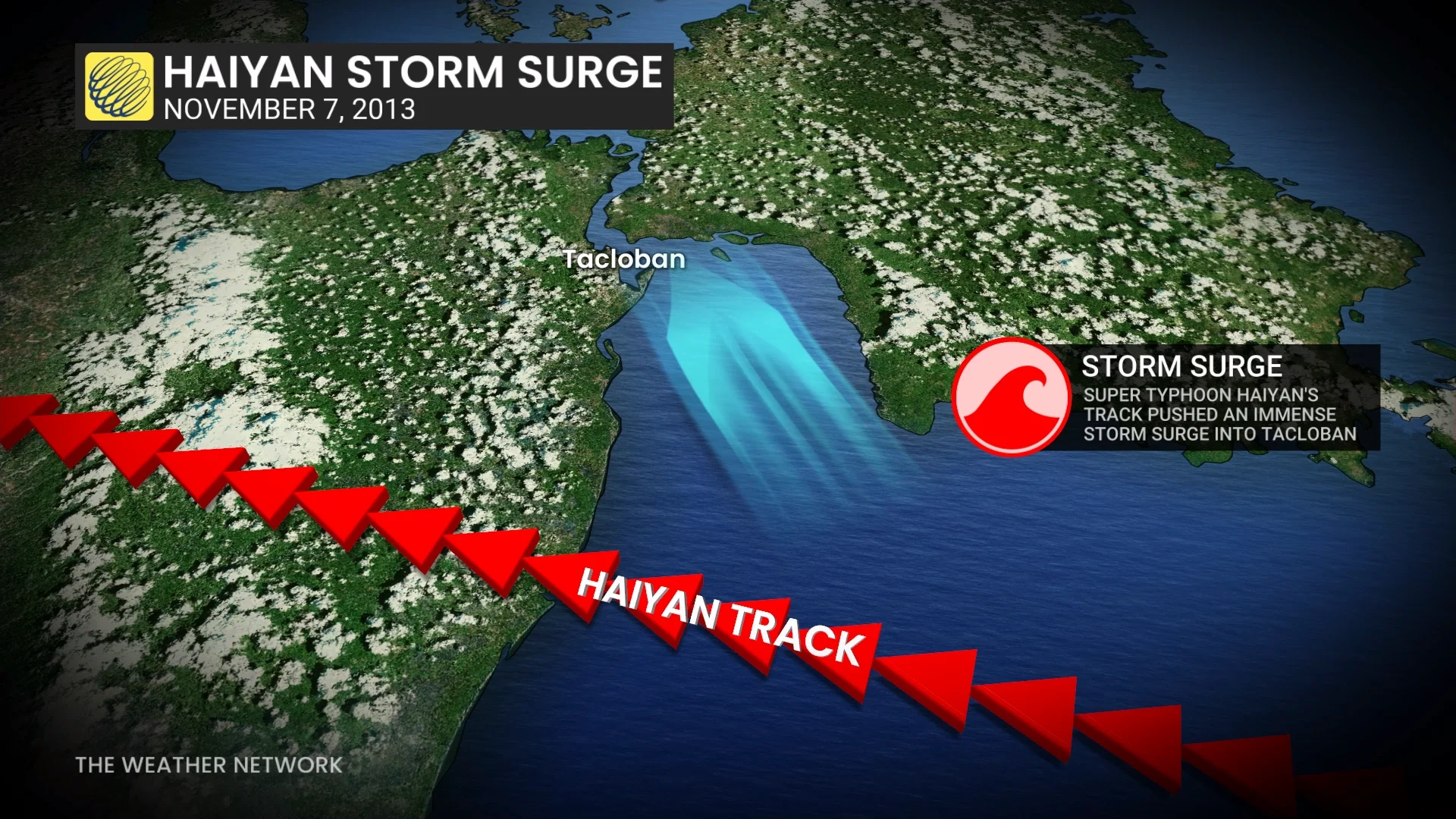
The large and powerful typhoon made landfall on the island of Leyte on Nov. 7. Tacloban City suffered some of the worst damage.
RELATED: Why Hurricane Katrina’s storm surge was uniquely destructive
Home to more than 200,000 people, the city is located in the narrow end of a bowl-shaped bay. Haiyan’s immense storm surge funneled into this bay and inundated the city. Seawater pushed as far as 1 kilometre inland, measuring 4-5 metres deep in spots near the coastline.
Ferocious winds and an overwhelming storm surge damaged or destroyed one million homes in the region. More than 6,300 people died as a result of the typhoon, with 1,000+ more people reported missing and never found.
The typhoon continued west across The Philippines through the following day, leaving behind significant wind damage and flooding in its wake.
A weakened Haiyan eventually turned northward toward its final landfall, bringing gusty winds and flooding rains to portions of northern Vietnam and southern China.