The 1929 earthquake that triggered a deadly Newfoundland tsunami

Several dozen people died when the tsunami destroyed numerous communities along Newfoundland’s Burin Peninsula
A rare and powerful earthquake struck off the southern shores of Newfoundland during the evening hours on Nov. 18, 1929.
The damage wasn’t done once the shaking ended. Tsunami waves measuring as high as 13 metres crashed onto the Burin Peninsula, destroying numerous villages in the region.
DON’T MISS: When and where could a tsunami happen in the Atlantic Ocean?
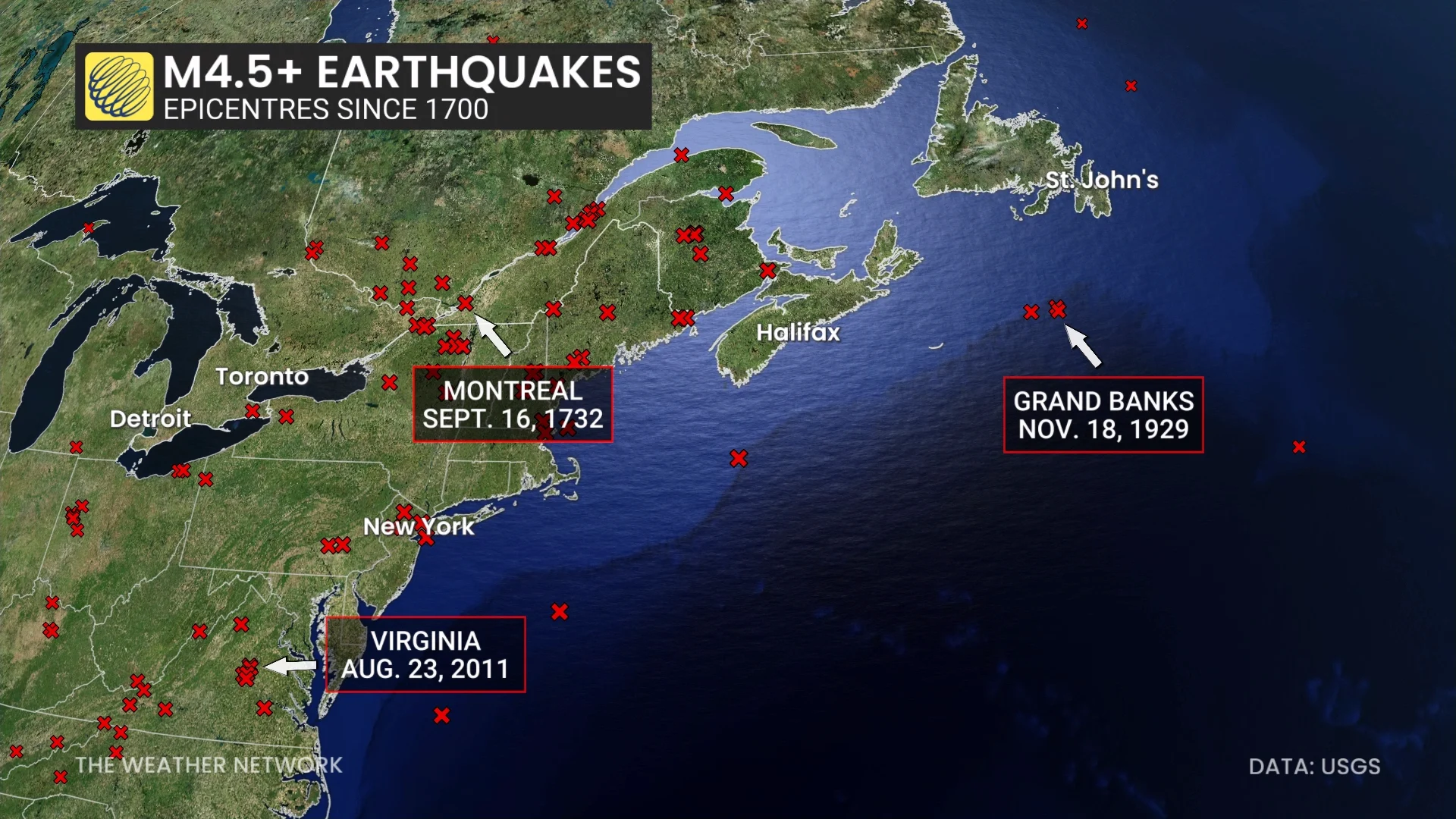
Earthquakes are no strangers in the eastern half of North America, especially in places like Quebec and Virginia. But an active fault line also lurks offshore from Atlantic Canada.
A powerful earthquake struck about 250 km south of Newfoundland’s Burin Peninsula at 5:02 p.m. local time on Nov. 18, 1929. Packing an estimated magnitude of 7.2, strong shaking was felt throughout Atlantic Canada, with rattling reported as far away as Ottawa and New York City.
The quake occurred along the Grand Banks, a complex of plateaus along the edge of the continental shelf off Newfoundland’s southern shores.
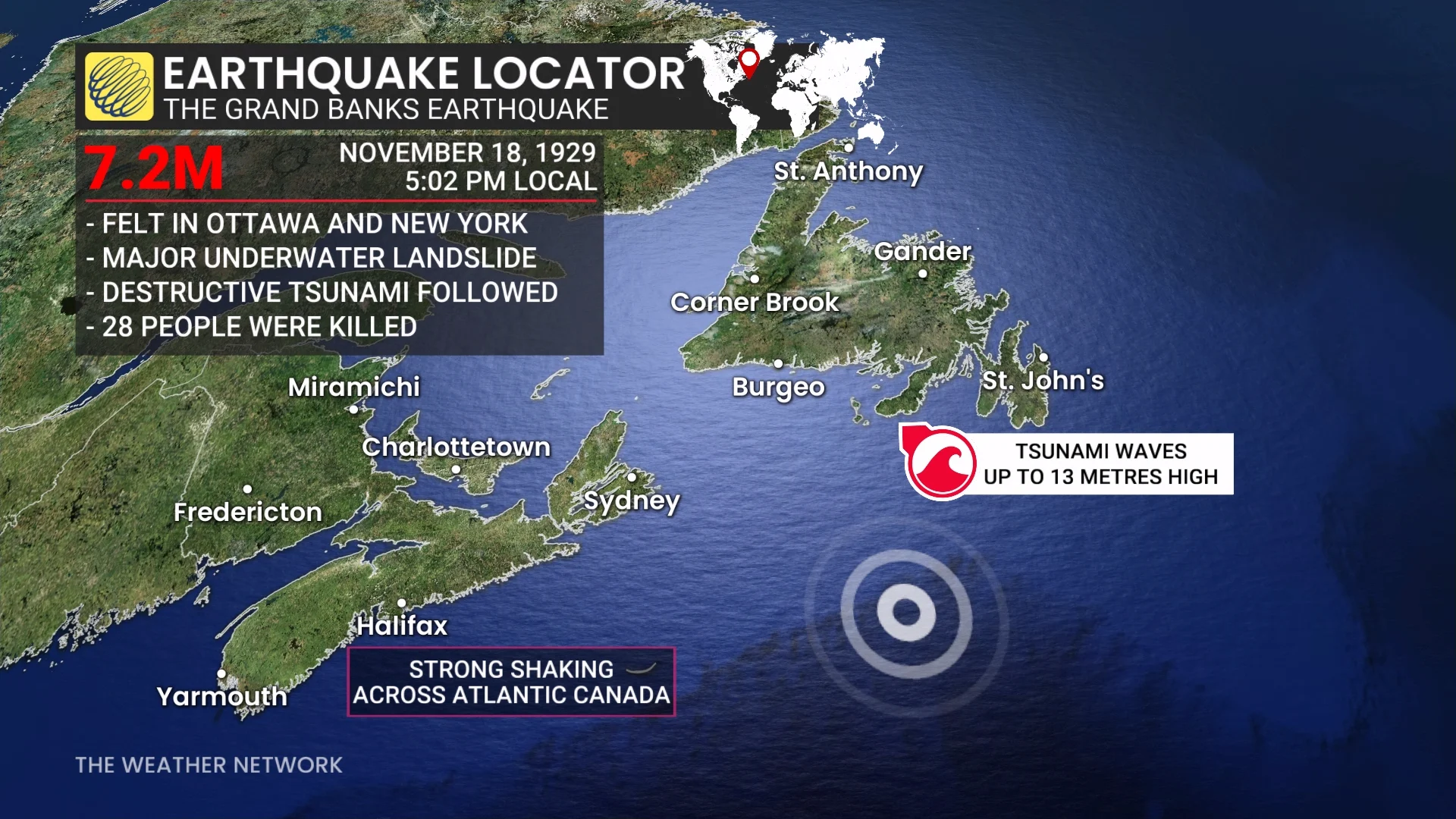
Intense shaking unleashed a massive underwater landslide in this rugged region, triggering a series of tsunami waves that radiated away from the epicentre like ripples on a still pond.
Newfoundland’s Burin Peninsula bore the brunt of the tsunami. Waves as large as 13 metres tall surged ashore, destroying both buildings and vessels. The tsunami’s official death toll stands at 28, making this the deadliest earthquake-related disaster in recorded Canadian history.
Given the damage to infrastructure and communications, including numerous severed undersea telegraph lines, it took several days for outside aid to arrive in the region.