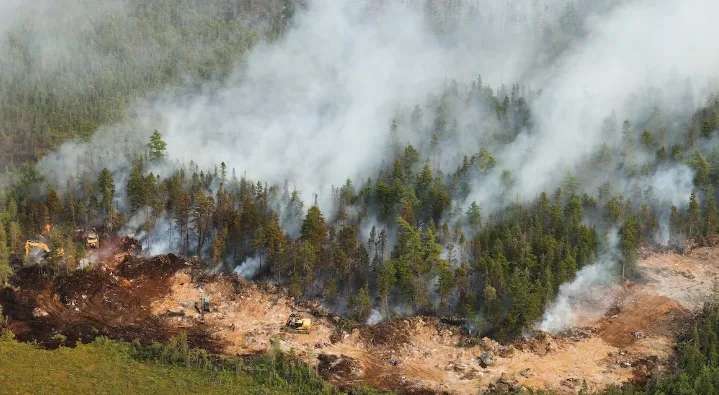
N.S. fire that burned 8,500 hectares in 2025 now officially extinguished

A wildfire that ripped through 8,500 hectares in Nova Scotia's Annapolis Valley last year has now officially been deemed extinguished.
The fire burned in the West Dalhousie area from mid-August until late September, though crews remained working at the site until late October. It destroyed 20 homes and forced hundreds of people to flee.
While the blaze may have faded from the attention of some people in the province, the Department of Natural Resources was still keeping tabs on the area until Tuesday, when the fire was declared extinguished.
RELATED: 'Zombie fires' are occurring more frequently in boreal forests
Jim Rudderham, the director of fleet and wildfire management for Natural Resources, said although the department considered the fire under control when crews left the affected area last fall, they needed to ensure there was no lingering fire underground that could reignite this spring.
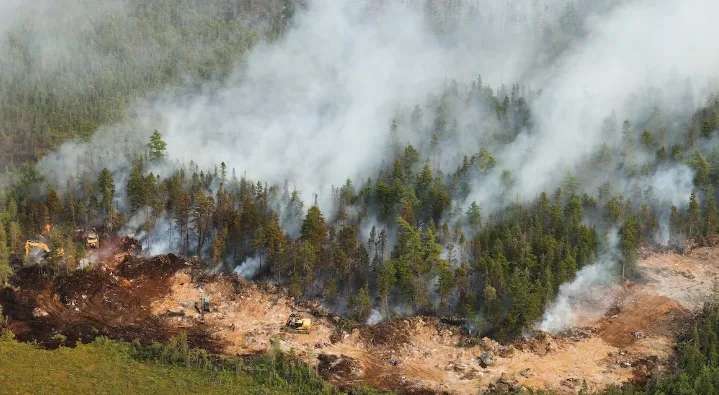
An aerial view of a dozer break at the Long Lake wildfire in Annapolis County, N.S., from Aug. 23, 2025. (Province of Nova Scotia)
"We wanted the winter snow to sit on that fire. We want the spring rains to absorb into that fire and then we wanted some heat — we wanted the fire weather conditions to start to build up again, which they did," Rudderham said.
He said a drone equipped with an infrared scanner to detect remaining heat sources was flown over the burned area at night over the weekend, and did not find any areas of concern.
"Last week it was very hot and dry in this province. So the conditions were there to help accelerate anything that might have been there, but we didn't find anything."
The warden of Annapolis County told CBC News in an email that the wildfire had a significant impact on area communities over the past year.
"We are incredibly thankful to the DNR crews, volunteer fire departments, emergency responders, and all partner agencies who worked tirelessly to manage this challenging situation," said Diane Le Blanc.
"We all have a role to play in staying vigilant, following burn restrictions, and taking precautions to help prevent future wildfires."
DON'T MISS: Understanding wildfires can help protect you and your home
Rudderham said it is possible for fires to continue burning underground through the winter despite rain and snow, but while "holdover fires" are common in Western Canada, he has not yet encountered one in Nova Scotia.
With this year's fire season already underway, Rudderham urged people to be cautious and thoughtful about their outdoor activities.
Rudderham said there have been more wildfires this season than there were to this point last year.
"Our crews were crazy busy last week," he said. "These were all human-caused fires.
"So people really need to pay attention to what they're doing outside and follow the burn restrictions and really think of what they're doing."
This article, written by Frances Willick, was originally published for CBC News.