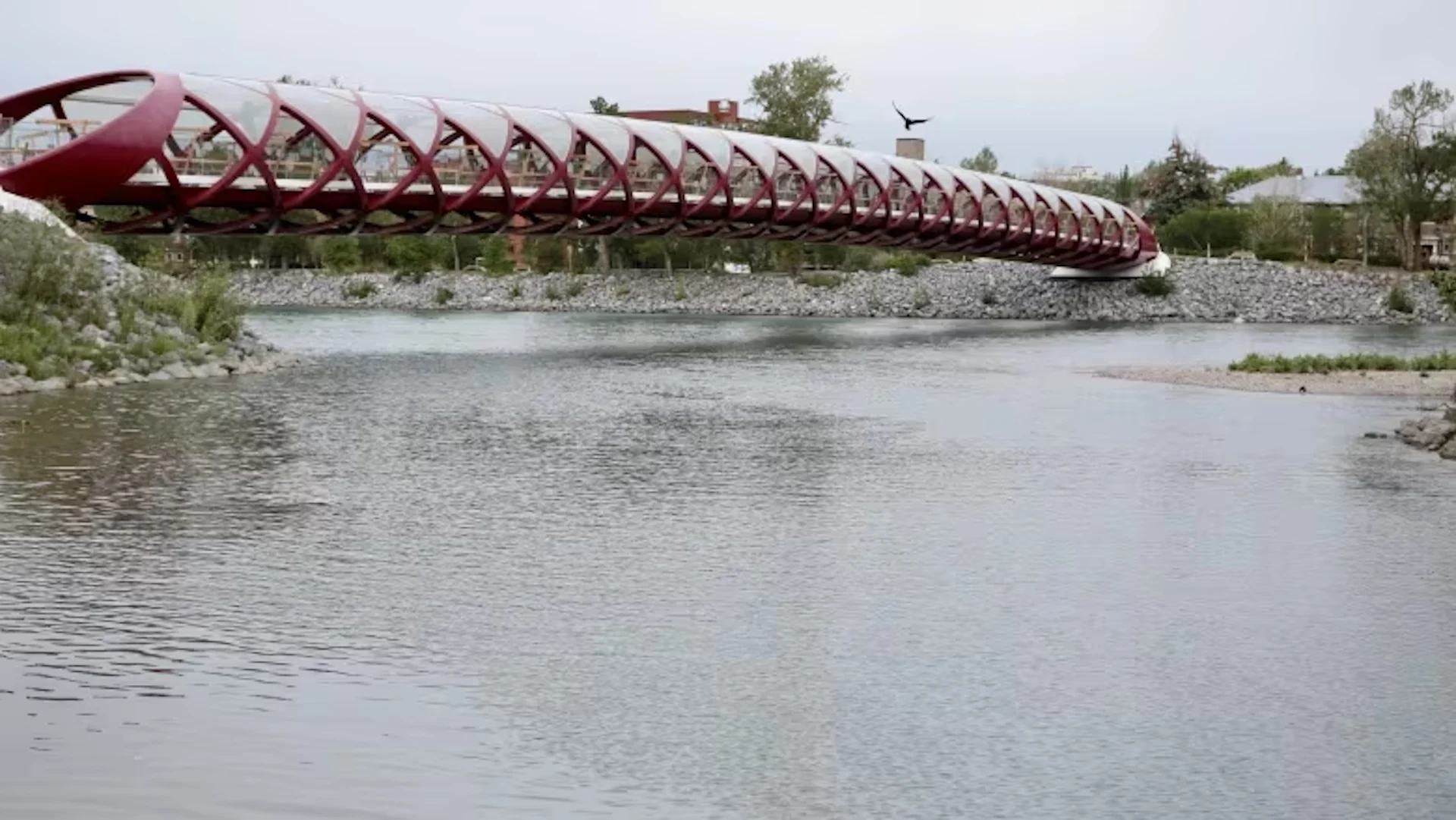
Low river levels in Calgary spark concerns

Despite recent rainfall over Calgary, conditions are still drier than usual, leading to concerns over low water flows in the region.
"The flows in both the Bow and Elbow Rivers continue to be well below normal for this time of year due to the low snowpacks and early snowmelt in the Bow and Elbow River Basins, as well as ongoing dry conditions," the City of Calgary said in a statement Friday.
DON'T MISS: Uncomfortable weekend conditions in the West, with high heat and smoky skies
"Reservoirs upstream of Calgary are currently filling and the Glenmore Reservoir is being held at full supply level to proactively manage water supply in anticipation of a hot, dry summer."
Local conditions are being monitored with the goal of ensuring there is adequate water supply throughout the summer season.
The Alberta government has released data that provides a glimpse into what river conditions look like across the province. It issued water shortage advisories for several areas, including the Bow River Basin.
Meanwhile, the City of Calgary has advised residents to be "mindful of their outdoor water use" and adopt water-saving strategies like using rain barrels, watering cans, and drip irrigation systems in gardens.
These dry conditions shouldn't be taken lightly, according to John Pomeroy, Canada Research Chair in Water Resources and Climate Change.
Pomeroy, who is also the director of the Centre for Hydrology at the University of Saskatchewan, said that river levels in Calgary are "about half of what we would expect at this time of year" and haven't improved despite the rains.
"This is due to a number of factors that occurred this year," he said. "One is the lower-than-normal snowpack in the Bow River Basin."
He said that rapidly melting snowpacks caused "depleted snow conditions" by the end of May.
Other reasons include lower levels of precipitation, especially in May, and reduced glacier coverage in the Bow River Basin, according to Pomeroy.
He thinks that the flows will "continue to decline" over the summer and won't change even if there's more precipitation over the season.
"We have … warmer than normal temperatures forecast through the rest of the summer," he said.
"So even if we get more precipitation, we'll have more evaporation and that will mean less water available for stream flow."
Pomeroy is hoping things will look a little different next year with heavier snowpacks but believes that damage control is needed.
"Nature is setting our alarms right now that we have to take this very, very seriously and get greenhouse gas emissions under control," he said.
"Otherwise we're going to reach situations where managing our water sustainably is simply impossible."
This article, written by Boshika Gupta, was originally published by CBC News on July 14, 2023.