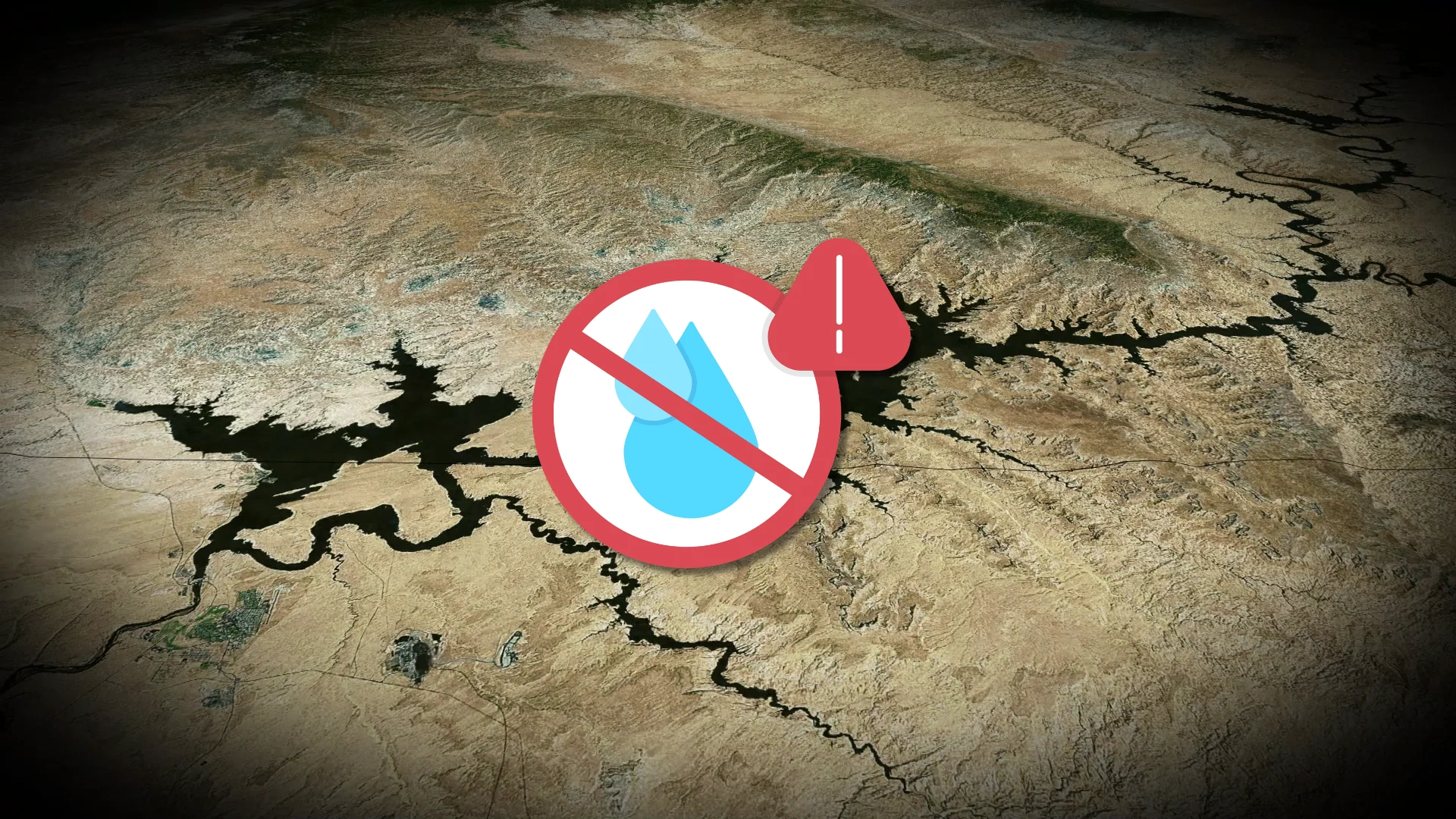
Lake that provides power to millions falls dangerously low

Lake Powell is a crucial reservoir for power generation and drinking water for millions of homes and businesses across the region
For the second time this decade, a reservoir that provides hydroelectric power and regulates drinking water for millions of people is approaching a dangerously low level amid a significant drought.
The lake’s level is within 10 metres of the minimum power pool, which is the lowest point at which generators are able to produce electricity for the region.
DON’T MISS: The world is officially in its water bankruptcy era
Lake Powell is the second-largest artificial lake in the United States.
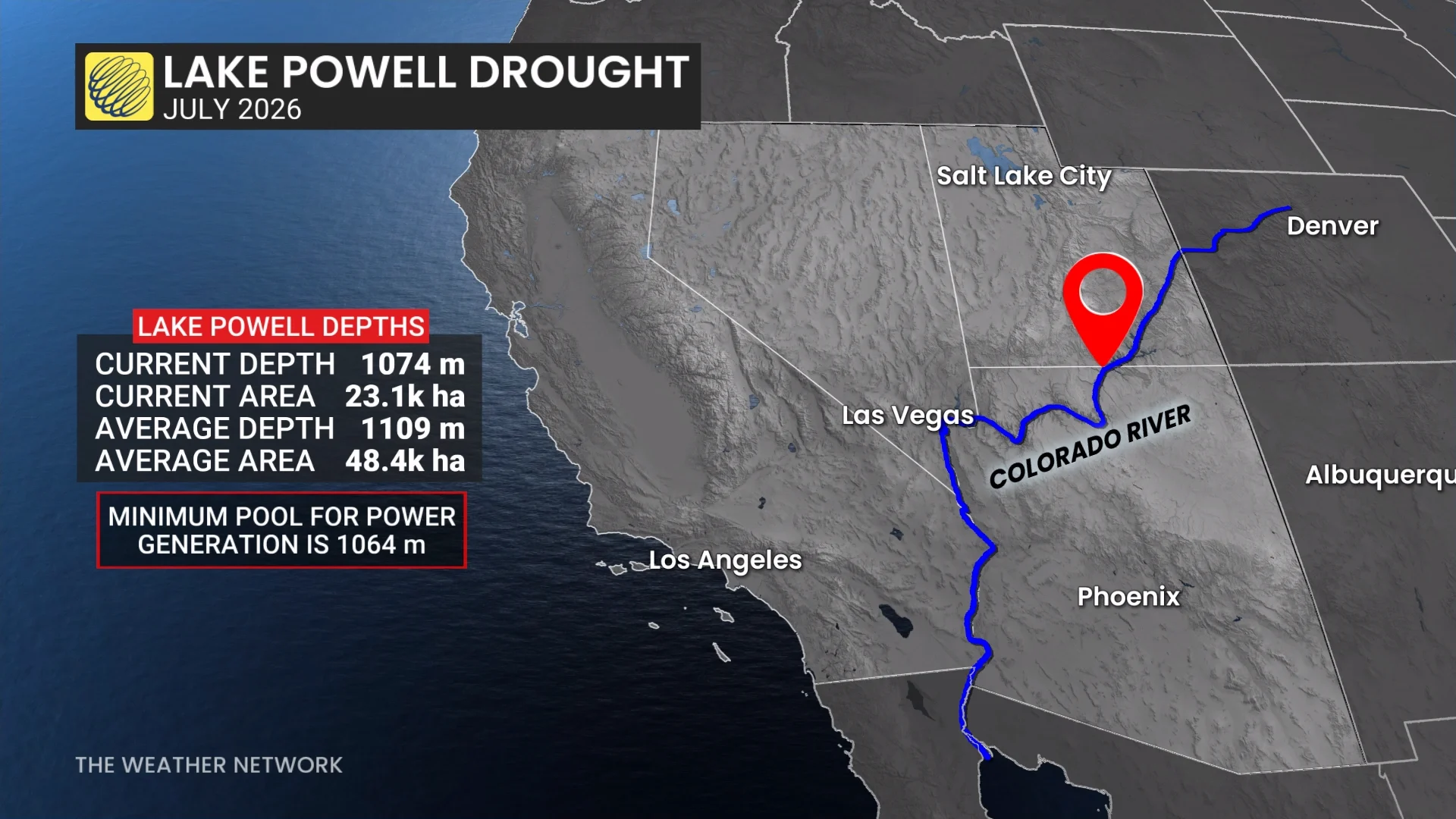
Created by the Glen Canyon Dam along the Colorado River in southern Utah, the body of water generates power for millions of homes and businesses throughout the western U.S. The reservoir also helps regulate water usage across the Southwest.
The lake’s elevation dropped to 1,074 metres on July 16, marking one of the lowest measurements on record since the lake filled to capacity in 1980. Lake Powell’s average elevation for this time of year sits around 1,109 metres.
The minimum water elevation for power production is 1,064 metres, and the “dead pool” elevation at which water is stuck behind the dam sits around 1,027 metres.
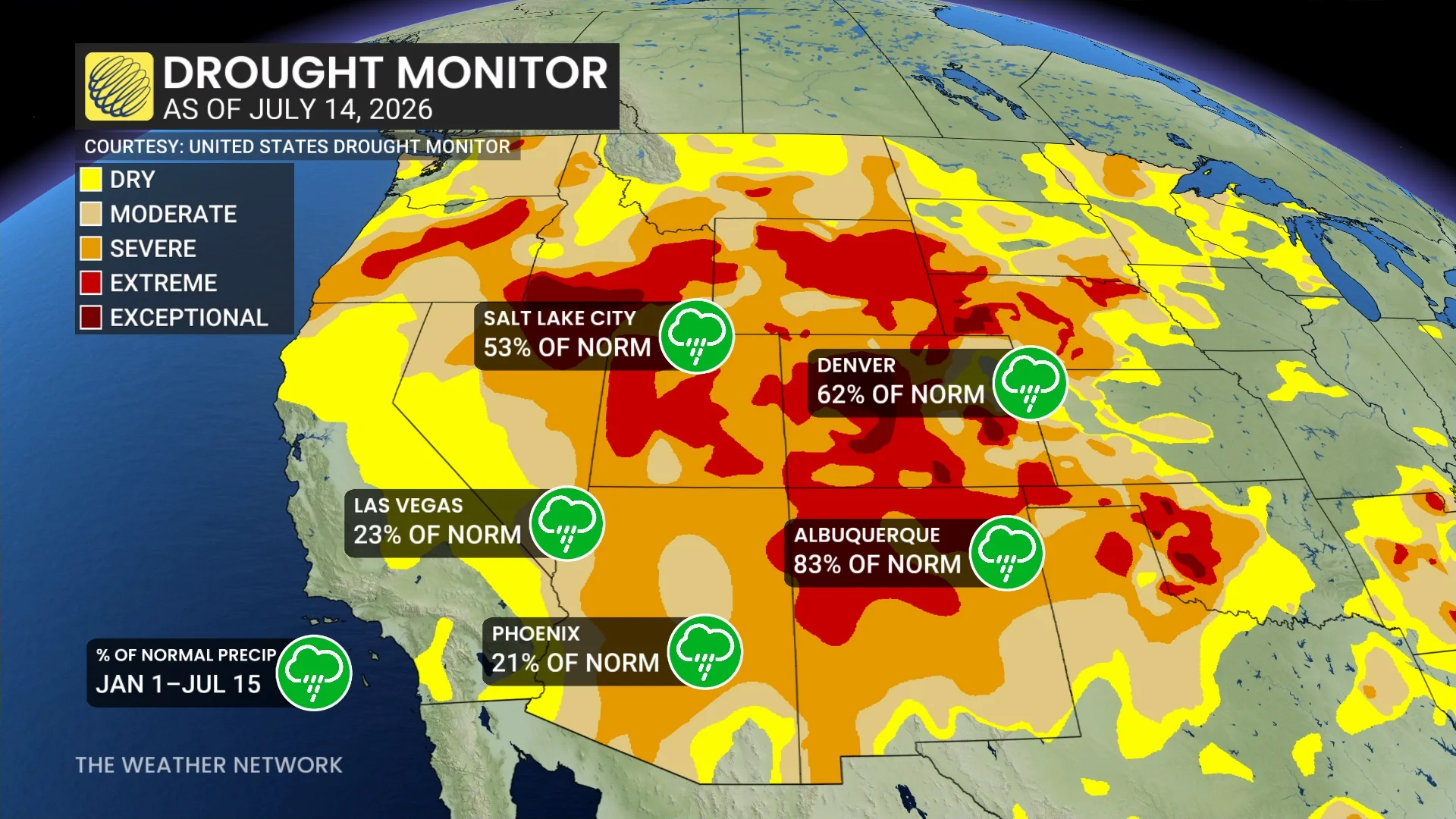
We’ve seen a severe drought build across the western U.S. in recent months. The states of Colorado, New Mexico, Utah, and Wyoming all experienced their lowest snowpack on record this past season, coming in as low as 25 per cent of normal in some areas.
Rainfall has been just as scarce. Las Vegas, Nevada, has seen just 23 per cent of its normal precipitation since the beginning of the year, picking up just 13 mm of rain since Jan. 1.
Temperatures across the Southwest started running hot very early this season. A historic heat dome in March broke more than 1,000 heat records across the western half of the U.S.
The region may see glimmers of hope for recovery in the days and weeks ahead as the monsoon season sets in. Many communities in the western U.S. also typically experience greater precipitation than usual during a strong El Niño in the autumn and winter months.