Canada’s strongest onshore earthquake hit B.C. in June 1946

The M7.3 earthquake was the strongest ever recorded on land in Canada
The strongest onshore earthquake ever observed in Canada struck Vancouver Island during the mid-morning hours on June 23, 1946.
Folks from northern British Columbia to Oregon rushed for cover as the ground swayed during the estimated M7.3 tremor.
DON'T MISS: Earthquakes are a risk in Canada. Here’s how to stay safe
Canada is prone to severe earthquakes from coast to coast.
The country’s greatest risk sits beneath and around British Columbia, where numerous major fault lines are capable of rupturing in powerful earthquakes.
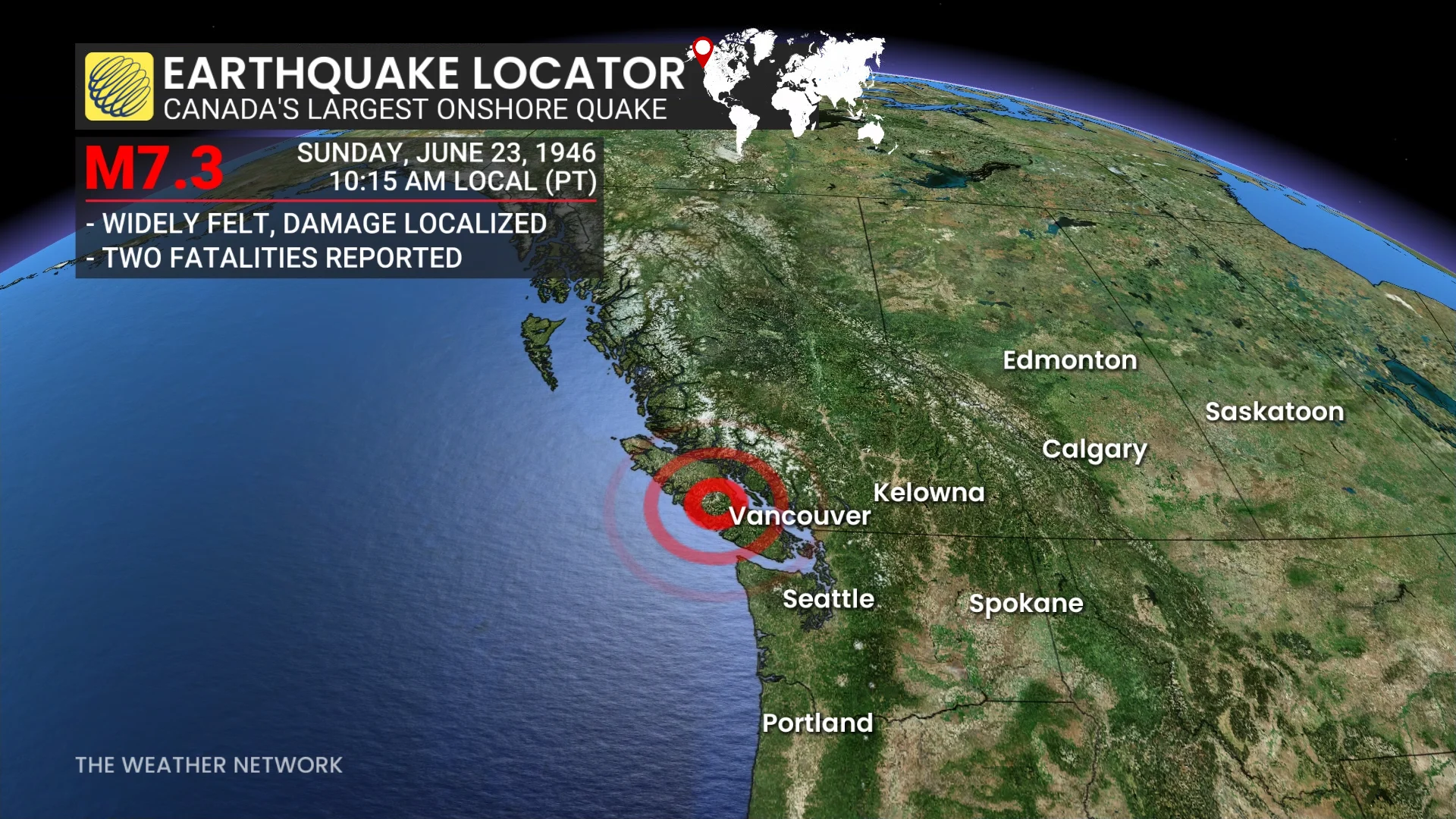
One of those faults slipped beneath Vancouver Island around 10:15 a.m. on Sunday, June 23, 1946.
Severe shaking near the epicentre damaged homes across the island, with strong rattling reported in the neighbouring Lower Mainland. People could feel the earthquake as far away as Portland, Oregon, according to Natural Resources Canada.
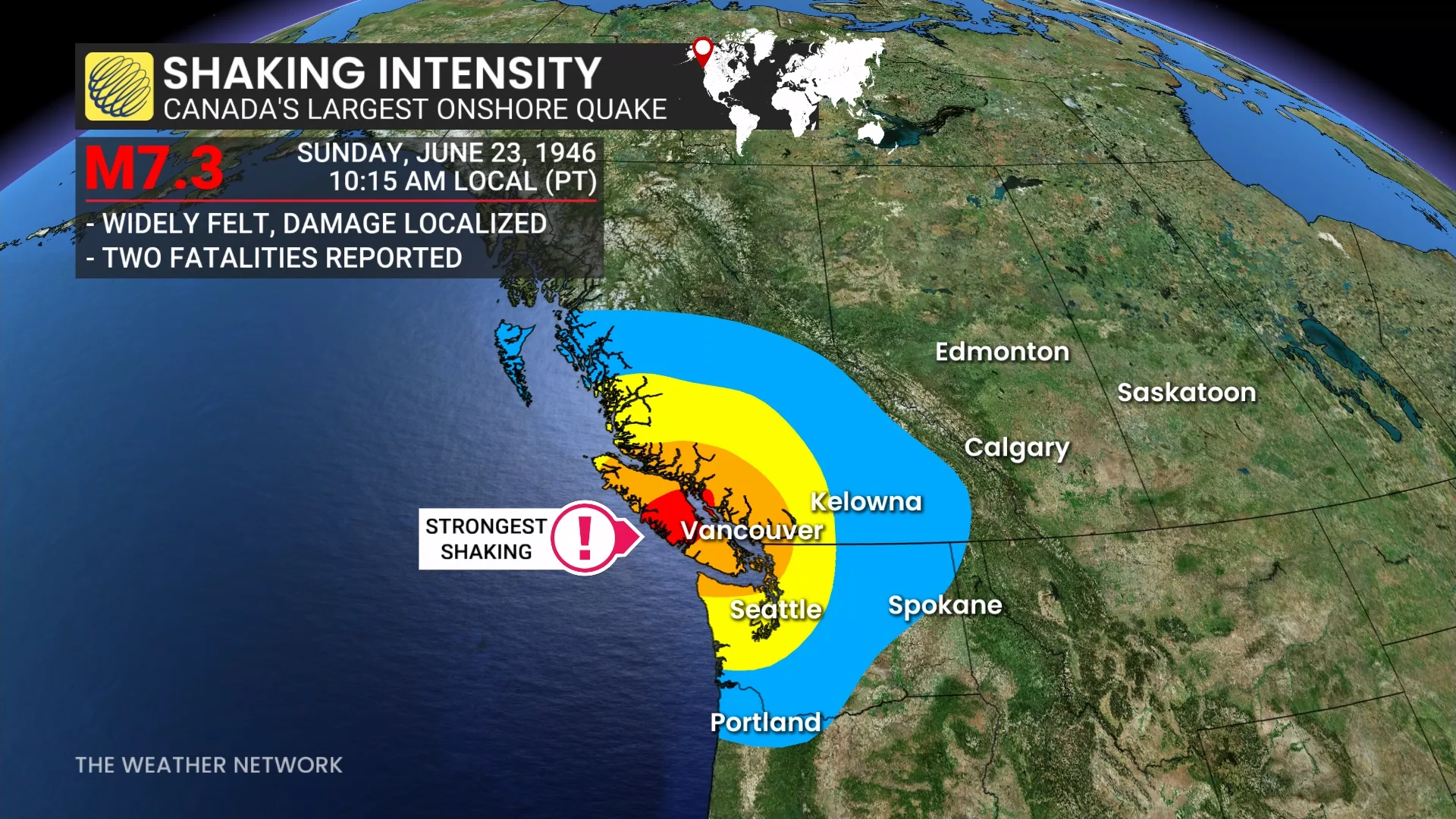
Two people reportedly died during the event, though neither of the fatalities were directly related to earthquake damage.
Scientists estimate that the earthquake was a M7.3, making it the most powerful earthquake ever recorded on land in Canada.
RELATED: Powerful Cascadia quake could trigger near-instant flood risk: report
Several stronger offshore earthquakes have been recorded throughout history, including the M9.0 that caused a catastrophic tsunami throughout the Pacific region in January 1700.
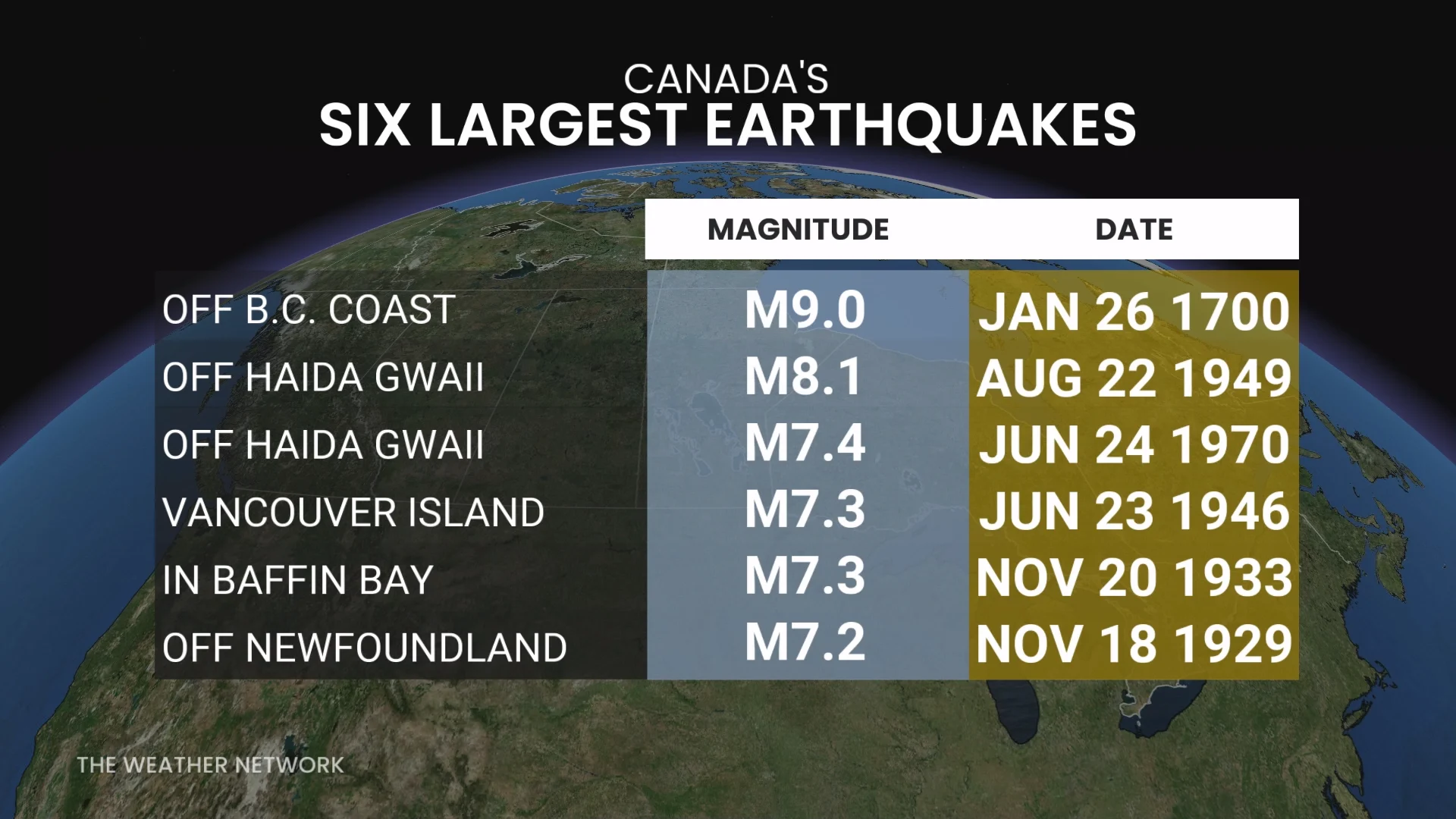
Despite its stature in the books, the M7.3 that hit Vancouver Island caused considerably less damage than the M7.0 that struck Charlevoix, Quebec, back in 1663.
The latter earthquake caused major damage throughout eastern North America due to its location, the geology of the region, and the era in which it occurred.