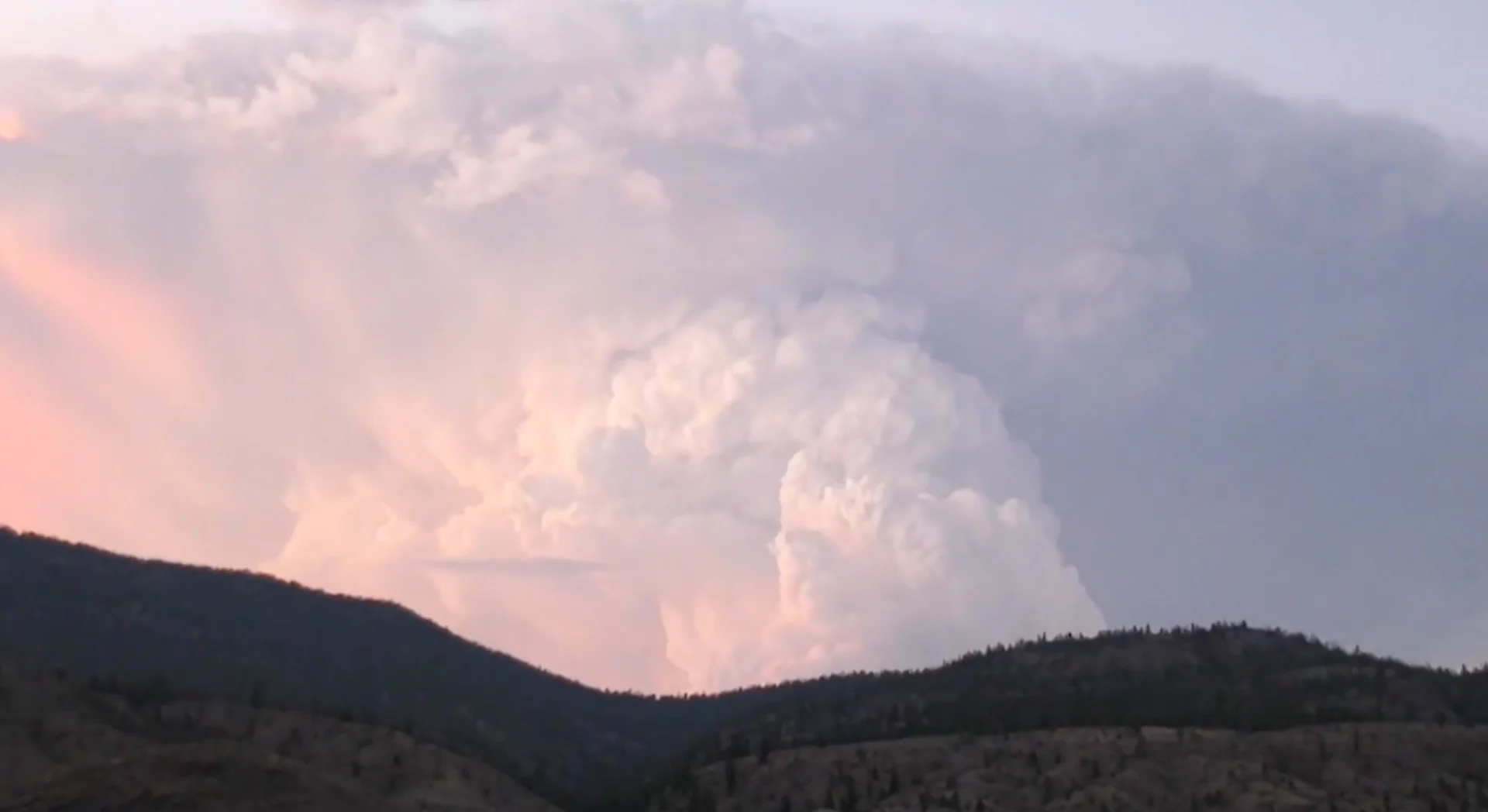
June 2021: Canada's hottest temperature, then disaster in Lytton, B.C.

Five years ago, the village of Lytton, B.C., endured record-setting heat just before a devastating wildfire took most of the community.
What started out as a B.C. community recording Canada's hottest temperature on record for three consecutive days ended in the near-total destruction of it from a devastating, deadly wildfire.
June 30, 2026 will mark the fifth anniversary of the destructive and deadly wildfire, as well as the heat wave that led to the fatalities of hundreds of people.
SEE ALSO: A decade of recovery: How Fort McMurray's resilience has helped rebuild
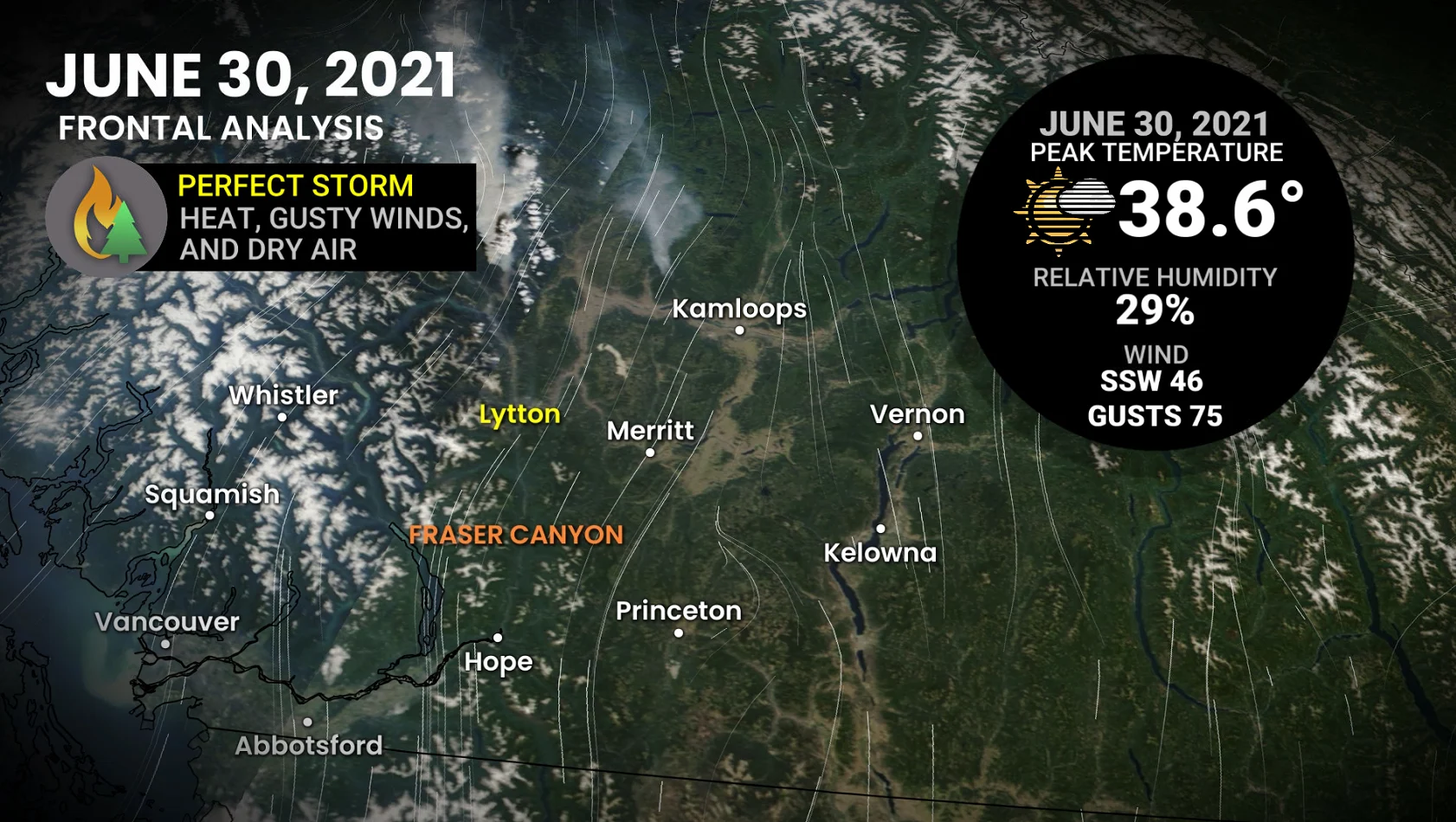
Extreme heat, low humidity, dry fuels, and winds gusting to more than 70 km/h created explosive, fire-weather conditions, leading to rapid evacuation alerts and a near total loss of the village of Lytton.
"We know this event had a tremendous effect on families and communities who lost loved ones, and also on the many first responders and health-care workers who did their utmost to care for the overwhelming number of people who were affected by the heat. On this anniversary, my thoughts are with those who were affected and those who live with trauma from that event," said Bonnie Henry, B.C.'s health officer, in a news release issued on June 25.
What led to the severity of the heat wave
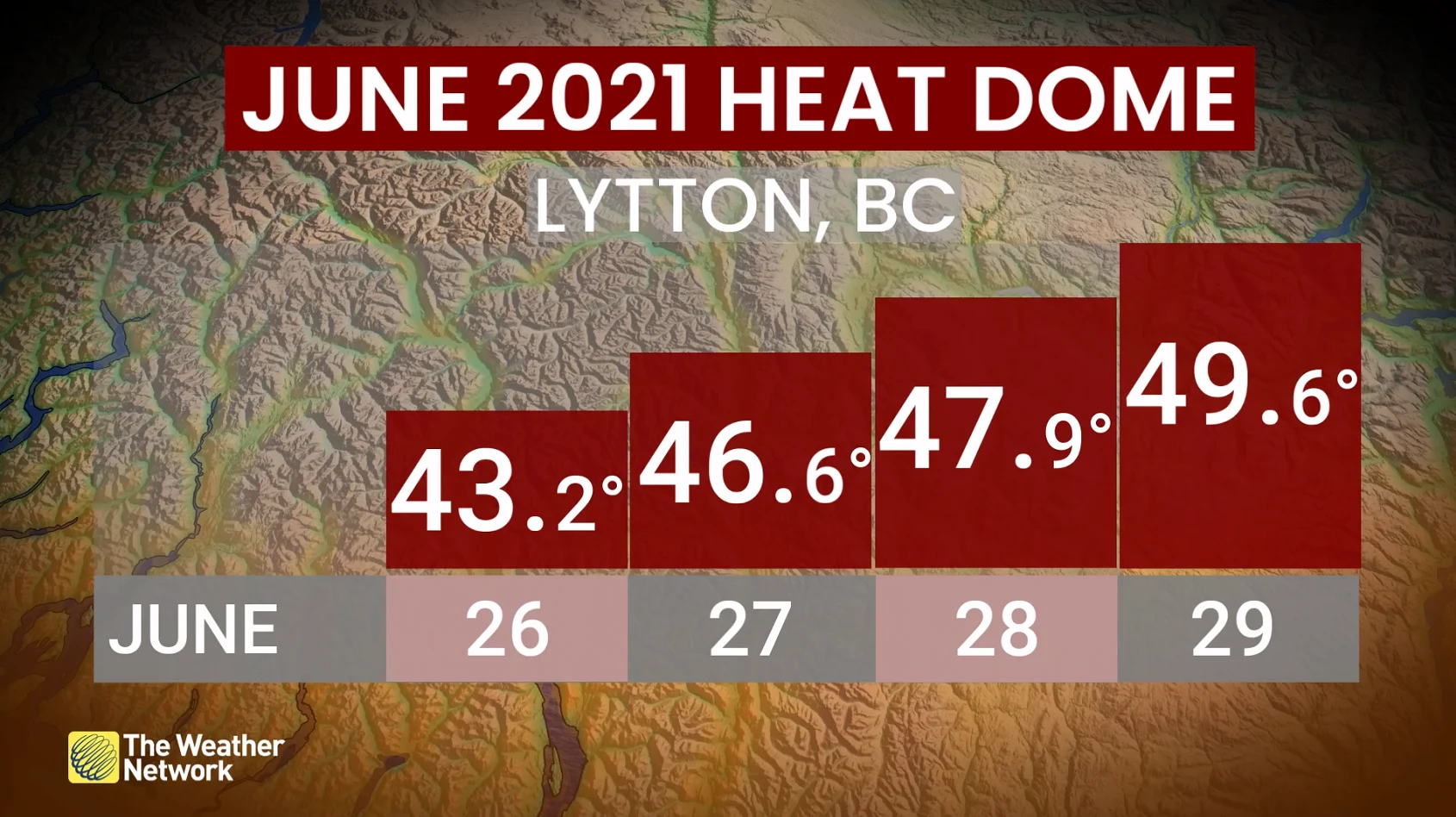
A prolonged heat wave saw the British Columbia village of Lytton record the country's highest temperature on record three days in a row in June 2021--hitting 46.6 C (June 27), 47.9 C (June 28) and 49.6 C (June 29).
This unbearable heat left millions overheated in B.C. and others in Western Canada. Power grids failed, asphalt melted, highways buckled, and fruit baked on vines and trees. City workers turned on portable spray parks, added heavy misters, converted hockey rinks into cooling centres, and opened 24-7 libraries and recreation centres.
Tyler Hamilton, a meteorologist at The Weather Network, talked about the "weather recipe" needed to create an unprecedented heat dome environment. A strong Pacific jet and deepening low-pressure system over the Gulf of Alaska helped amplify the extreme downstream ridge over western North Americ and across B.C., he said.
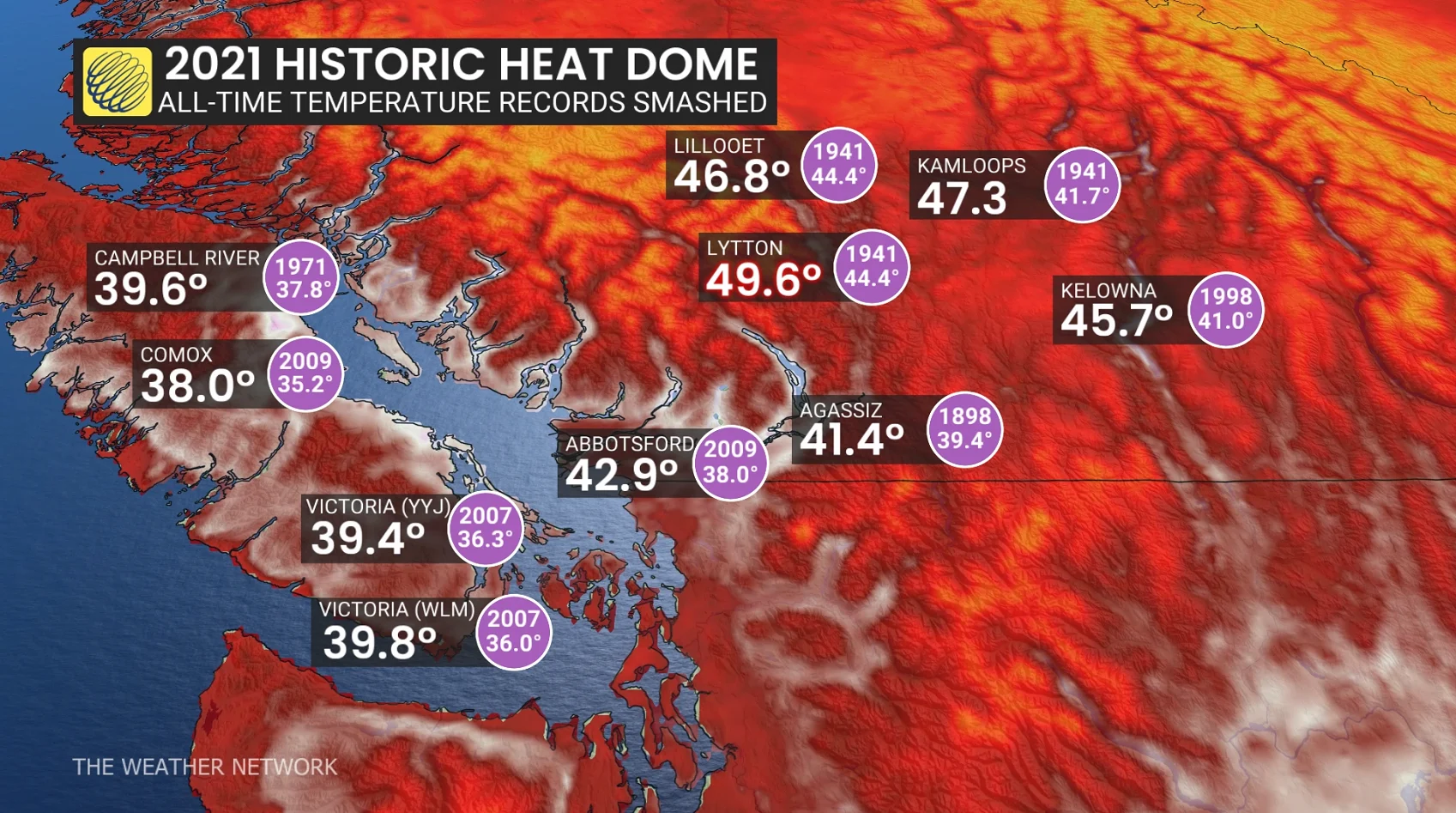
"Our weather maps obviously focused on the surface, but a heat dome builds and builds. It's an event that occurs day after day. Those overnight temperatures build, and in turn, that feedback effect continues, raising the temperature the following day," said Hamilton.
"That's how we can get temperatures to 42 C into the Fraser Valley and 50 C in the Interior."
As a result, more than 600 people perished from B.C.'s unprecedented and record-setting heat, according to a government report. The fatalities were reported to the BC Coroners Service between June 18 and Aug. 12, 2021. In that period of time, the largest number of deaths occurred from June 25 and July 1 during a heat dome event.
Nothing short of total destruction from the wildfire
The June 2021 wildfire had nothing short of a devastating impact, nearly wiping out all of the structures and services in the community.
The wildfire arose in the early-evening hours on June 30, 2021--one day after Lytton set another new, national temperature record (49.6 C). It took just mere hours to complete its destruction of the village.
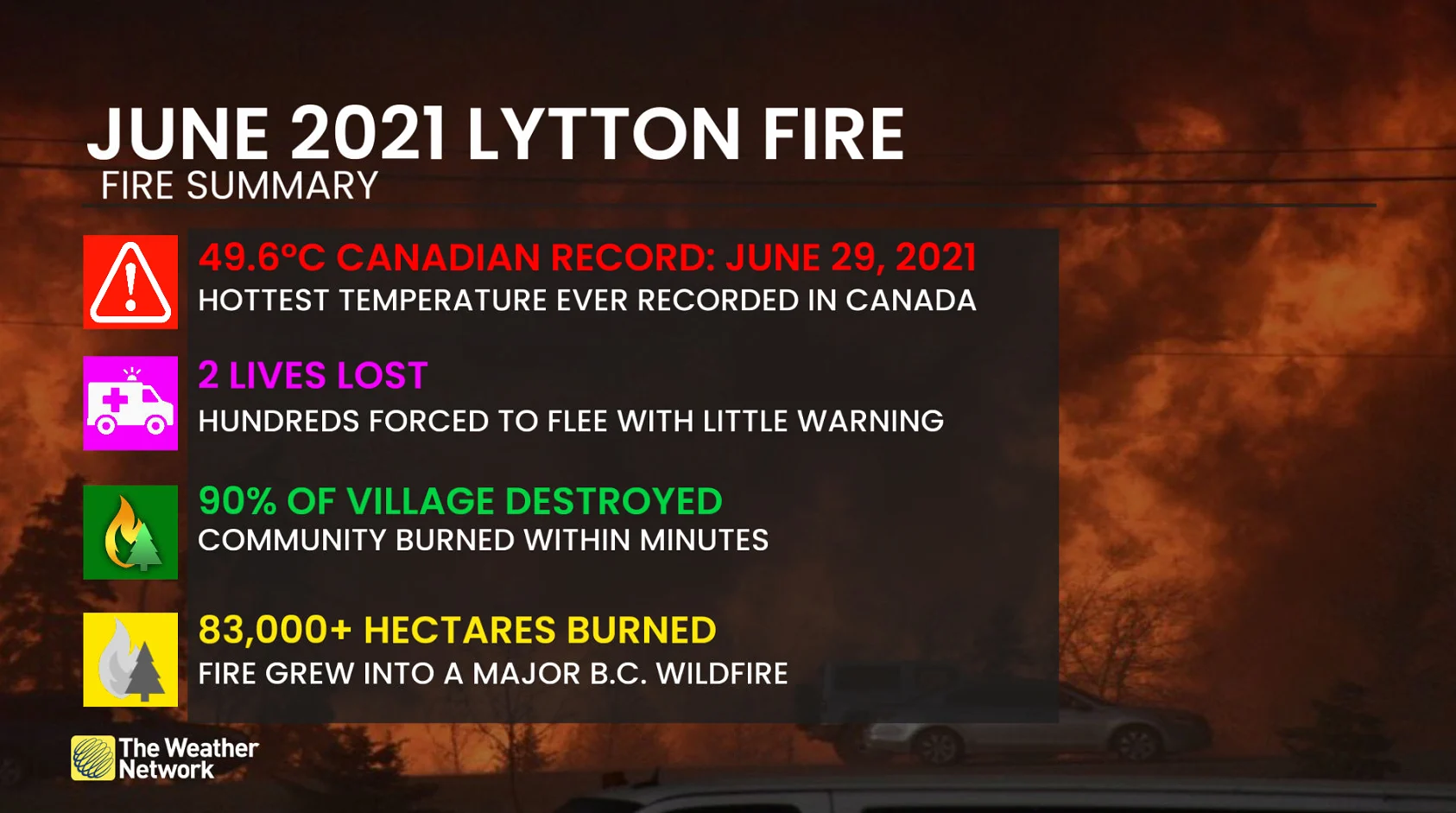
The out-of-control blaze took off in the steep and rocky terrain of British Columbia’s Fraser Canyon, just south of Lytton, according to Environment and Climate Change Canada (ECCC).
Eventually, the blaze destroyed an estimated 90 per cent of Lytton, including the post office and the health centre, and caused two fatalities.
More than 83,000 hectares were scorched and two deaths were reported as a result. Insurance losses from the wildfire reached more than $100 million.
The exact ignition cause has not been determined, but the heat dome event created extreme fire-weather that allowed the blaze to spread at speeds of near 20 km/h.
Aside from human losses and property, millions of wild animals perished and wildlife habitats were destroyed. The fire also created smoke that was lifted to the South Coast and east across the Rockies.
Jumping ahead five years, the aftermath in Lytton continues as residents are still facing economic and emotional challenges in rebuilding.
WATCH: Storm chaser describes 'scary' B.C. atmospheric river event of 2021
With files from Environment and Climate Change Canada (ECCC). and Tyler Hamilton, a meteorologist at The Weather Network