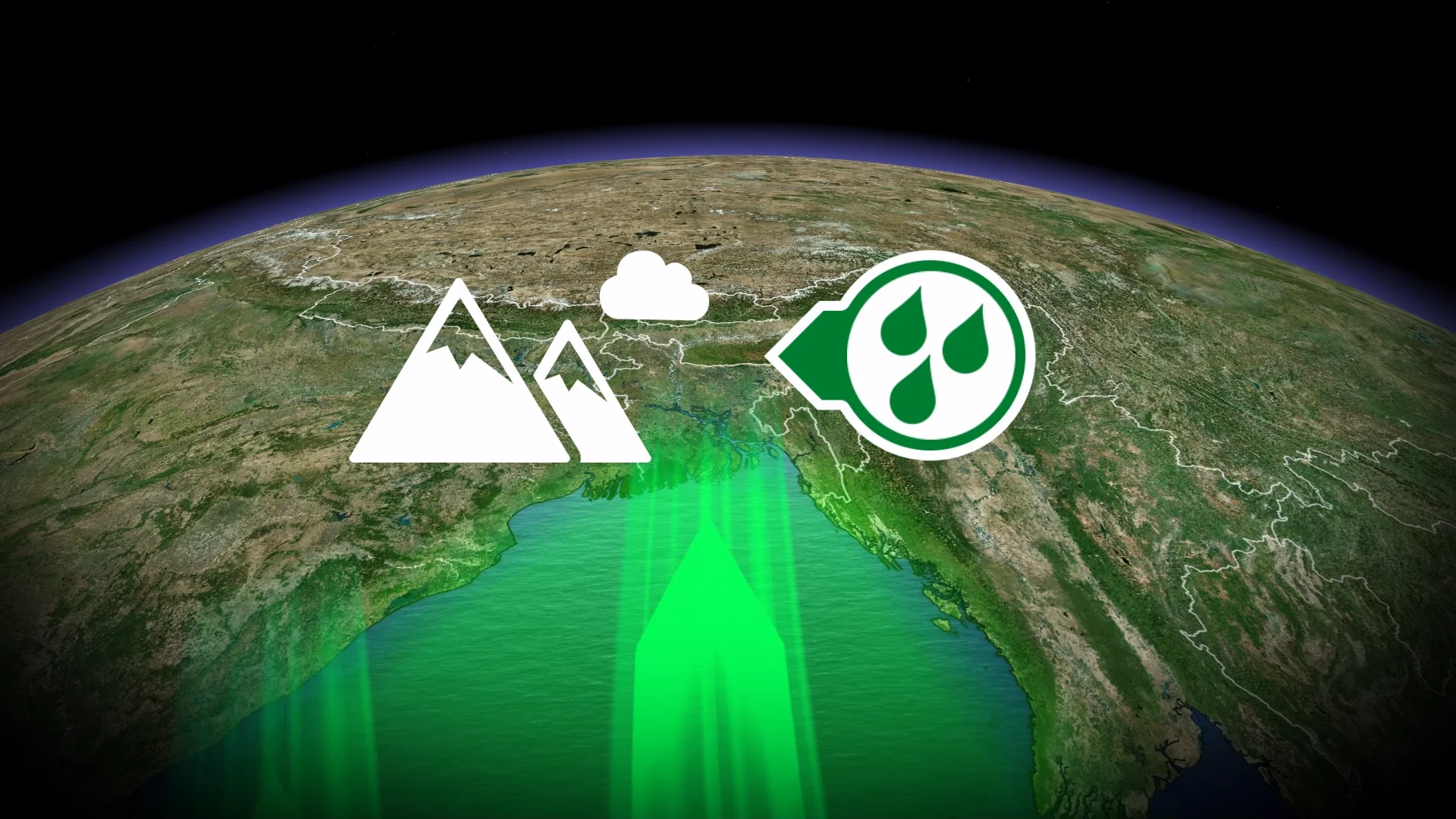
This community saw 2,493 mm of rain in just two days

Cherrapunji, India, is routinely one of the wettest places on Earth
Everyday downpours are a sight to see. A particularly heavy shower or thunderstorm can put down 100+ mm of rain in short order, leading to flash floods and stories to tell for years to come.
But some places on Earth experience the heaviest rainfall nature can produce. Chief among them is Cherrapunji, India.
DON'T MISS: What's the wettest month in your corner of Canada?
This community in northeastern India holds several world records for extreme rainfall.
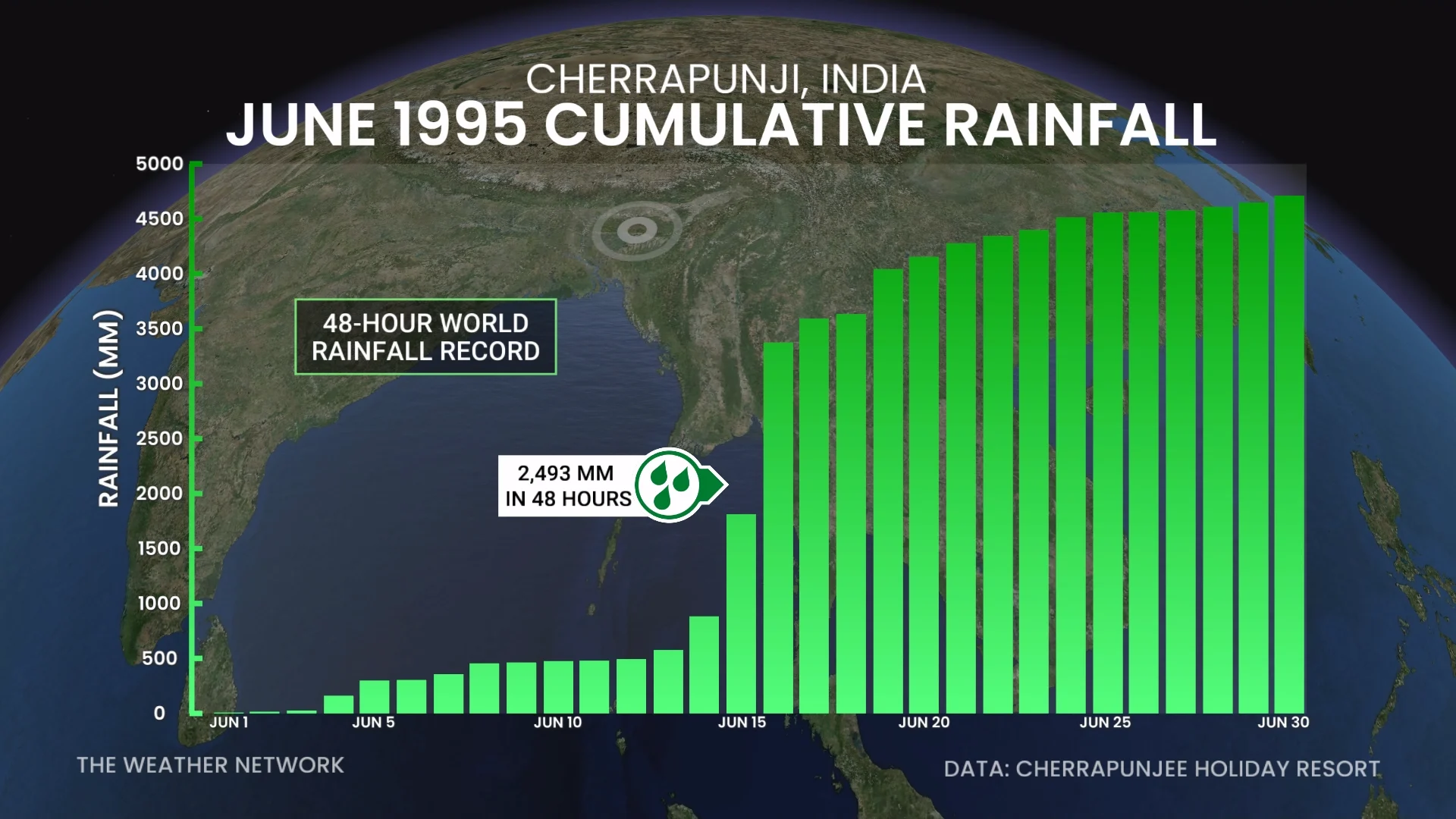
A perfect setup in the middle of June 1995 fuelled a deluge in Cherrapunji that continued for two days straight.
The region saw nearly 2,500 mm of rain over the course of 48 hours, a global record that stands to this day. Additional downpours throughout the month put June 1995 in the books with nearly 5,000 mm of rain.
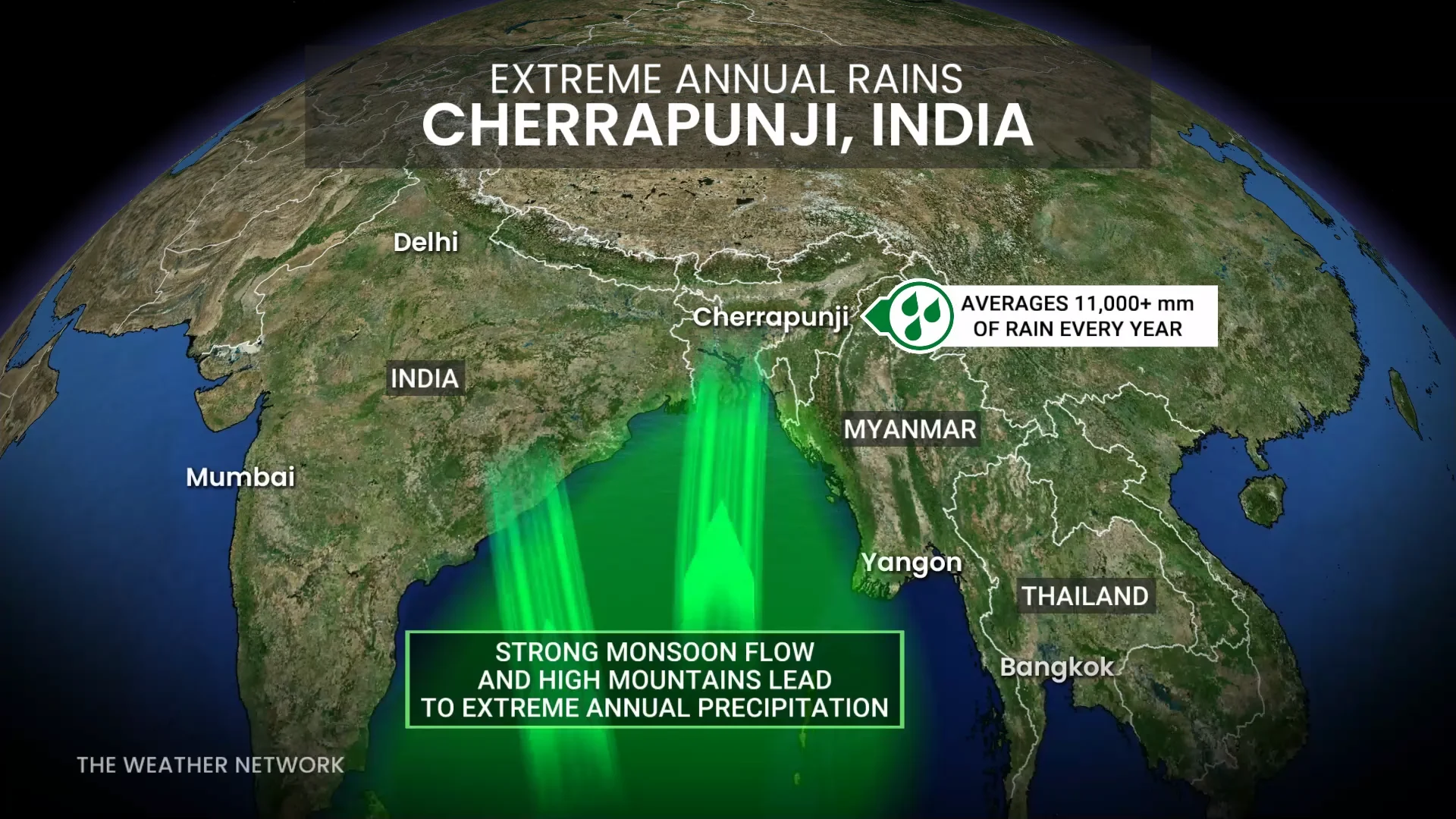
Cherrapunji is in the ideal location to experience high-end torrential rainfall.
India’s summer monsoon sees a near-constant stream of warm, moist winds flowing north out of the Bay of Bengal. These rich winds blow across the flat terrain of neighbouring Bangladesh before crashing into the hills of northeastern India.
A seemingly endless supply of moisture rises along the hills and lifts into the atmosphere, providing a deep reservoir aloft to fuel intense showers and thunderstorms.
This unique fusion of meteorology and geography makes Cherrapunji one of the rainiest places on Earth, where they average more than 11,000 mm of precipitation per year.
In addition to the 48-hour rainfall record, the community also holds the all-time record for most rain observed in one year, recording 26,470+ mm of rain between August 1860 and July 1861.