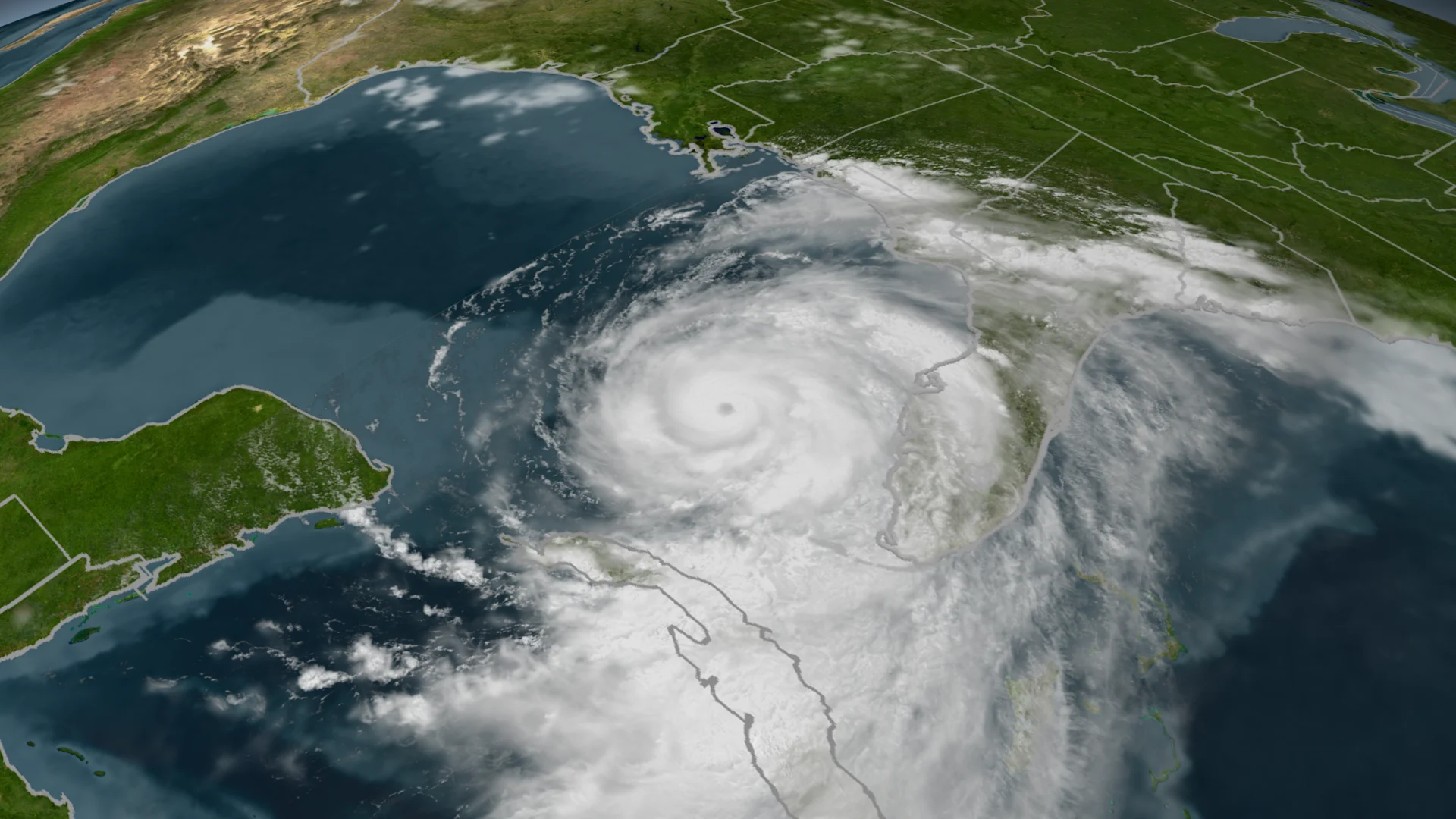
Hurricane Dennis made history, then slammed into Florida

Dennis was briefly the strongest storm on record so early in the Atlantic hurricane season
A historic Atlantic hurricane season in 2005 kicked off with a whopper in Hurricane Dennis.
The system very briefly held the record for the most intense hurricane ever observed in the Atlantic so early in the season.
DON’T MISS: From Camille to Katrina, the Category 5 storms that shaped history
Dennis formed from a tropical disturbance in the eastern Caribbean Sea on July 4, 2005,, a somewhat unusual place for a storm to get its start so early in the hurricane season.
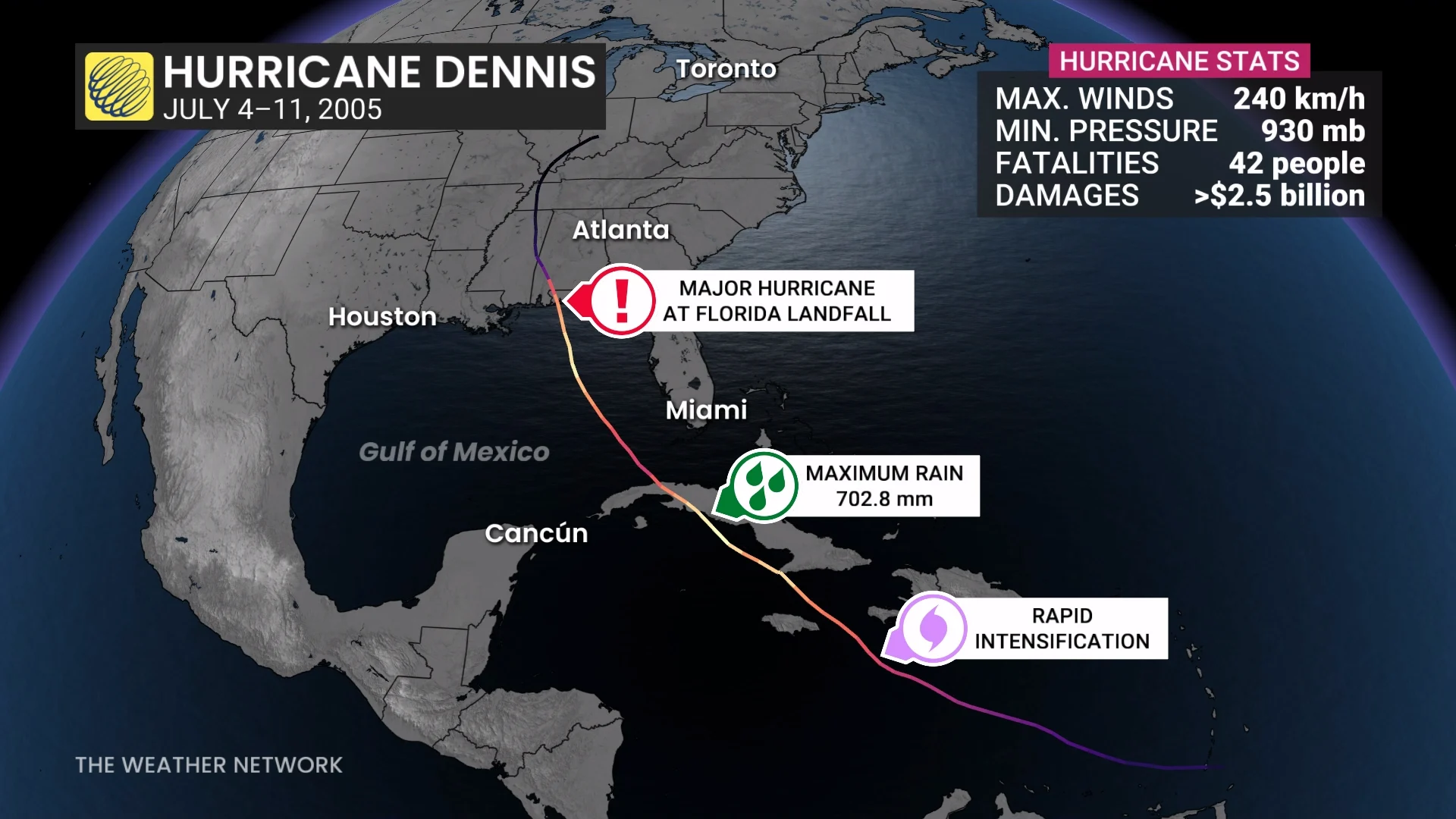
The storm feasted on unseasonably warm waters as it brushed by Jamaica, rapidly intensifying from a Category 1 to a Category 4 in 24 hours on approach to its first landfall in Cuba.
Hurricane Dennis’ winds and flooding lashed the island nation; gauges measured as much as 702 mm of rain over Cuba’s mountainous terrain.
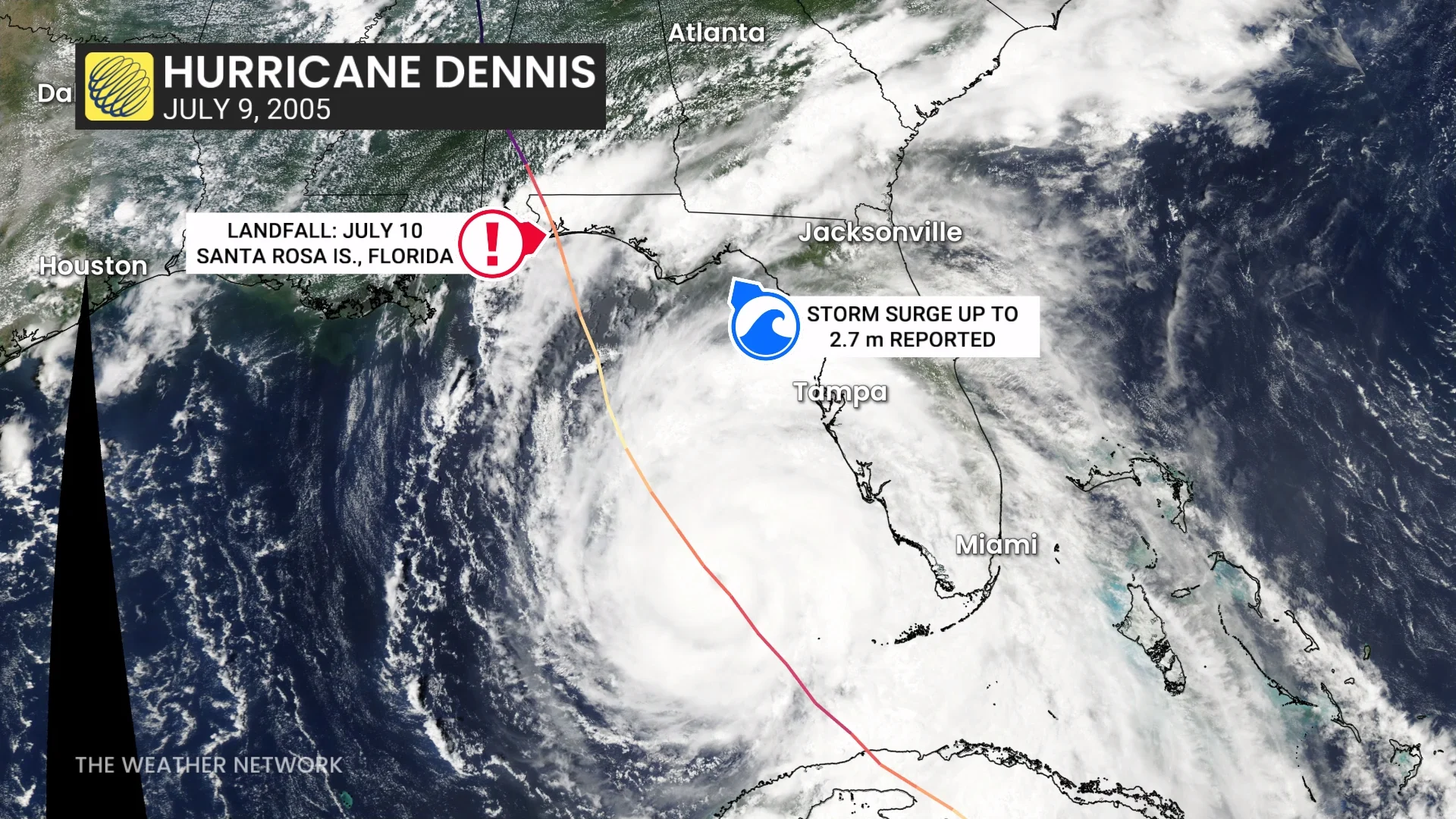
The hurricane emerged over the soupy Gulf waters and reintensified on approach to the Florida Panhandle. Dennis made landfall on Santa Rosa Island on July 10 as a major hurricane with 195 km/h winds.
Intense winds and a storm surge as high as 2.7 metres above normal tide level destroyed many homes and businesses near the coastline, causing $2.5 billion (USD) in damage throughout the region.
RELATED: Hurricane remnants can bring dangerous conditions deep into Canada
Flooding rains, gusty winds, and isolated tornadoes followed the storm meandered inland toward the Ohio Valley, with unsettled conditions reaching southern Ontario about a week after landfall.
At the time, Dennis was the strongest Atlantic hurricane ever observed before August.
This record stood for exactly eight days until Hurricane Emily achieved scale-topping Category 5 status in the central Caribbean Sea. Emily’s record stood for almost 19 years until broken by Hurricane Beryl in early July 2024.
Header image courtesy of NASA.