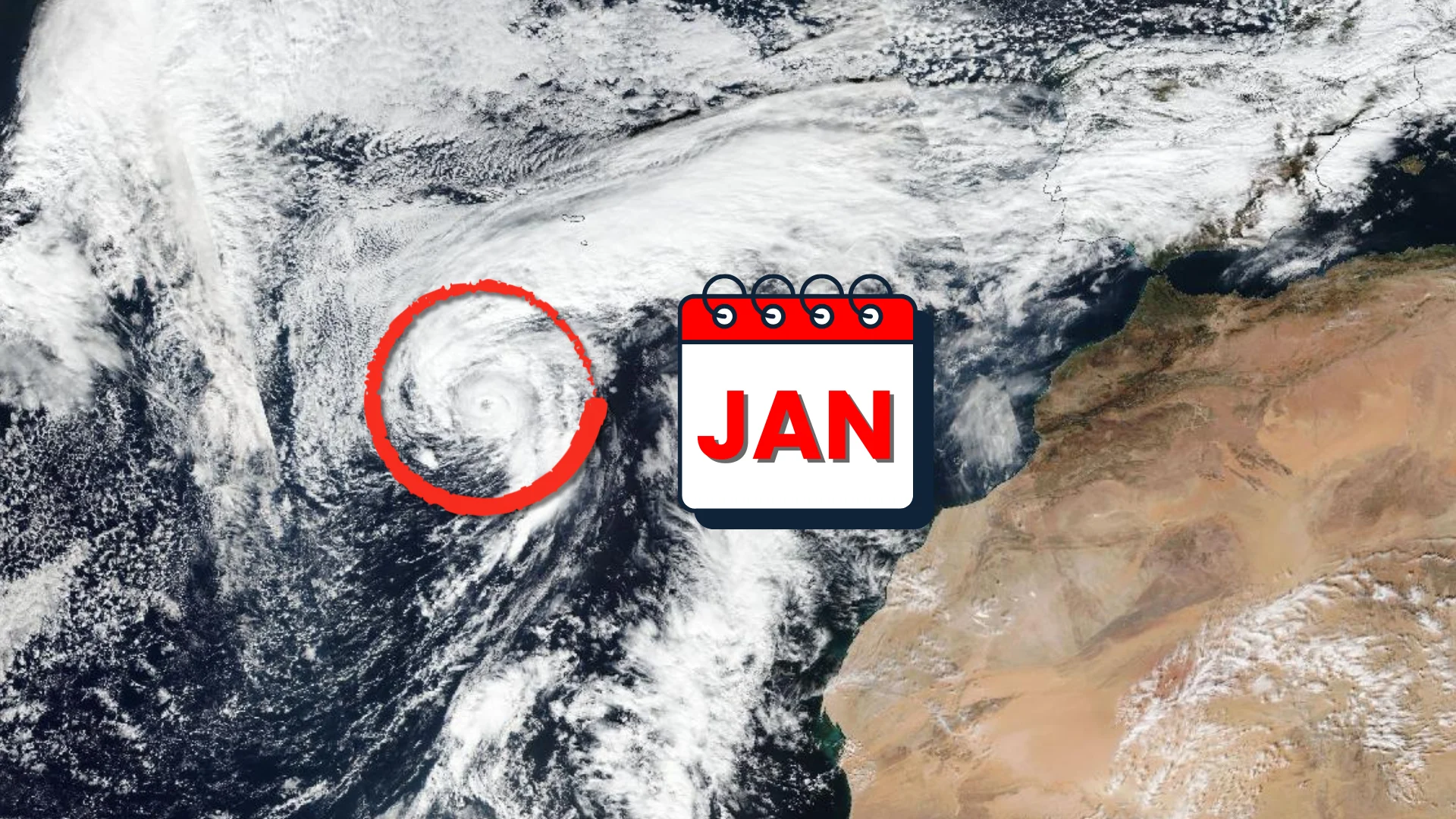
The ‘surprise’ hurricane that formed in the middle of January

Hurricane Alex defied the odds to become one of just eight storms known to swirl over the Atlantic in the month of January
Forecasters got quite the surprise in 2016 when the year kicked off with a hurricane.
Hurricane Alex formed in the northeastern Atlantic in the middle of January 2016, becoming one of only a handful of storms known to exist during the heart of winter.
DON’T MISS: Rare hurricanes can form during the wintertime
A surprise system with tropical roots
A cluster of thunderstorms northeast of Cuba on Jan. 6 would eventually seed the development of Hurricane Alex a week later.
This disturbance evolved into a powerful low-pressure system over the central Atlantic as it passed northeast of Bermuda a few days later.
Thunderstorm activity took root as the system moved over unusually warm ocean waters. Forecasters with the U.S. National Hurricane Center (NHC) declared the system Subtropical Storm Alex on the afternoon of Jan. 12.
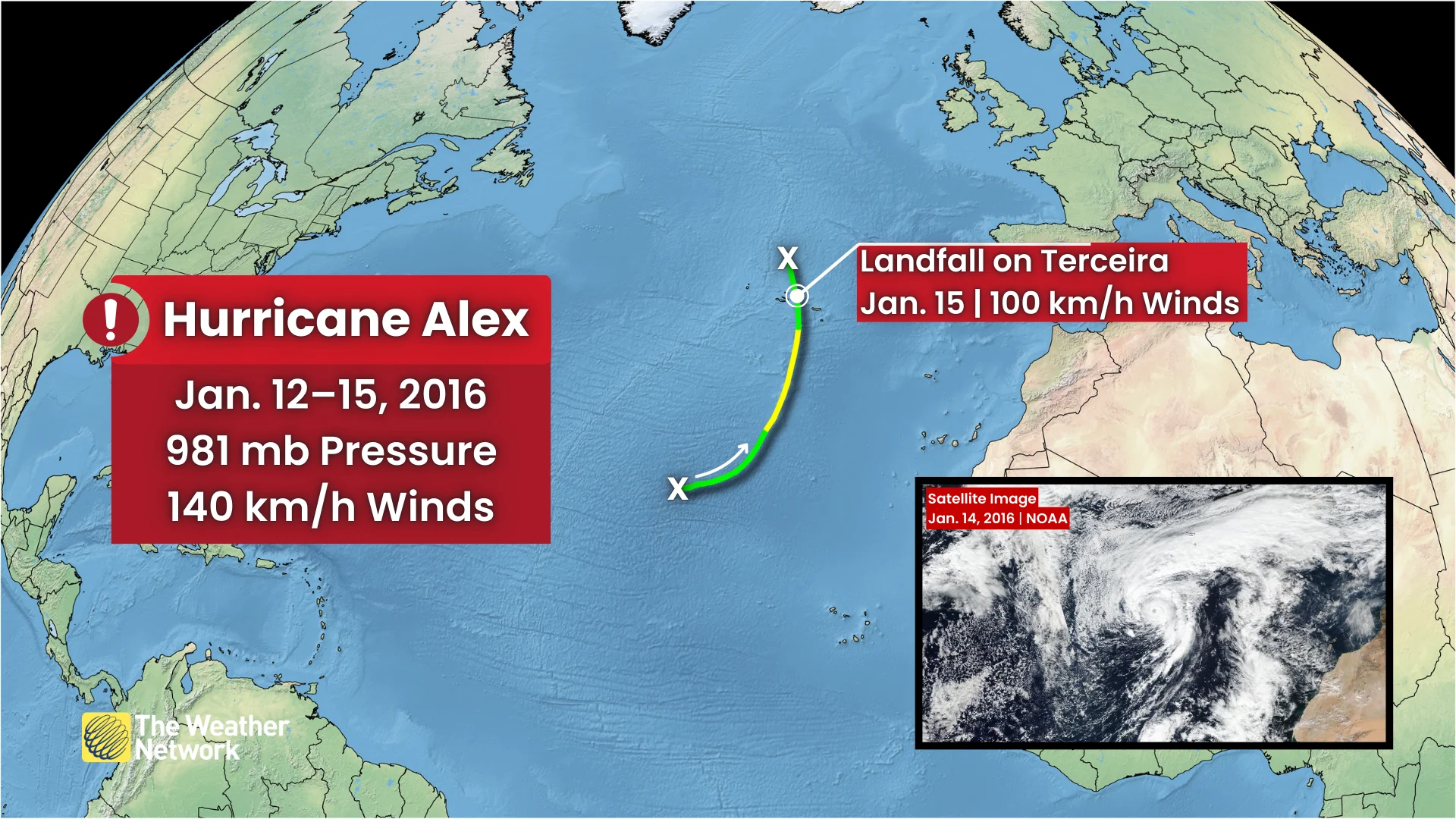
The system defied the odds and continued to organize, eventually developing an eye and gathering enough strength to become a full-fledged hurricane by the morning of Jan. 14.
Hurricane Alex briefly packed maximum winds of 140 km/h at its peak intensity. Unfavourable conditions forced the storm to begin weakening as it approached the Azores Islands. Alex made landfall on Terceira on the morning of Jan. 15 as a tropical storm with 100 km/h winds.
Thankfully, the storm produced no known damage or injuries in the Azores as it raced through the region. Alex lost its tropical characteristics later that afternoon.
An unusual January storm
How rare are storms in the middle of winter?
Since reliable records began in 1851, we’ve observed nearly 1,700 tropical storms and hurricanes across the Atlantic basin. Only 8 of those storms, just one-half of one per cent, have existed during the month of January.

Hurricane Alice formed in the Caribbean on Dec. 30, 1954, passing over the islands of Saba, Saint Martin, and Anguilla during the opening days of 1955. The system remained a hurricane for several days as it travelled into the open Atlantic.
Tropical Storm Zeta closed out the historic 2005 hurricane season when it formed on Dec. 30, tracking through the central Atlantic for several days into 2006.
Most recently, forecasters noticed after the fact that an unnamed subtropical storm formed in the western Atlantic in the middle of January 2023. The system moved into Atlantic Canada with gusty winds, steady rain, and unseasonably warm temperatures.