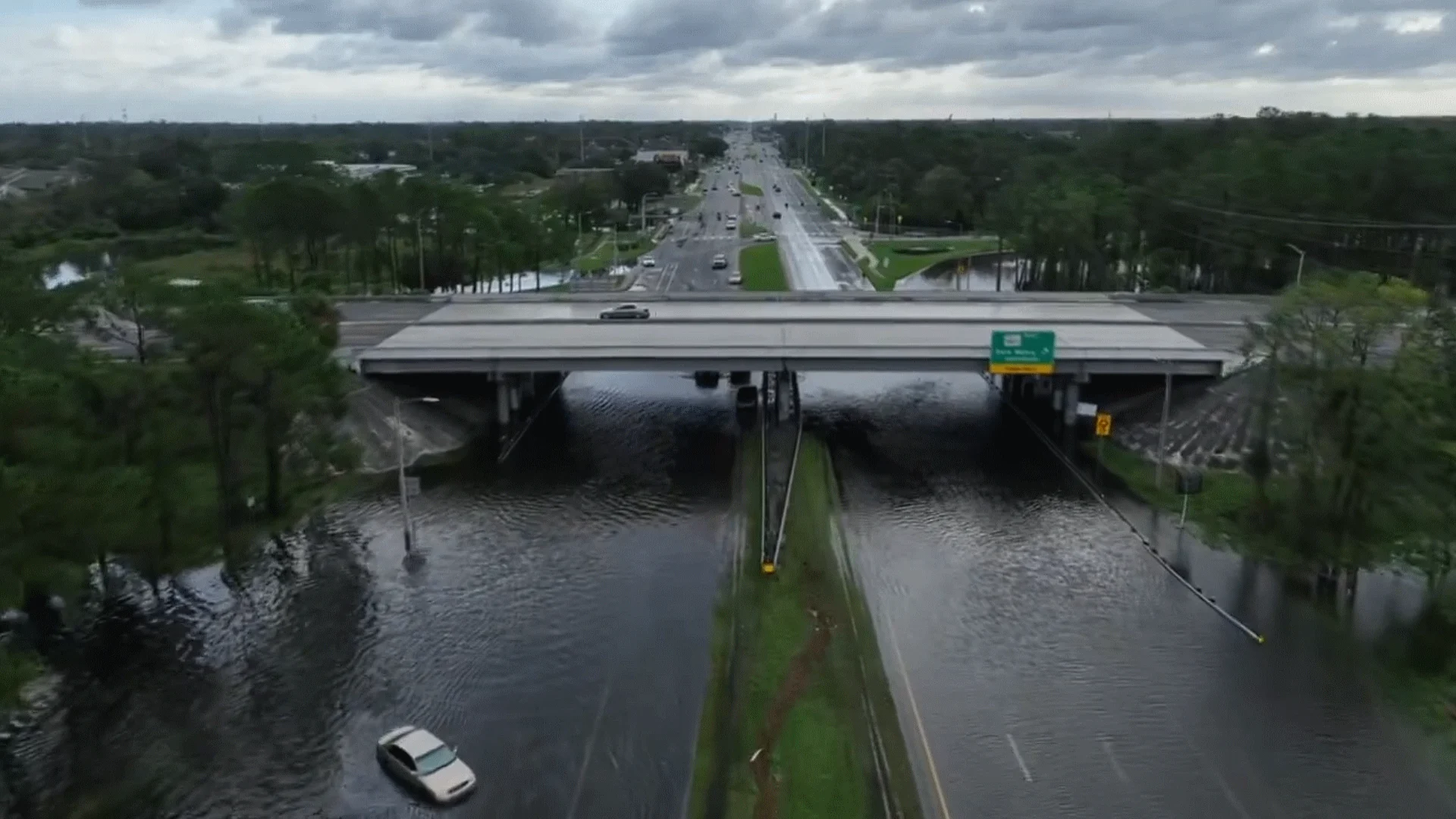
Flesh-eating disease spikes in Florida following hurricanes Helene and Milton

At least 13 people have died.
Florida has seen a surge in cases of flesh-eating bacteria following hurricanes Helene and Milton, according to state health officials.
Vibrio vulnificus is a bacteria commonly found in warm coastal waters, but the recent heavy rain and flooding have caused concentrations to spike in some counties.
Statewide, cases rose from six in early September to 24 by month's end.
The Tampa Bay-area counties of Hillsborough and Pinellas are the hardest hit.
Before Hurricane Helene reached land on September 26, Pinellas had no reported cases, and Hillsborough had just one. Now, Pinellas has more than a dozen. As of October 23, Hillsborough has seven.
Since the hurricanes, at least 38 new cases have been reported, and 13 people have died.
Vibrio vulnificus can infect people through open wounds exposed to contaminated water or by consuming undercooked seafood.
Higher-risk individuals include people with compromised immune systems, those with liver disease, or anyone with an open wound. Health officials urge people to avoid swimming or wading in floodwaters.
If someone must come into contact with potentially contaminated water, they should cover any wounds with a waterproof bandage and wash thoroughly afterward. If any signs of infection appear, seek immediate medical attention.
VIDEO: Hurricane Milton damage in St. Petersburg
Header image: Flooding in Tampa Florida following Hurricane Milton (Hillsborough County Sheriffs Office).