
Tragic floods, historic twisters struck around the world in 2025

A spate of devastating fires and historic hurricanes made international headlines in 2025
Rare snows blanketed palm trees in Florida. Destructive wildfires burned millions of hectares of land. One of the strongest hurricanes ever observed made a direct strike on Jamaica.
2025 was a chaotic stretch for weather around the world. Here’s a look at some of the most impactful events we witnessed this year.
DON'T MISS: After three Category 5 storms, a historic hurricane season ends
Rare snows hit Florida and Australia
The year kicked off with an extraordinary snowstorm across the southern United States. A moisture-packed storm ran into unusually cold air to produce an unprecedented blanket of snow on the northern Gulf Coast on Jan. 21.
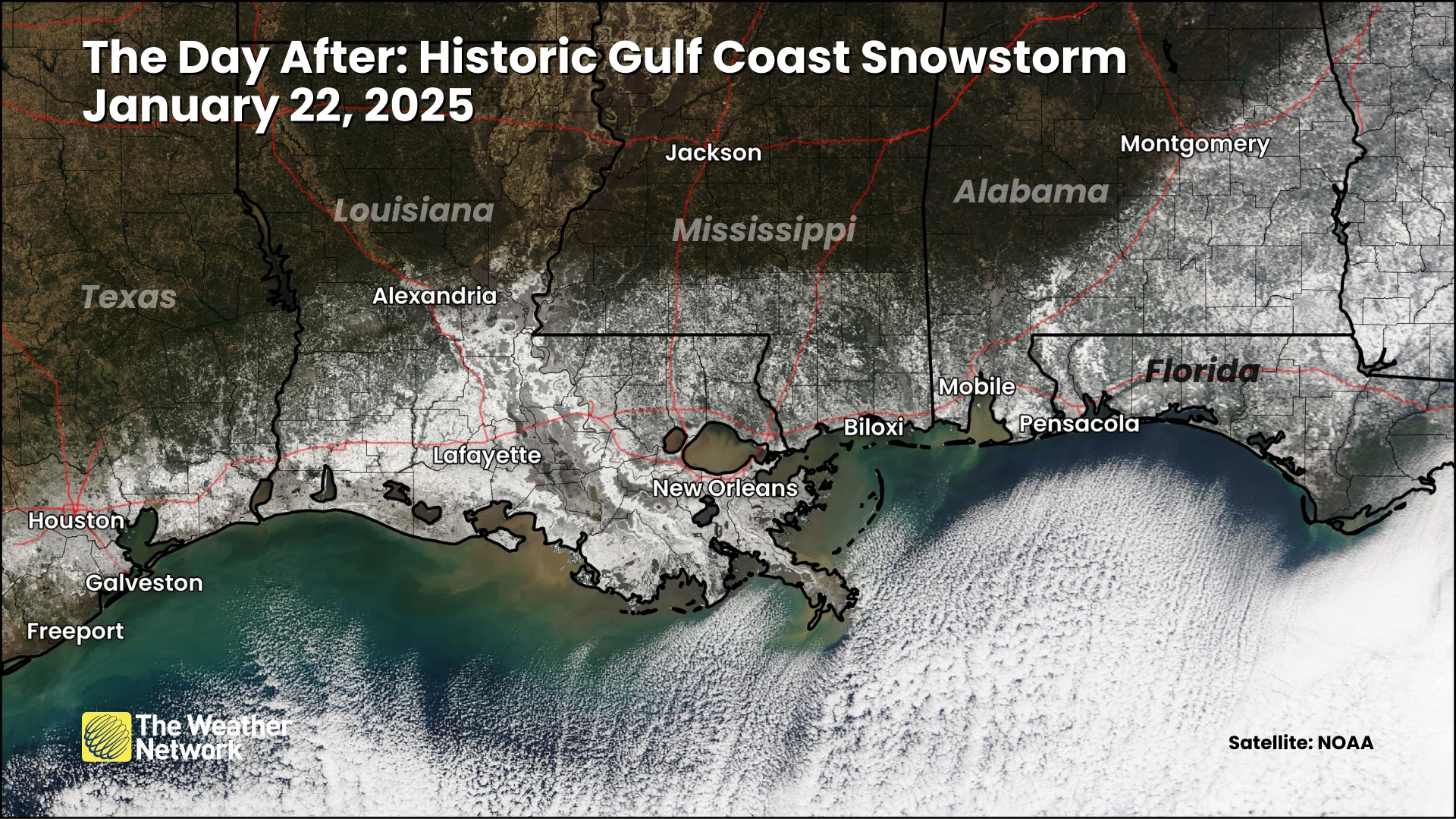
Milton, Florida, reported 25.4 cm (10 in.) by the end of the storm, shattering the record for the most snow ever measured in the state. The city of Mobile, Alabama, saw 22 cm (8.6 in.) of accumulation, while New Orleans came in with around 20 cm (8 in.) of historic snowfall.
Unusual midwinter snows also fell halfway around the world in Australia. Southern portions of the country saw more than 40 cm (16 in.) of snow, the most they’d seen in almost 40 years.
Thousands killed in devastating floods
Tragic floods claimed thousands of lives throughout the year.
A deluge in central Texas on July 4 sent intense flash floods sweeping through campgrounds in Kerr County, killing more than 100 people, including many children, in one of the U.S.’s worst flooding events in recent history.
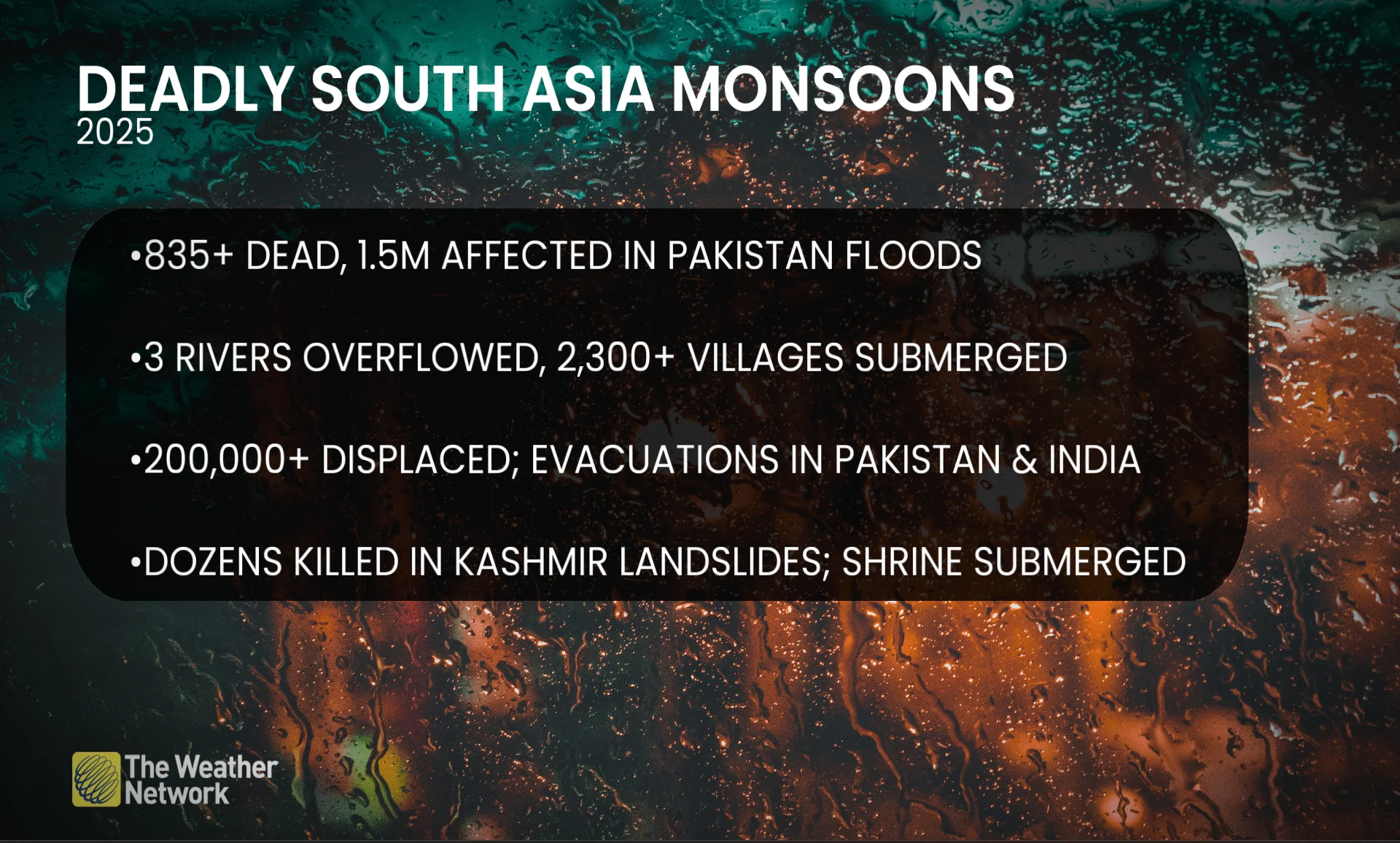
Portions of India and Pakistan endured prolific monsoon rains during the summer months. Delhi, India, measured nearly twice its normal rainfall. More than 800 people lost their lives when persistent rains triggered floods powerful enough to wash away entire villages.
Hundreds more died in Indonesia’s Sumatra between November and December as waves of tropical rains washed over the region. The situation was exacerbated by Cyclone Senyar, which was one of only two tropical cyclones to pass through this part of the world since modern recordkeeping began in the mid-20th century.
WATCH: Once-in-a-generation snowstorm wallops Gulf Coast
Historic twisters hit North Dakota and Japan
This was quite the year for tornadoes around the world, as well. Canada and the U.S. both notched above-average tornado activity this year.
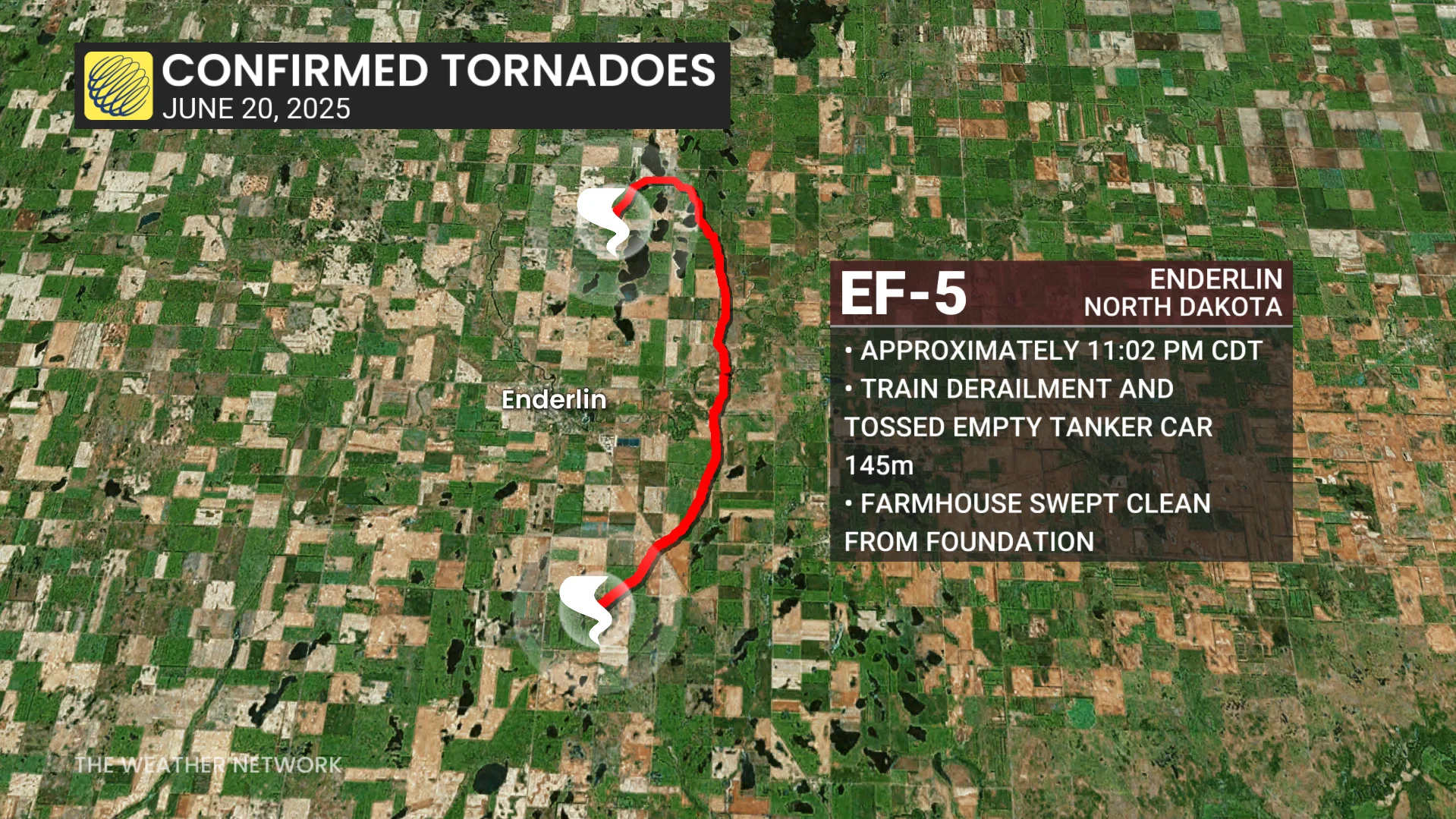
One of those U.S. twisters landed in the record books. An EF-5 touched down in Enderlin, North Dakota, on June 20, becoming the first confirmed scale-topping tornado since the storm that devastated Moore, Oklahoma, in May 2013.
Twisters are common in many countries. A deadly tornado on Sep. 5 was reportedly the strongest twister ever confirmed in Japan. The deadly storm, which struck near the town of Makinohara in Shizuoka Prefecture, packed estimated winds of 270 km/h.
Hurricane Melissa topped the charts at landfall
Toasty sea surface temperatures and favourable conditions helped catapult this year’s strange Atlantic hurricane season into history by producing three Category 5 storms.
One of those storms, Hurricane Melissa, grew into one of the most intense tropical cyclones ever recorded at landfall anywhere in the world.
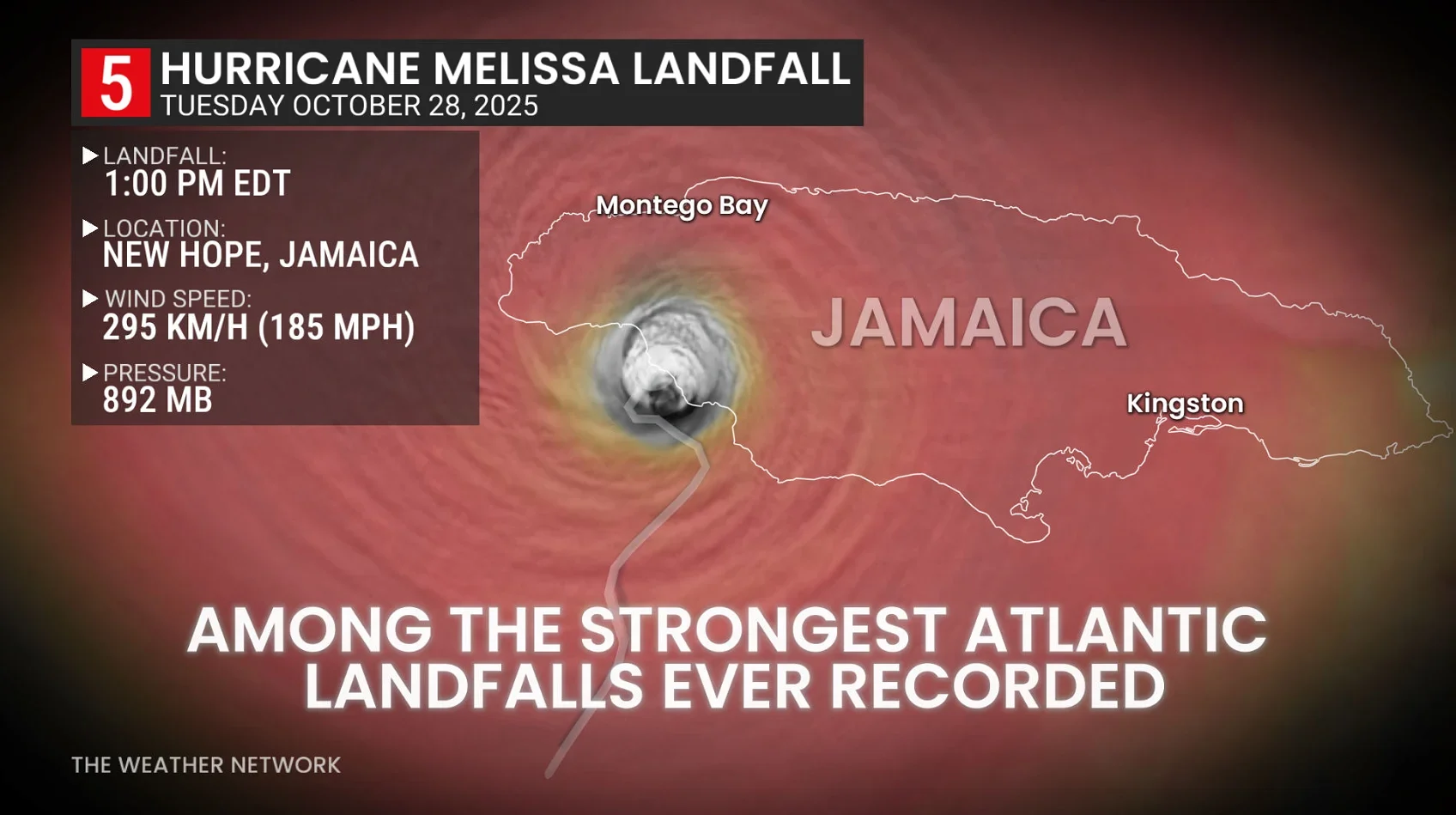
The system rapidly intensified in the Caribbean Sea before striking western Jamaica at full intensity on Oct. 28 with maximum winds of 295 km/h and a minimum pressure of 892 mb. Only one other Atlantic hurricane in recorded history made landfall with such intensity.
Dozens of people died in Jamaica and Cuba as the hurricane crossed the region, with a disease outbreak continuing months after the storm’s passage.
Destructive fires swept through southern California
Millions of hectares of land burned globally in 2025 as wildfires raged from Canada to France. Some of the year’s worst blazes affected communities in southern California.
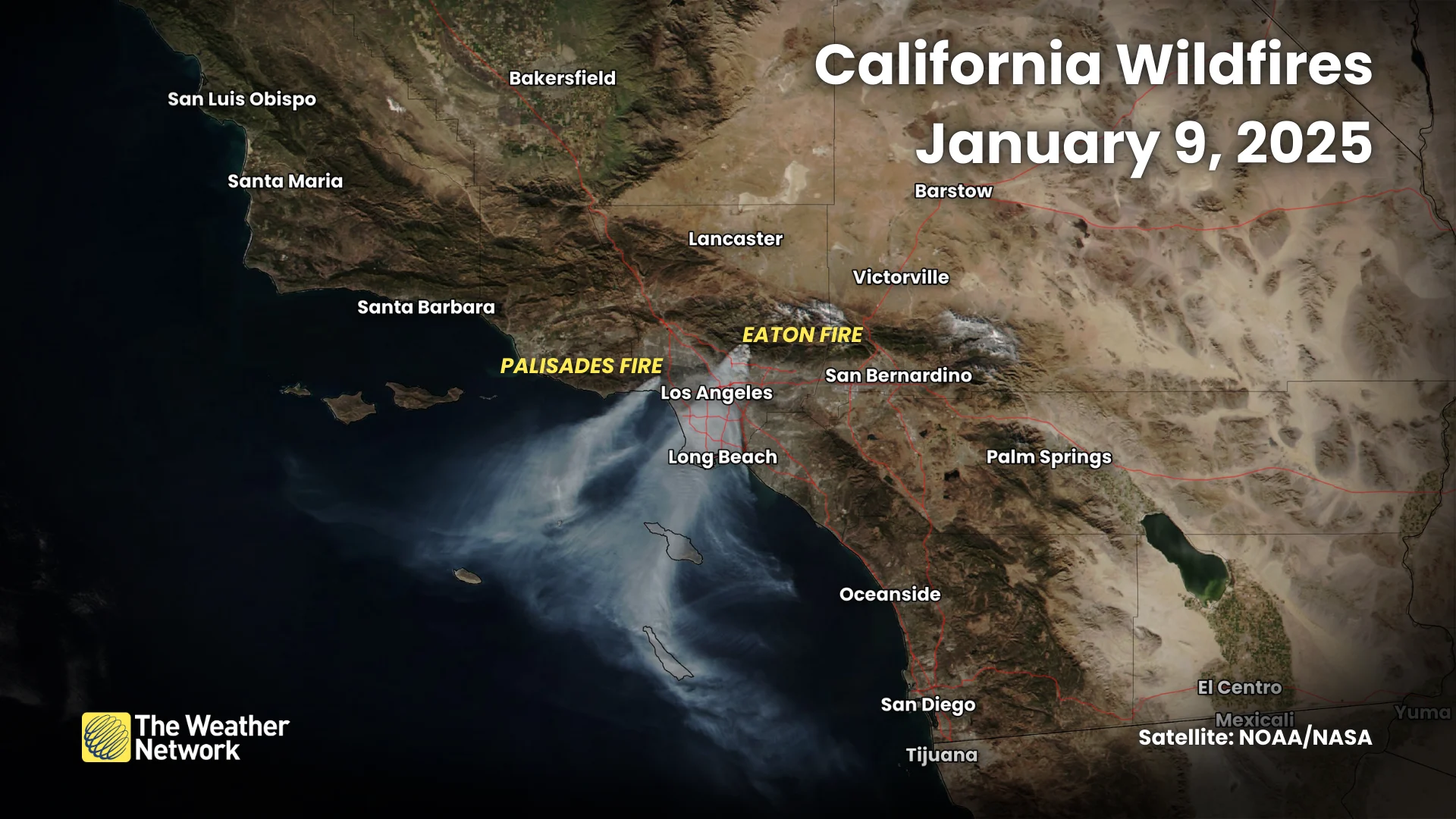
Powerful Santa Ana winds in January helped fan the Eaton and Palisades wildfires to grow into the second- and third-most destructive wildfires in California history.
The two blazes combined destroyed more than 16,200 structures across the region, killing 31 people and displacing hundreds of thousands of residents from their homes.
Header image created using graphics and imagery from Canva, NOAA, and NASA.