Why even small earthquakes can be a big concern in Eastern Canada

While earthquakes in this region aren't uncommon, the St. Lawrence River rarely sees earthquakes near the magnitude 5.0 mark.
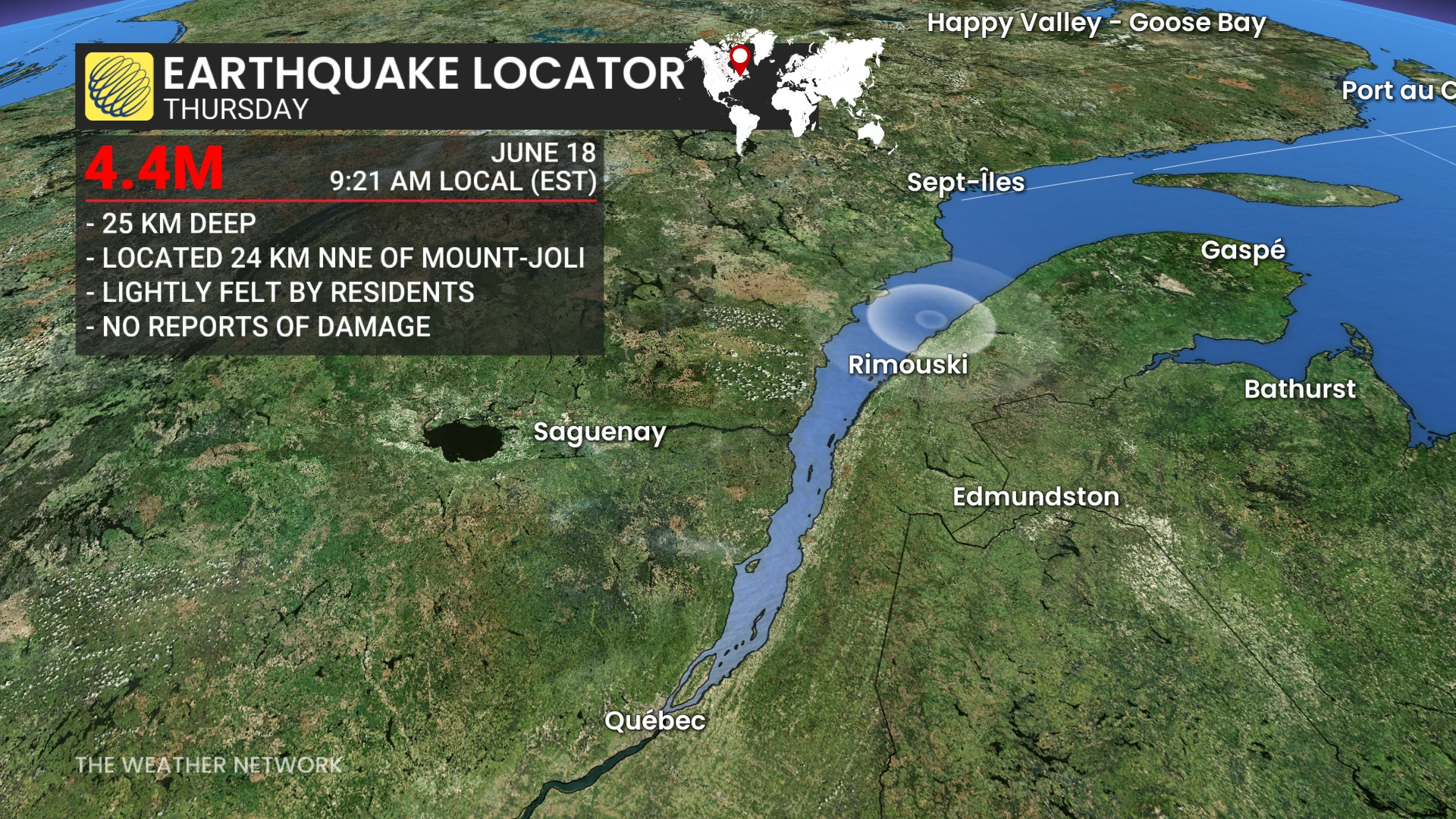
On Thursday, Earthquakes Canada reported a magnitude 4.4 earthquake in eastern Quebec, striking at 10:21 a.m. EDT in the St. Lawrence River near Mont-Joli at a depth of about 19 kilometres.
No damages were reported, but the tremor was felt in several communities.
Why eastern Canada's earthquakes worry experts
While earthquakes in this area aren't uncommon, "this region doesn't get very many earthquakes near a magnitude 5 or higher," says Weather Network meteorologist Rachel Modestino.
RELATED: Contrary to popular belief, Eastern Canada is more quake-prone than perceived
"Earthquakes in this part of Canada, or closer to Montreal, might be far more devastating than we realize thanks to geology and the fact that none of the buildings have been built with earthquakes in mind," says another Weather Network meteorologist, Mark Robinson, who spoke to Tiegan Hobbs, a Research Scientist at the Geological Survey of Canada and Adjunct Professor at the University of British Columbia, about earthquakes back in the fall.
"Experts are very concerned about that fault line and Montreal."
Another challenge is that seismic waves tend to travel farther through the older, colder bedrock underneath much of eastern Canada.
This means earthquakes can often be felt across a much larger area than similarly-sized events in western Canada.
A seismic zone stretching 500 kilometres
B.C. sits on top of the Pacific ring of fire, a 40,000 km area where more than 90 per cent of the world's earthquakes, and some of its largest, occur.
That's a fairly established fact -- but many may not realize the western Quebec seismic zone, a 160-km-wide band of intraplate seismicity that extends roughly 500 kilometres from the Adirondack Highlands in the United States to Canada's Laurentians, is also highly active -- albeit not in the same way as the ring of fire.
In the western Quebec seismic zone, "[Earthquakes aren't] happening all the time, or as frequently as they are in western Canada," Dr. Hobbs says.
"And they can't get as big as the largest earthquakes in western Canada, but you can absolutely get earthquakes that will be big enough to do damage, and they can occur all along that region," Dr. Hobbs says.
Eastern Canada has experienced damaging earthquakes in the past, including the 1988 Saguenay earthquake, which measured magnitude 5.9 and was felt as far as 64 km away.
Western Canada and "earthquake culture"
"People in western Canada, they know that earthquakes can happen," Dr. Hobbs says.
As McMaster University points out, western Canada has a larger culture of "earthquake readiness," including more awareness of emergency protocols, more abundant seismic monitoring, and more infrastructure that is retrofitted to withstand shaking.
In other words: Western Canada quakes can be larger and more destructive, but the infrastructure and people may be more prepared when compared to eastern Canada.
"People in eastern Canada are maybe thinking it's not their problem to worry about, but we know that we have active seismic zones in eastern Canada," Dr. Hobbs says.
"That's an area where we do get earthquakes."
New warning system in eastern Canada
In November 2025, the Honourable Tim Hodgson, Minister of Energy and Natural Resources; the Honourable Jill Dunlop, Ontario’s Minister of Emergency Preparedness and Response; and Ian Lafrenière, Quebec’s Minister of Public Security, announced that a new Earthquake Early Warning (EEW) system went online in support of earthquake preparedness efforts in Quebec and eastern Ontario.
The EEW system detects earthquakes using a network of more than 200 sensors in Quebec and Ontario, sending alerts through the National Public Alerting System to people in affected areas.
Natural Resources Canada will deliver alerts to infrastructure operators, enabling them to automatically stop trains, restrict bridge and tunnel traffic, and sound alarms ahead of damaging shaking.
“Seismic risks are very real in Quebec, and the early earthquake warning system provides us with a valuable tool for enhancing public safety in the event of an earthquake," Lafrenière says in a November press release.
"The Government of Quebec is pleased to have collaborated in the deployment of this system, which will help to better warn people of an imminent tremor so that they can protect themselves adequately.”
RELATED: Why are earthquakes so hard to predict?
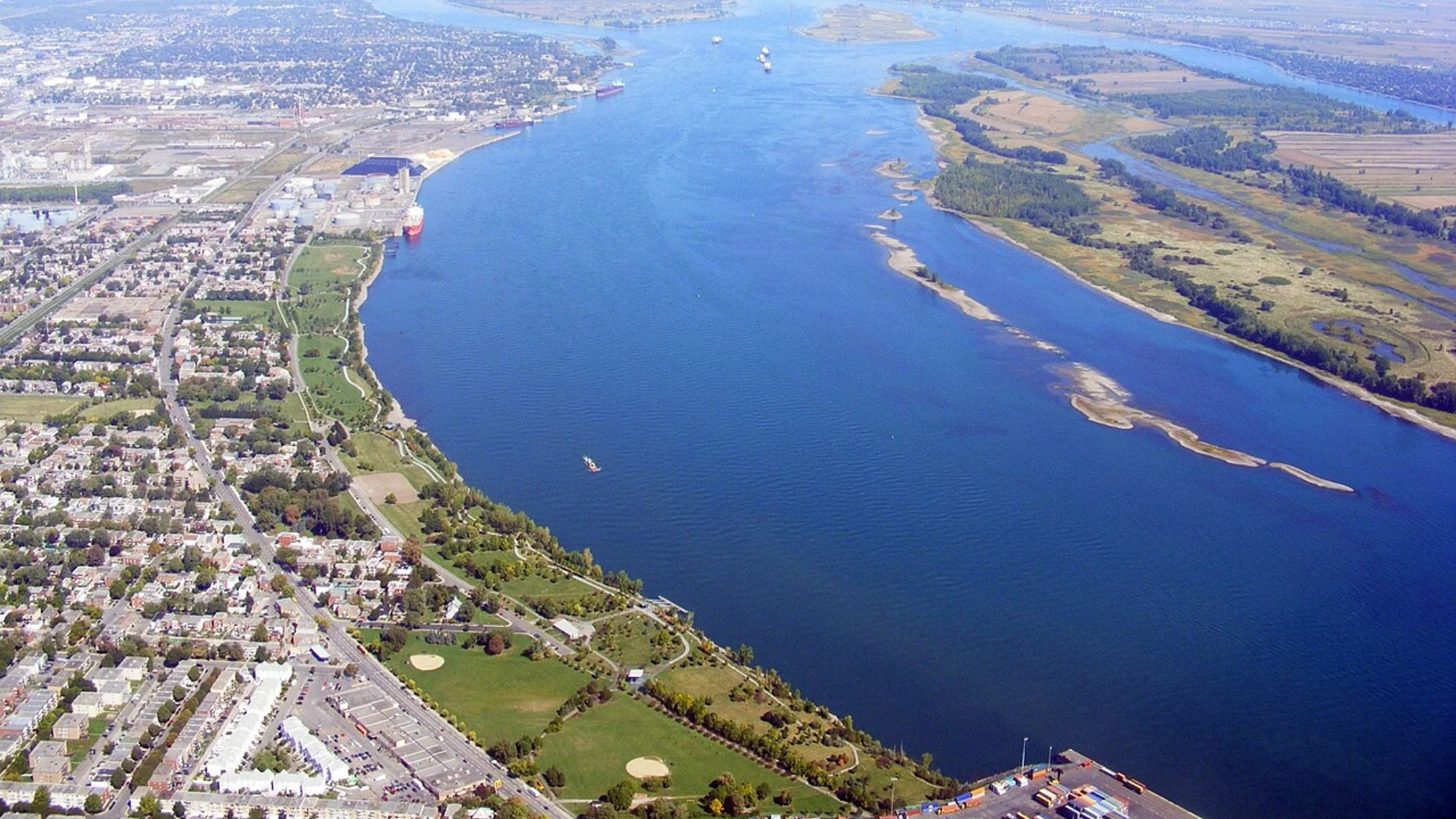
Header image: File photo of the St. Lawrence River. (abdallahh/Wikipedia CC BY-SA 2.0