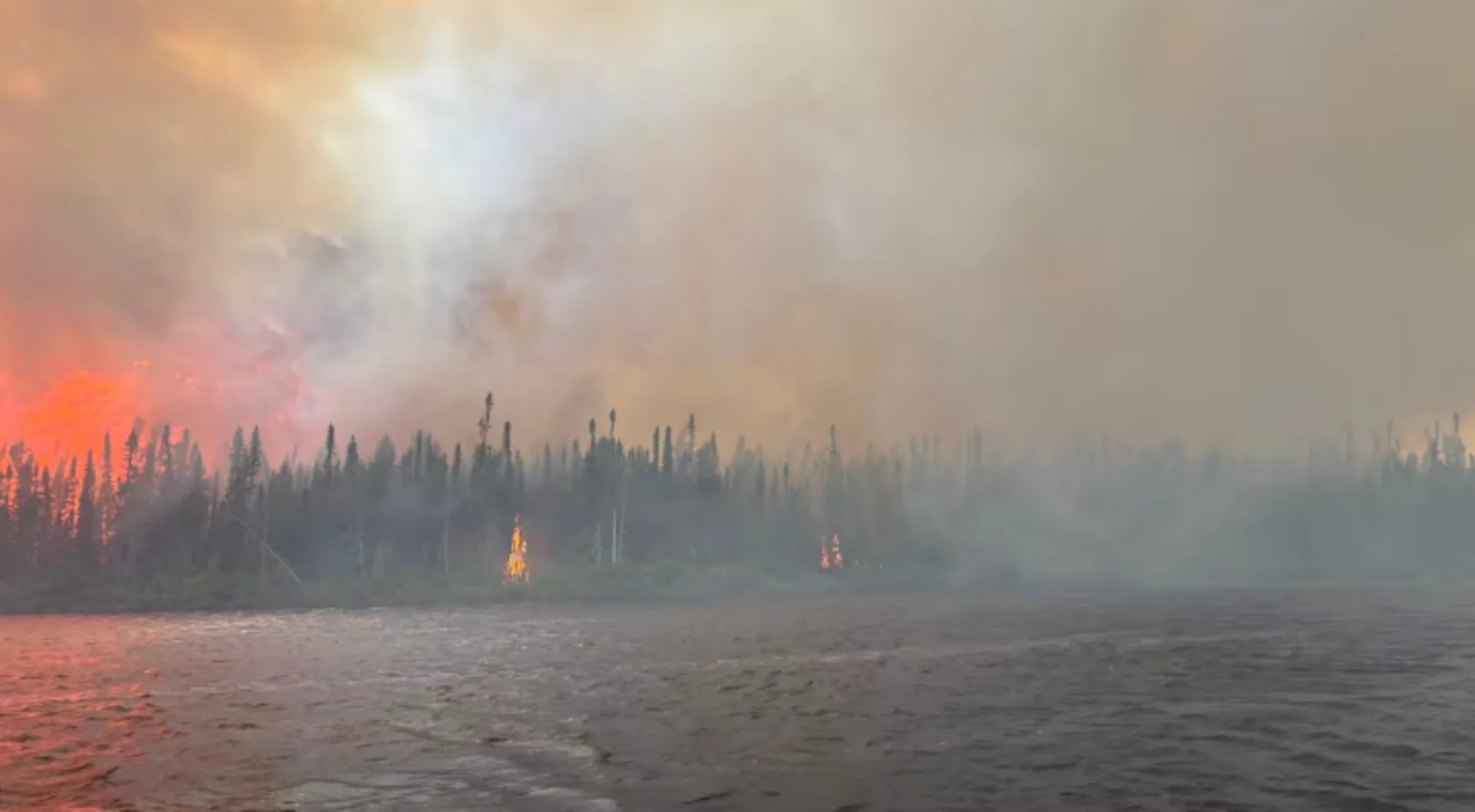
Wildfire evacuations continue in Kasabonika Lake First Nation, Ont.

An evacuation effort continued on Monday in Kasabonika Lake First Nation.
The remote northwestern Ontario community declared a state of emergency over the weekend, and began flying out its most vulnerable residents due to surrounding wildfires.
Evacuees are being flown to Toronto via Thunder Bay.
In a media release issued late Monday afternoon, the City of Thunder Bay said the first group of evacuees moved through the Thunder Bay airport Sunday night, and that aircraft would continue to arrive and depart as part of the ongoing evacuation effort.
"At the request of emergency management partners, the Thunder Bay International Airport is serving as a hub for evacuation operations, facilitating the movement of approximately 450 community members to Toronto," the release states.
"Operations are dynamic, and flight schedules and passenger volumes may change quickly as conditions evolve."
As of Monday, six wildfires were burning nearby the community, which is located about 450 kilometres north of Sioux Lookout. Two of those fires were listed as over 1,000 hectares in size.
DON'T MISS: The Weather Network's wildfire hub
“Well, everybody's pretty anxious, that's for sure,” said Keith Mason, a project manager with Kasabonika Lake who is also part of the community's emergency response effort, speaking with CBC News on Monday.
Mason said several flights took evacuees out of the community on Sunday and around a hundred more people were expected to leave on Monday.
The evacuees, which include elders, expectant mothers, children and those with underlying health conditions, are being flown to Thunder Bay and then onto Toronto.
Wildfire activity in northwestern Ontario increased sharply over the weekend.
As of Sunday evening, there were 61 active fires reported in the region, with 36 not under control, three being held, five under control and 17 being observed, according to Ontario’s Aviation, Forest Fire and Emergency Services.
Of these fires, six are located within a roughly 20-kilometre radius of Kasabonika Lake First Nation, including Nipigon 12, which is located west of the community and currently measuring 1,100 hectares.
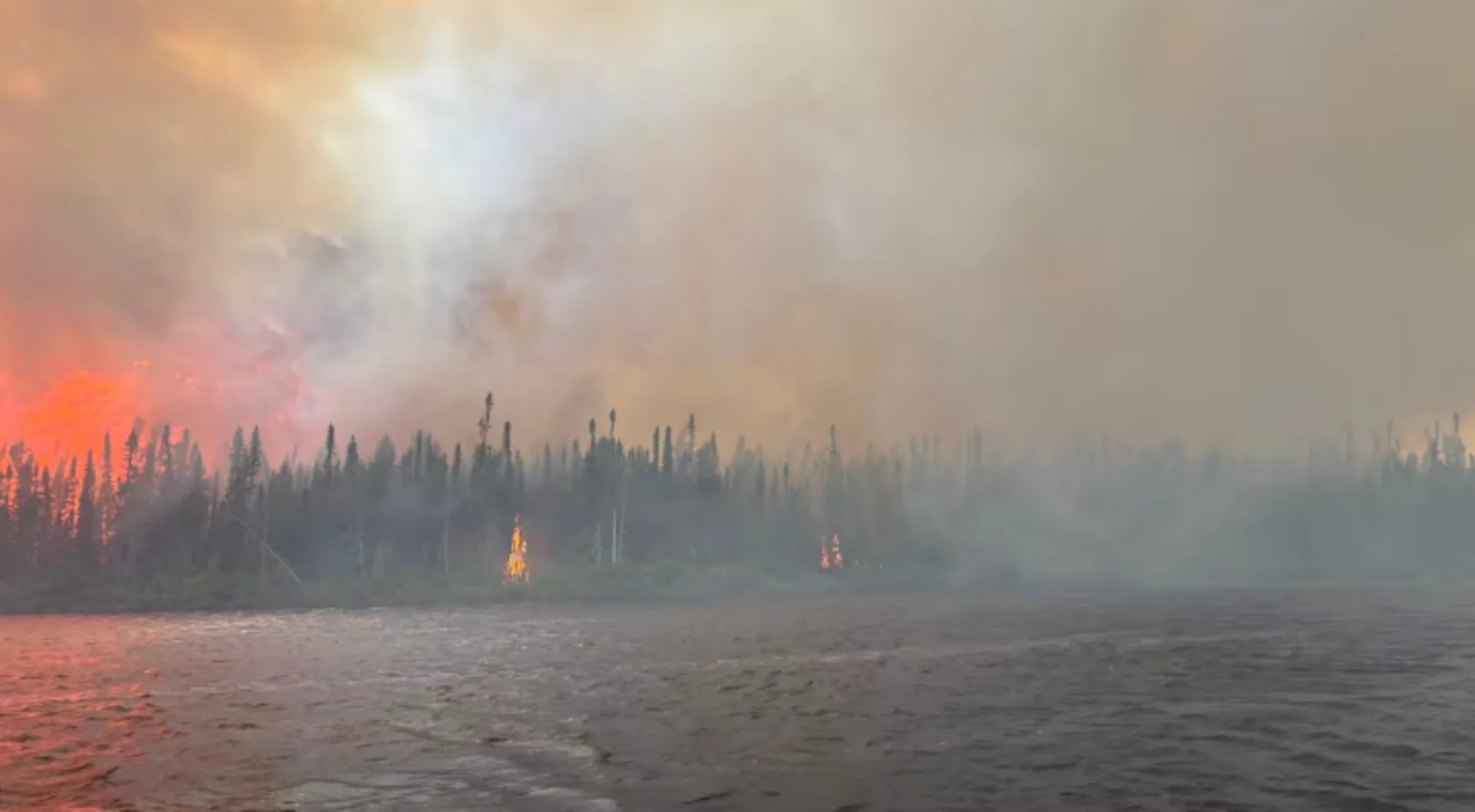
Fire and smoke captured by a resident of Kasabonika Lake First Nation. (Lloyd Lawson)
On its Ontario Forest Fires Facebook page, the province also posted on Monday morning that a Notice to Airmen is in effect for wildland fire Nipigon 16, meaning higher than standard airspace restrictions are in place around the fire.
Mason said there are concerns about smoke and how close the fires are getting to the community.
“You can smell it and you can actually see the closest fire visibly from the community, especially at night,” he said.
“And luckily the plumes [of smoke] have just been going up into the sky and over Kasabonika. But as soon as the winds change … we're afraid that the smoke is just going to come right down into the community and that's not going to be good for anybody.”
Mason said while they are hoping for the best, they are also preparing for the worst, and the possibility of a full scale evacuation.
SEE ALSO: Wildfire prompts evacuations in northern Manitoba
And while leadership is anxious to get the most vulnerable to safety, there are also concerns for those forced to travel hundreds of kilometres away from home.
“Toronto is far, far away. It's basically a whole new world for a lot of our people, and it’s quite scary for them” he said.
Ontario’s Ministry of Emergency Preparedness and Response, the Ministry of Natural Resources and Indigenous Services Canada are working with the community on the evacuation effort.
In an email on Monday a spokesperson for the Ministry of Emergency Preparedness and Response said evacuees will receive “appropriate wraparound supports including health care, education and social services.”
In its release, the City of Thunder Bay said it's prepared to provide additional assistance, "including reception, shelter, and transportation support, as needed. Residents may notice increased activity at Thunder Bay International Airport as evacuation efforts continue."
"The public is asked to avoid the airport unless necessary and to follow direction from airport authorities and emergency personnel."
This article was originally published by CBC News on June 29, 2026.