El Niño, climate change made October the world’s warmest on record

A powerful El Niño and the continuing effects of climate change pushed global average temperatures to unprecedented levels in October
Last month was the world’s warmest October on record.
This finding adds another data point to a longstanding trend of historically high temperatures around the globe, including a bevy of heat records set earlier this year.
Experts added that global temperatures are on track to make 2026 the second-warmest year on record.
DON’T MISS: Canada's Winter Sneak Peek: El Niño puts record warmth in play
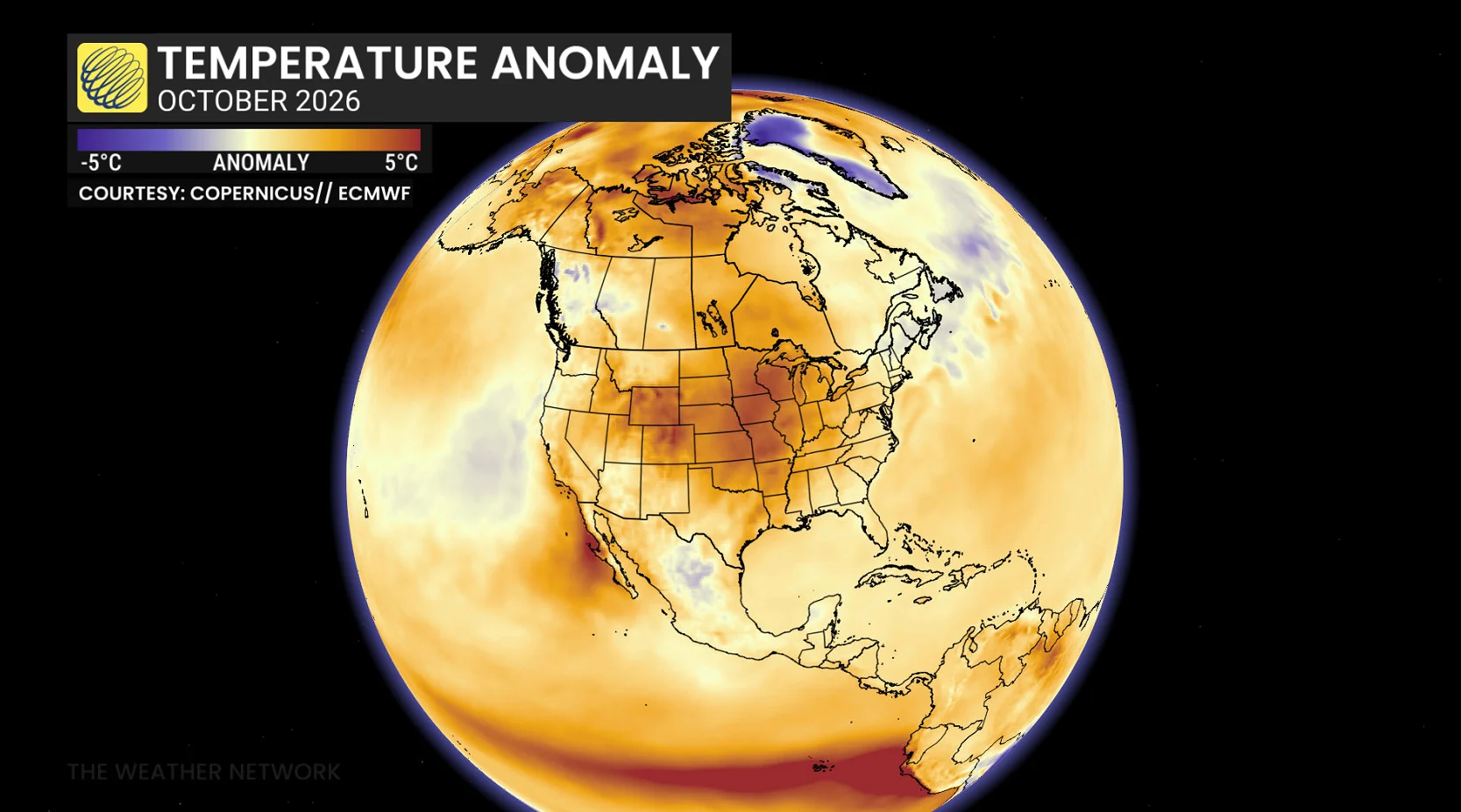
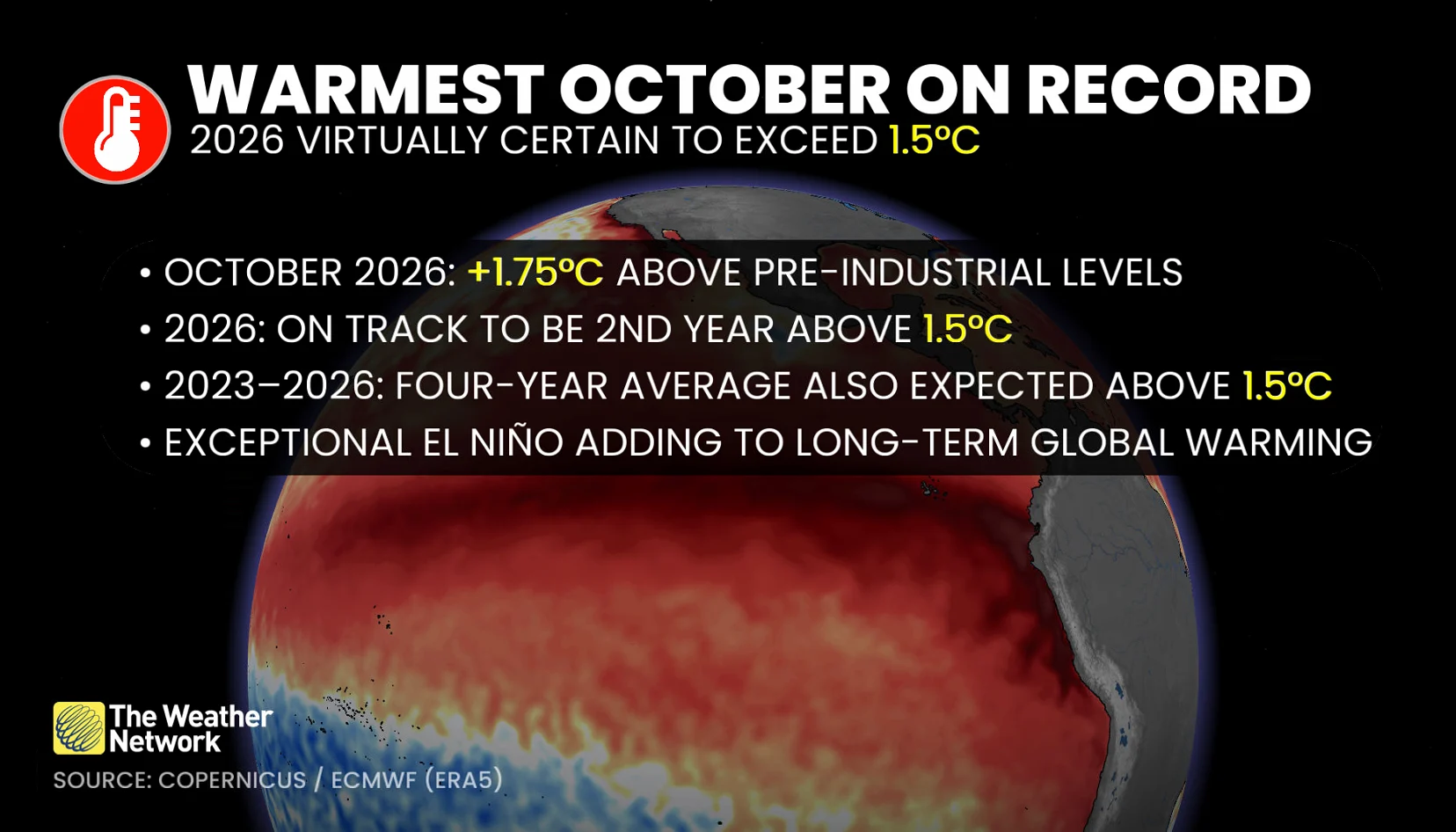
Global surface temperatures in October averaged 1.75°C above the pre-industrial (1850-1900) average, according to Europe’s Copernicus Climate Change Service (C3S).
The group of experts found that this past month also ended 0.90°C above the 1991-2020 average. Both values rank as the warmest anomalies ever observed in an October.
These lofty temperature anomalies made October the third consecutive month with global average temperatures exceeding 1.5°C warmer than normal.
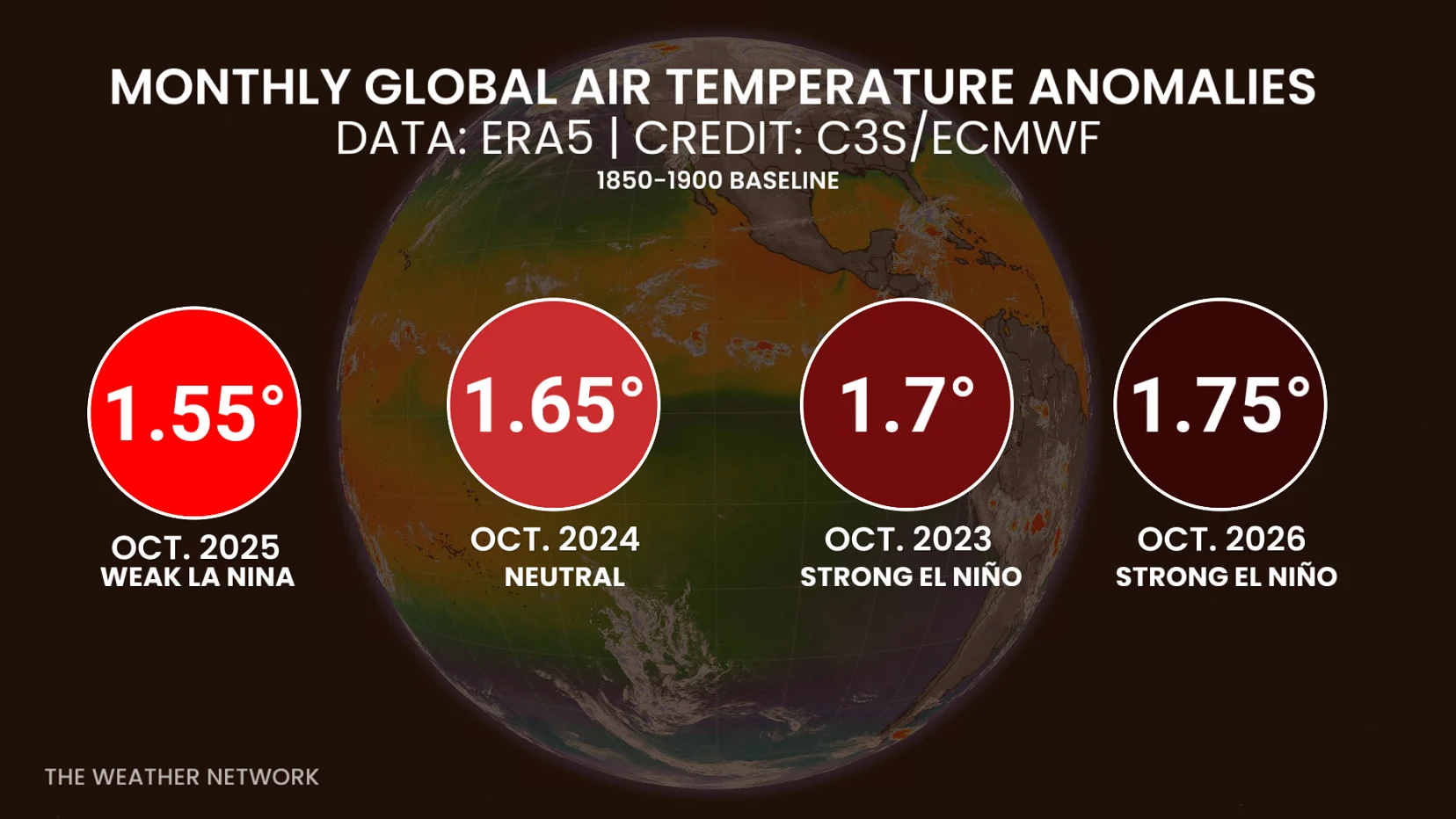
Based on current trends, C3S finds an 80 per cent chance that 2026 will be the second-warmest year on record, with a 20 per cent chance that this year will tie or exceed the all-time heat observed in 2024.
October’s record warmth stemmed from several factors.
A very strong El Niño has sent temperatures soaring in the eastern Pacific Ocean. Waters in a key region of the Pacific are running more than 3°C above normal, which is an all-time high for this time of year. Anomalously warm waters influence warmer-than-normal air temperatures.
The ongoing effects of climate change are also a major factor in ongoing warmth around the world. Data from C3S indicate that the world hasn’t recorded a below-average October since 2007. A higher temperature baseline leads to more extremes in a warming world.
A historic October is just the latest warm-weather record we’ve seen so far in 2026. This past summer ranked as the warmest on record in both the United States and much of western Europe.