Destructive Alberta tornado narrowly misses Rocky Mountain House community

A powerful tornado touched down in Clearwater County, Alta the evening of July 18, barely missing the southern neighbourhoods of Rocky Mountain House before going on to damage at least 51 properties and render eight homes uninhabitable in the county. Fortunately, no serious injuries have been reported
New details are emerging about a destructive tornado that touched down in the Alberta foothills July 18, including how its path barely missed several Rocky Mountain House neighbourhoods.
DON'T MISS: Tornado causes 'significant damage' to parts of west-central Alberta county
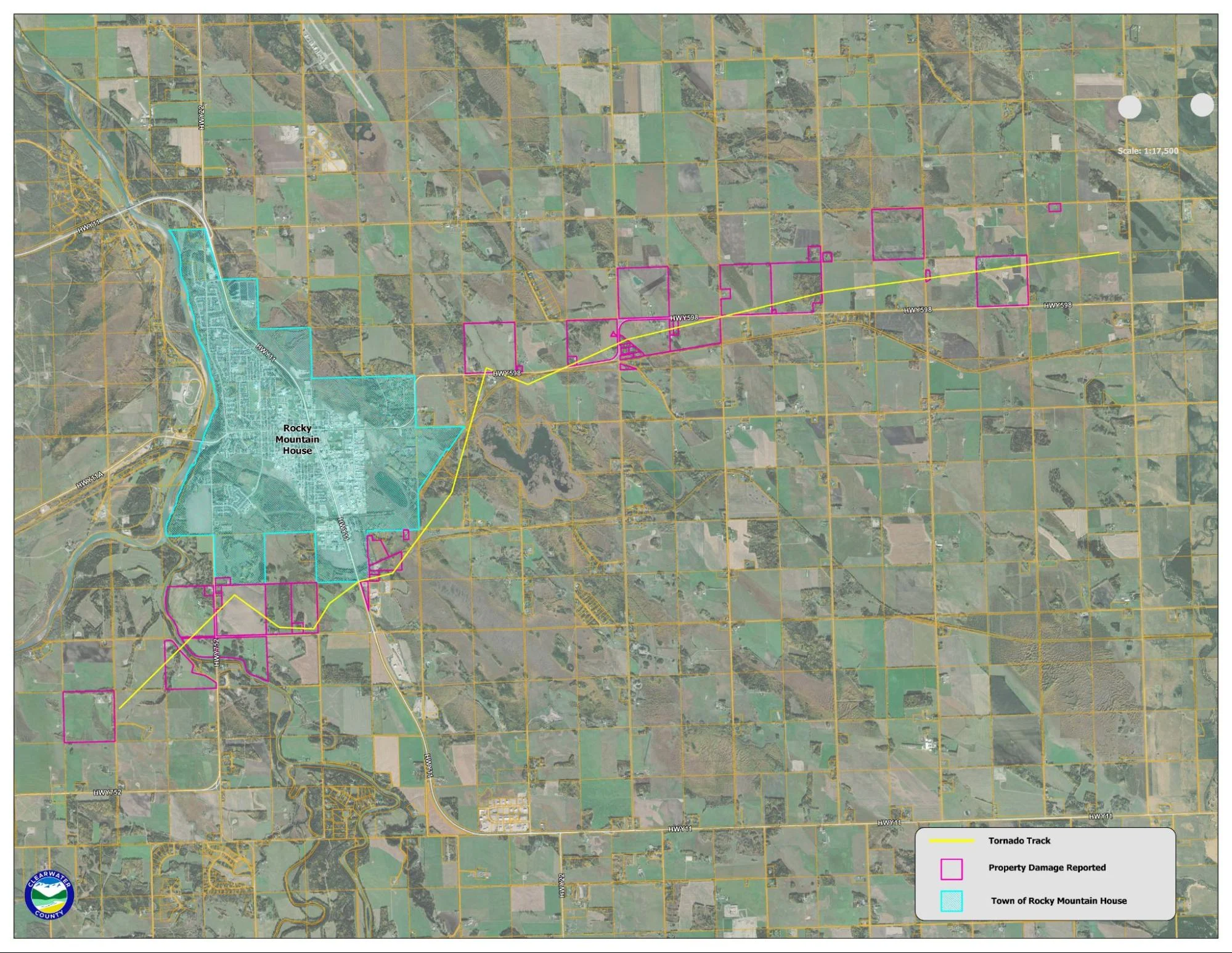
Clearwater County | GIS mapping shows the path of the tornado, as well as properties damaged by the storm
Clearwater County mapping data shows the twister touched down at around 6:30 p.m., about five kilometres southwest of the southern limits of Rocky Mountain House.
It traveled towards the town before taking a more easterly route, narrowly avoiding the southernmost neighbourhoods of the town of roughly 8100 people.
The tornado then continued in a northeast path around the town before heading into the countryside towards Leslieville.
While the town of Rocky Mountain House itself escaped mostly unscathed, it dealt significant damage to dozens of properties in the county.
DON'T MISS: The Weather Network's hub for all information on tornadoes in Canada
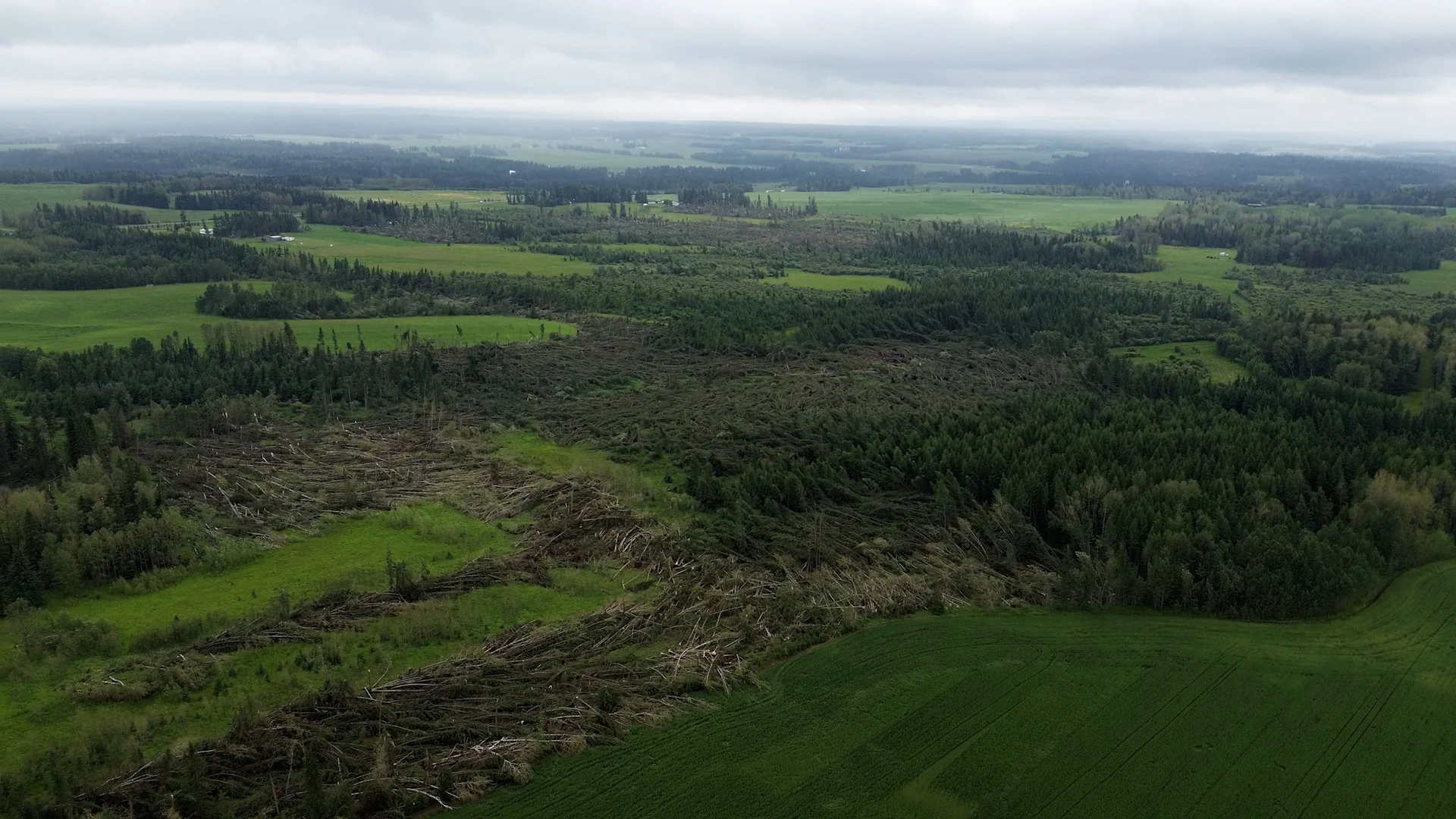
Clearwater County officials reported Monday that 51 properties were damaged by the storm. Eight homes were left uninhabitable, and approximately 92 hectares of trees were damaged as well.
Fortunately, no serious injuries have been reported.
“There were a lot of outbuildings damaged. Calf shelters, granaries turned over, and shops completely decimated. They’re no longer in place,” said Clearwater County reeve Jordon Northcott.
“There was a lot of damage to homes. They weren’t completely destroyed, but had fallen trees on them, and shingles completely stripped from the roof. I haven’t heard any reports of livestock injuries, so that’s good news.”
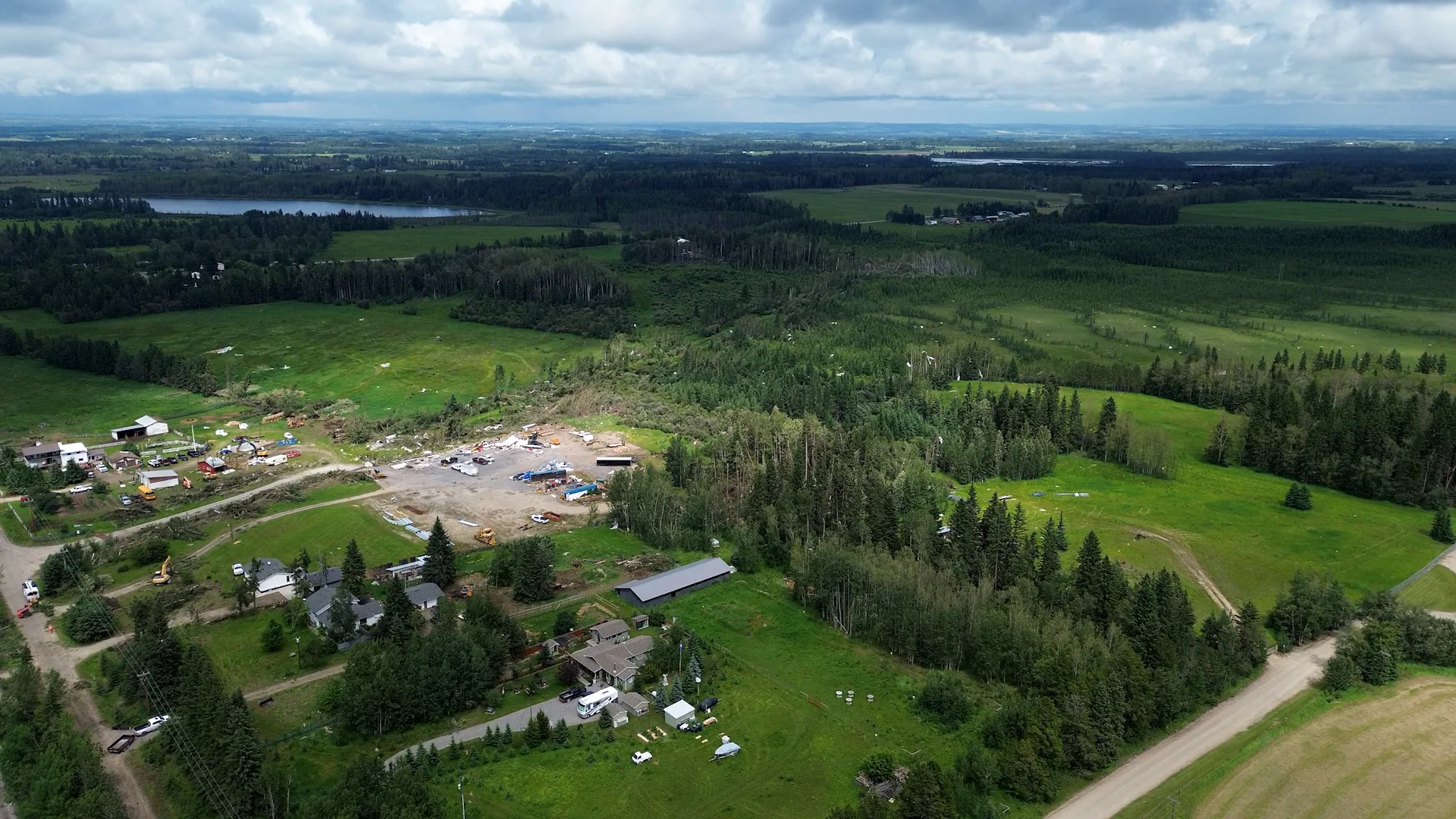
Connor O’Donovan | Damage from the storm is seen just southeast of the town of Rocky Mountain House
Clearwater County and utility management crews were busy over the weekend and on Monday afternoon clearing roadways of debris, attending to damaged infrastructure assisting residents in cleanup efforts.
“Council is here for the residents of the county. It’s a really difficult time for a lot of people, so if there’s anything we can do, please reach out to your council members,” Northcott added.
DON'T MISS: ‘This is a tornado emergency’: How forecasters warn of grave danger
Meanwhile, several provincial officials commented on the storm and its damage over the weekend, urging impacted residents to begin insurance claims right away.
“For tornado-related damage, Albertans should contact their insurance provider as soon as possible to discuss coverage and begin the claims process. Most residential insurance policies cover damage caused by windstorms and tornadoes, while vehicle damage may be covered if comprehensive or all-perils coverage is in place,” said Rimbey-Rocky Mountain House-Sundre MLA Jason Nixon.
“We will continue working closely with local municipalities and emergency officials to ensure they have the resources and support they need in the days and weeks ahead. Together, our community will recover, rebuild and come back stronger.”
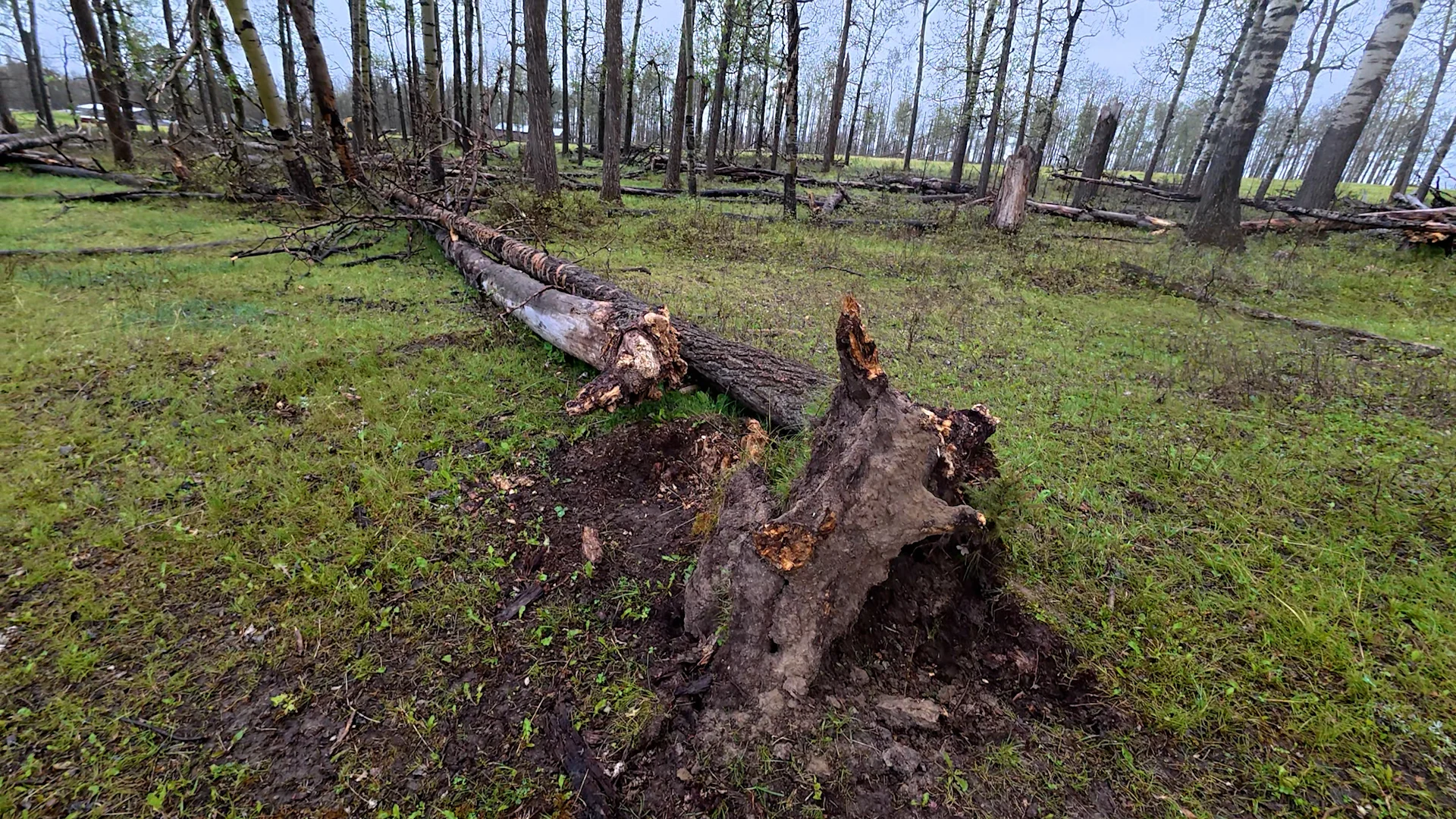
Connor O’Donovan | Clearwater County officials reported at least 92 hectares of trees were downed or damaged by the storm
Western University’s Northern Tornadoes Project is also actively investigating the storm. Its reports can be found online once completed.
The tornado was just one of several that touched down in Alberta over the weekend. Another twister was spotted near Cadomin Friday evening.
RELATED: Tornadoes in Canada are more common than you think. Here’s how to prepare
“On the afternoon of July 18, a rapidly developing lee trough east of the Rockies helped trigger thunderstorms along the Alberta foothills. Shortly after 3:00 p.m., a thunderstorm developed about 45 km west-southwest of Rocky Mountain House and quickly intensified as it tracked east,” said Tyler Hamilton, a meteorologist at The Weather Network.
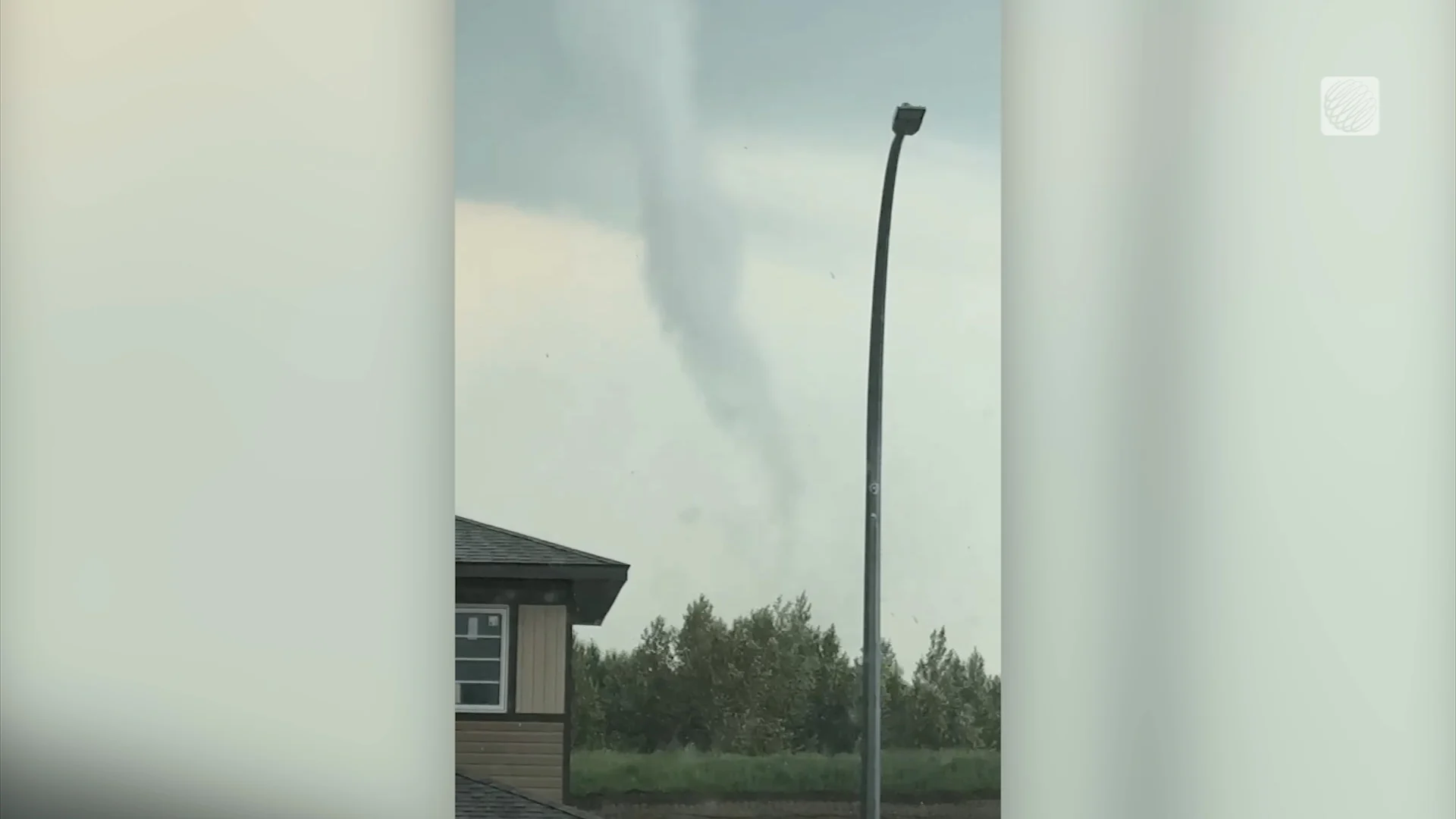
Don Edmunds | The tornado is seen from the southern suburbs of Rocky Mountain House the evening of July 18, 2026
“By 5:00 p.m., the storm had evolved into a rotating supercell. The environment was primed for severe weather, with rich low-level moisture (dew points in the mid-teens), strong atmospheric instability, and favourable wind shear. Those ingredients allowed the storm to organize, persist, and develop the rotation needed to produce a tornado.”