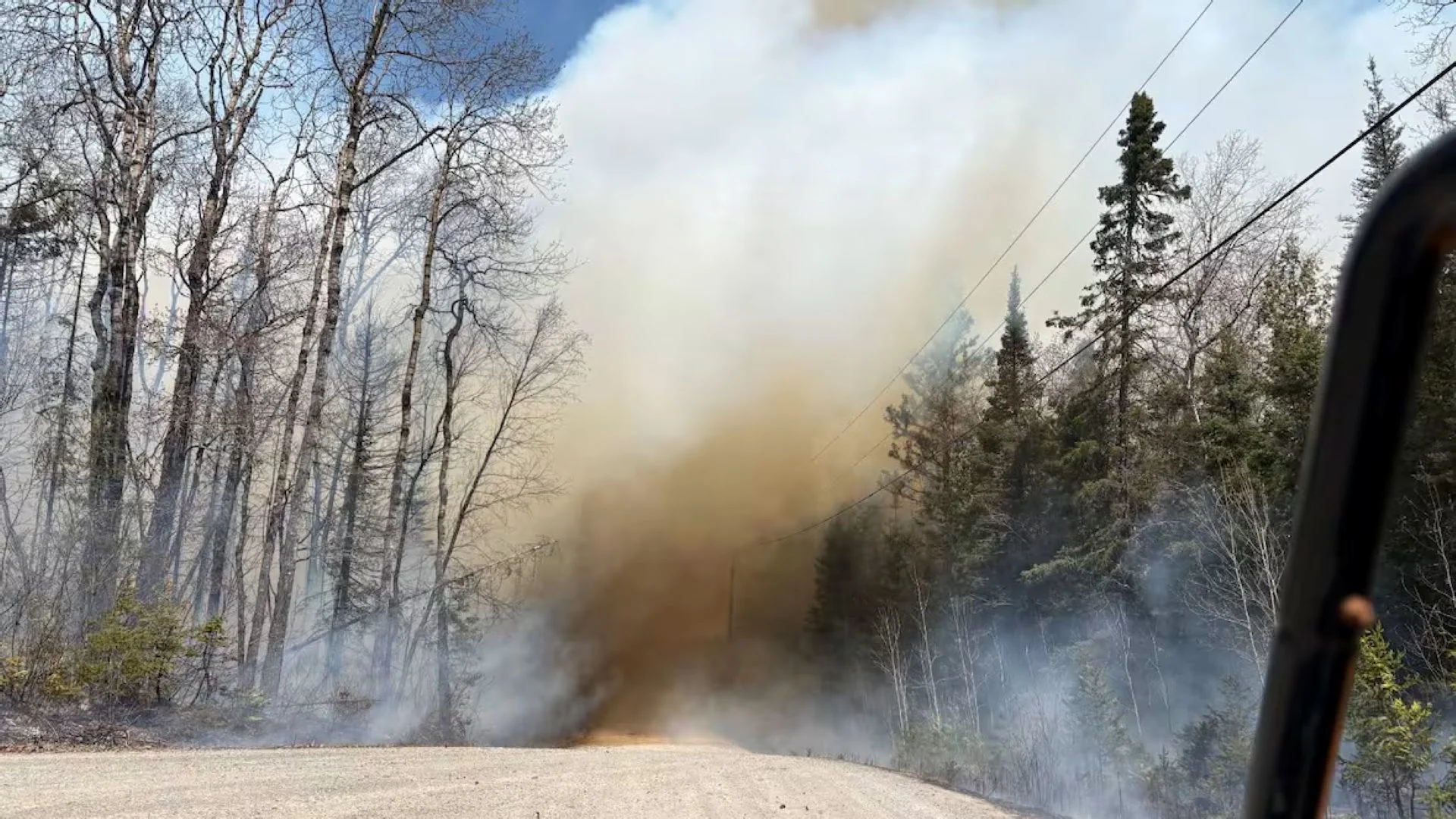
Cooler temperatures provide some relief for northwestern Ontario wildfires

Cooler temperatures and recent rainfall are helping wildfire crews contain fires across northwestern Ontario after a stretch of hot, windy conditions sparked multiple new blazes late last week.
As of late Monday afternoon, there were five active fires in the northwest region, according to Ontario's fire map. One fire near Dryden is not under control, at about 150 hectares. Five fires are being held, and three are under control.
“Recent wet weather is really helping to moderate conditions following multiple new fire starts that happened late last week in the northwest region amid some high winds and some warm temperatures,” said fire information officer Chris Marchand.
SEE ALSO: U.S., Canada off to surprising, contrasting wildfire season starts
Marchand said overnight rainfall has already helped crews make progress, particularly in the Fort Frances fire management area.

Chris Marchand, a fire information officer with Ontario's Ministry of Natural Resources' Aviation Forest Fire and Emergency Services in Dryden. (Submitted by Chris Marchand )
“Overnight rainfall has supported FireRanger crews in making strong progress,” he said, adding that additional rain expected Monday into Tuesday should further reduce fire behaviour and limit new starts.
Crews are now taking advantage of the conditions to advance suppression work.
“FireRanger crews and aircraft are really taking advantage of the cool wet weather to move those active fires through the various stages of control until we can call them out,” Marchand said.
He said crews are focused on strengthening containment lines around active fires, while equipment is being pulled off more advanced incidents so it can be redeployed elsewhere.
Water bombers were used on at least one fire over the weekend, though Marchand said aircraft are typically less necessary in wet conditions.
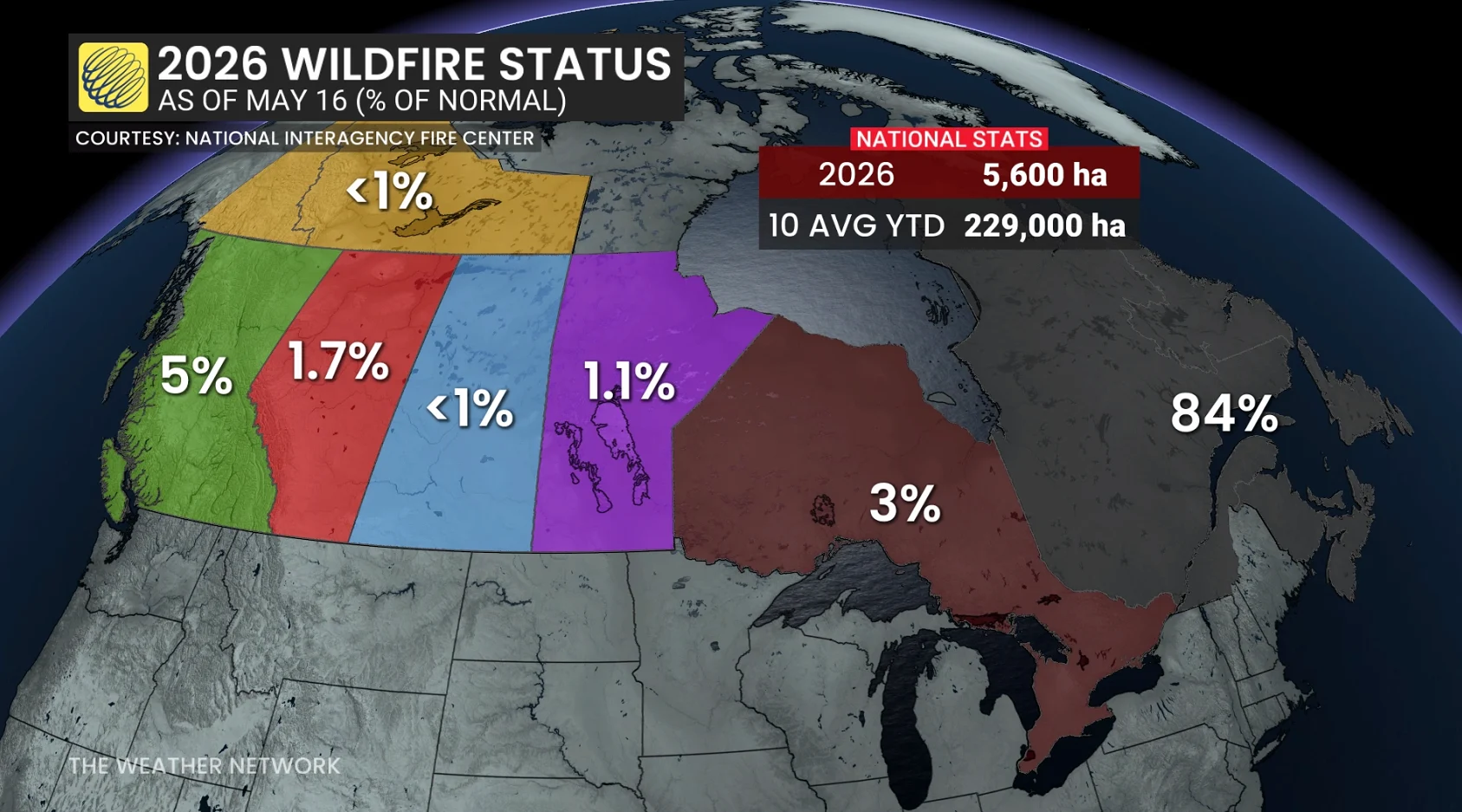
The Ministry of Natural Resources says 10 FireRanger crews from the northeast region have been deployed to assist in the northwest.
Fire hazard ratings are currently low across much of the region following recent rainfall.
Residents of Mine Centre, near Atikokan, have been allowed to return home after being ordered to evacuate on Friday due to wildfire threats.
It was the first evacuation notice in the region since Ontario’s wildfire season began on April 1.
Evacuee describes rapid loss
For residents in the Factor Lake area near Atikokan, the speed of the fire left little time to react.
Stacey O'Sullivan said conditions changed within minutes on Friday as strong winds pushed smoke and ash toward their property near Factor Lake.
“We noticed that it was quite smoky,” O'Sullivan said. “And then a couple of minutes later, the smoke was getting heavier and heavier, and you could see this haze in the air, and ash started falling on our clothes.”
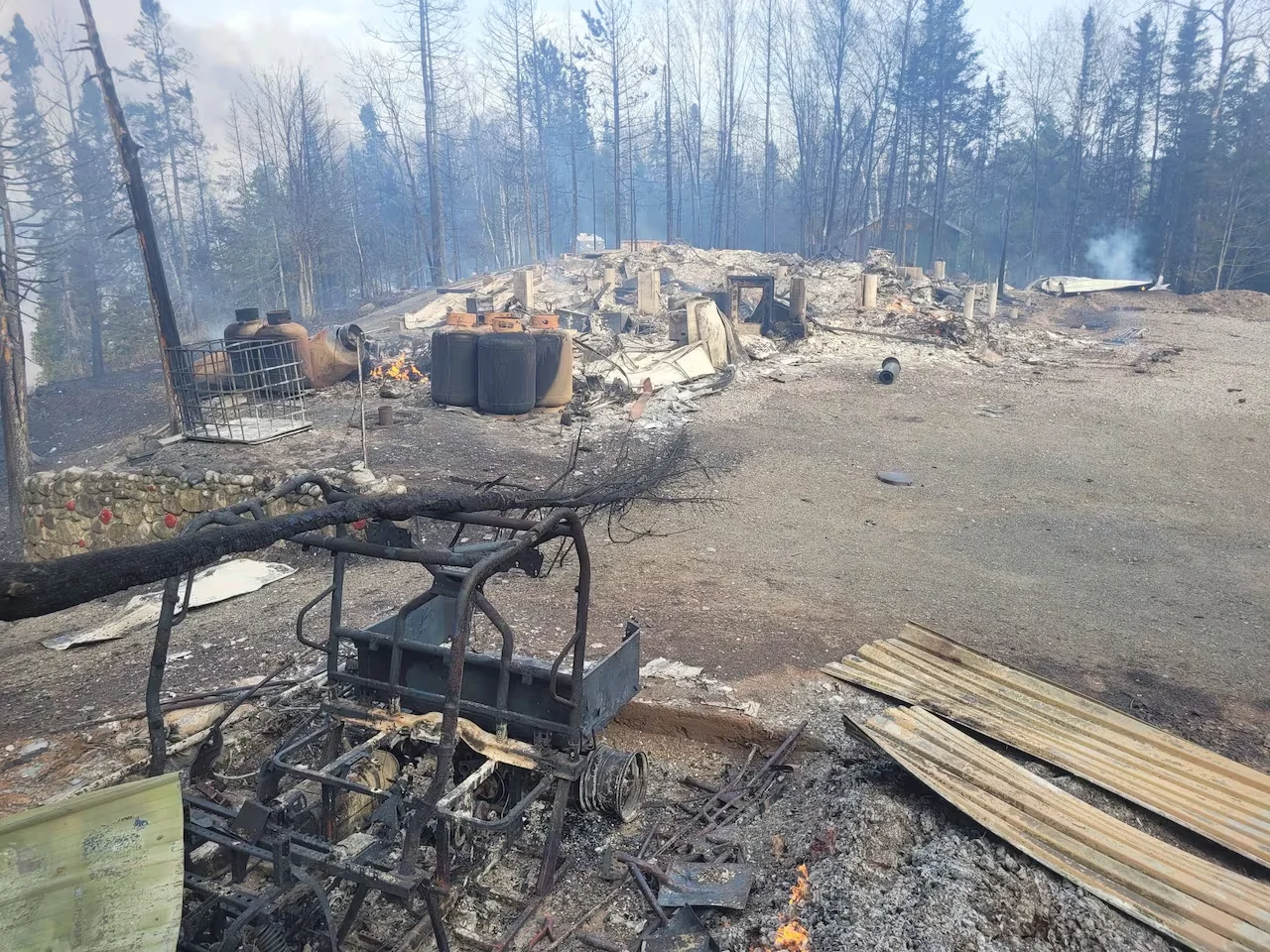
Burned remains of a Factor Lake property show the aftermath of a fast-moving wildfire that destroyed multiple structures, including a home and outbuildings, according to resident Stacey O’Sullivan. (Makenzi Fisk)
She said what initially seemed like a distant fire quickly became a direct threat to their home and access route.
“We just were kind of freaked out,” she said.
“We had to drive over trees that had fallen on the ground,” she said.
After evacuating, O’Sullivan said updates began arriving by text message confirming the extent of the damage.
“Before we even got to town, we were getting texts saying that our woodshed was on fire,” she said. “And then we got other texts saying that our house was on fire.”
She said multiple structures were ultimately destroyed, including a guest house and sauna, along with outbuildings and personal belongings. Propane tanks on the property later exploded, leaving the site heavily damaged.
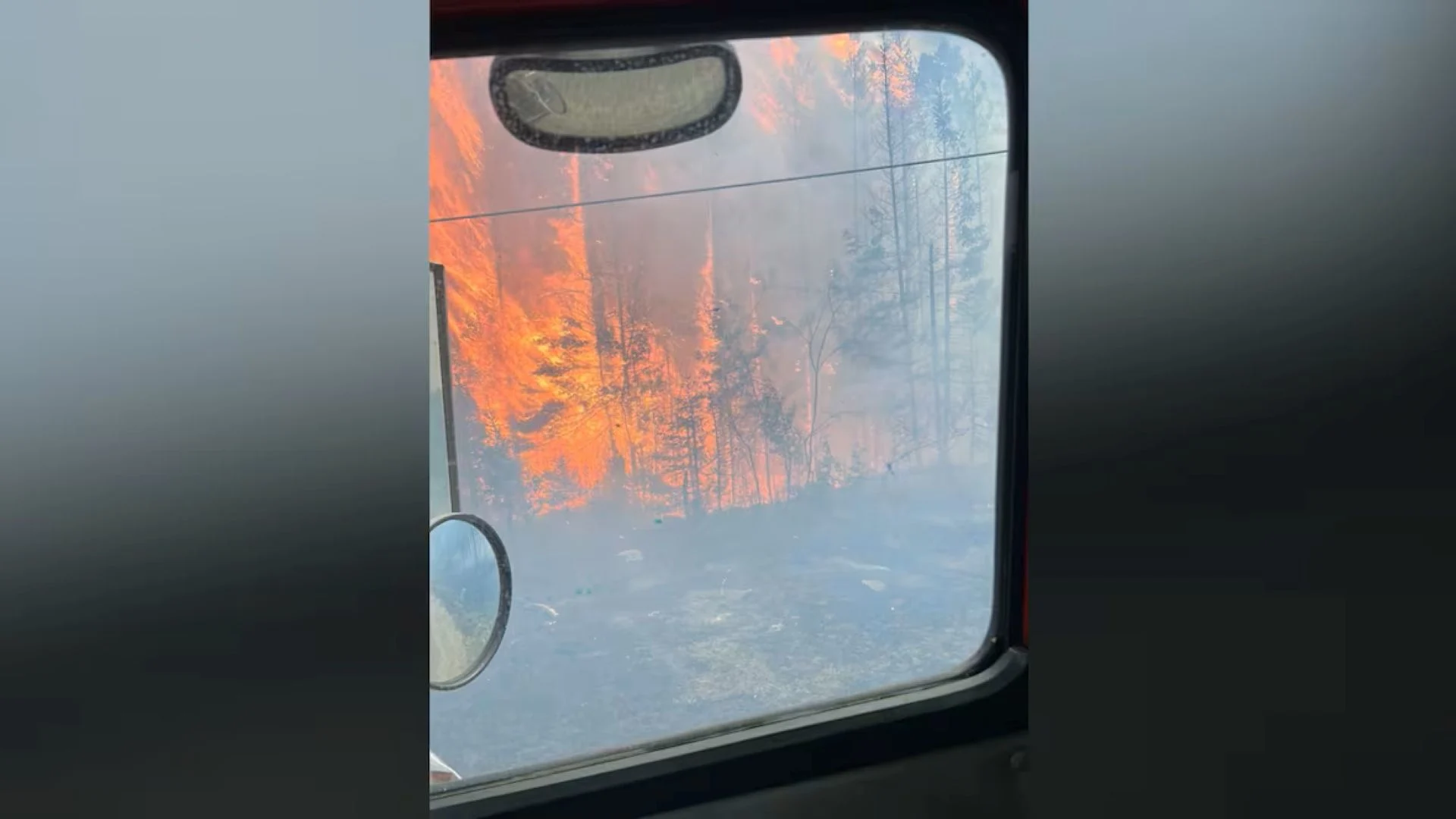
(Chapple, Emo and La Vallee Fire and Emergency Services/Facebook via CBC)
O’Sullivan said the loss has been difficult to process.
“It’s hard to imagine, and it’s hard to really, like, for it to sink in,” she said.
She said the family is now staying in a hotel while navigating insurance claims and limited local accommodation.
The fire also destroyed equipment belonging to Pictograph Community Arts, where O’Sullivan serves as a board member.
The Atikokan-based organization supports local arts programming, workshops, and community events, and also operates tourism and retail space for local artists.
Cooler, humid conditions expected to continue
In Northeastern Ontario, five small fires reported over the long weekend have all been extinguished.
Those fires were reported in the Cochrane, North Bay, Haliburton, Wawa and Timmins sectors. The largest, Cochrane 2, measured about six hectares.
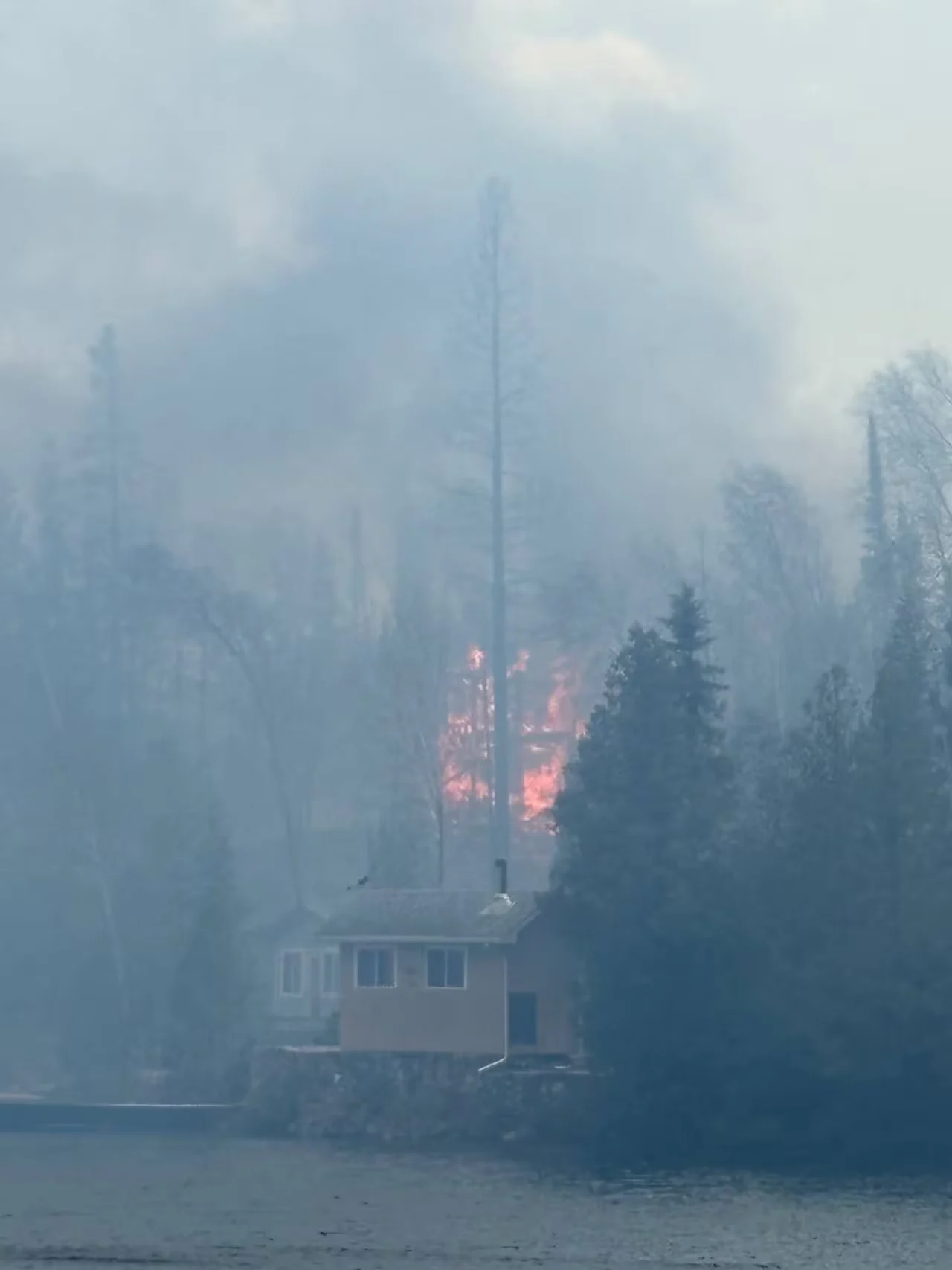
A fast-moving wildfire destroyed multiple structures in Factor Lake near Atikokan. The fire here was seen on May 15. (Makenzi Fisk)
The Ministry of Natural Resources says recent rainfall has reduced fire hazard across the northeast to low, with humid conditions expected to continue through the start of the week.
Marchand cautioned that spring conditions can still shift quickly before forests fully green up.
“High winds, warm temperatures and lower humidity are really warning signs that residents should be extremely cautious or ideally even leave outdoor burning activities for another time,” he said.
Thumbnail courtesy of Makenzi Fisk via CBC.
The story was originally written by Rajpreet Sahota and published for CBC News.