
Cold temperatures, strong winds delay seeding for Manitoba farmers

Derek Ruchkall should be out in his fields, planting. Instead, he's back at the yard site repairing his seeder — and waiting for warmer weather.
A cold spring has delayed seeding for many Manitoba farmers.
RELATED: 100+ km/h winds cause a dust storm on the Prairies, ice and snow are next
Ruchkall farms near Anola, about 30 kilometres east of Winnipeg. While moisture conditions in the area have been ideal, cool soil temperatures and strong winds mean he's a good week behind schedule, he said.
"We're not in a panic mode yet, but it's definitely been a struggle, kind of waiting on the weather to get going," Ruchkall said Wednesday.
Last week's strong winds prevented him from putting down fertilizer. There's also a possibility the wind scattered crops, like cereals, planted at a shallower depth.
Many crops also don't like the cold weather, Ruchkall said.
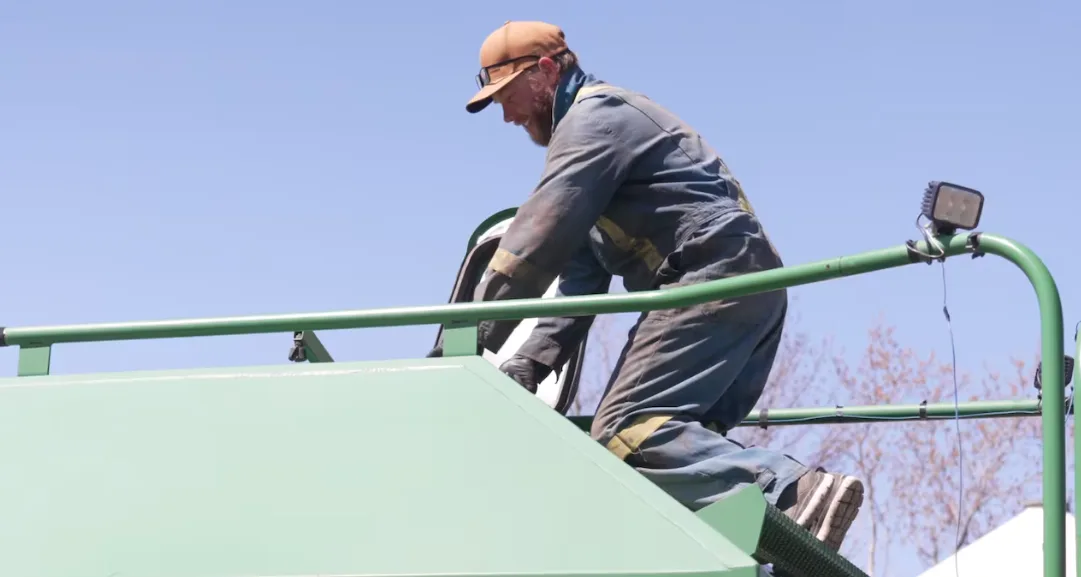
Ruchkall repairs his air seeder while he waits for the ground to warm up so he can continue planting his crops. Cold weather and strong winds have made an already difficult year more challenging for the Anola farmer. (Jura McIlraith/CBC)
Most seeds can sit dormant for a short time with no issue, "but if they sit too long in cold soils, it's not good for them, either," Ruchkall said.
"You do lose some germination that way, and it does affect the yield at the end of the day."
The rising cost of fuel and fertilizer has already been a challenge. The added weather complication "really hurts," Ruchkall said.
Jill Verway, president of Keystone Agricultural Producers, says it hasn't been a typical spring.
"Certainly concern with producers and stress getting the crop in," Verway said.
"You combine that with high input costs, high fuel costs, high fertilizer — all of those additional tensions are making this year seeding tense."

Jill Verway, president of Keystone Agricultural Producers, says the cold weather and wind have been an added challenge on top of rising fuel and fertilizer costs. (Zoom)
Some producers may have to reseed patches of their fields if crops were scattered in the wind, she said.
DON'T MISS: Canada's end to May: Who will get the head start on summer?
Frost has been sticking around longer and creating wet spots in fields as it's thawing, said Verway, who farms near Portage la Prairie.
Seeding is 37 per cent complete in the province, said Manitoba Agriculture's weekly crop report, released on Wednesday. That's up from 13 per cent last week.
This time last year, more than 57 per cent of farm land was seeded.
Dennis Lange, a provincial pulse and soybean specialist, says compared to the five-year average, farmers aren't that far behind. The average is 43 per cent.
Some regions, including the northwest region, are a lot further behind, Lange said.
"Based on weather conditions and field conditions, that's just the way this year has been," Lange said.
"Things change in a hurry in farming, so what we say today, a week from now, it'll be different once we get this warmer weather kicking in."
SEE ALSO: The '3Cs' you need to know to protect your plants from frost
Back in Anola, Ruchkall hopes the weather will co-operate and stay warm soon.
Before the last rain, Ruchkall and his helper worked 60 hours over three days to get the crop in.
"If the conditions are perfect, you better get your seed in the ground and be on that tractor," Ruchkall said.
"You just don't know, you know, if you get a week or two of really bad weather or rain events, then we won't be able to get finished seeding."
WATCH: The '3 Cs' that mean frost could be on deck
This article, written by Jura McIlraith, was originally published for CBC News. With files from Juliette Straet