
U.S. chemical blaze intensifies, raises air quality fears
The skies over Houston, Texas, remained ominous on Tuesday, as a major fire at a chemical plant continues to spread a thick smoke plume over the city.
The fire started Sunday morning at the Intercontinental Terminals Company (ITC) in Deer Park, a suburb of Houston. Eight large chemical tanks have thus far been involved in the fire. Officials with ITC say the tanks contain gasoline components such as naphtha and xylene, and Toluene, which is used in paint thinner. All three chemicals can have toxic effects to those who are exposed to them.
Spring is here! Check theweathernetwork.com on Wednesday, March 20 to see what the season has ahead, plus get an EXCLUSIVE sneak peek at Summer 2019!
Harris County Public Health issued a statement regarding the fire on Sunday, suggesting that area residents seek medical attention if they experience "negative effects" such as coughing, difficulty breathing, nausea, or dizziness. A shelter-in-place order was issued for about 34,000 people in the area, according to local media. Nearly two dozen area schools near the fire were closed on Monday, with many area parents stating they will not allow their children to return to school until the fire is out.
Despite the noxious chemcials now ablaze, and the massive black cloud spreading over parts of the city, both government officials and spokespeople with ITC have thus far maintained that air quality in the area is "below levels that represent a public health concern."
That will likely remain true as long as the plume continues to rise and butt up against the inversion layer over the city; where the temperature profile makes a 'cap' on the lower level of the atmosphere. This capping action is quite visible in some of the images taken by locals, particularly by those leaving in planes.
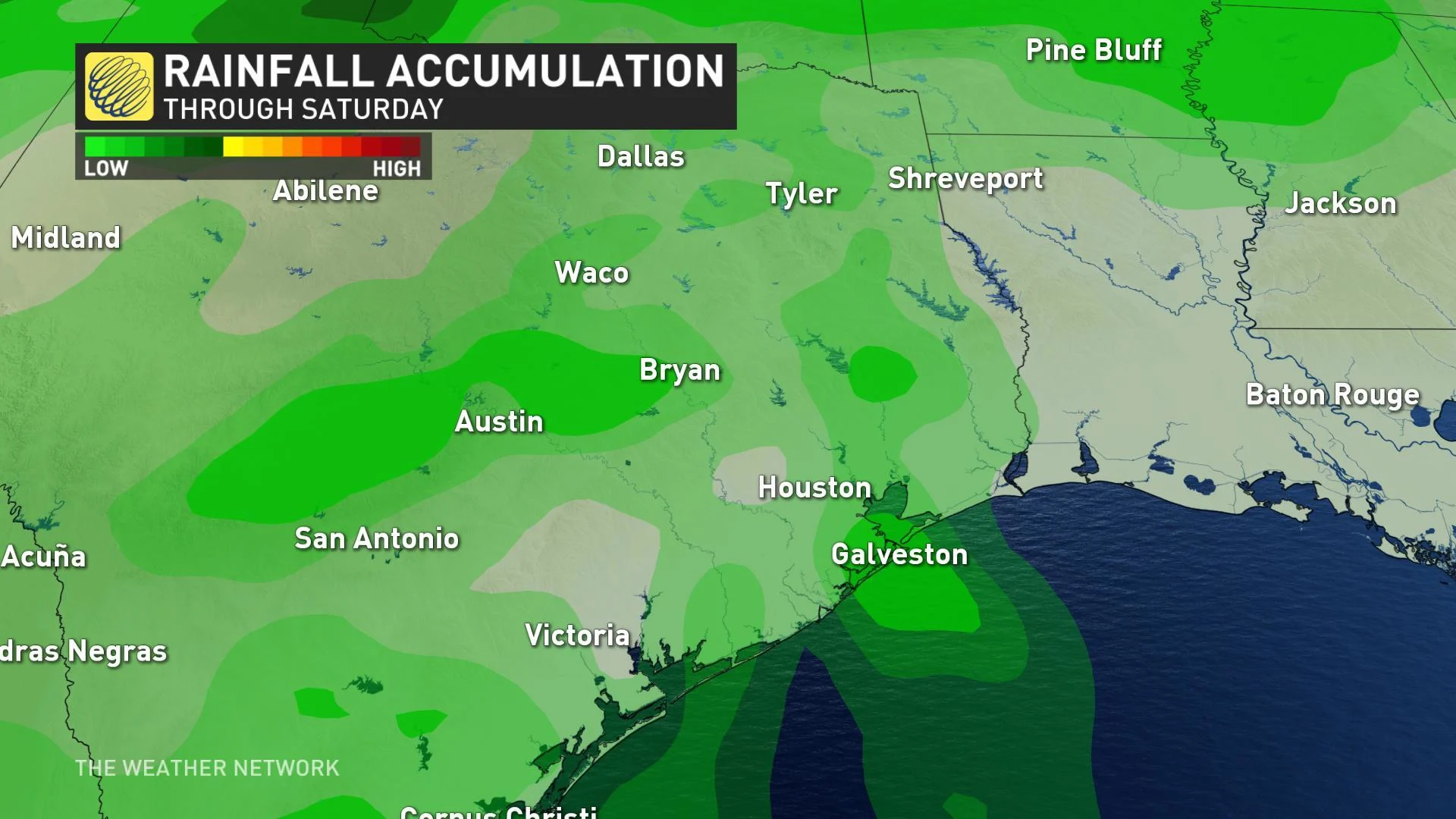
Unfortunately, it may be that the fire can't be extinguished (or burn itself out) before rain moves into the area later this week, and that could pose some significantly higher health risks for people in the area.
Rain drops form around condensation nucleii -- bits of dust or dirt in the air, or in this case, bits of chemical ash. Should rain fall through the plume at its more concentrated points, closer to the fire, it would essentially wash the pollutants out of the air, and onto the surrounding ground, water, and people, below.
SEE ALSO: 10 houseplants that can help clear your air
A storm moving through the area would also help to mix the lower levels of the atmosphere, effectively 'stirring' the stagnant layers below the cap level and the surface, dramatically worsening the air quality closer to the surface.
In the best case scenario, the fire will be extinguished while the atmosphere remains relatively stagnant, and the plume will disperse over a wide area, mainly out into the Gulf of Mexico. While the chemicals would still eventually mix out of the atmosphere, the concentrations would be low enough not to do much harm.
With that said, some showers are in the forecast late this week as a weak front moves over the region into the weekend. Officials have no timeline for the fire, which continued to intensify into Tuesday as fire crews faced water pressure issues, but the fire is expected to burn for at least another two days.
Sources: ABC 13 |