Busy summer sends Canada's tornado count soaring above normal

Canada’s tornado count is soaring after repeated rounds of severe storms across the country this summer
Dozens of tornadoes have touched down across Canada so far this year amid some exceptionally active spells of severe weather in recent weeks.
An astounding 20 of those tornadoes touched down in just two days, making for one of the country’s largest outbreaks in recent years.
DON’T MISS: Tornado season is underway in Canada. Here’s what you need to know
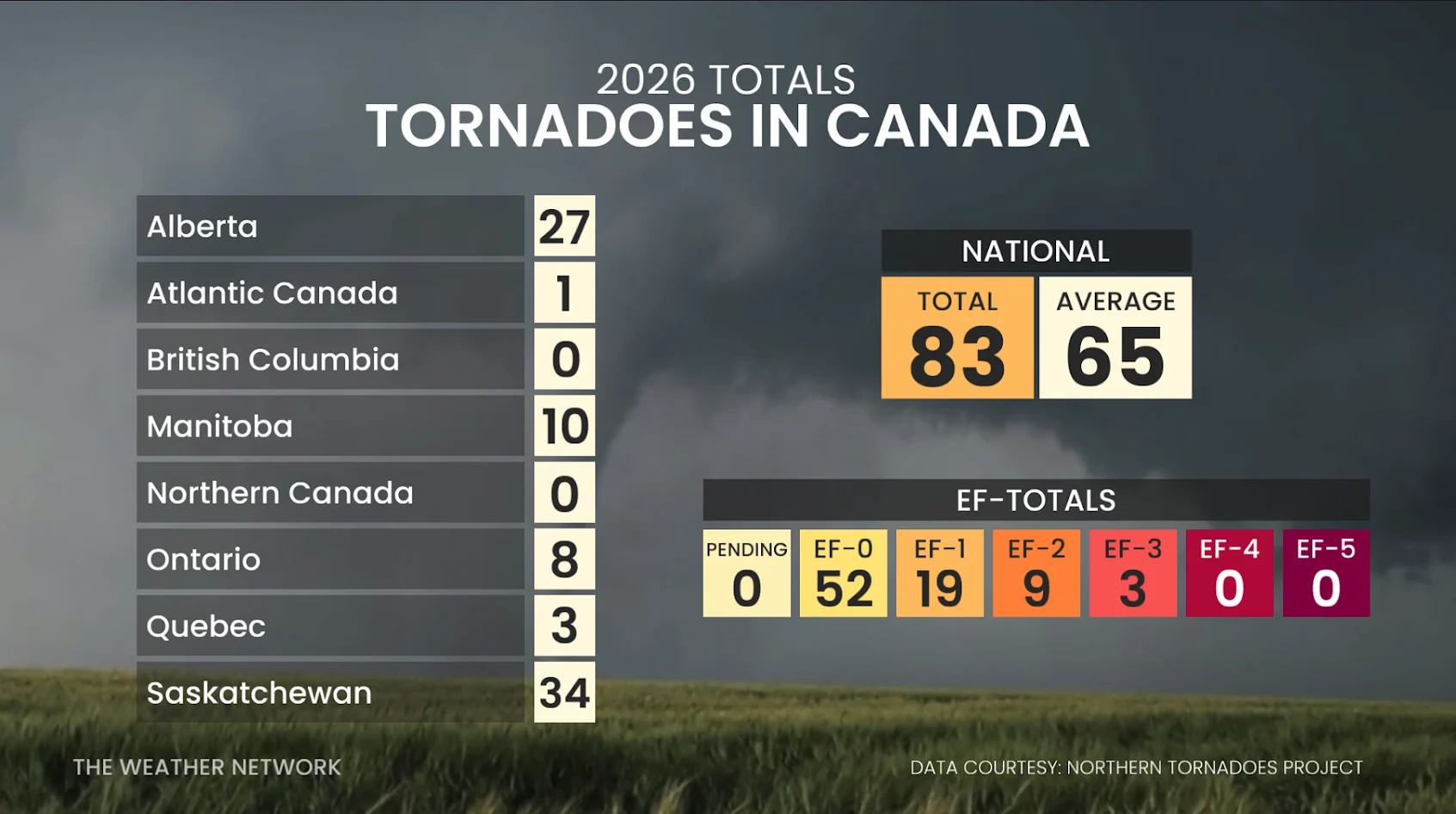
Experts with Western University’s Northern Tornadoes Project (NTP) have confirmed at least 83 touchdowns throughout Canada so far in 2026.
The vast majority of those twisters hit the Prairies, with Saskatchewan (34) and Alberta (27) accounting for nearly three-quarters of all of Canada’s tornado activity this year.
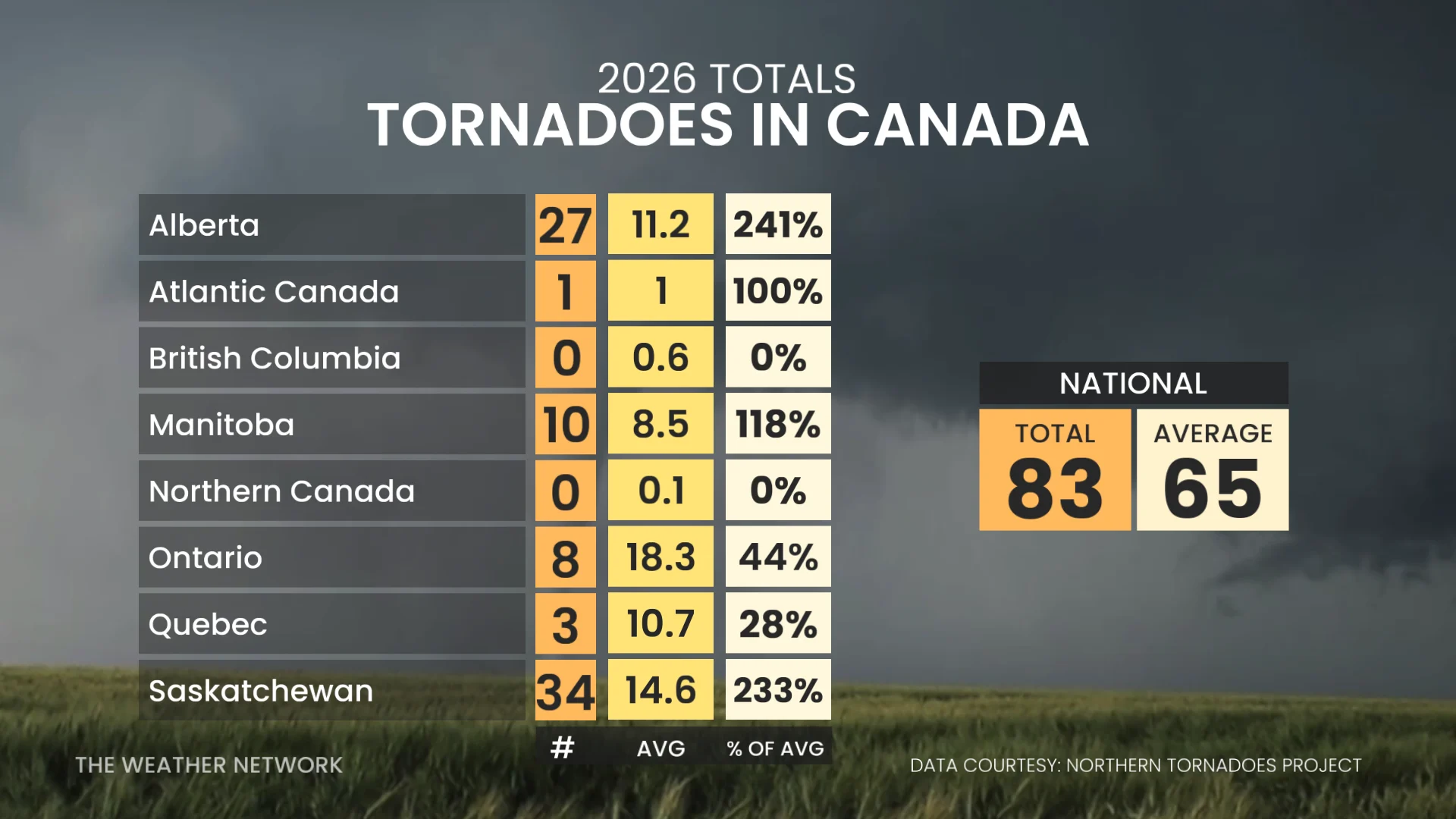
The two Prairie provinces have both already seen more than double their usual number of tornadoes for an entire year.
Saskatchewan has been hit especially hard this month.
RELATED: Tornadoes can happen anywhere—and cities aren't immune
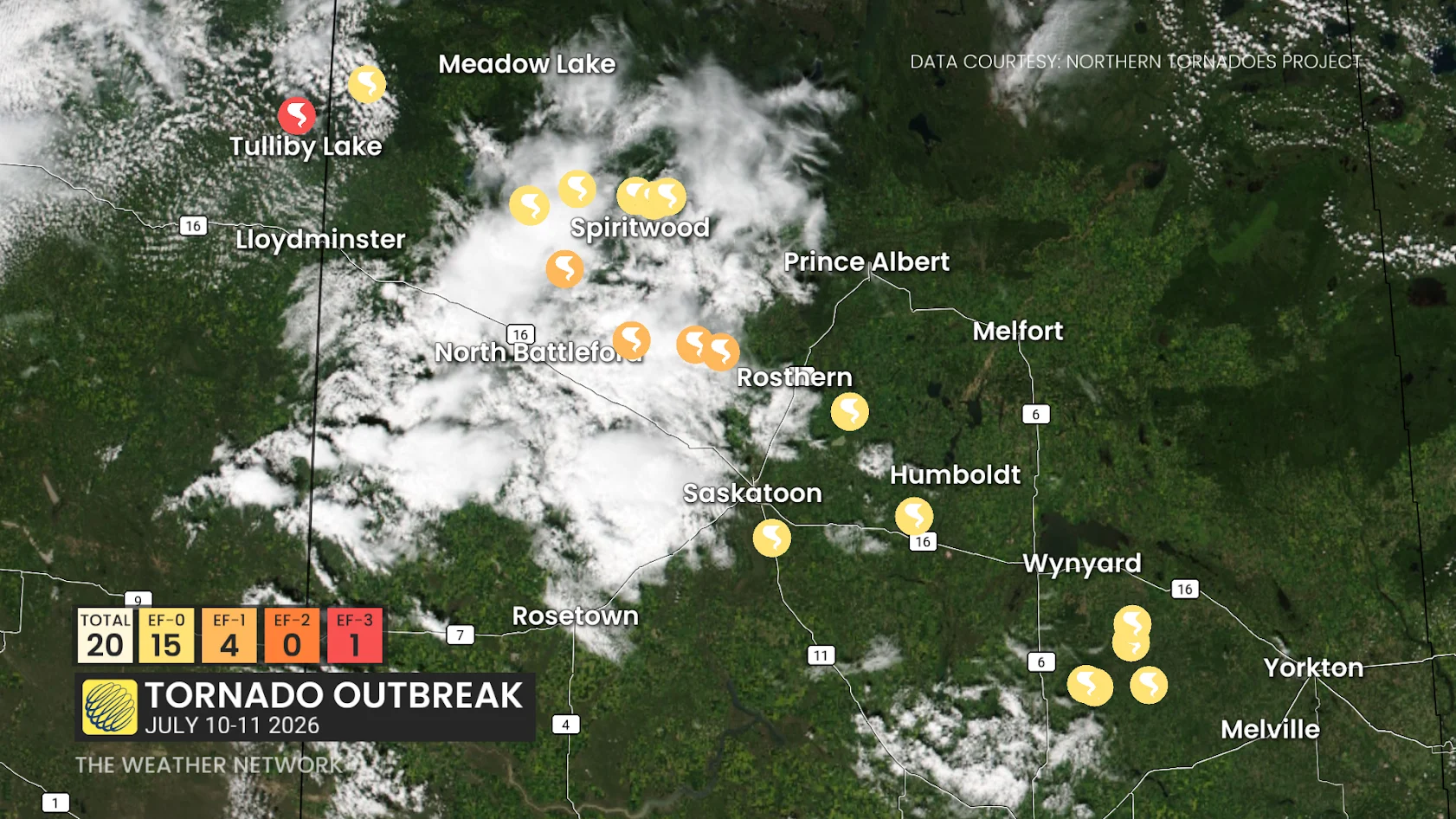
The province witnessed 20 tornadoes between July 10 and July 11, making for one of Canada’s largest two-day outbreaks in recent years.
Manitoba is also running slightly ahead of its provincial average, recording 10 confirmed touchdowns so far this year.
Meanwhile, the tornado count is lagging behind across the eastern half of Canada. Despite some rounds of damaging storms in recent weeks, Ontario and Quebec combined have only seen around one-third of their typical number of twisters this season.
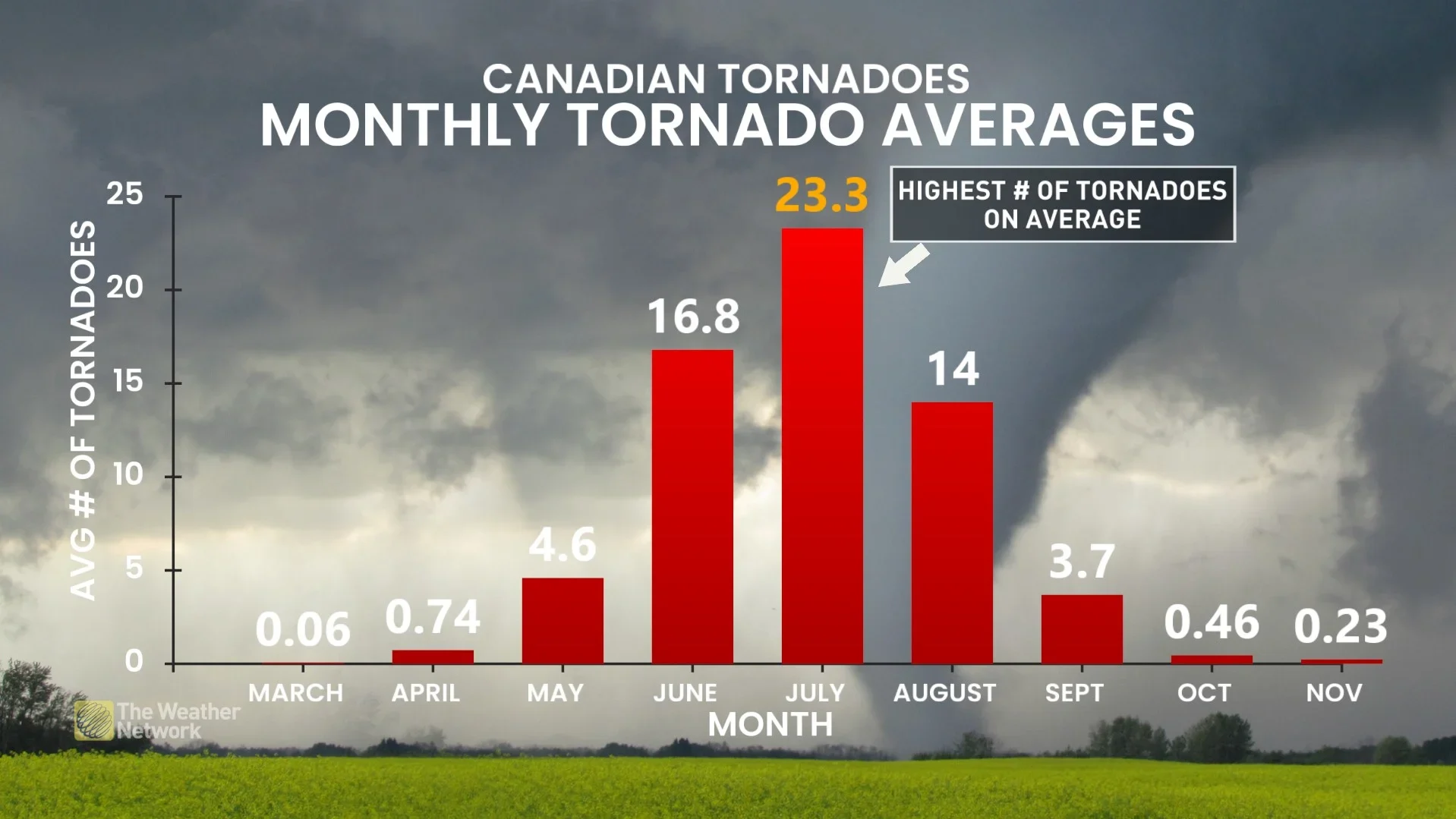
The vast majority of Canada’s tornadoes occur during the summer months, with July leading the pack with an average of about 23 twisters from coast to coast.
We can expect activity to start to wane across the country once the cooler autumn months settle in and the bulk of the severe weather returns stateside.
The annual tornado count is also running ahead of average south of the border.
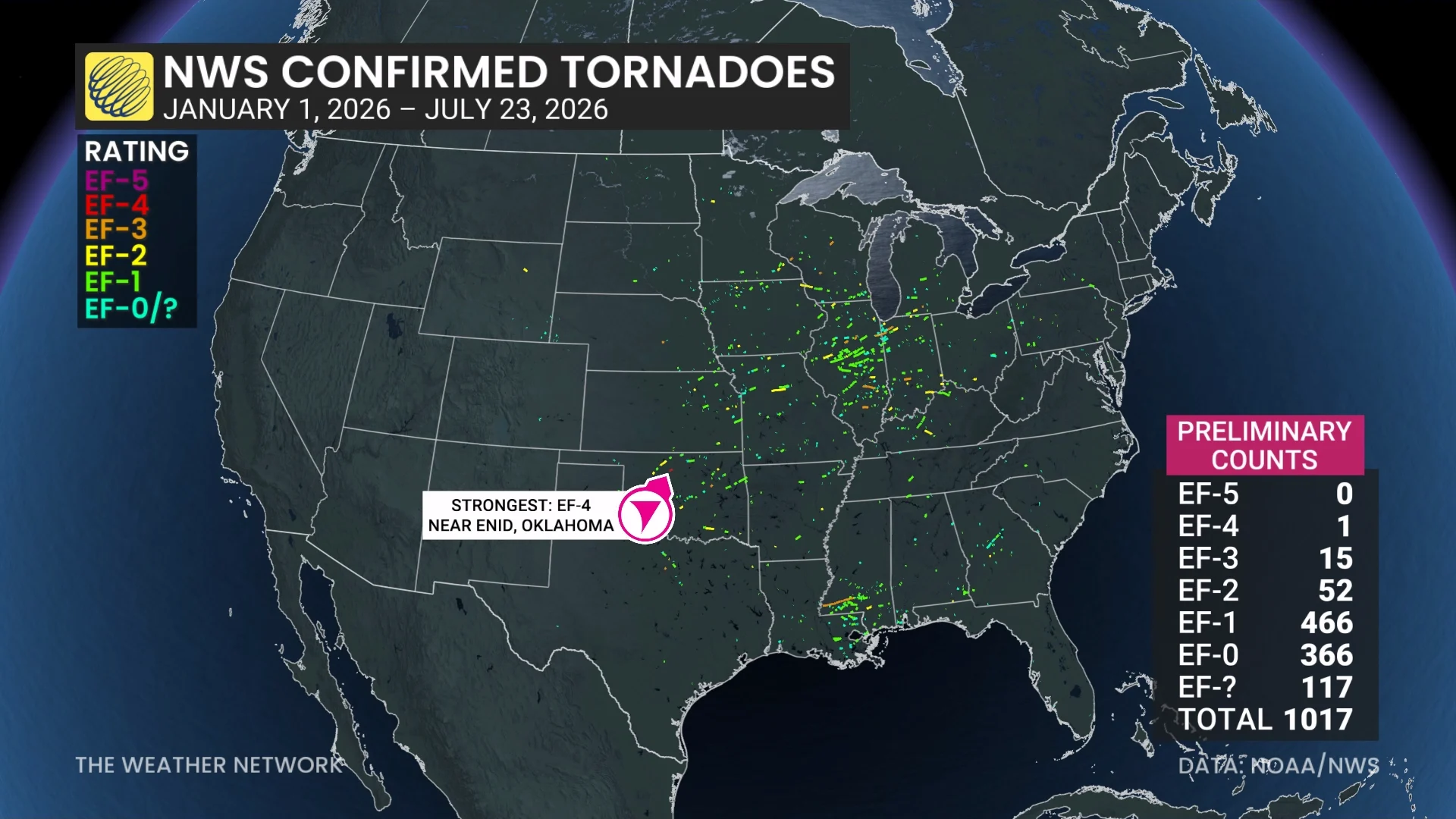
The U.S. National Weather Service has confirmed 1,017 tornadoes through the morning of July 23. This is 100-200 twisters ahead of the typical pace we’d see by this point in the summer.
The U.S.’s elevated count is connected to Canada’s above-average total so far this season, as the jet stream has shunted the active storm track farther north than usual.
While Canada’s tornado season simmers down in the autumn, severe weather is a year-round hazard across the U.S. Visitors to the Gulf Coast should be especially vigilant for dangerous thunderstorms during the autumn and winter months.