Severe season: Canada's first tornado and microburst of 2026 confirmed

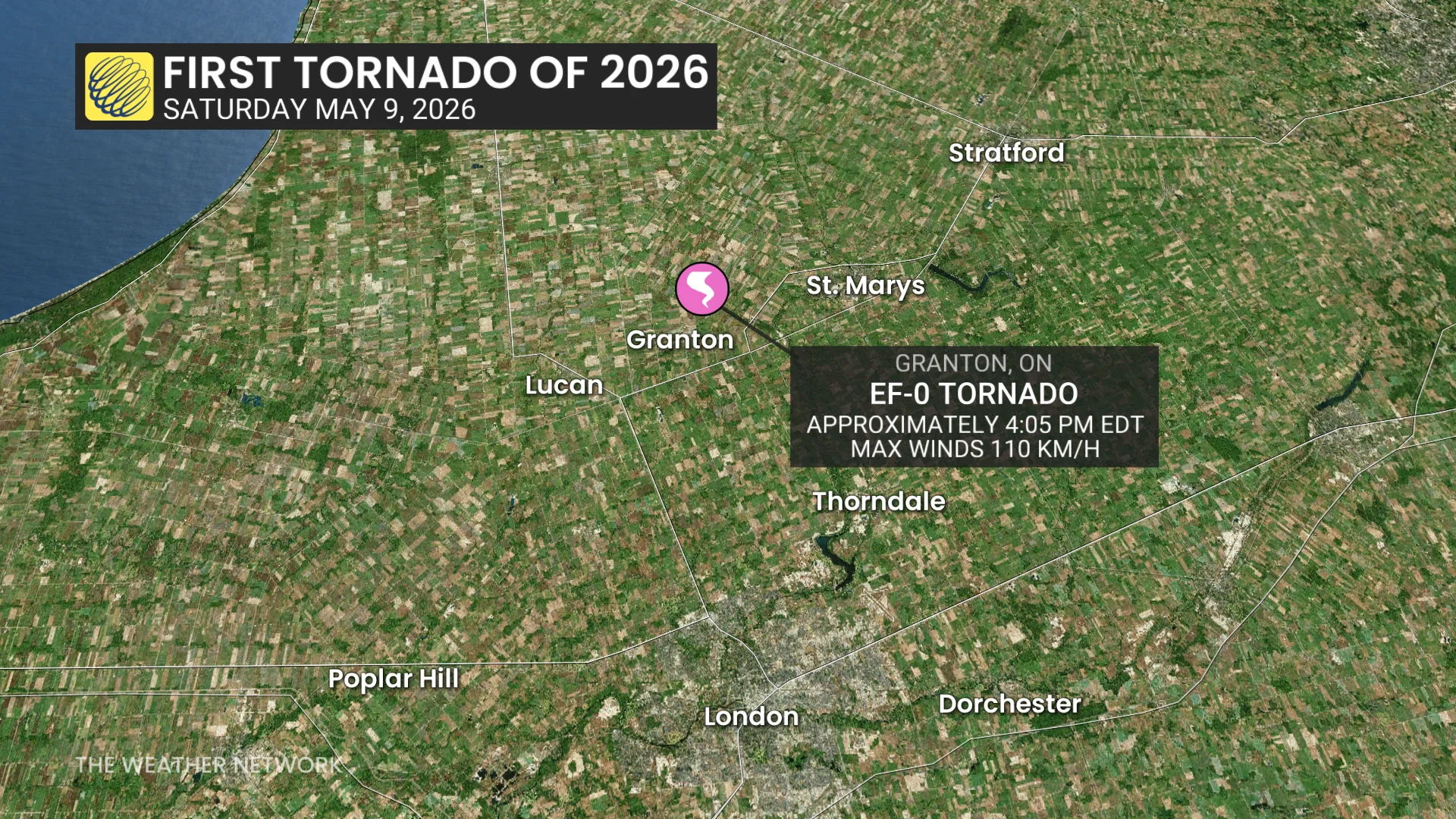
Canada's first confirmed tornado of 2026, an EF0 with 110 km/h winds, touches down in Granton, Ontario
The Northern Tornadoes Project (NTP) has confirmed Canada's first tornado and microburst of 2026 following a detailed damage survey conducted earlier this week. The storm, which passed through the Lucan, Ont. area on May 9, produced both an EF0 tornado and an EF0 microburst — the lowest rating on the Enhanced Fujita Scale.
DON'T MISS: When does Canada usually see its first tornado of the year?
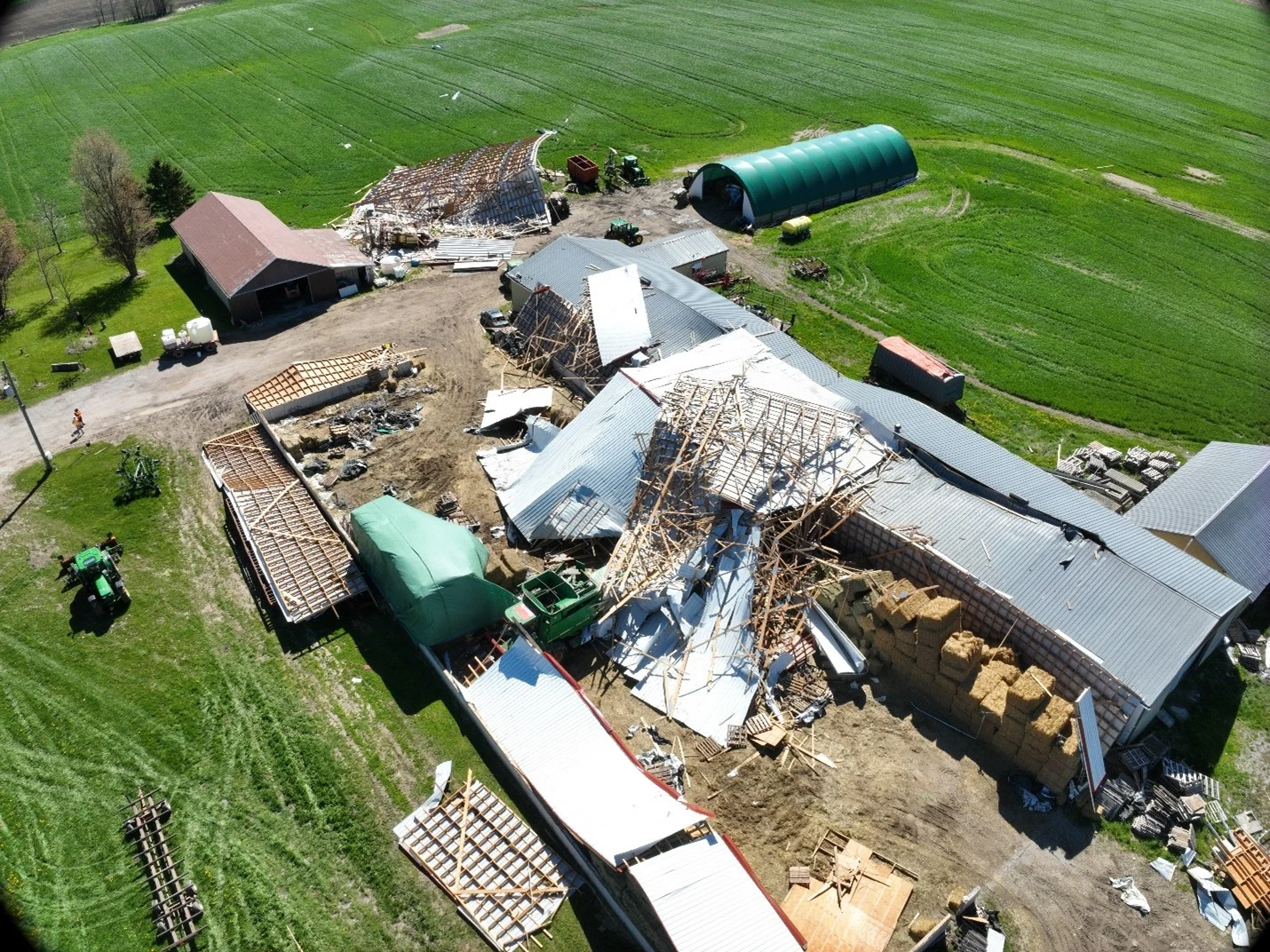
The EF0 microburst caused damage to a barn, removing its roof during the brief event, while the EF0 tornado toppled a vehicle, a solar panel on a pedestal, and broke large branches from trees. Fortunately, no injuries were reported.
May 9 – Lucan, Ont.
NTP conducted ground and drone surveys on May 10, 2026, confirming an EF0 microburst south of Lucan during a May 9 storm. The microburst, with an estimated maximum wind speed of 130 km/h, caused damage to a farm building. No injuries were reported.
The start time for the event is radar-estimated, and a satellite review is still underway.
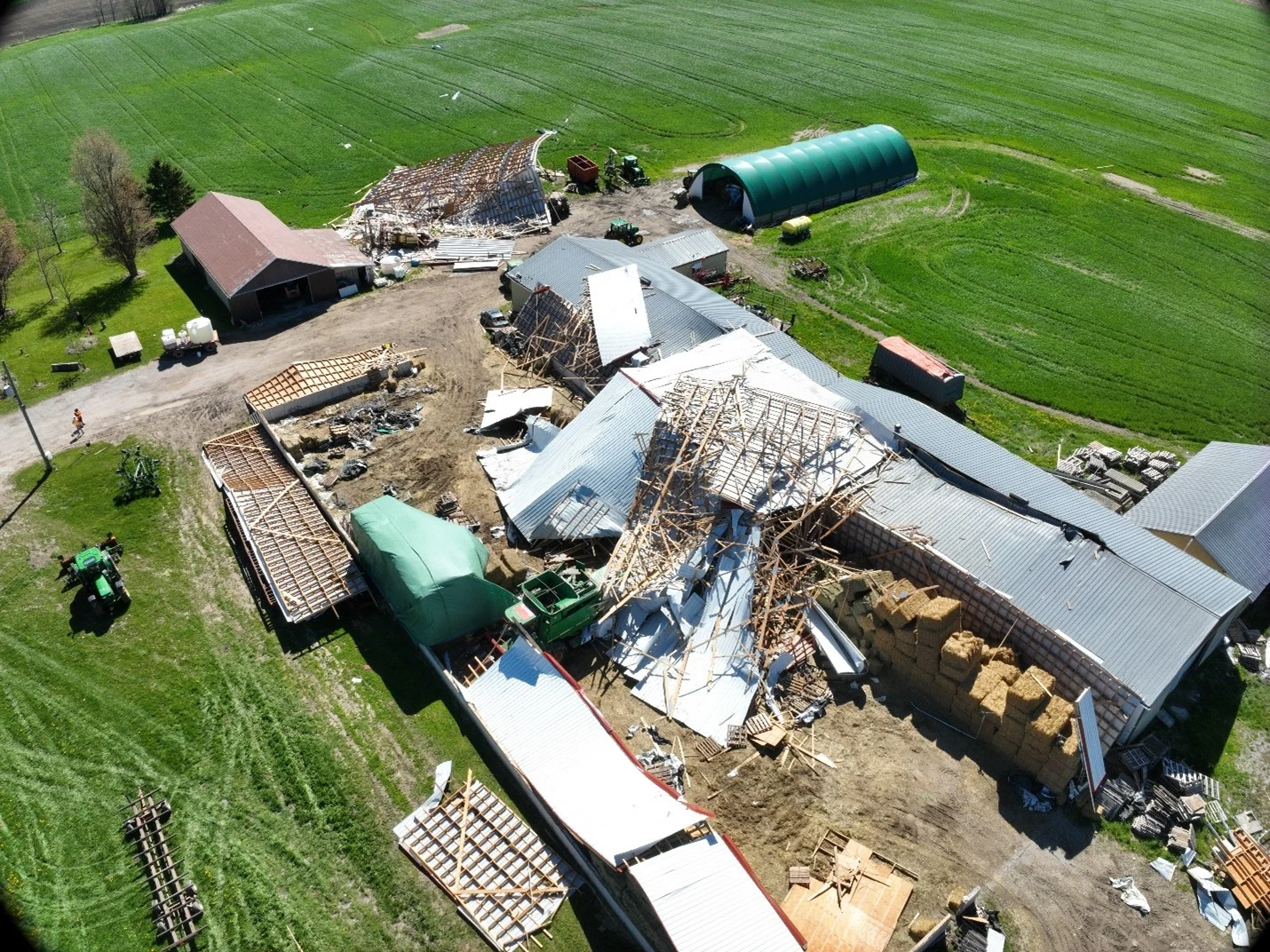
Oblique drone image showing the removed roof and fallen walls of a large barn impacted by the EF0 microburst. The barn had large openings on each end / Northern Tornadoes Project
May 9 – Granton, Ont.
The same storm also produced an EF0 tornado south of Granton, with maximum wind speeds estimated at 110 km/h. Damage included the toppling of a truck pulling a trailer and impacts to a solar panel. Limited weak tree damage was also documented in a small area.
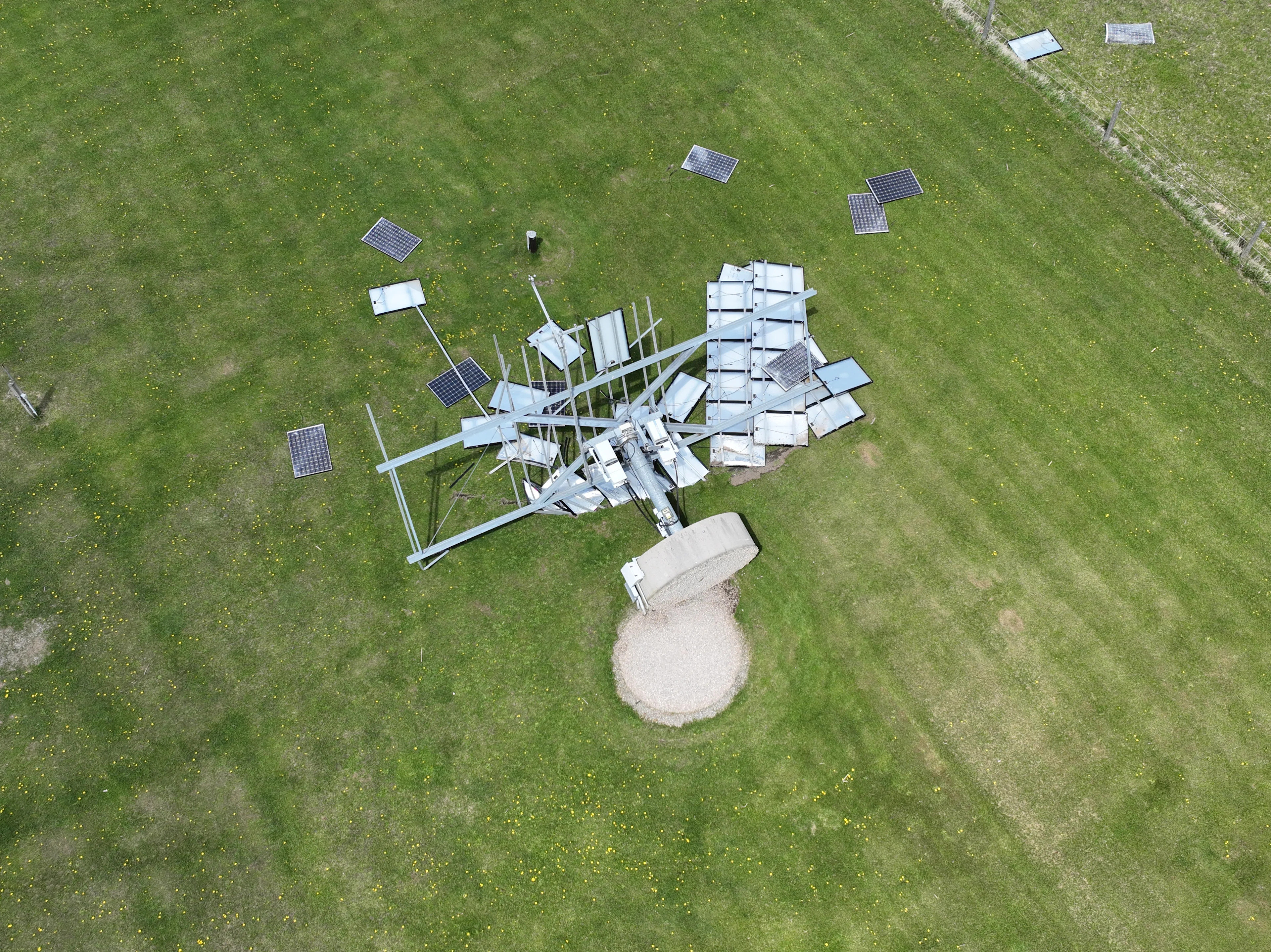
Drone image showing the solar panels and pedestal that were toppled by the EF0 tornado / Northern Tornadoes Project
While the exact track details remain uncertain due to limited damage indicators, the tornado’s path was likely at least 1 km long. The motion of the tornado was assessed as west-to-east.
RELATED: Tornadoes in Canada: Safety tips, historical data, and research on Canadian severe weather
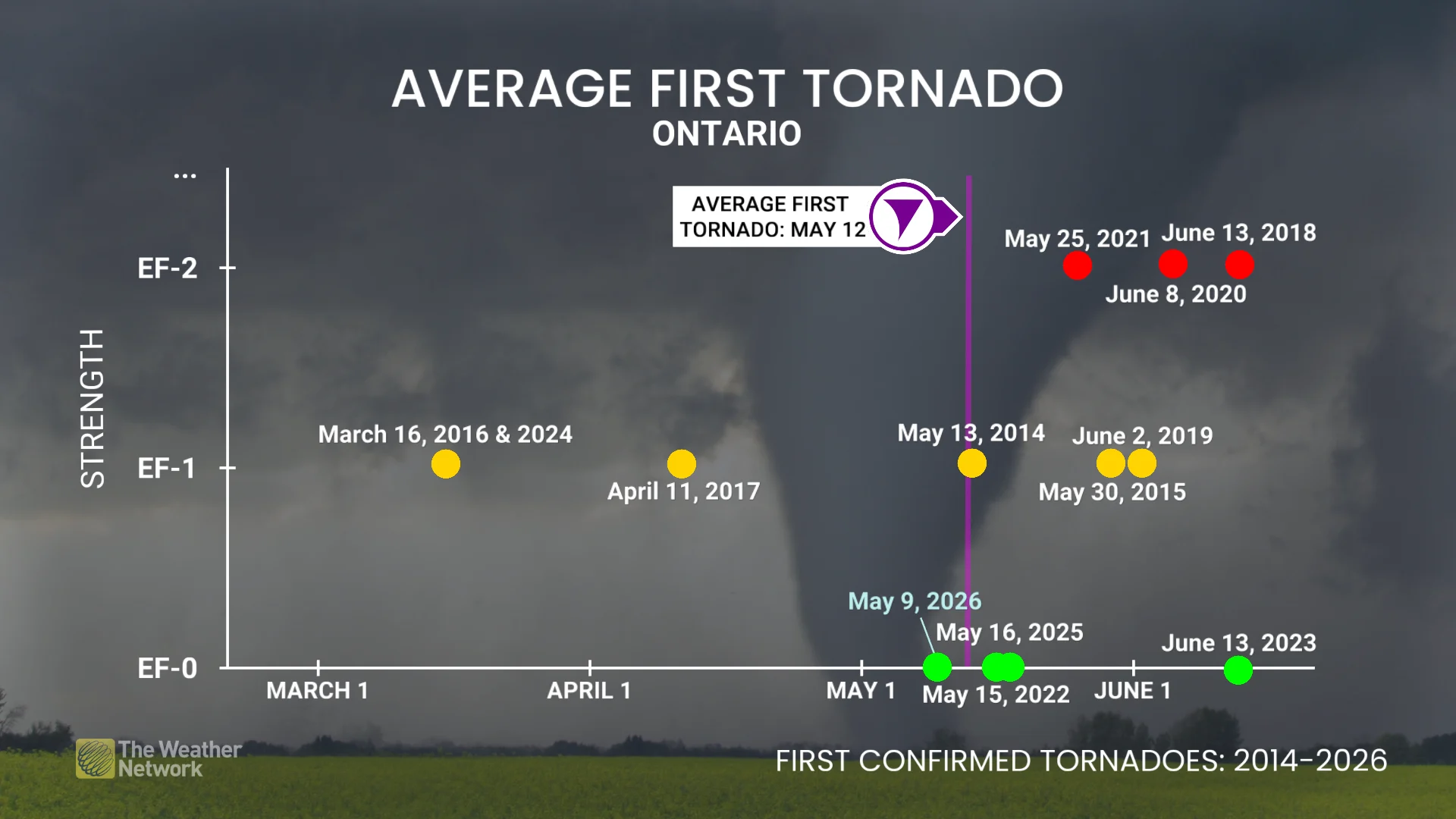
May and June are typically active months for severe weather in Ontario, so stay informed and have a safety plan ready in case of severe thunderstorms or tornado warnings.