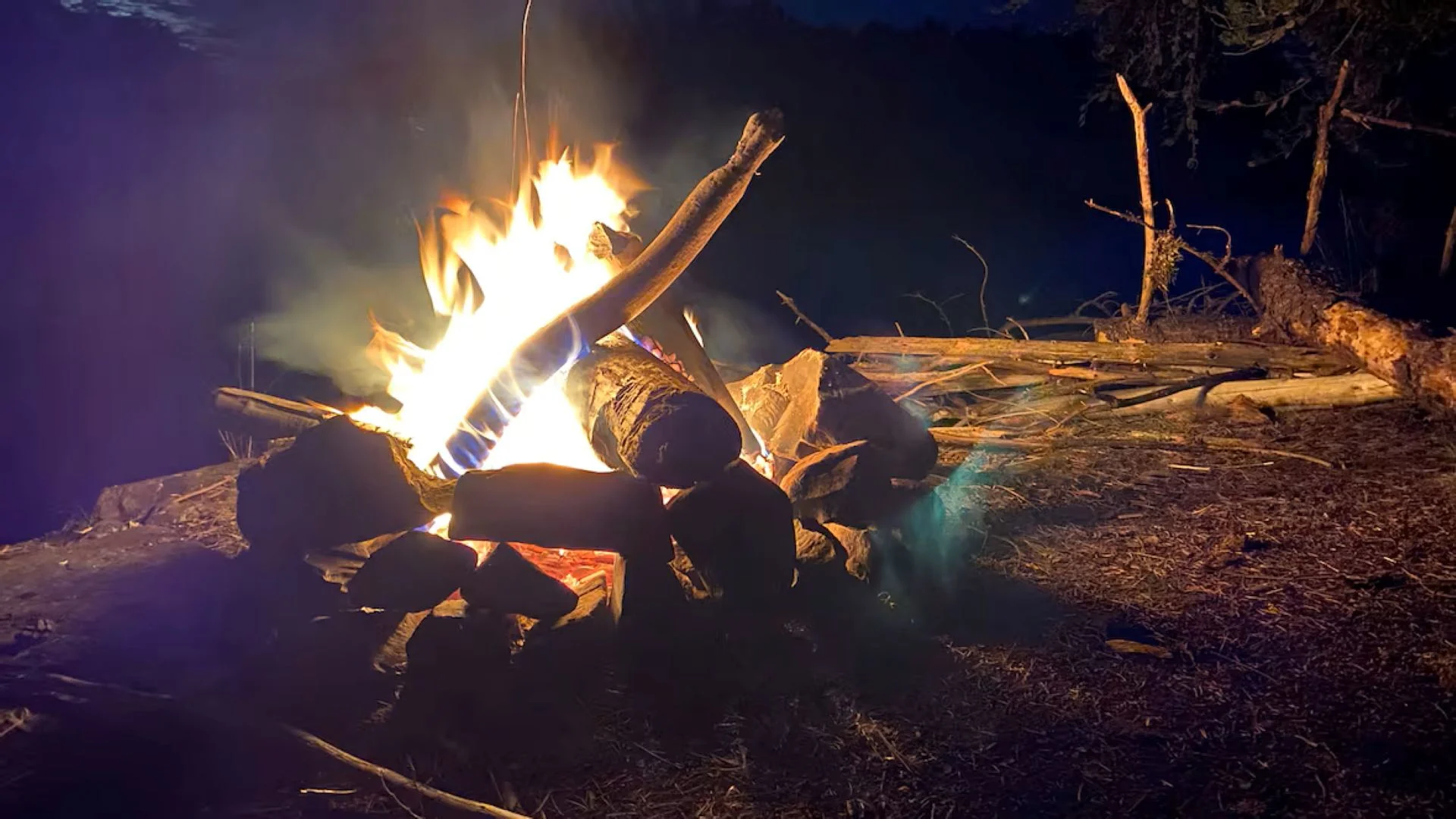
Campfires to be banned across B.C.'s South Coast amid warm spring weather

The B.C. Wildfire Service (BCWS) will enact campfire prohibitions across the Coastal Fire Centre — which includes the South Coast — on Thursday at noon, amid unseasonably warm spring conditions.
It comes as at least two dozen temperature records fell across B.C. over the weekend, with some areas breaking maximum temperature records by as much as 8 C.
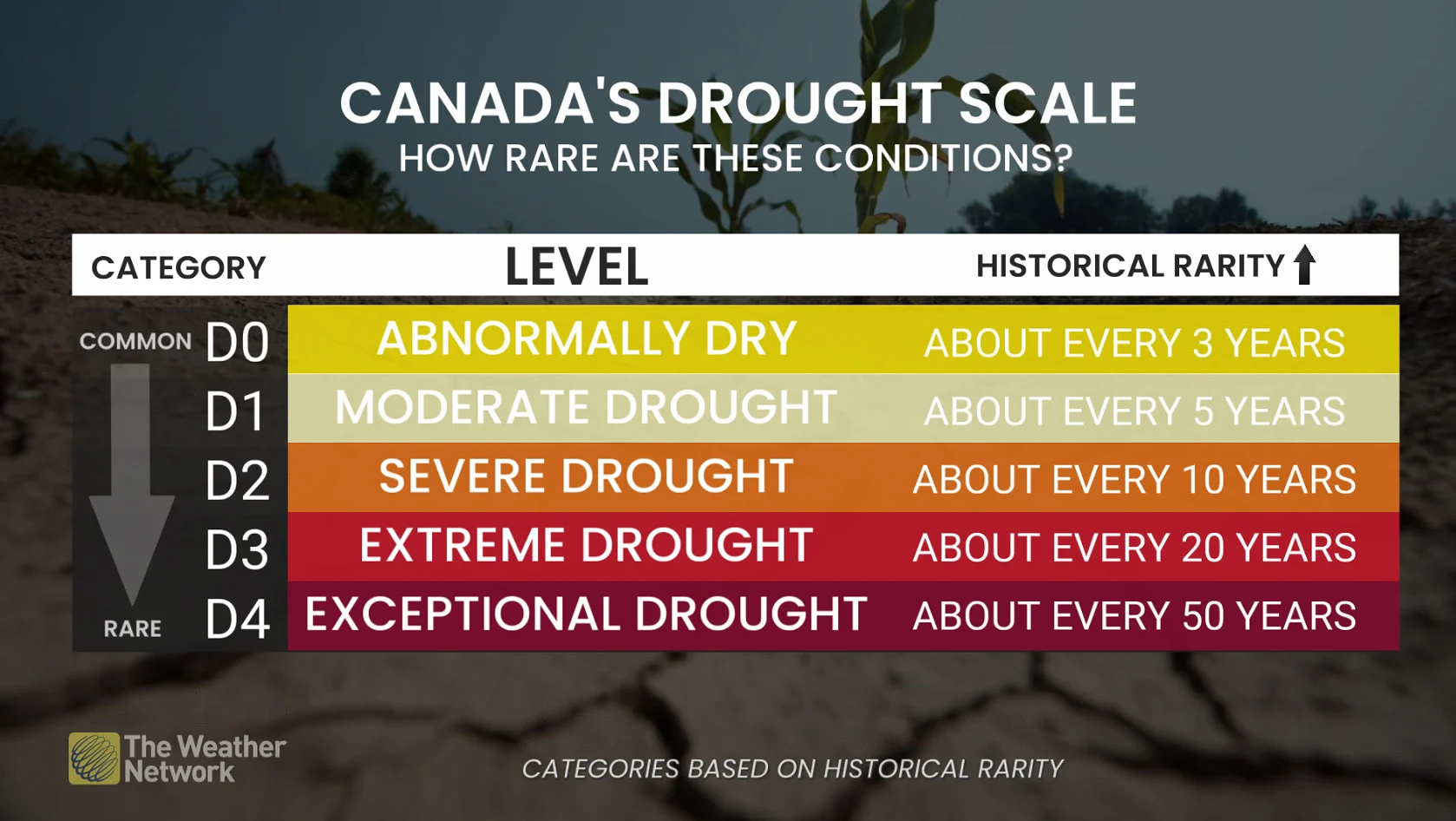
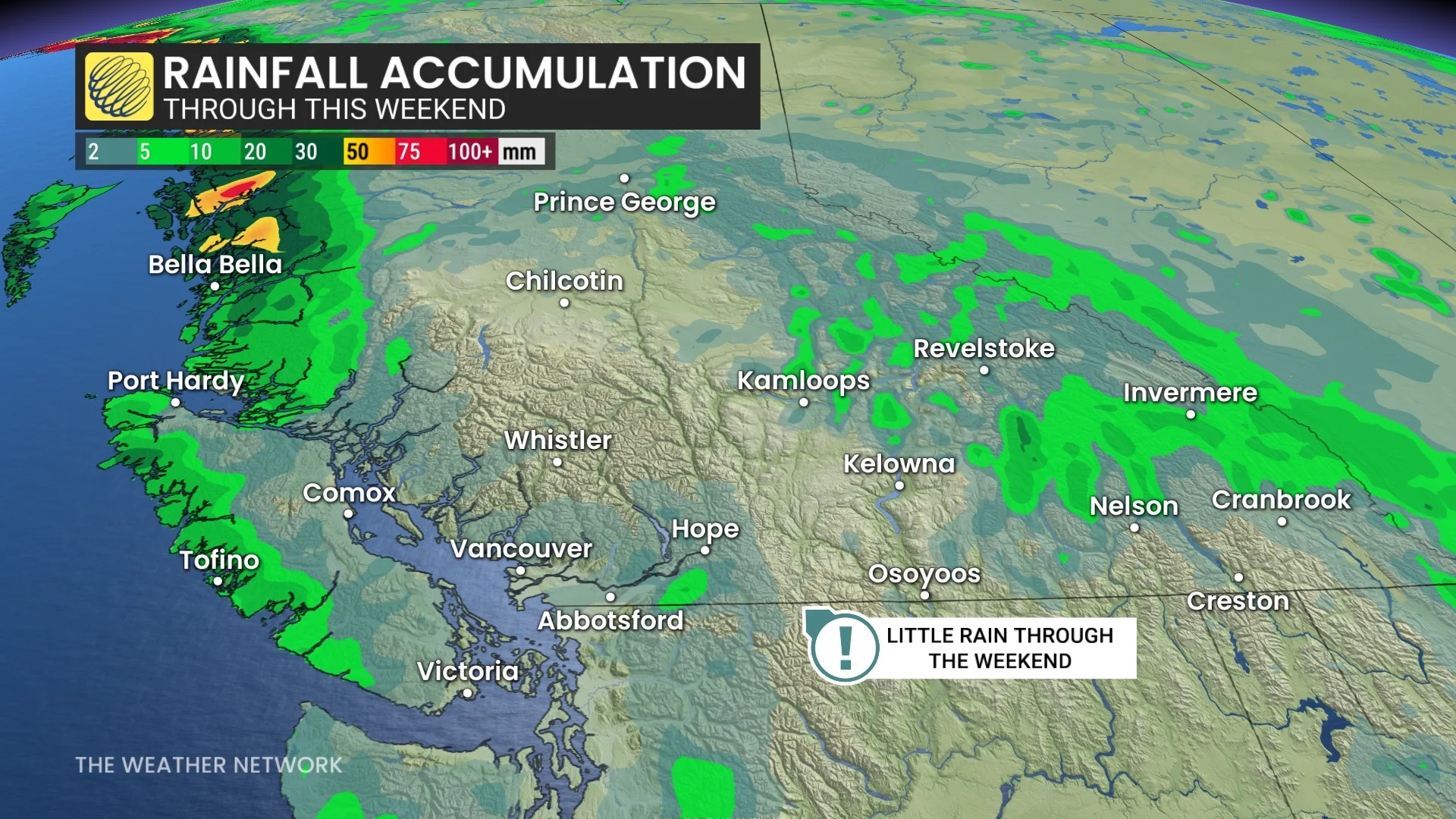
Southwest B.C. has been warm and dry for weeks, with Metro Vancouver recently banning lawn watering in May, the earliest that's happened on record.
And with high or extreme fire danger being reported across the Coastal Fire Centre, fire information officer Jennifer Lohmeyer said widespread fire prohibitions will go into effect on Thursday.
"In the Coastal Fire Centre, we've been experiencing warm, dry conditions for the last three weeks and that's expected to continue," she said on Monday.
Lohmeyer said more details on the campfire ban will be released in the next day, but all open burning — including larger Category 2 and Category 3 fires — will also be prohibited.
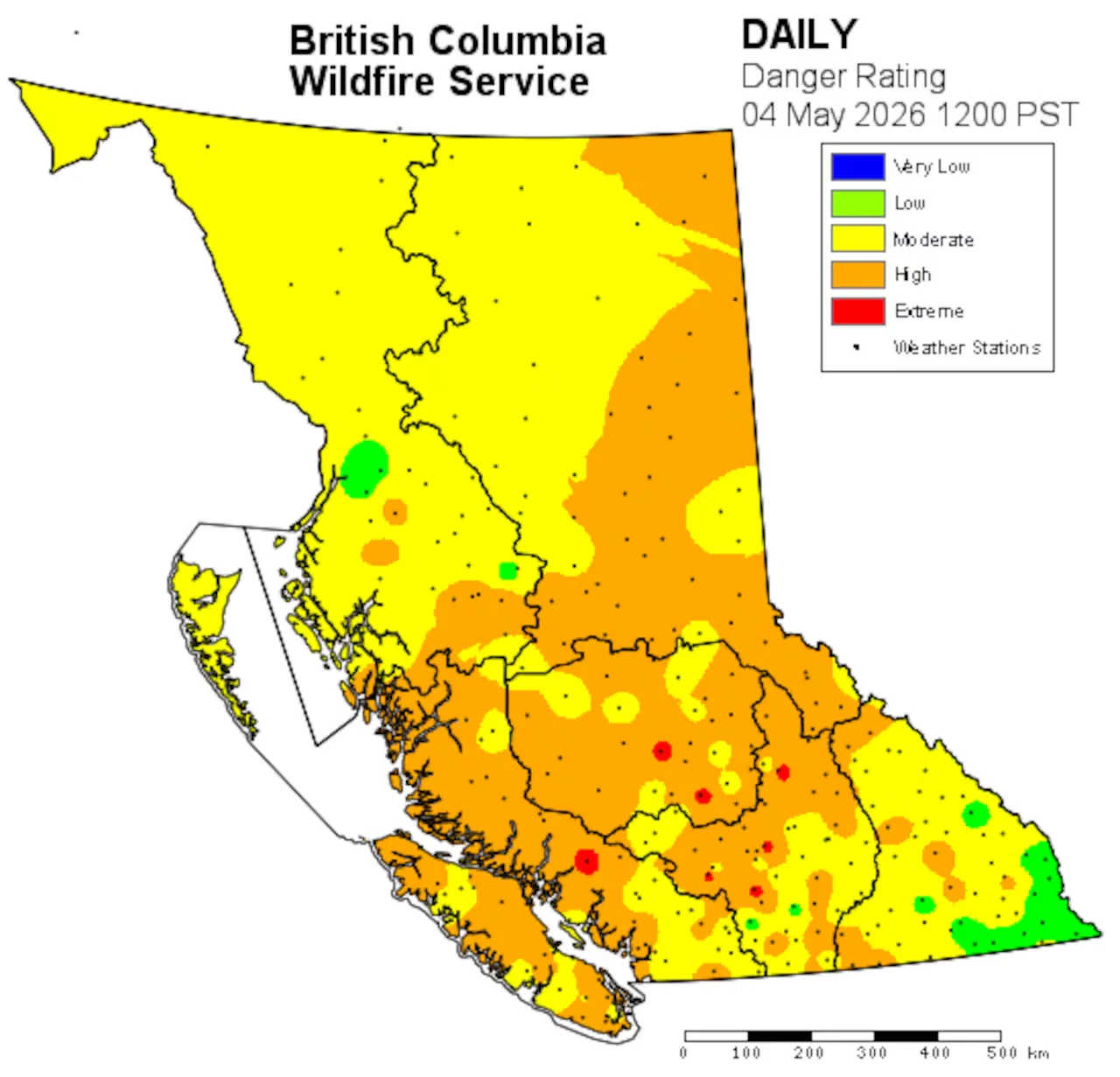
Across B.C.'s South Coast, the B.C. Wildfire Service says there's high fire danger in most regions. It comes after an unseasonably warm start to spring. (B.C. Wildfire Service)
Campfires — which fall under Category 1 fires, according to the B.C. Wildfire Service — are fires that are no more than half a metre high by half a metre wide, though outdoor stoves will still be allowed under the campfire ban.
Anyone breaching the ban could be hit with a $1,150 violation ticket, an administrative penalty of up to $10,000, or fines of up to $100,000 and one year in jail if convicted in court.
Currently, Category 2 and Category 3 fires are banned across the Cariboo, and in parts of northwest B.C. They include large pile fires and stubble fires.
Those bans will also be implemented in parts of the Prince George Fire Centre covering north-central and northeast B.C. — including the area around Prince George, Fort St. James and the Robson Valley — starting on Tuesday at noon.
The fire bans coming to those regions, according to the BCWS, will last until mid-October unless they're rescinded earlier.
Temperature records broken
The unseasonably hot temperatures across B.C. over the weekend come after a warmer winter and an ongoing drought in many parts of the province, which officials say could mean higher fire risks.
As of 4:30 p.m. PT Monday, there were just under 30 wildfires burning across B.C., most of which were listed as under control by the BCWS.
Andréanne Doyon, an associate professor at Simon Fraser University's resource and environmental management school, said she worries that low snowpack levels this spring could prove problematic if the summer is hotter than usual.
"We know that when we go into hotter, which usually means drier, summers, the fire season is worse," she said on Monday.
"That gets compounded then by air quality ... when it's really hot, that just sort of creates a really unfortunate event when we can see either cascading or compounding hazards."
Thumbnail courtesy of Martha Dillman/CBC.
The story was originally written by Akshay Kulkarni and published for CBC News. It contains files from Baneet Braich and Jon Hernandez.