A destructive, stormy day in Ontario cost $500 million back in 2005

The storms caused widespread flash flooding and three damaging tornadoes throughout the region
One of Ontario’s costliest weather disasters unfolded during a muggy late-summer afternoon in 2005.
Clusters of vigorous thunderstorms caused significant damage as several tornadoes touched down amid torrential downpours that unleashed major flash flooding throughout the region.
DON’T MISS: What is a flash flood? A civil engineer explains
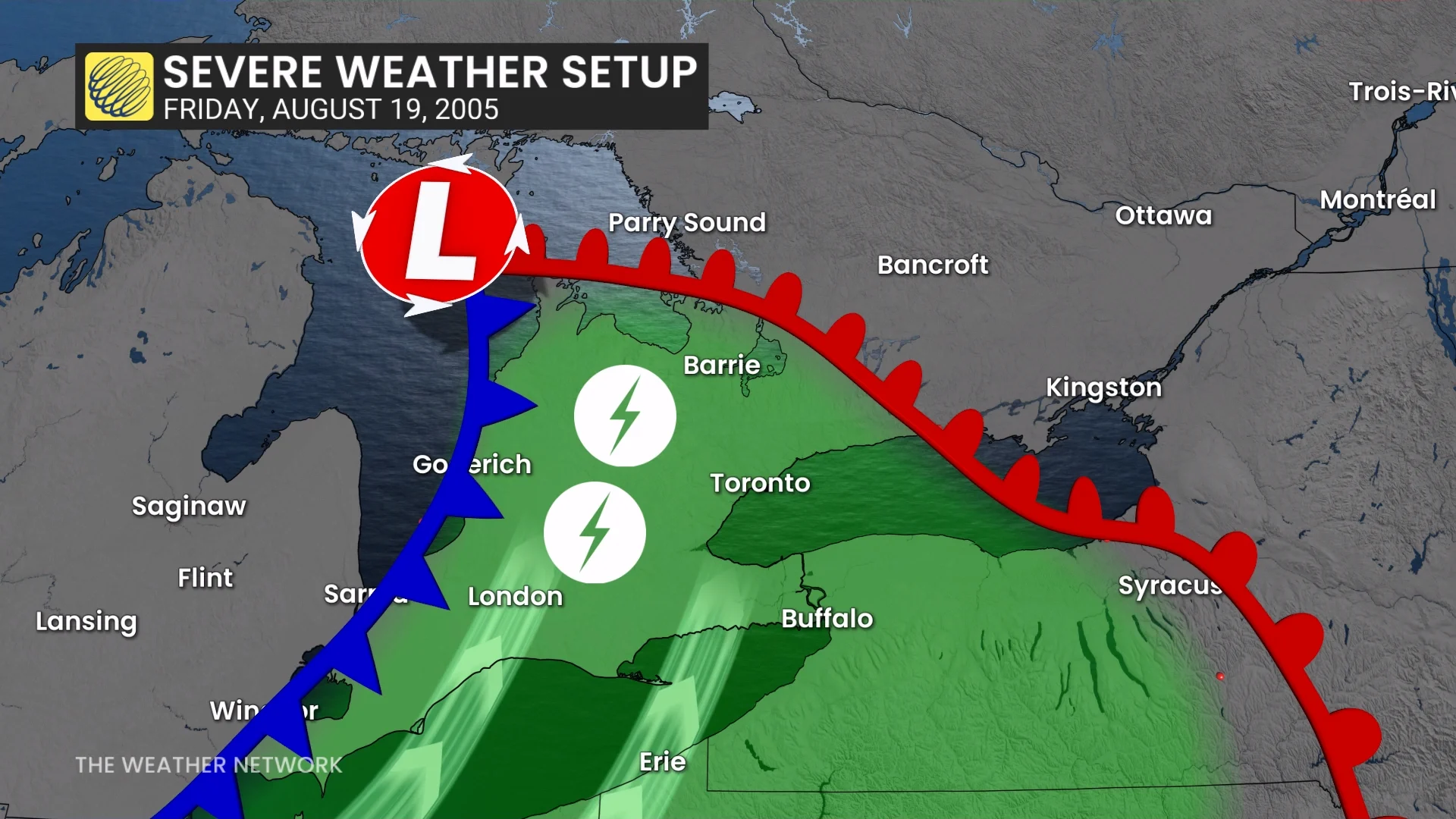
A centre of low pressure moving over Lake Huron set the stage for severe weather in southern Ontario during the morning and afternoon hours on Aug. 19, 2005.
Warm, muggy air from the south provided the fuel needed for storms to thrive and produce extremely heavy rainfall. Ample wind shear aloft spawned a tornado threat.
A strong tornado touched down in Miverton during the lunch hour, producing F2 damage along a path that carved northeast toward Conestogo Lake.
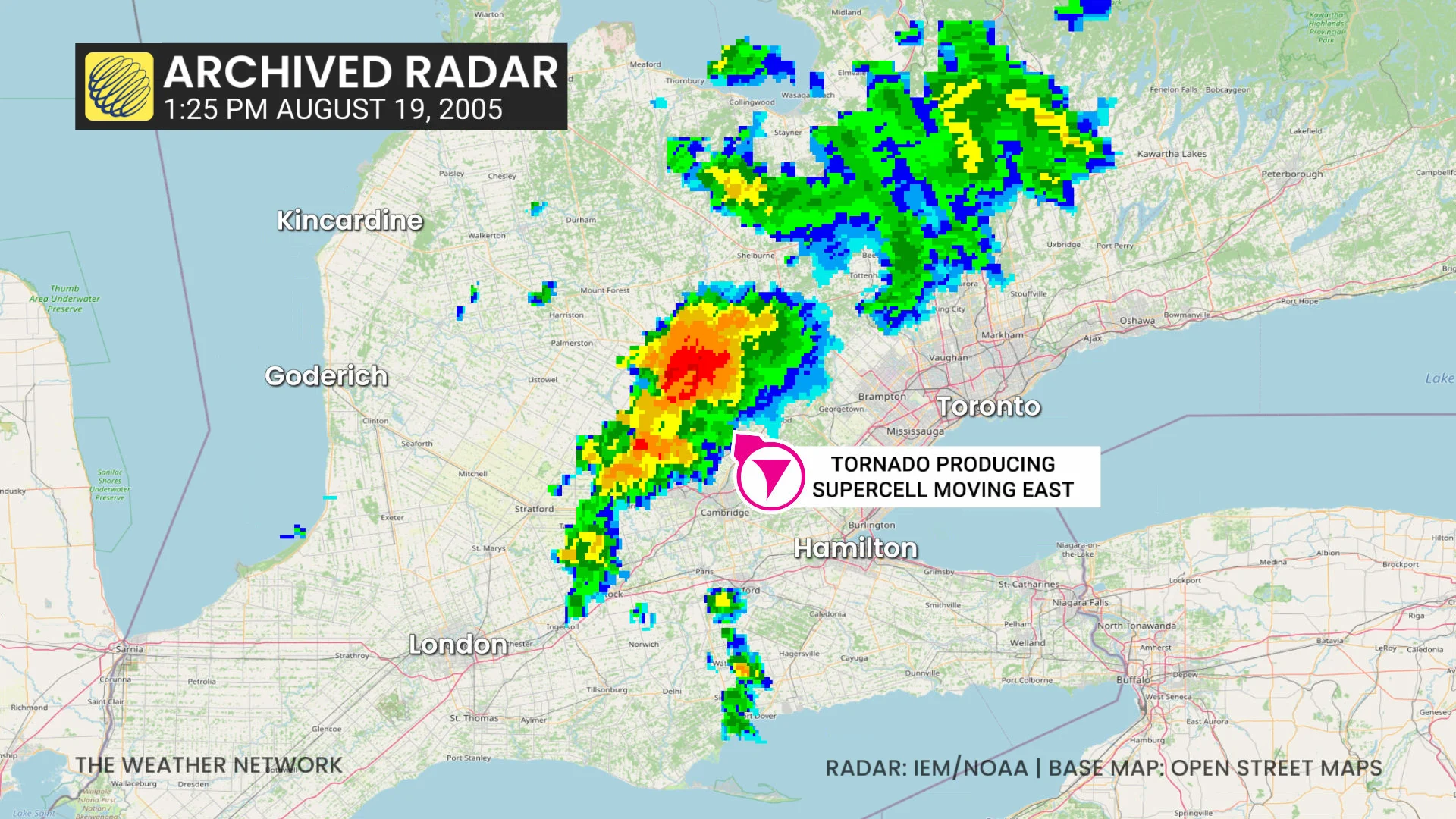
Less than an hour later, the storm produced another significant F2 tornado in Salem that damaged homes, farms, and trees as it moved toward Lake Belwood. Six people were injured in the two twisters, but officials reported no fatalities from the event.
A report filed after the storm highlighted the intensity of the storms, noting that one of the tornadoes “drove a ballpoint pen seven centimetres deep into a tree, splitting the trunk” on an area farm.
A third tornado occurred near South Easthope later that afternoon, producing F1 damage and no reported injuries.
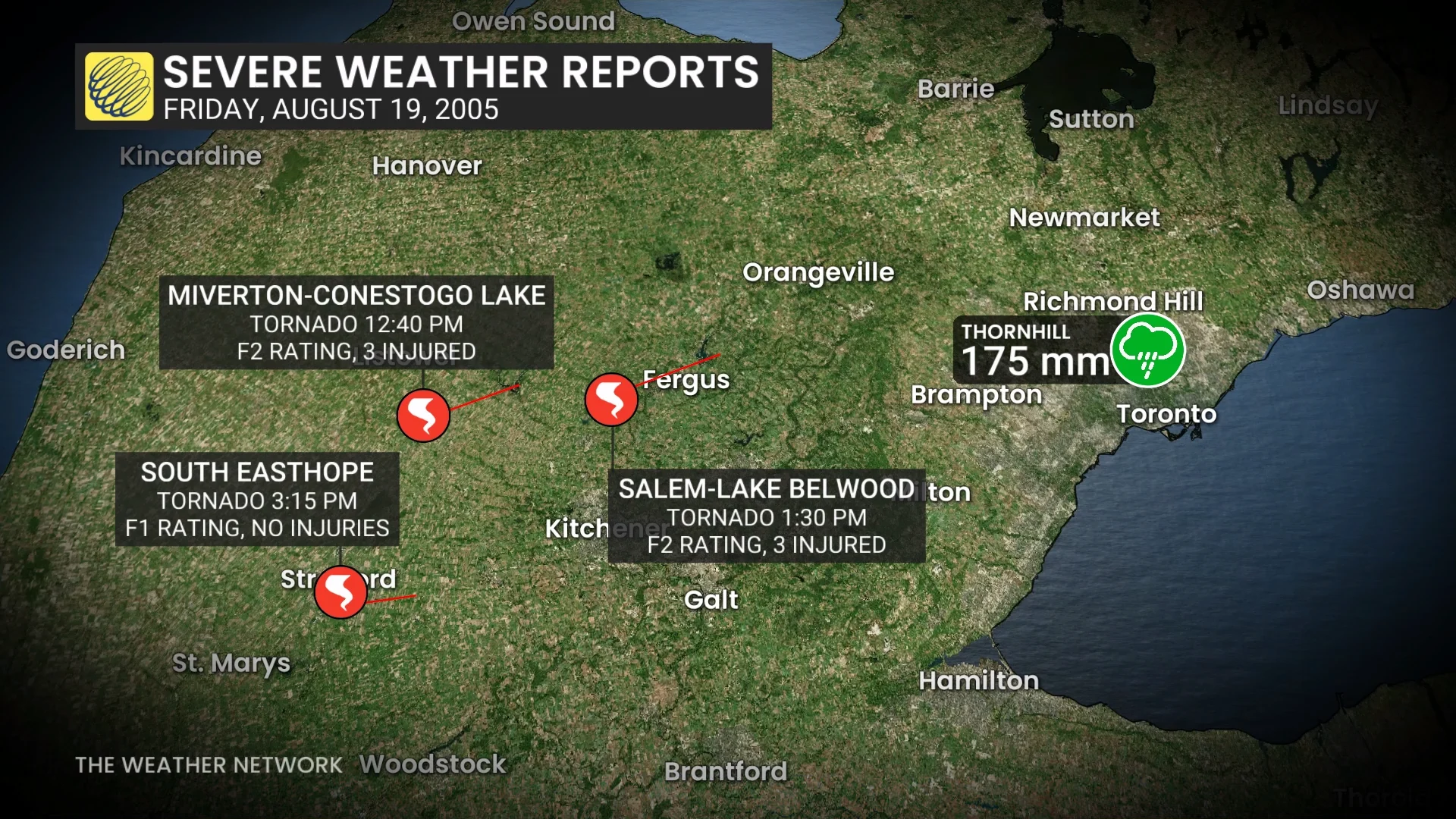
Twisters weren’t the only ordeal folks in southern Ontario had to deal with during those Friday afternoon storms. Exceptionally heavy rainfall caused major flash flooding throughout portions of the Greater Toronto Area.
One observer in Thornhill reported 175 mm of rain in one hour, while an Environment Canada office in Downsview saw a one-hour rainfall total of 100 mm. These overwhelming rainfall rates reportedly exceeded the flooding rains that arrived with Hurricane Hazel’s remnants in 1954.
Public Safety Canada stated that insurance companies received more than 15,000 claims related to wind or flood damage, and that total losses likely exceeded $500 million.
This was reportedly Ontario’s second-costliest disaster at the time behind the 1998 ice storm, though a litany of storms in the intervening decades have pushed it farther down the list.