
A tornado outbreak caused Georgia’s deadliest plane crash

Southern Airways Flight 242 crashed near Atlanta, Georgia, during a tornado outbreak on April 4, 1977
Georgia’s worst-ever plane crash occurred in the middle of a tornado outbreak on April 4, 1977.
A line of severe thunderstorms heavily damaged the commercial jet as it approached Atlanta, forcing the crew to attempt an emergency landing on a nearby highway.
The accident is one of many weather-related crashes in the 1970s and 1980s that directly led to safety improvements from which we benefit today.
DON’T MISS: Microbursts can turn a gentle storm into a harrowing ordeal
Flying during a major tornado outbreak
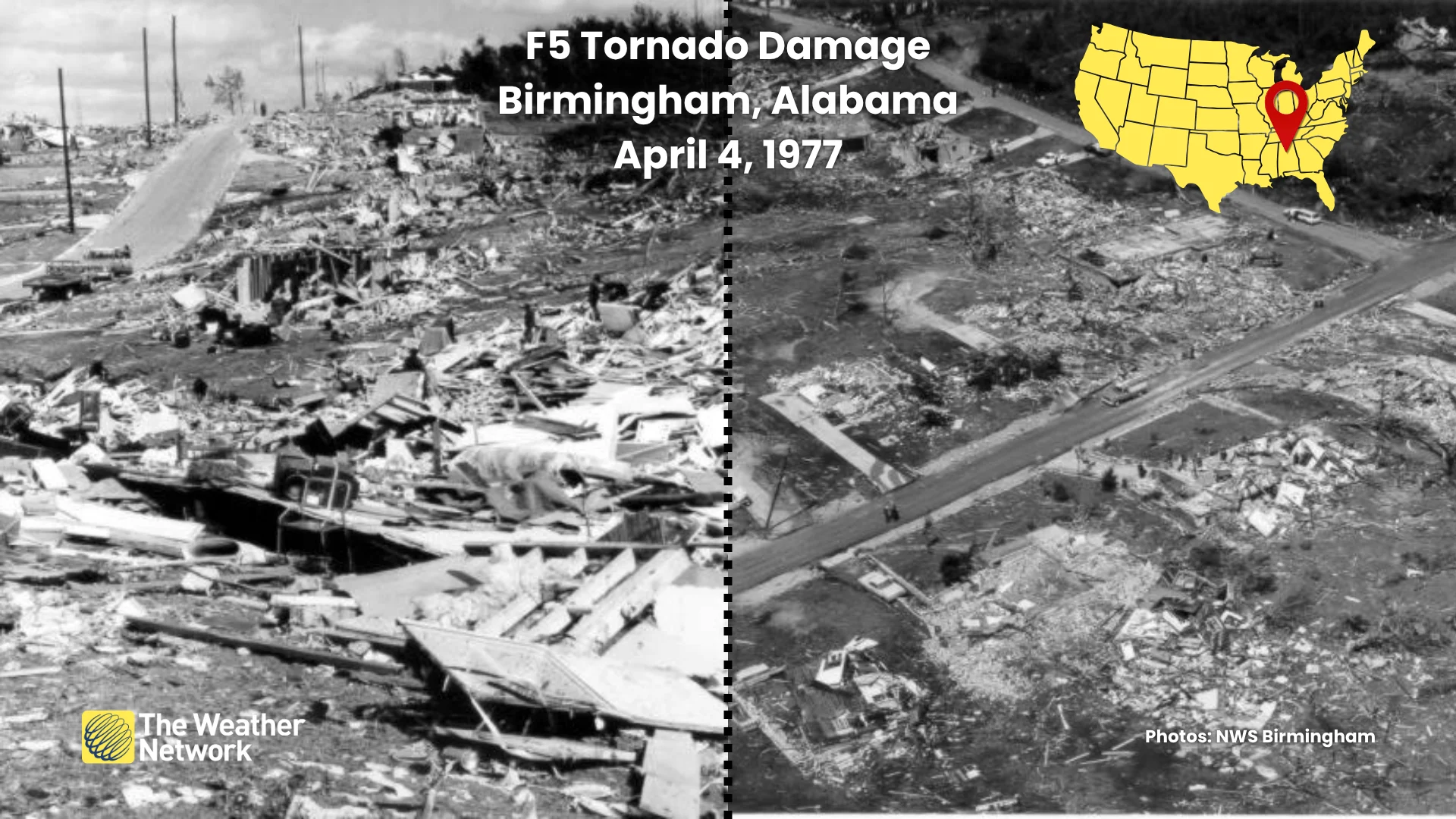
Forecasters knew the setup was ripe for widespread severe weather across the southeastern United States that Monday afternoon. Nearly two-dozen twisters touched down, including a deadly, scale-topping F5 that tore through Birmingham, Alabama.
Southern Airways Flight 242 departed Huntsville, Alabama, at 3:54 p.m. that stormy afternoon, carrying 81 passengers and 4 crew members for the short half-hour hop over to Atlanta, Georgia.
Flight 242 was equipped with on-board weather radar, but the technology of the time struggled to highlight the severity of the storms along the flight’s path. As a result, the crew misread the radar and flew directly into the heart of a severe thunderstorm near Rome, Georgia.
The first sign of trouble emerged about 12 minutes into the flight. Rain and hail pounded the aircraft with such ferocity that it was audible on the cockpit voice recorder for several minutes.
Around 4:09 p.m., the pilot radioed that hail smashed their windscreen and that the left engine shut down. Several moments later, the right engine shut down as well. The immense surge of rain and hail had damaged both of the engines to the point that they wouldn’t restart.

RELATED: A tornado caused the 1981 crash of a commercial jet
Gliding without engines, the pilots of Flight 242 tried to divert to nearby airports to no avail. They were simply losing too much altitude too quickly to make it to a nearby airport.
Faced with no other options, the crew attempted to land on a straight stretch of highway in the town of New Hope, Georgia, about 50 km northwest of the Atlanta Airport. The plane broke apart in a fireball when it crashed into a gas station, vehicles, and trees along the road.
72 people died in the crash, including nine people on the ground. Against all odds, 22 people aboard Flight 242 survived the ordeal.
Flying is much safer today
Flying is safer today than at any point in aviation history, largely because of lessons learned from tragic crashes like the loss of Flight 242.
A repeat of that 1977 disaster is highly unlikely today thanks to better training, better communication, and better technology that helps flight crews navigate hazardous weather conditions.
RELATED: How Doppler radar revolutionized weather and saves lives
Today’s advanced radar systems, both on the ground and onboard aircraft, can detect dangers like intense rain, hail, and wind shear before they can pose a safety hazard.
Realtime weather information is readily available to flight crews to keep them informed of the latest developments, ensuring a safe journey to their destination.
Header image created using graphics and imagery from Canva.