Weather made the Chernobyl nuclear disaster even worse

The incident in 1986 remains the world’s worst-ever nuclear accident
Radioactive fallout covered much of Europe in the spring of 1986 following the worst nuclear power plant disaster ever recorded.
Shifting winds sent dangerous particles wafting across the continent in the days following the meltdown and explosion at Chernobyl.
DON’T MISS: The day radioactive hail fell on Washington, D.C.
Chernobyl remains the world’s worst nuclear accident
Chernobyl Nuclear Power Plant sits just outside the town of Pripyat in far northern Ukraine, a short walk away from the Belarus border and around 100 kilometres north of Kyiv.
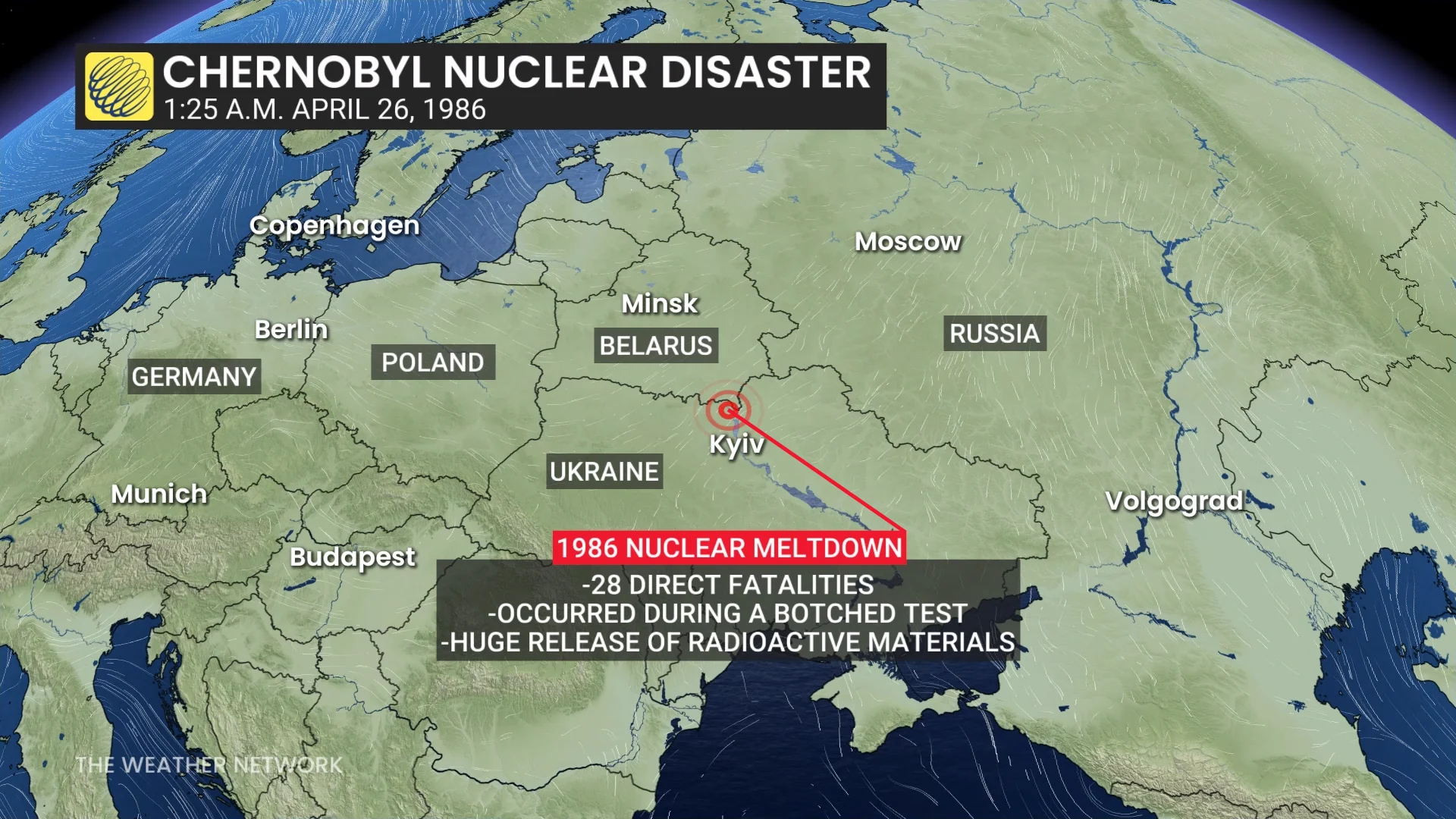
The plant generated electricity using four nuclear reactors. Shortly before 1:30 a.m. on Apr. 26, 1986, operators initiated a test to see how the plant’s emergency systems would continue cooling a nuclear reactor during a major power outage.
A series of human errors and malfunctions caused a power surge that severely damaged Reactor No. 4, leading to several powerful steam explosions, a raging fire, and a meltdown of the reactor core. The catastrophe killed 28 plant employees and first responders within the first few days.
Weather played a significant role in the aftermath
What happened at Chernobyl didn’t stay there for long. The explosions and fires released a tremendous amount of radioactive materials into the atmosphere. Much of that contamination involved a long-lived, dangerous radioactive isotope called cesium-137.
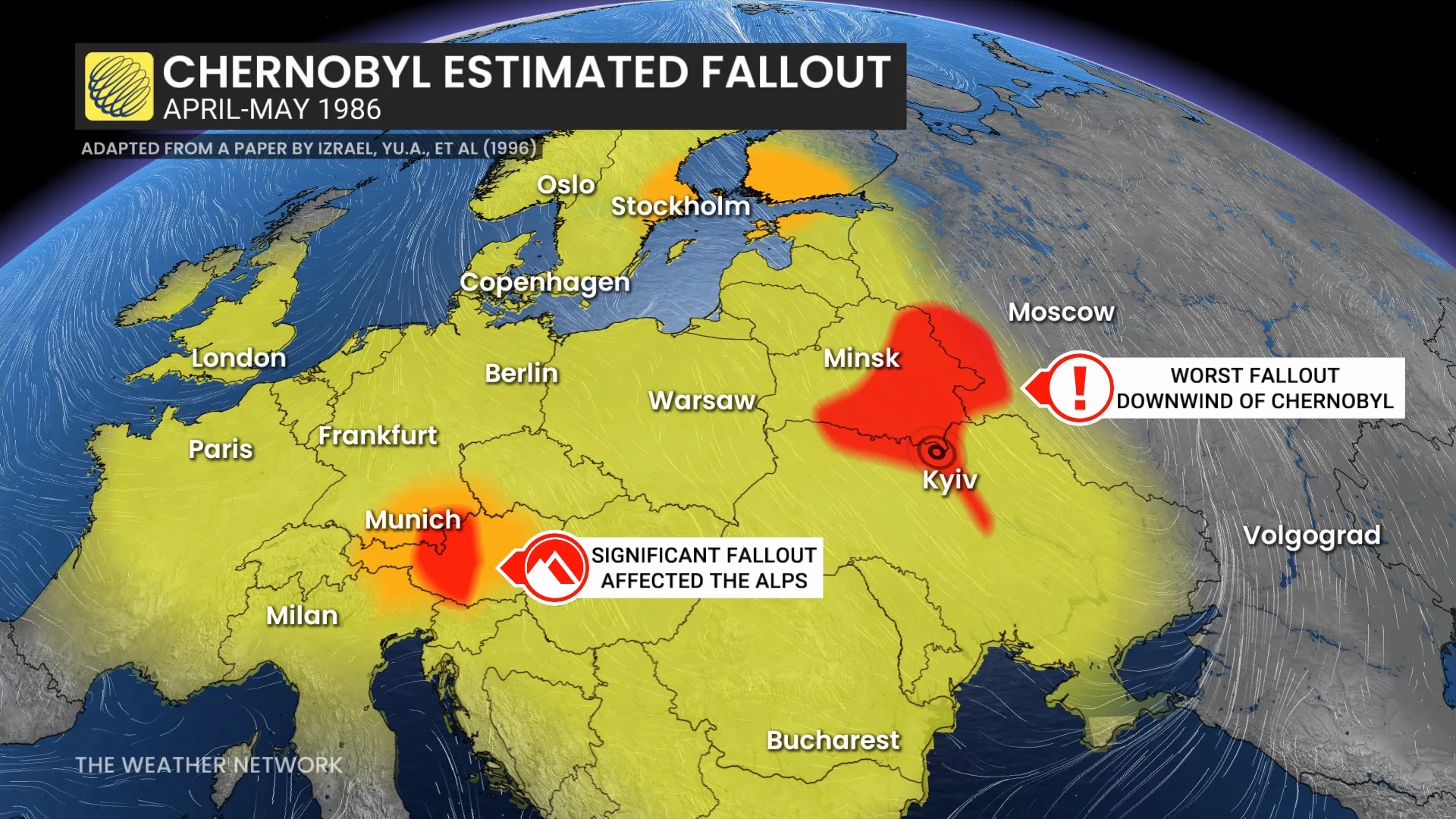
Several weather systems helped transport this radioactive cloud west and then north across Europe in the days following the disaster.
A detailed study released years after Chernobyl found that the worst contamination occurred relatively close to Chernobyl around northern Ukraine, Belarus, and portions of western Russia. Belarus received more than one-third of all the contamination deposited in Europe.
Scientists also measured considerable levels of cesium-137 high in the Alps, as well as across portions of Sweden and Finland. Notable levels of radioactive contamination stretched as far west as Ireland.
The severity and extent of Chernobyl’s radioactive fallout was magnitudes greater than any single nuclear weapon detonation.
Chernobyl released many times more radioactive materials than Japan’s Fukushima Daiichi disaster in March 2011. The dispersion of contaminants was also much greater with Chernobyl than the Japanese incident, largely due to the materials involved and the 1986 event’s violent explosion and fires.
Header image created using graphics and imagery from Canva.