321,000+ hectares burned in explosive European fires this year

The total area burned by wildfires across the European Union so far this year is more than twice the average for this point in July
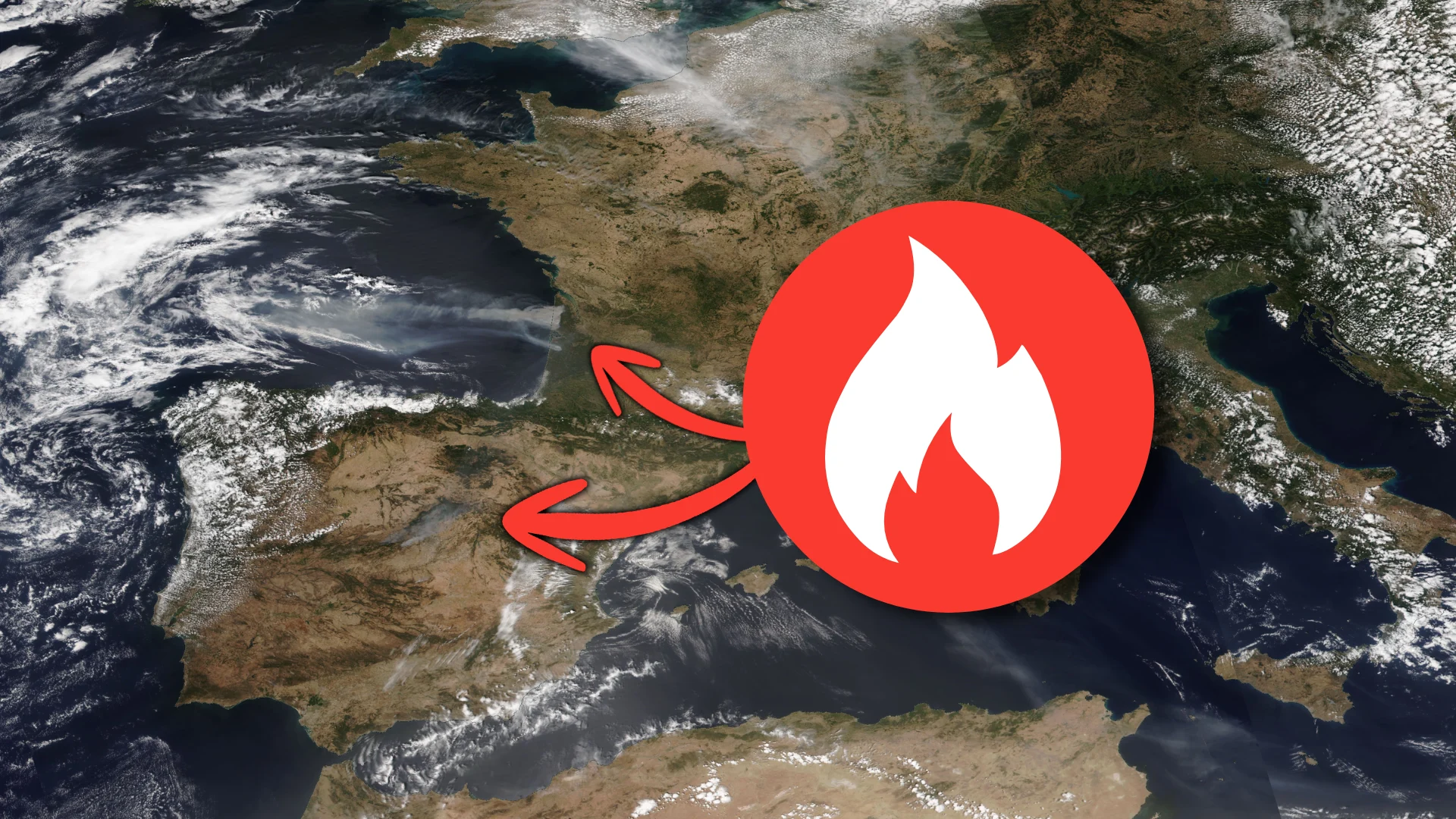
Europe’s explosive wildfire season grew worse this week as several large fires raged in France and Spain.
Drought conditions and a series of brutal heat waves have driven the continent’s above-average fire activity, with twice as much area burned as usual for this point in the year.
DON’T MISS: Why extreme heat is one of the world’s deadliest weather disasters
Hundreds of thousands evacuated from fire zones
This weekend saw at least four large fires burning out of control across western Europe, forcing hundreds of thousands of people from their homes as the blazes crept into populated areas.
Prime Minister Sébastien Lecornu of France called the situation “unprecedented” in a social media post on Saturday, adding that “1,400 firefighters, 1,500 military personnel, and 1,700 internal security forces are now engaged in fighting the fires.”
Forest fires near Madrid, Spain, may have also affected vital equipment used in NASA’s Deep Space Network (DSN), which enables communication with spacecraft that travel far beyond low-earth orbit, such as the Artemis and Voyager missions.
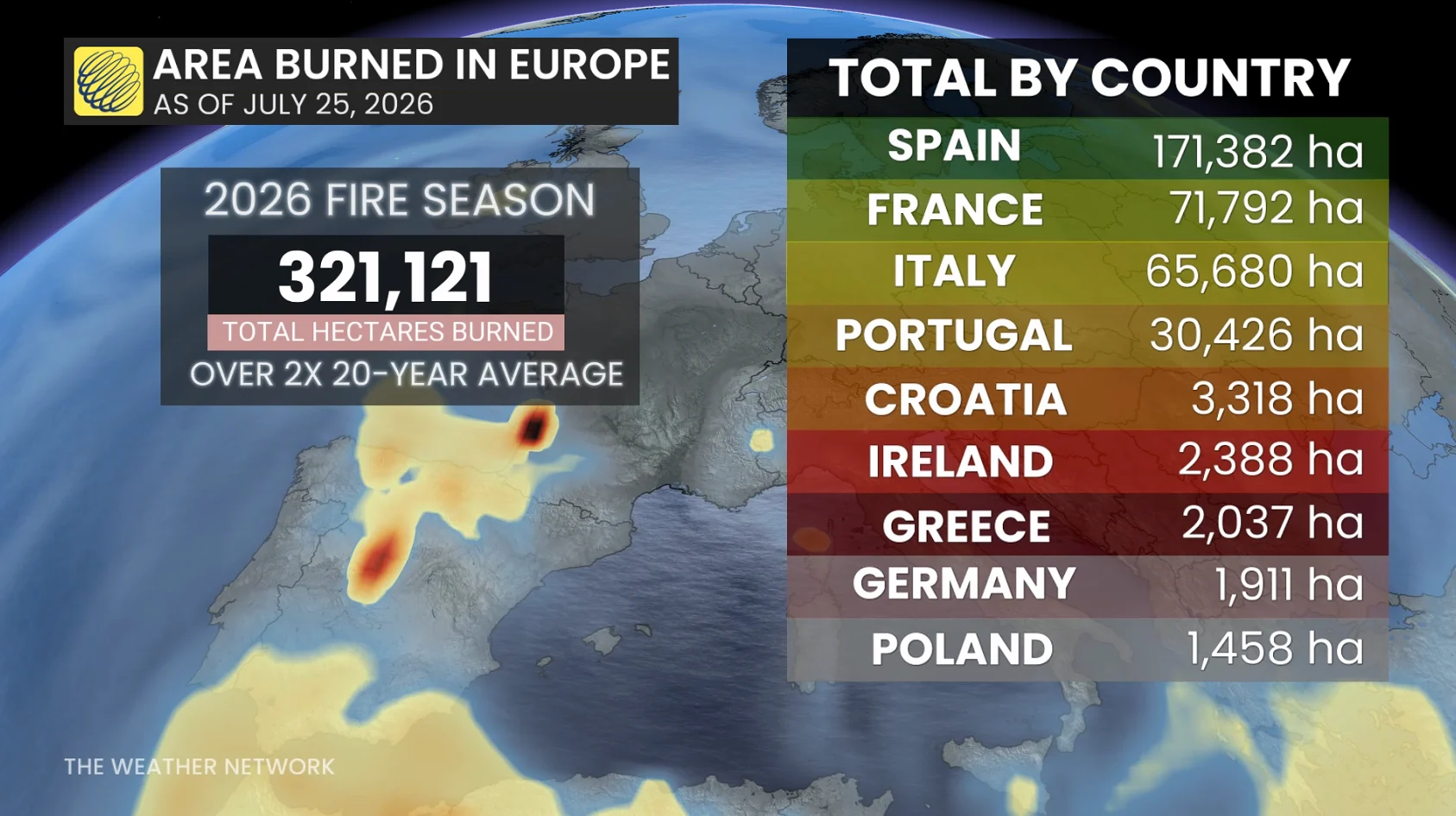
Data released by the European Forest Fire Information System (EFFIS) showed that 321,121 hectares have burned across the European Union this year through July 22, which is more than twice the 20-year average.
Spain accounts for the vast majority of the European Union’s total area burned this year (139,809 ha), followed by sizable numbers out of Italy (65,588 ha) and France (57,966 ha).
Fires driven by ongoing drought and persistent heat waves
Vast swaths of Europe have suffered through numerous bouts of extreme heat so far this year.
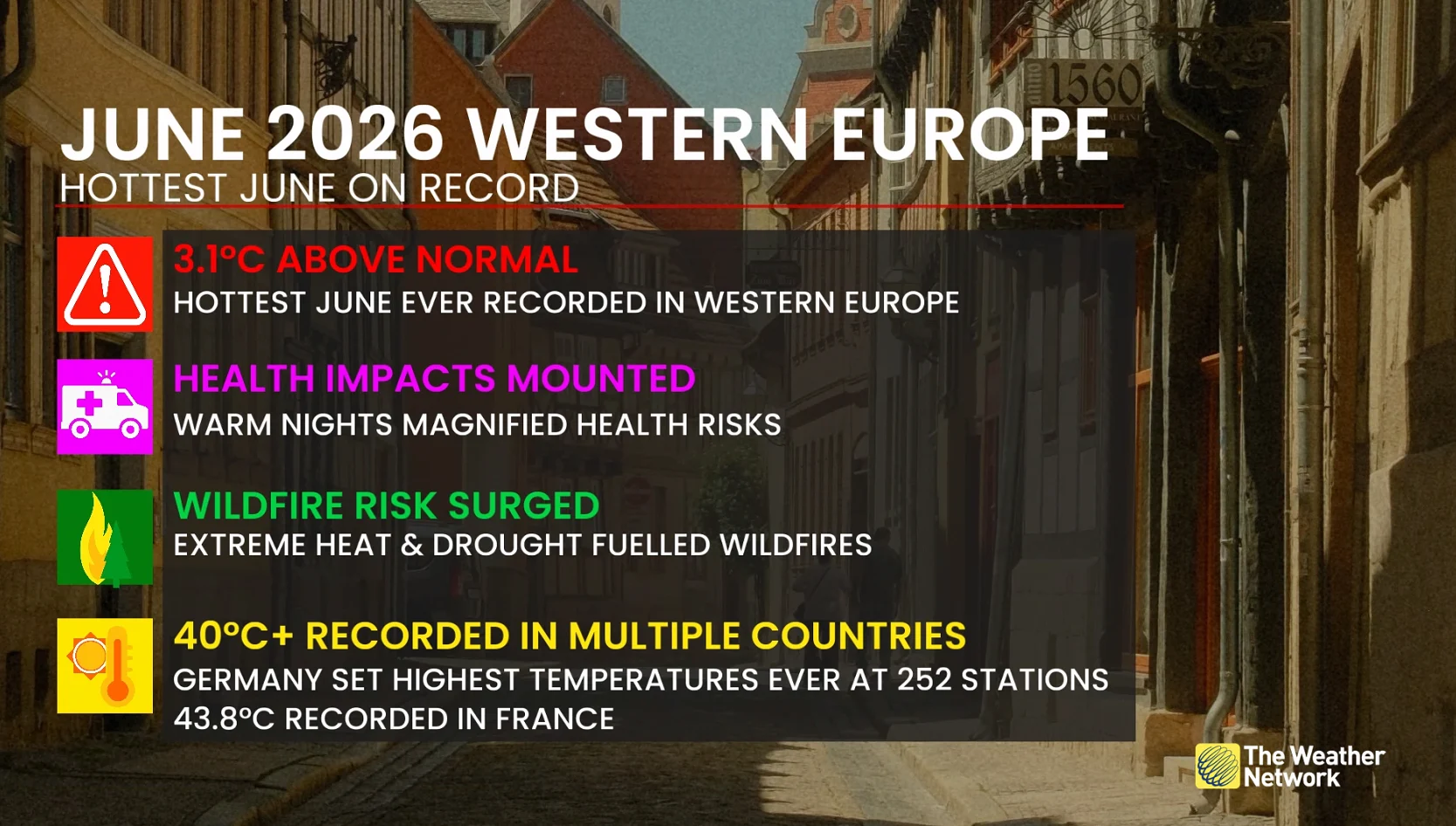
The continent as a whole recorded its warmest June on record, according to the World Meteorological Organization, with average surface air temperatures running more than 3°C above seasonal by the end of the month.
Germany, Poland, and Denmark recorded their all-time national high temperature records during a particularly brutal June heat dome event. Preliminary data suggests that this episode alone may have claimed more than 10,000 lives.
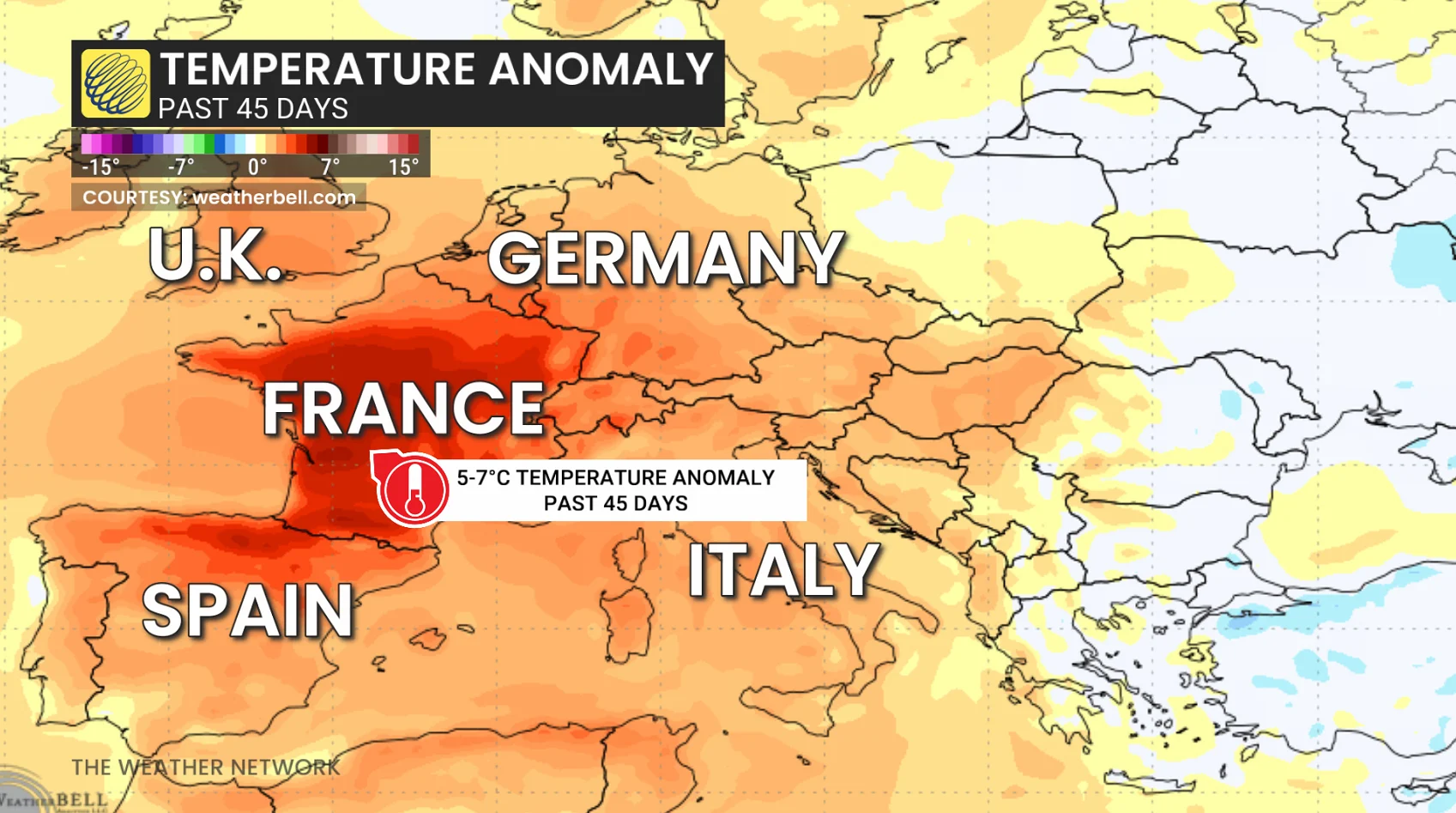
It’s likely that the ongoing trio of extreme weather events across western Europe is linked to climate change.
The Intergovernmental Panel on Climate Change (IPCC) said in its 2023 report that “the frequency and intensity of hot extremes will continue to increase” even if atmospheric warming stabilizes at 1.5°C going forward. Drought and subsequent wildfires are closely linked to hot temperature extremes.