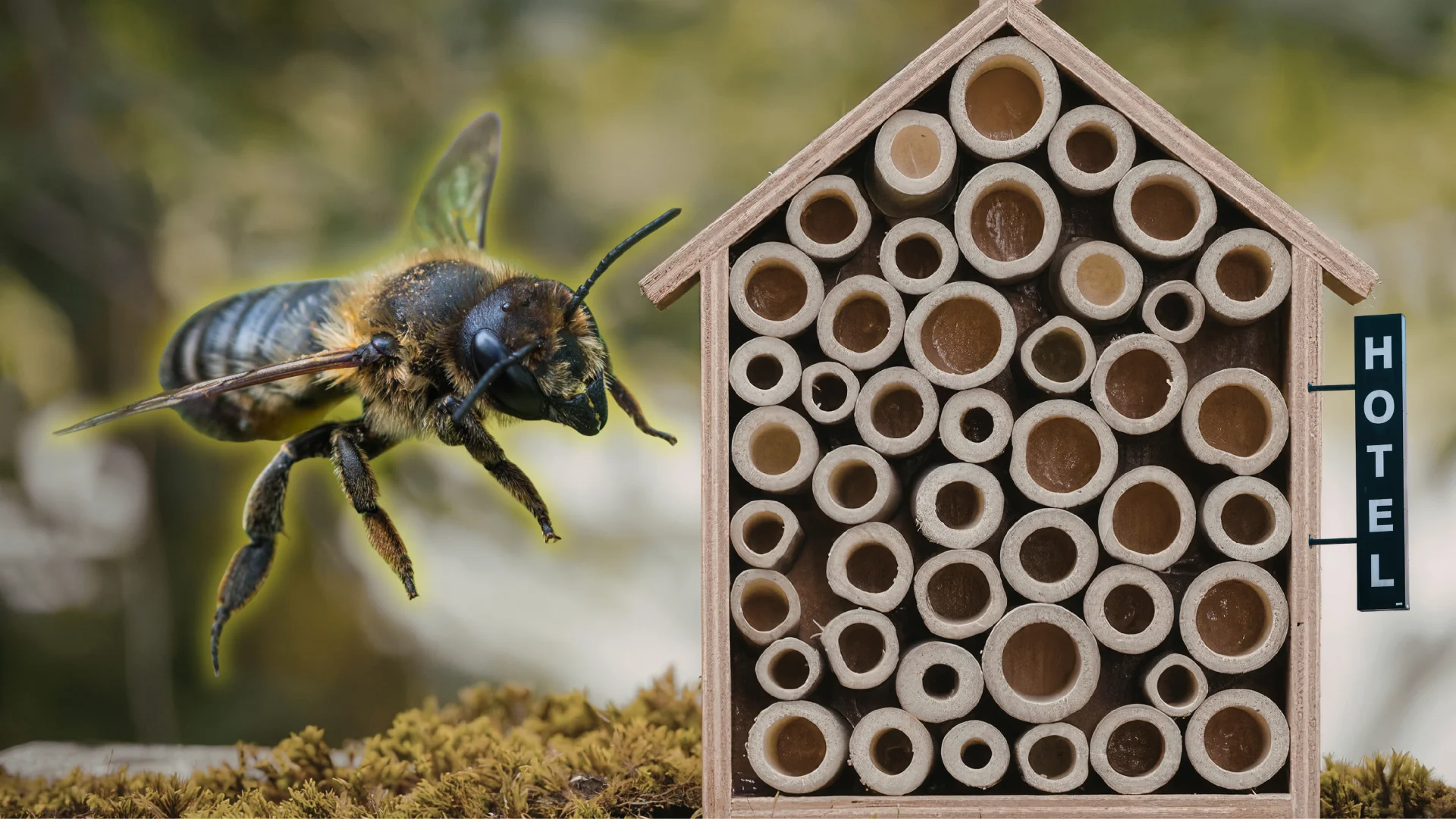
Want to help native bees this summer? Build them a hotel!

‘Bee hotels’ make a cute addition to your garden and help promote native pollinator populations. Isn’t that just the bee’s knees?
Did you know that honeybees aren’t native to North America? However, Canada is home to over 800 native bee species that are actually, in some instances, better pollinators than our honey-producing European friends.
Most native bee species are solitary, meaning they don’t form colonies. Instead, they prefer to nest in dead trees, hollow stems, wood structures, or underground. But in this modern world of infrastructure and horticulture, it can be difficult for many solitary bees to find a safe place to lay their eggs.
But you can help by putting a ‘bee hotel’ in your yard!
RELATED: Buzzing with ideas to keep pollinators and plants thriving
What is a bee hotel?
No, it isn’t a mini building filled with bee staff for other bees to spend a night or two in. A bee hotel is a human-made structure that provides numerous nesting cavities for solitary bees to lay their eggs in.
Also called a ‘bee house,’ these structures can be bought in most outdoor stores or easily made with materials you may have lying around in your garage. Bee hotels come in all shapes and forms, so it’s okay to get a little creative!
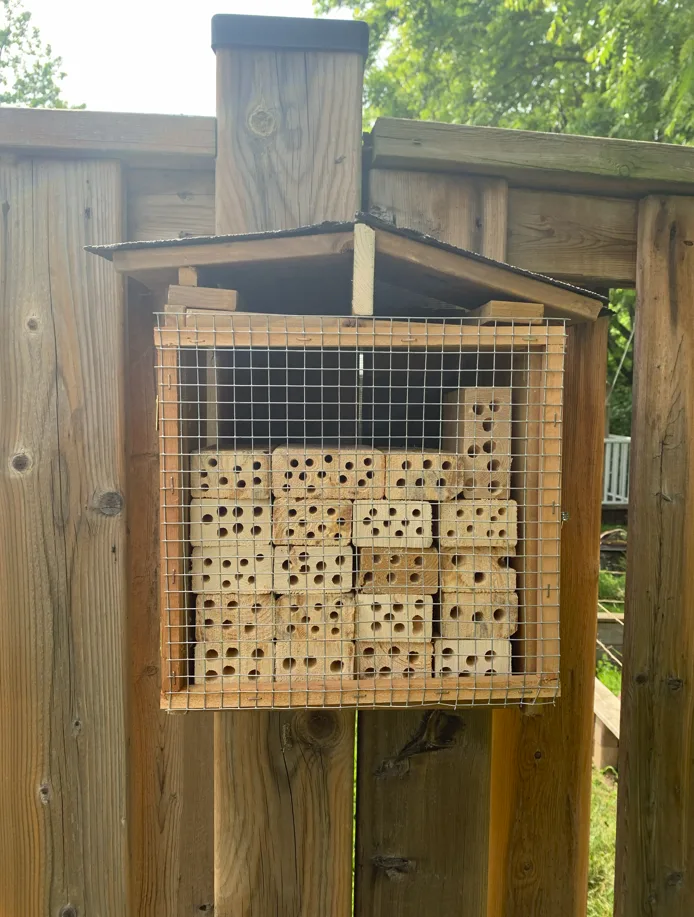
A homemade bee hotel built using scrap wood and spare materials. (Anika Beaudry/TWN)
How to make a basic bee hotel
If you want to make a simple bee hotel, you can cut pieces of hollow bamboo into about 10 cm-long sticks. Place the sticks inside of an old flower pot and use the drainage hole on the bottom of the pot to mount it sideways on a tree or fence, making sure the opening is protected from any direct sunlight and rain.
If you want to make your bee hotel even fancier, you can build a wooden frame with backing to place the bamboo sticks in. Alternatively, you can drill holes into blocks of untreated wood, but be sure that the holes are no bigger than 1 cm in diameter.
The best place to have your bee hotel is close to your garden, where the bees can easily feed and collect pollen (pollinating your plants at the same time!).
SEE ALSO: Canada's MVPs (Most Valuable Pollinators)
You may not see bees move in right away—they need time to find it, after all.
These hotels are especially popular with mason bees and leafcutter bees. You’ll know one of these bees has made a nest in one of the cavities when it’s plugged by either mud or small leaves.
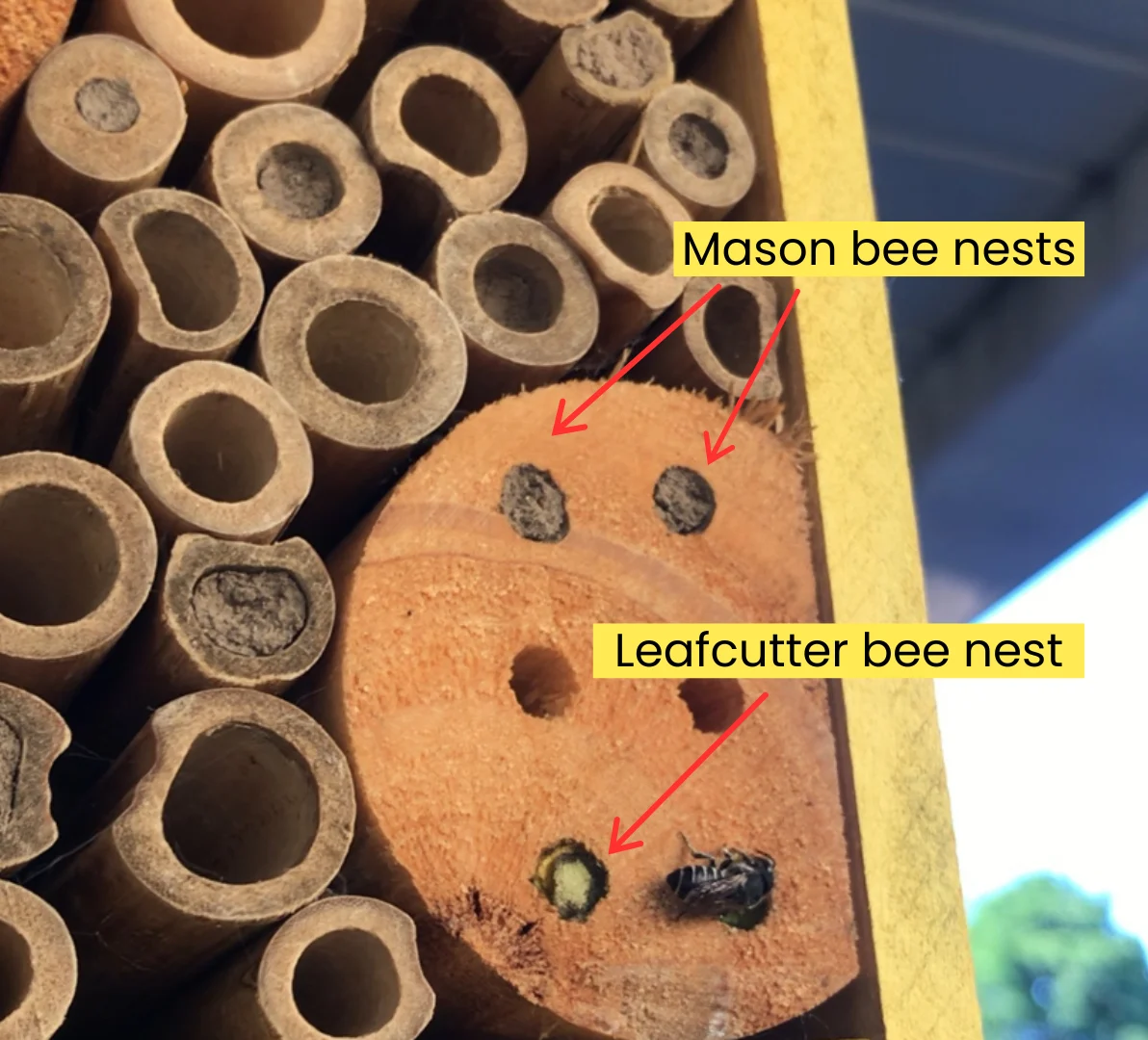
Mason bees use mud to seal their nests, while leafcutter bees use leaves. (Anika Beaudry/TWN)
Hotel housekeeping
If you want to make sure your local native bee population is as healthy as possible, you’ll want to replace the bamboo sticks or drilled wood every year or two. Replacing these will reduce the chances of the bees catching diseases from one another as they reuse each other’s nests.
Winter is a good time to move them into a safe corner of the yard and under some leaves so that any overwintering bees can safely emerge in the spring. Another option is to cycle between two different hotels each year, replacing one with the other as soon as all of the bees have emerged in early spring.
Also make sure to regularly check on the hotel to make sure there haven’t been any unwelcome guests that could harm your bees, like ants, spiders, or birds. If there are, it may mean you need to move the hotel to a different location.
Thumbnail image created using file photos via Canva.