
The pros and cons of an El Niño summer across Canada

El Niño can have far-reaching effects on Canada’s weather patterns. These influences are a mix of good and bad news from coast to coast
A potentially strong El Niño could influence our summertime weather across Canada this year.
The pattern’s effects can range from dry heat to hurricanes and just about everything in between.
Each influence comes with its own set of pros and cons depending on how you hope Canada’s summer unfolds.
DON’T MISS: El Niño may make Canada’s summer simmer instead of sizzle
Pro: Summer lovers are in luck across Western Canada
The general pattern expected across Canada during an El Niño summer tends to see ridges build in the west while a series of troughs dip across the east.
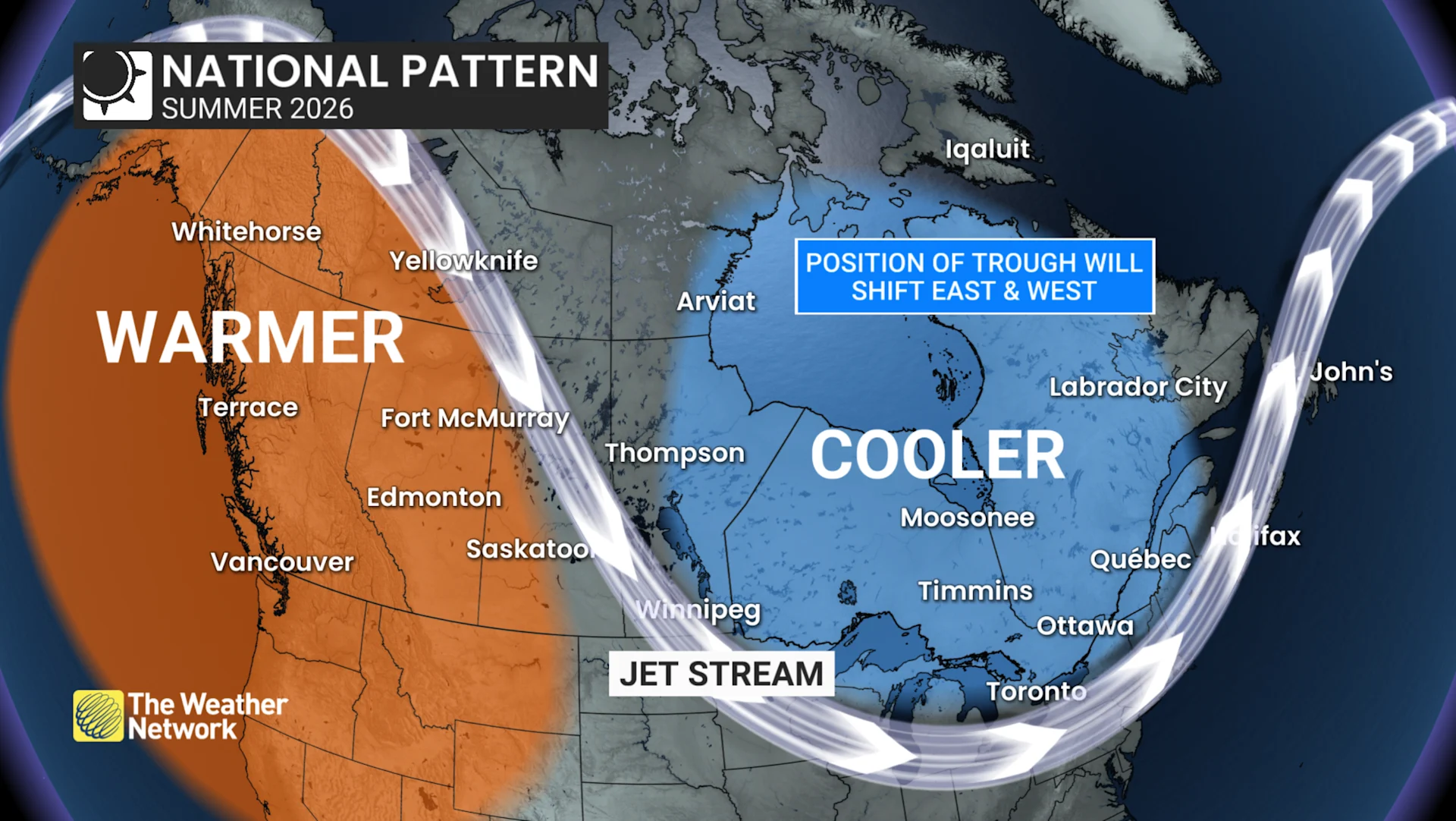
A ridge of high pressure often produces unseasonably warm and dry conditions in communities under their influence. As a result, we can expect summer as a whole to feature above-seasonal temperatures and below-seasonal precipitation in Western Canada.
That’s welcome news for summer-lovers and outdoor enthusiasts alike, offering plenty of opportunities to get out and enjoy lengthy stretches of favourable weather.
Con: Western Canada winds up more susceptible to wildfires
A hot and dry summer is also a tense situation across fire-prone Western Canada. Long spells of rain-free heat offer plenty of opportunities for fires to spark and quickly grow out of control.
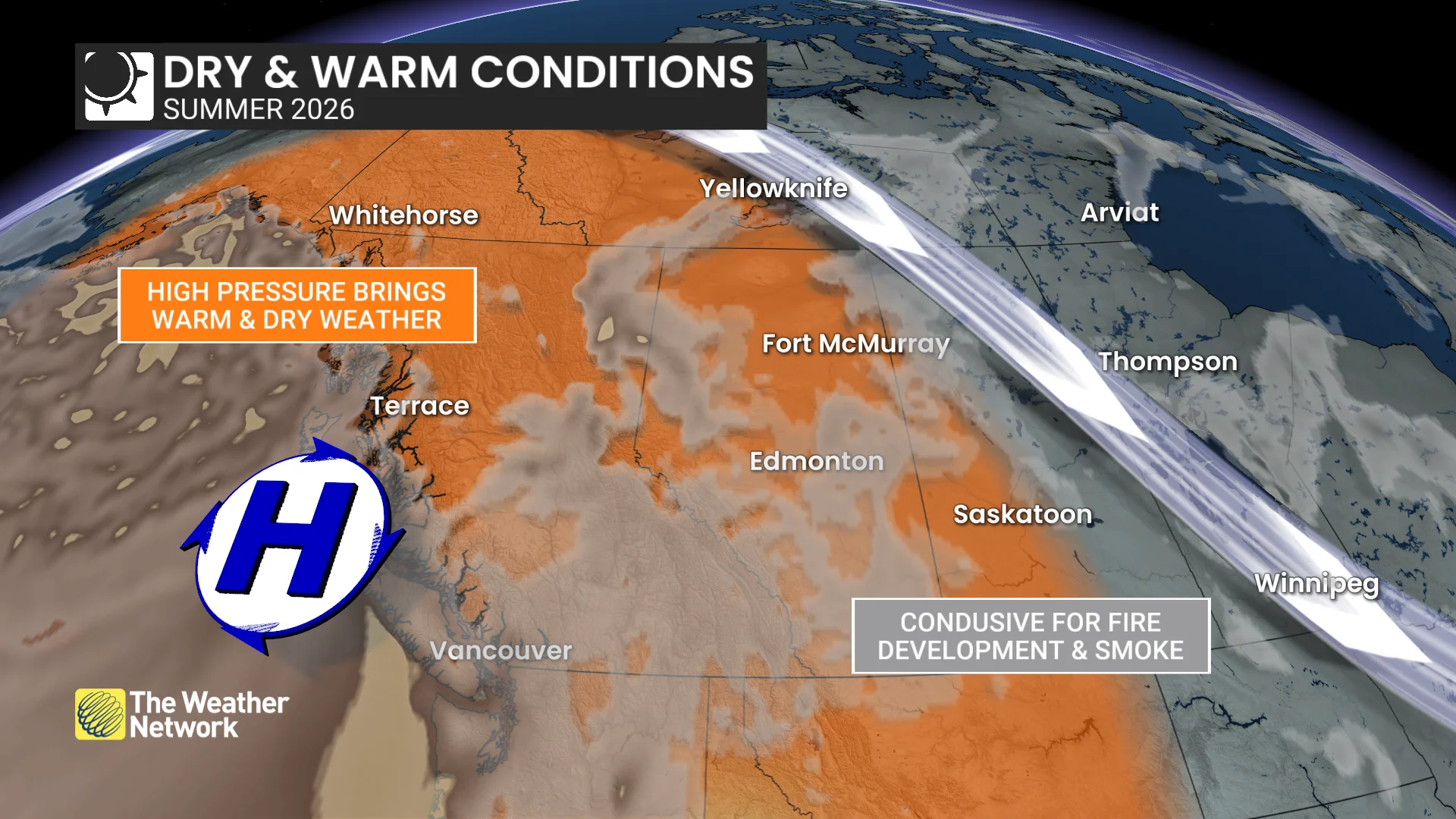
Numerous communities throughout British Columbia, Alberta, and the territories up north are entering the summer season in a moderate or severe drought, leaving little breathing room for a continued spell of unusually dry conditions.
Pro: El Niño tends to mute extremes across the country
One spot of good news for folks from coast to coast is that El Niño tends to mute extreme weather conditions.
Upper-level weather patterns tend to keep moving during periods influenced by El Niño, which lowers the risk of features getting ‘stuck’ in place and causing long spells of extreme heat or exceptionally unsettled conditions.
Con: Lack of consistent summer-like heat in the east
This progressive pattern could put a damper on the summertime spirit for folks in the eastern half of the country, particularly around the Great Lakes.
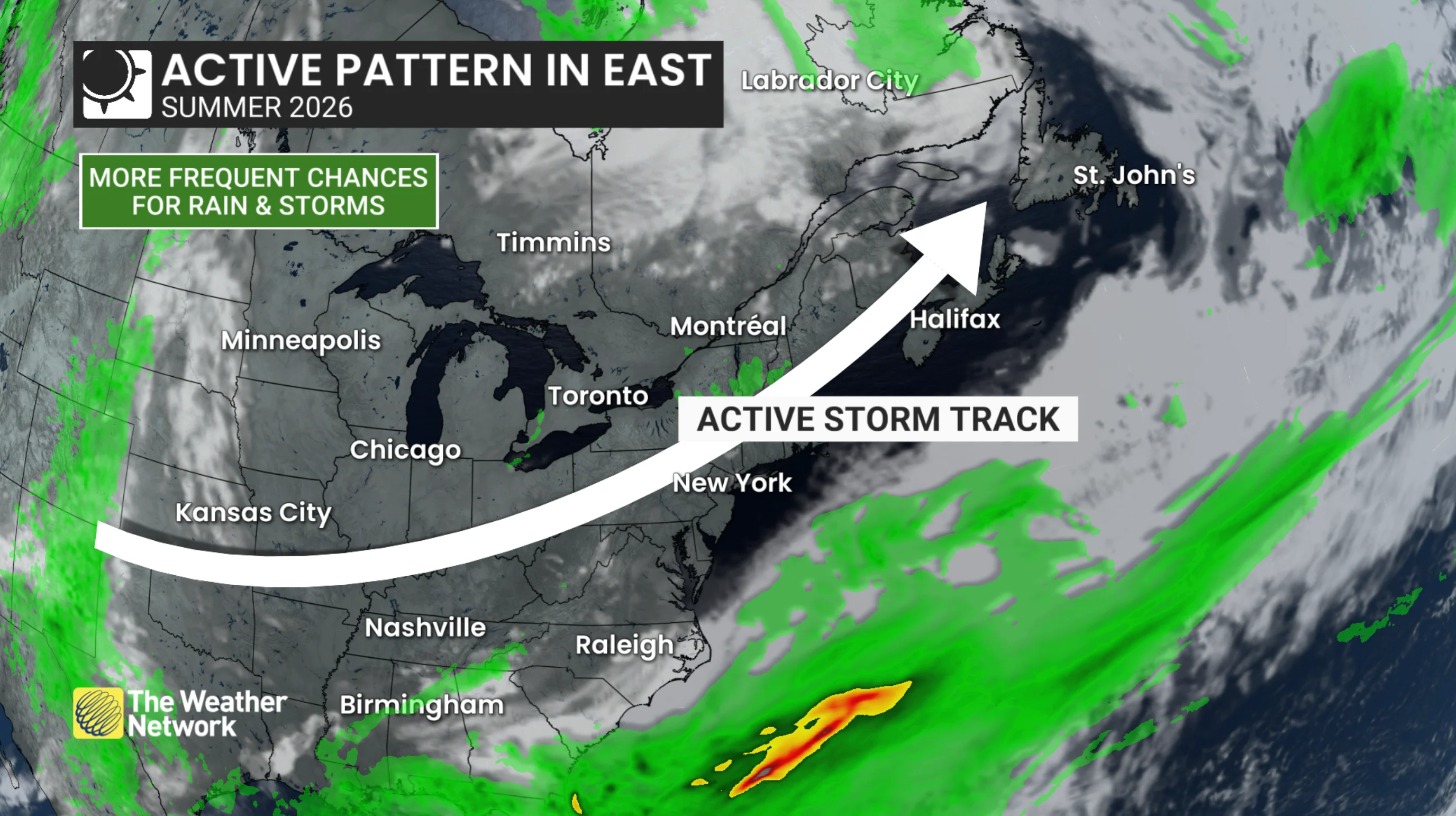
We’re at risk of seeing overall below-seasonal temperatures throughout the summer months, particularly across most of Ontario and much of Quebec.
Below-seasonal certainly doesn’t mean it won’t get hot, though. A cooler-than-normal reading in July can still be toasty enough to require air conditioning.
Pro: El Niño typically suppresses Atlantic hurricanes
El Niño’s most famous summertime influence is a below-normal Atlantic hurricane season.

The pattern achieves this feat by encouraging Pacific wind shear that blows east and disrupts tropical systems trying to develop over the neighbouring Atlantic basin.
However, plenty of impactful Atlantic hurricanes have spun up during El Niño years. It truly only takes one storm making landfall to make for a bad season for communities in the path of a storm.
Con: Pacific cyclones could upend Canada’s patterns
The warmer waters of El Niño can lead to above-average tropical cyclone activity throughout most of the Pacific basin. This could increase the risk of strong typhoons recurving toward higher latitudes.
Recurving typhoons can reorient the jet stream, creating ripple effects that can significantly affect weather patterns over Canada.
Header image created using graphics and imagery from Canva.