
The driving forces behind Canada’s extreme temperature swings

Temperatures can range from 0°C to -40°C over relatively short distances during Canada’s long, dynamic winters
There aren’t many places on Earth where you can see a 40-degree temperature swing between towns that are just a few hundred kilometres apart.
Canada’s vast landscape and dynamic weather patterns make these extreme temperature gradients possible. The driving forces behind these huge gradients depend on where you live in the country.
DON’T MISS: Cold air damming can grip towns in a lengthy, frigid gloom
Storms dominate Eastern Canada and the Great Lakes
Sprawling low-pressure systems are the catalyst for major temperature swings across the eastern half of Canada.

Storms like Texas and Colorado lows spin to life south of the border, developing near the Rockies before tracking east. Winds blow stronger around the system as its central air pressure drops, churning the atmosphere for thousands of kilometres.
The counterclockwise flow around these deepening storms pulls warm air from the Gulf of Mexico ahead of the system’s track. Communities under the influence of this ‘warm sector’ can see readings jump into the double digits.
Meanwhile, frigid Arctic air flooding south behind the centre of the low can send a powerful cold front sweeping across those same cities, forcing temperatures to plummet by 20°C or more as the cold airmass takes hold.
Downsloping is common in Alberta
Mountains start to play a role in our temperature swings as we make our way west into Alberta.
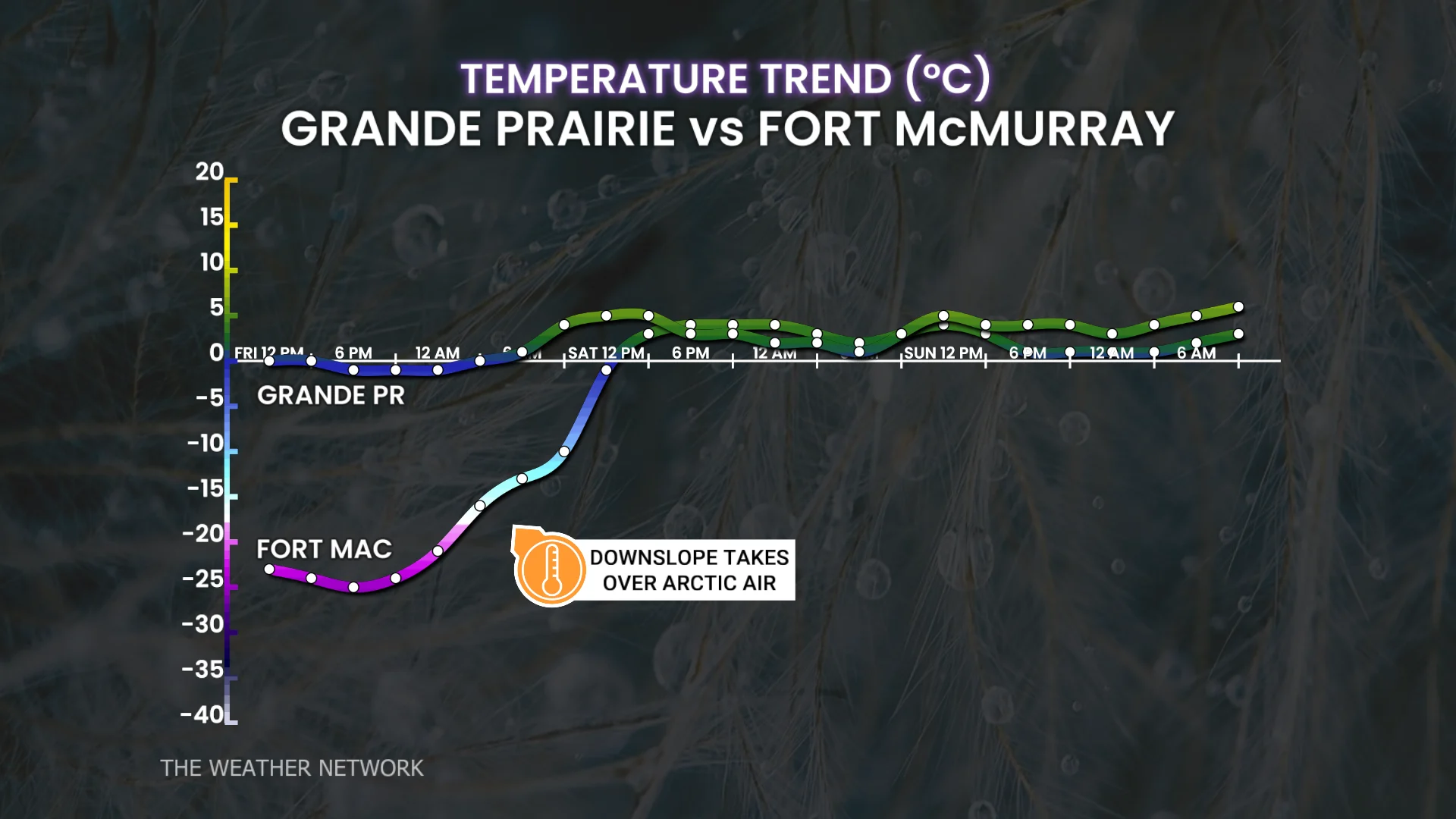
Pacific air flowing up and over the Rockies warms up and dries out as it descends the eastern slopes of this formidable mountain range. These Chinook winds can cause wind gusts to exceed 100 km/h as temperatures skyrocket in a matter of minutes.
A persistent downsloping event can send the warmth flowing far over the Prairies, digging deep into Saskatchewan. Chinook events can lead to wind damage, dangerous driving on north-south oriented roads, and even migraines in some folks.
Terrain divides cold from frigid in the West
Tall, dense mountain ranges can also act as a natural barrier that prevents nearby airmasses from mixing with one another. We often see this phenomenon play out in British Columbia and the Yukon.
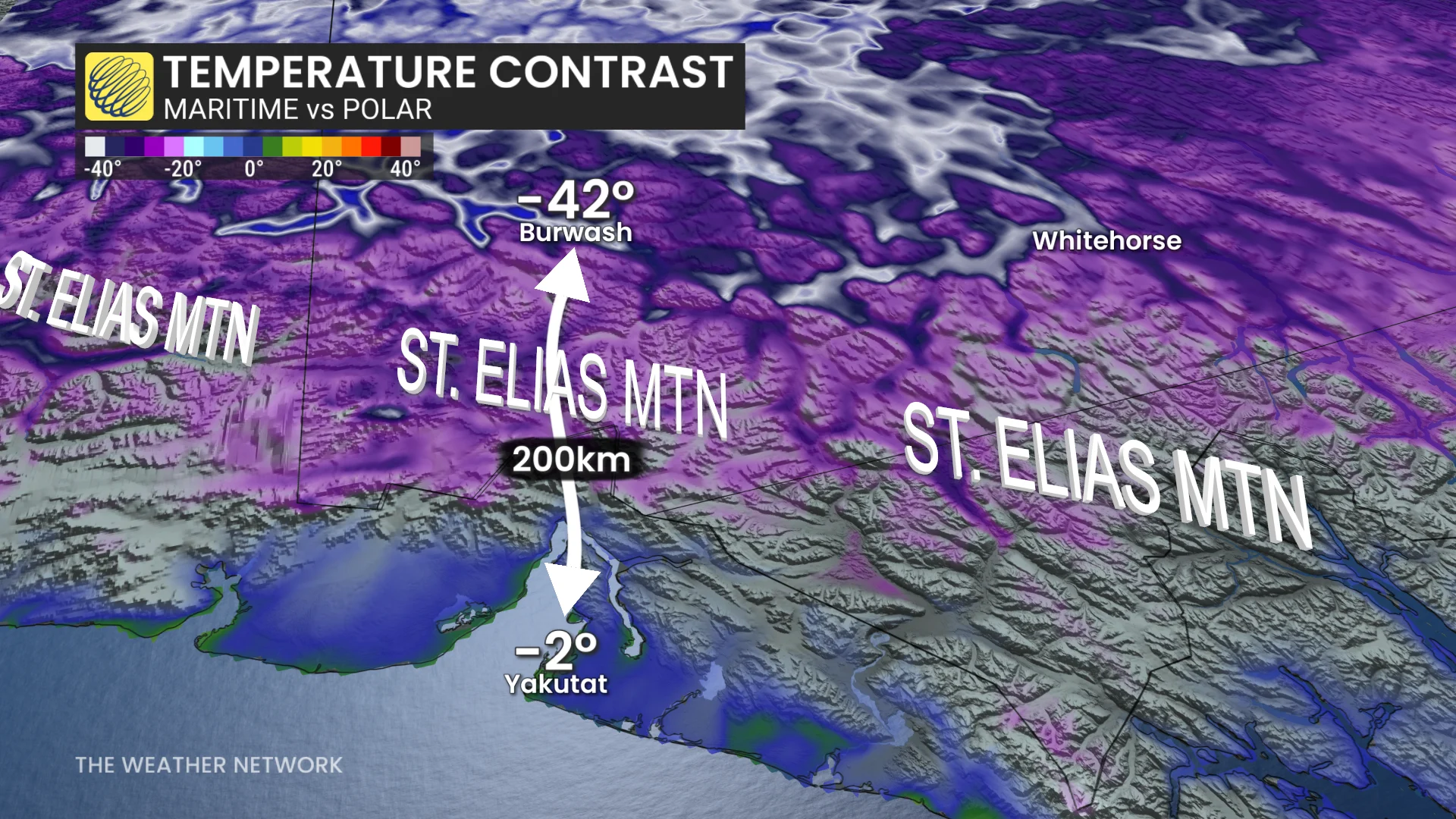
Onshore Pacific flow provides warmer air to the coast while intensely cold and dense Arctic air pools up east of the mountains. The coldest air eventually filters through the mountain valleys like blood through veins.
The highest mountains can act as a divide between the two opposing airmasses, sometimes driving temperature contrasts as much as 40°C over a span of just a few hundred kilometres.
Header image created using graphics and imagery from Canva.