Here are Canada's worst winter roads and the riskiest times to drive

Learn about Canada's most dangerous winter roads and get tips on how to stay safe.
More than 37 per cent of car accidents in Canada happen in winter, making it the busiest season for fender benders.
That’s according to a new report by Samsara, a U.S.-based fleet management system that uses artificial intelligence (AI) to anticipate road risks.
For its report, Samsara says it used anonymized data from Canadian commercial fleets between 2022 and 2025 — covering “billions of kilometres” of different roadways and conditions.
Spring ranks as the second-worst period for car accidents at 31 per cent, and this tracks, given it’s not uncommon to see winter-like conditions well into this season as well.
Accident occurrences fall sharply nationwide in summer and fall, accounting for around 18 per cent and 14 per cent of total annual incidents, respectively.
Two winter peaks
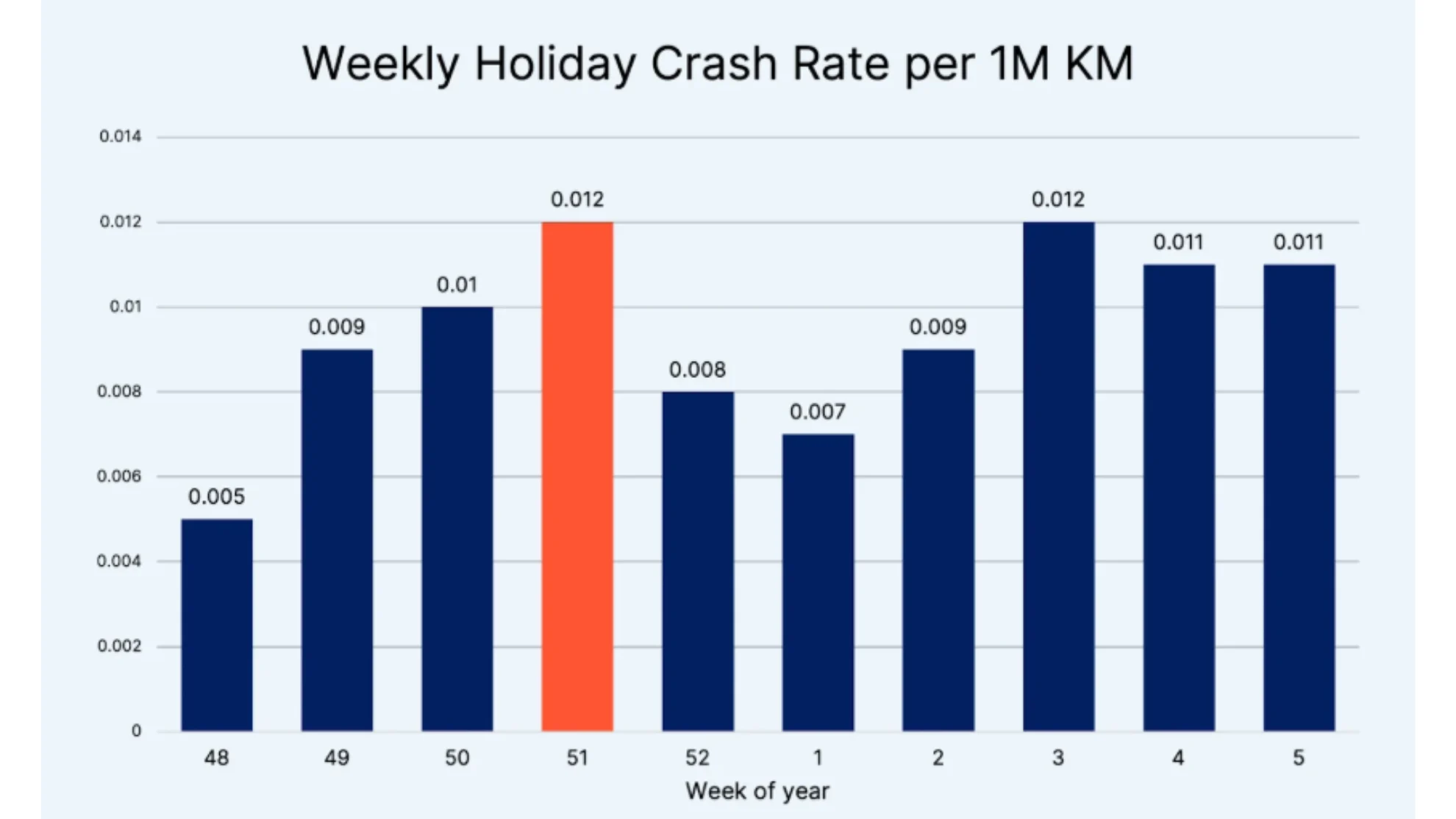
Samsara says there are two peaks in winter, with risk building steadily through late November and peaking in late December. During this time, crashes rose from 0.005 incidents per 1 million km to 0.012.
Between December 22 and 24, crash rates see a steep increase of 102 per cent. Crash rates climb sharply, with December 24th being the riskiest day of the week.
“This climb reflects the convergence of early-winter freeze conditions, holiday freight surges, and increased evening travel,” Samsara says in its report.
In the last week of December, crash rates fall to 0.008 — not because road conditions have changed, but because there tends to be lighter traffic post-Christmas.
Crash rates climb back to 0.012 by late January, or the third week of the year.
(Samsara)
“By Weeks 3–5, rates stabilize at elevated levels between 0.011–0.012 crashes per 1M km—driven by a return to full operations, continued cold, and limited daylight,” Samsara says.
Timing is also important. The data used in the analysis suggests that about 24 per cent of total winter accidents occur in the evening before midnight, when temperatures tend to fall quickly.
But really, afternoons aren’t much better at 23 per cent, and nor is the 8 p.m. to midnight window at 19 per cent. It’s all risky, according to data. The safest time to be on winter roads appears to be between 4 a.m. and 8 a.m., a period where 8 per cent of winter car accidents occurred.
“Nighttime hours remain especially risky as temperatures drop and visibility worsens, while late-night and early-morning periods still see serious crashes driven by fatigue and black ice,” Samsara says.

(Samsara)
Winter crash rates per province
Each province has its own winter challenges, the report says. In eastern Canada, drivers have to contend with frequent freeze-thaw cycles and coastal freezes. The weather is milder in southern Ontario, but even a modest snowfall can create commuter chaos.
Meanwhile, drivers on the Prairies have to navigate strong winds and whiteout potential.
The territories bring their own sets of challenges with extreme cold, low daylight, and wildlife on travel routes.
Here are provincial and territorial winter crash rates per 1M km, according to Samsara:
PEI: 0.099
Northwest Territories: 0.062
B.C.: 0.025
Yukon, Newfoundland and Labrador, Nova Scotia, and Alberta tied at: 0.019
Manitoba and New Brunswick tied at: 0.012
Lastly, Ontario, Saskatchewan, and Quebec saw a total of 0.006 winter car crashes per 1M km.
RELATED: Avoiding winter snowstorm car accidents
Canada’s most dangerous winter roads
The risk for winter crashes is concentrated in specific areas.
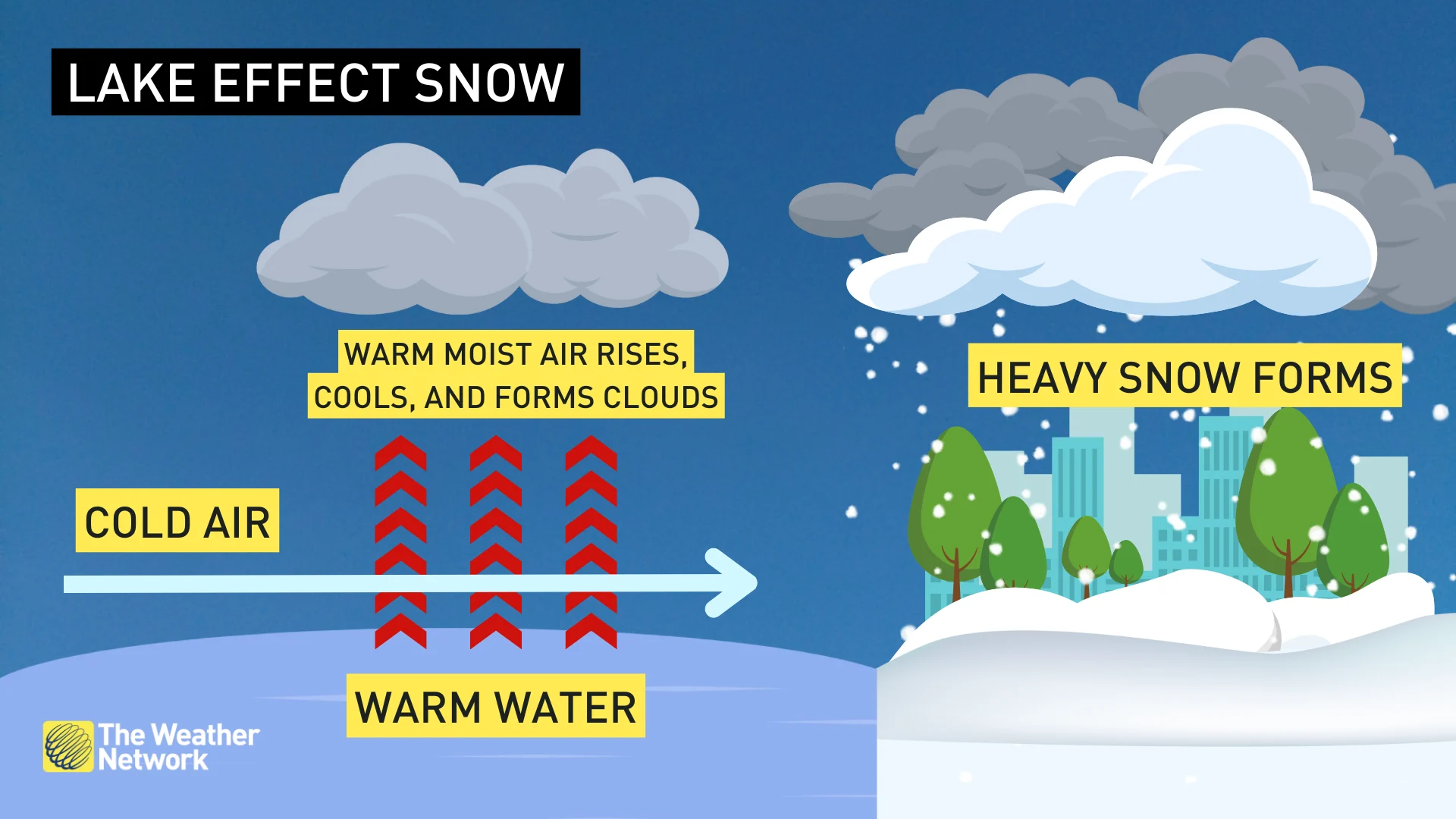
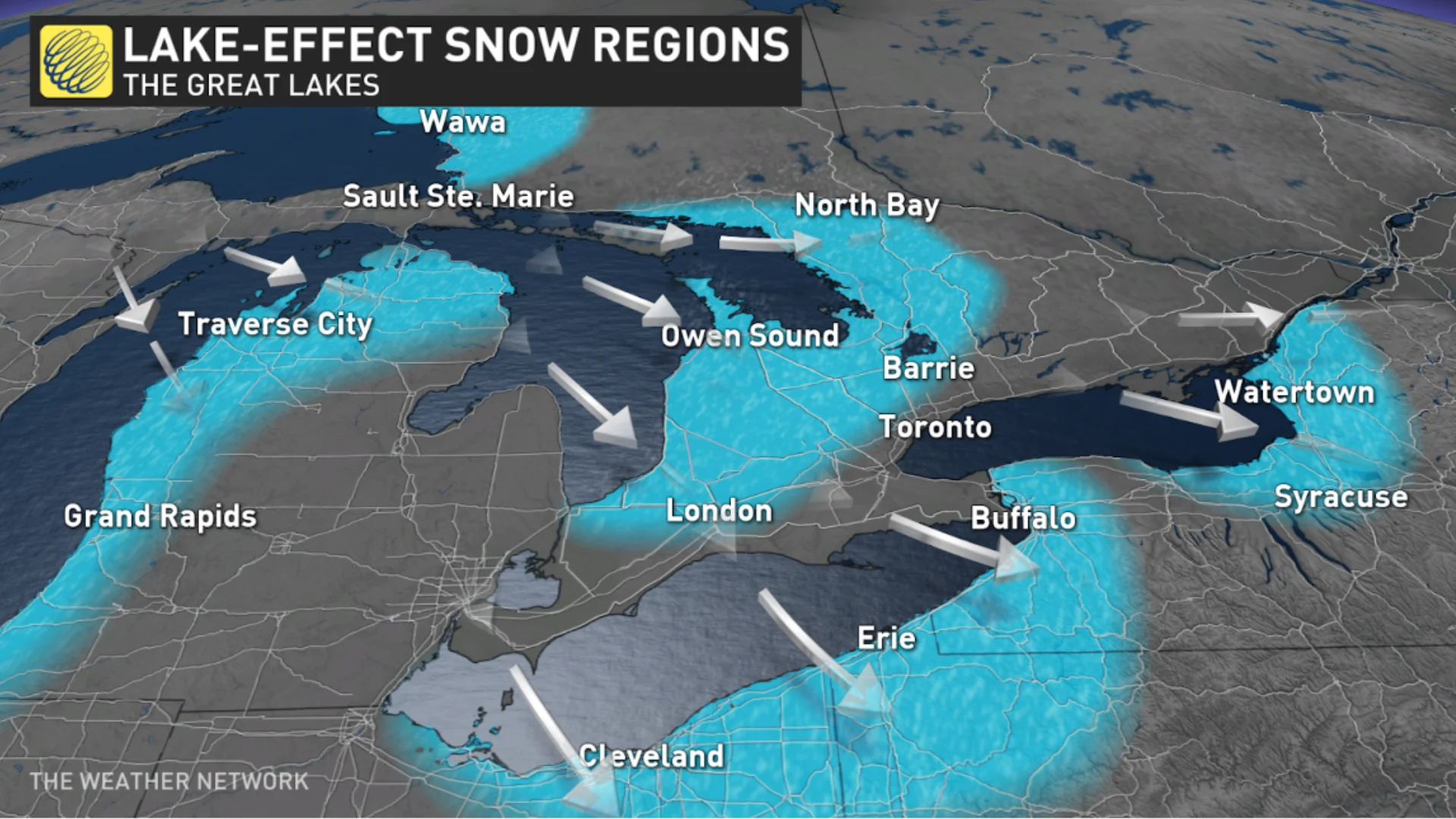
Mountain passes, areas that experience lake-effect snow, forested areas where wildlife frequently passes, and dense suburban zones are some of the riskiest places.
According to the data, the riskiest winter roads are:
Erieau Road – Erieau Peninsula lakeshore (Ontario), due to the presence of Lake-effect snow, narrow lanes, and shoreline curves.
Trans-Canada Highway – Rogers Pass and Yoho National Park (B.C.). Avalanche exposure makes this area particularly hazardous.
Trans-Canada Highway – Banff–Lake Louise (Alberta/BC border). This area has it all — high tourist traffic, wildlife, and frequent snow squalls.
Yellowhead Highway – Jasper–Hinton corridor (Alberta). Variable weather and wildlife crossings are of note.
Yellowhead Highway – McBride–Tête Jaune Cache (B.C.). Patchy traction on a narrow mountain road made this highway stand out as one of the trickiest in Canada during the winter.
Highway 17 – Kenora–Dryden (Ontario). Limited passing and long, dark lanes in heavy moose habitat present numerous hazards.
Highway 11 – Hearst–Kapuskasing (Ontario). Limited lighting and wildlife crossings are of note.
Queen Elizabeth Way – Burlington Skyway (Ontario). Extreme wind, lots of trucks, and traffic congestion during peak hours make the skyway stand out, and not in a good way.
Highway 401 – Mississauga interchange complex (Ontario). Multiple highway interchanges, extremely heavy traffic, and the presence of trucks make this a tricky spot for drivers any time of year, but especially during winter.
Highway 401 Express/Collectors – Toronto core (Ontario). With highways that weave between collector and express lanes amid heavy traffic, this highway stretch is best reserved for experienced drivers. Rapid freeze on overpasses makes it even more challenging during the winter months.
Winter driving safety tips
Slow down. Even ploughed roads can be slippery.
Leave extra space. Motorists are generally told to keep a two-second distance from other cars. In a winter storm scenario, experts recommend leaving a three-second cushion. Snow and ice can impact a car's ability to slow down and brake.
Clear the snow off your car( and stay away from cars that haven't). Snow and ice can reduce visibility, sometimes suddenly, if the debris shakes loose and crashes onto your windshield while in motion. Flying debris can also lead to accidents and delays for others. Lastly, having an uncleared car can land you with steep fines if you cause an accident.
Want more driving tips? Read (and bookmark) Weather Network meteorologist Tyler Hamilton's in-depth guide on winter driving, and how to navigate adverse weather.
Header image: File photo made with graphics and elements from Canva Pro.