Melting snow? Here's why air quality should be on your radar this spring

Melting snow doesn’t just make everything damp and dirty outside—it also affects your local air quality.
The days are getting longer, birds are chirping louder, and the temperature on the thermometer is finally starting to rise. Yes, it’s spring! That means goodbye snow and hello flowers!
As winter releases Canada from its cold and snowy grip, you may be surprised at what else is released during this changeable period.
Back in April 2017, researchers from McGill University and École de technologie supérieure in Montreal found that urban snow is basically a toxic cocktail, containing pollutants from the atmosphere and vehicles. And what happens when that snow melts? The pollutants end up back in the air.
Snow is nature’s air filter
For years, experts have warned against eating snow for the simple reason that it’s not as clean as it looks. And it’s true: snow is full of bacteria, microorganisms, heavy metals, and dirt. It’s also filled with air pollutants that it scrubs out of the atmosphere, almost like an air filter. Unlike an air filter, though, we can’t clean or throw it out when it gets too dirty.
RELATED: That dirty snowpack could be considered a 'chemical soup'
“Once in the snowpack, air pollutants may undergo chemical transformations that create additional pollutants with different toxicity and carcinogenicity,” states a news release published by McGill University on April 4, 2017. “Some compounds, including more toxic and carcinogenic chemicals, may volatilize back into the air, while others accumulate in the snow and are released with meltwater.”
Essentially, the air pollutants in the snow can become more potent over time as they undergo chemical transformations. Some of those transformed pollutants are then released back into the atmosphere as the snow melts into water and evaporates into the air. The polluted water that doesn’t evaporate may end up leaching into the ground or bodies of water.
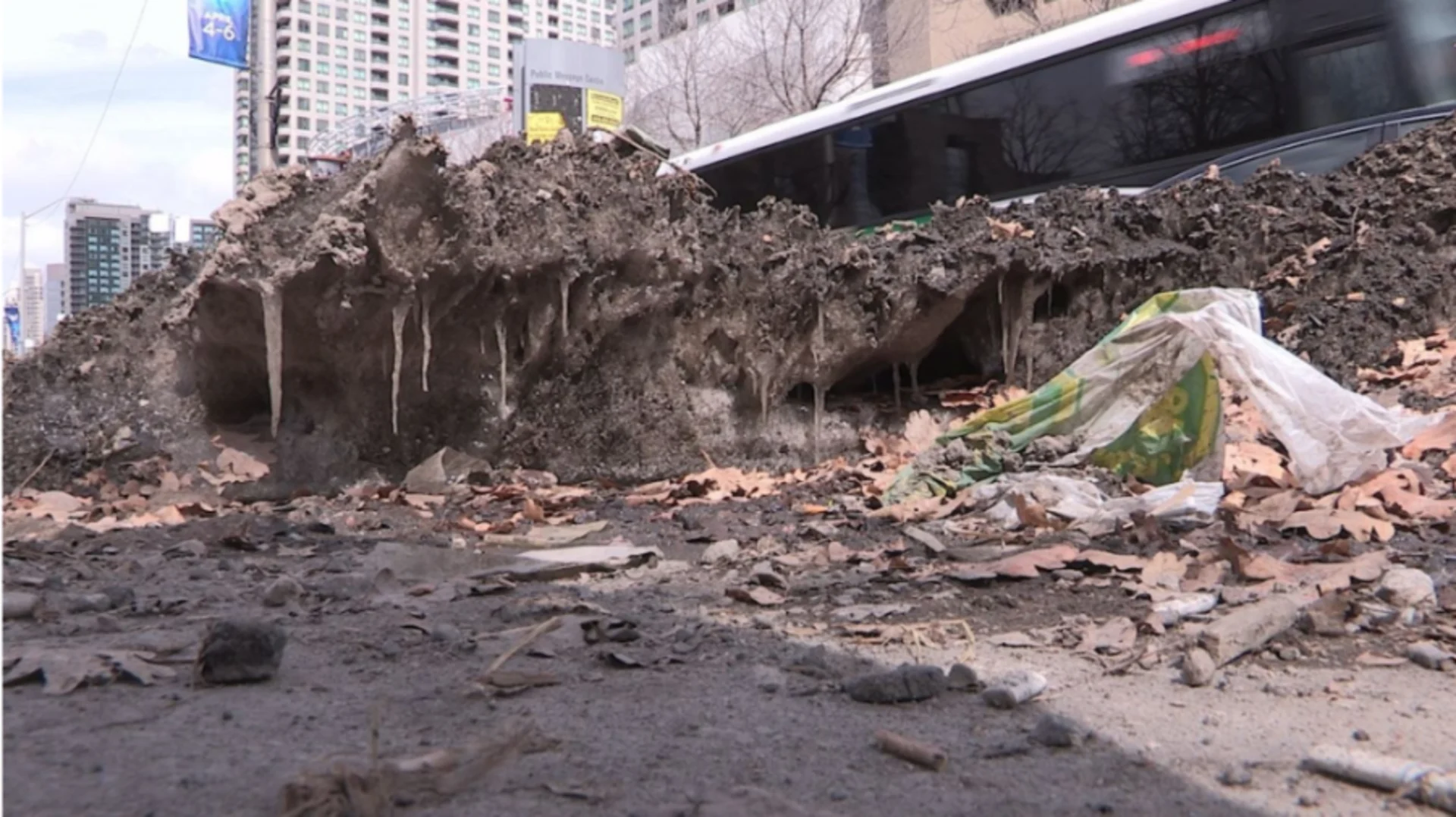
A look at the amount of dirt that can build up in the bottom of a melting snowpack. (Rachel Schoutsen/TWN)
Why does this matter for your health?
When we talk about air quality, it’s usually during wildfire season when the skies are visibly hazier from the smoke. But air quality can be poor without you seeing it, and the impacts on your health are just the same.
You may have noticed a funky smell in the air when going outside during the first big snow melt of spring. It’s not just because of all the hidden dog poop being revealed by the retreating snowbanks—it’s because the air quality is lower due to the air pollutants being released from the stale snow that has been sitting at the bottom of the pack since December.
SEE ALSO: The scoop on spring melts and pet waste
Poor air quality can result in increased asthma attacks, coughing, or throat irritation. In the long term, it can increase your risk of heart disease and lung cancer. Those most impacted by poor air quality are people with respiratory diseases, such as asthma or chronic obstructive pulmonary disease, and elderly individuals.
Health Canada states in a report published in 2024 that an estimated 17,400 Canadian deaths could be attributed to air pollution in 2018.
So, as temperatures continue to warm up this spring and we say goodbye to the piles of unsightly snow, be sure to check your local air quality before opening your windows or heading out to enjoy warmer weather.
Thumbnail image taken by Lauren O'Neil/TWN.