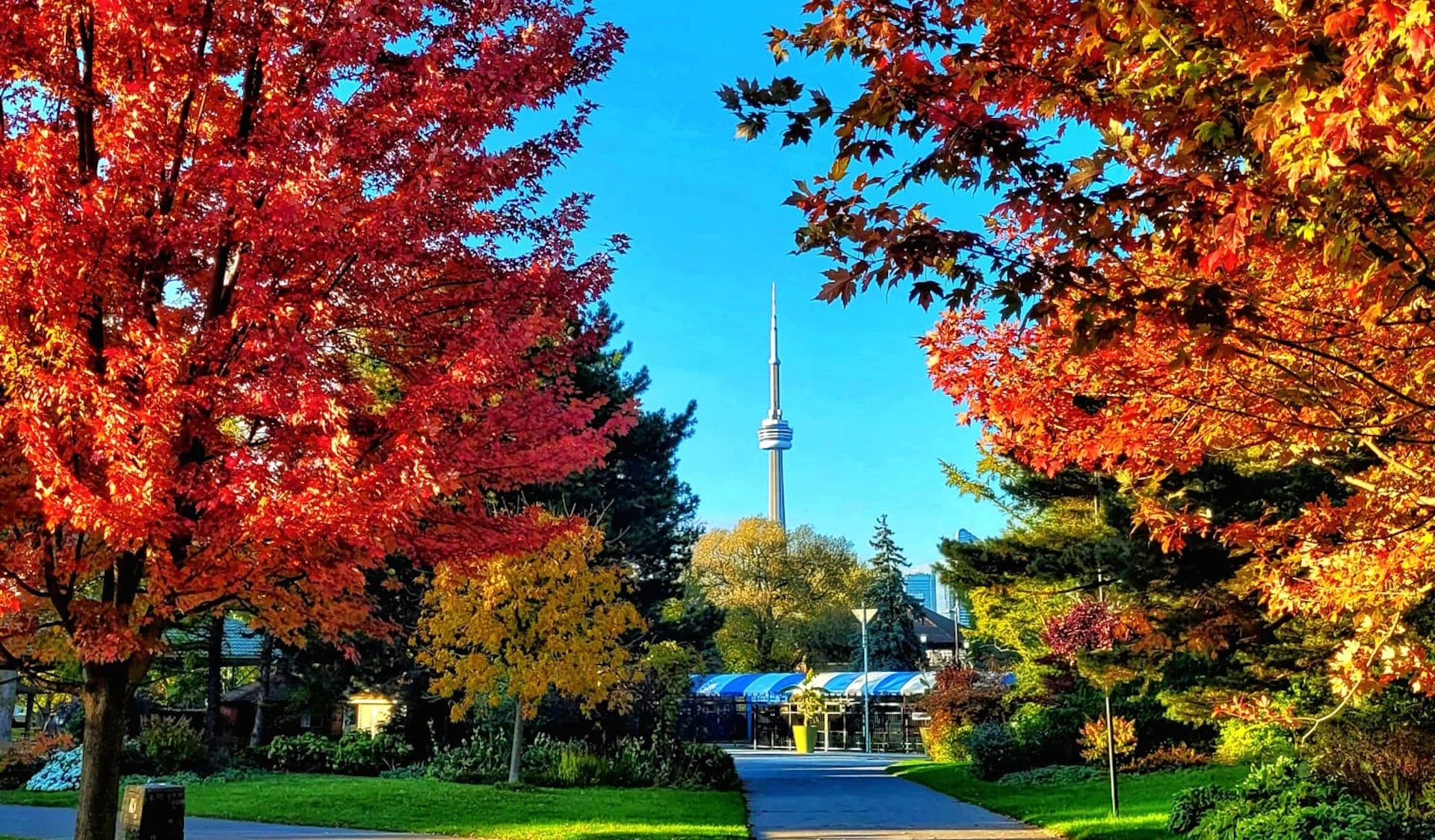
Why do the leaves change colour every autumn? Here's the science

When Fall arrives, we suddenly see the colours that have been hidden there, all along.
For months tree leaves are green, and then September arrives and they suddenly burst into yellows, oranges, and reds. So, why does this happen, and where did the leaves get those colours? Here's the science behind this seasonal colour-change.
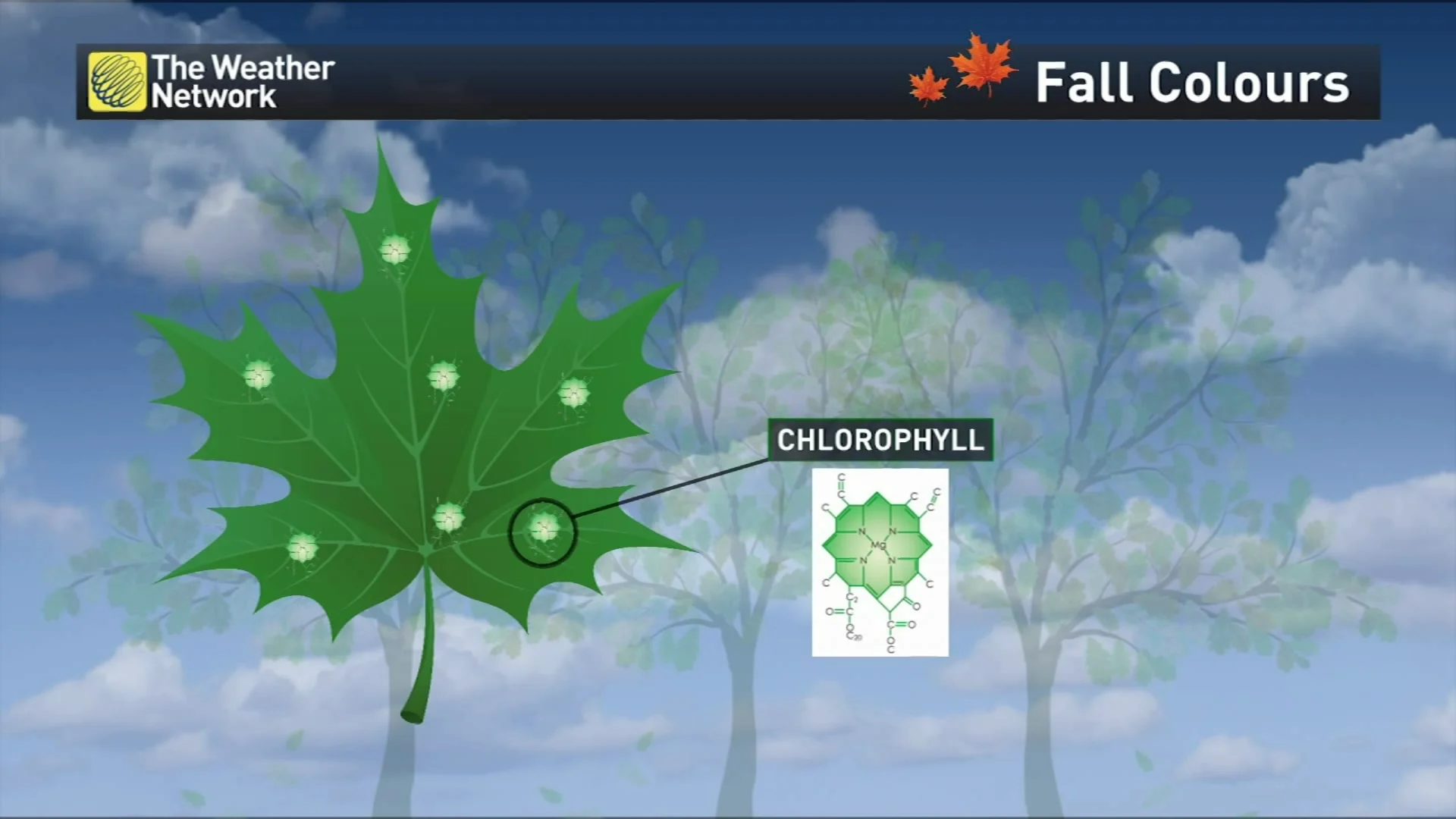
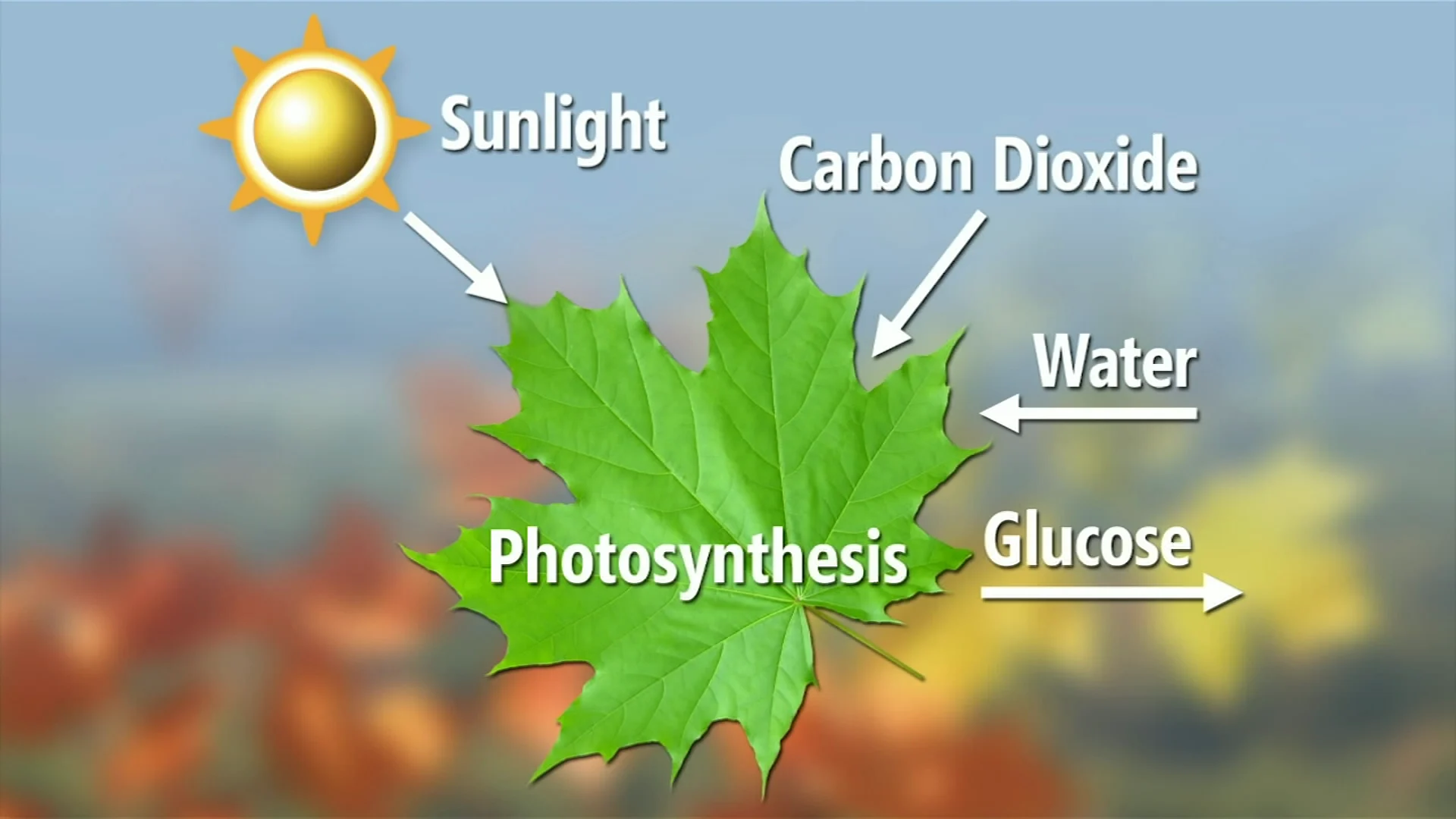
Plants, including trees, get the food they need by combining three things — water, carbon dioxide, and sunlight. They do this through a chemical process known as photosynthesis, using a group of chemicals called chlorophylls.
DON'T MISS: The planets visit with the Moon throughout the month of September
Chlorophylls are complex organic molecules whose primary function is to absorb light, and then convert that light energy into chemical energy. The chemical energy derived from this process then goes towards combining water and carbon dioxide into sugars that the plant uses for food.
In the process of photosynthesis, chlorophyll breaks down, but the plant makes more using some of the sugars it produced, along with energy from sunlight and nutrients absorbed from the soil. Thus, during the warmer months of the year, when there is an abundance of intense sunlight, chlorophyll is constantly broken down and remade inside a tree's leaves.
Tree leaves appear green because chlorophylls absorb light very strongly in the blue and red portions of the spectrum, but reflect green away. Thus, whenever we look at a leaf, or take a photograph of one, we only receive the green part of the light spectrum.
What sparks the colour change?
As fall approaches, the weather cools and the days grow shorter, all due to the change in the angle of sunlight as it enters the atmosphere and reaches the surface.
While the exact details are fairly complex, involving different forms of chlorophyll and other chemical processes going on within the leaf, very basically, the change in the angle and intensity of the sunlight, along with the shorter days, sets up a negative feedback loop in the leaf.
The chlorophyll within the leaves continues to absorb whatever sunlight reaches it. The energy is still converted to chemical energy, which goes into producing more sugars for the tree. However, due to the lower intensity sunlight, not all of the chlorophyll molecules that broke down during photosynthesis can be replaced.
As a result, less sunlight is absorbed due to the reduced amount of chlorophyll, and even less replacement chlorophyll is produced at the end of the cycle. This continues, day by day, until the leaf runs out of chlorophyll altogether.
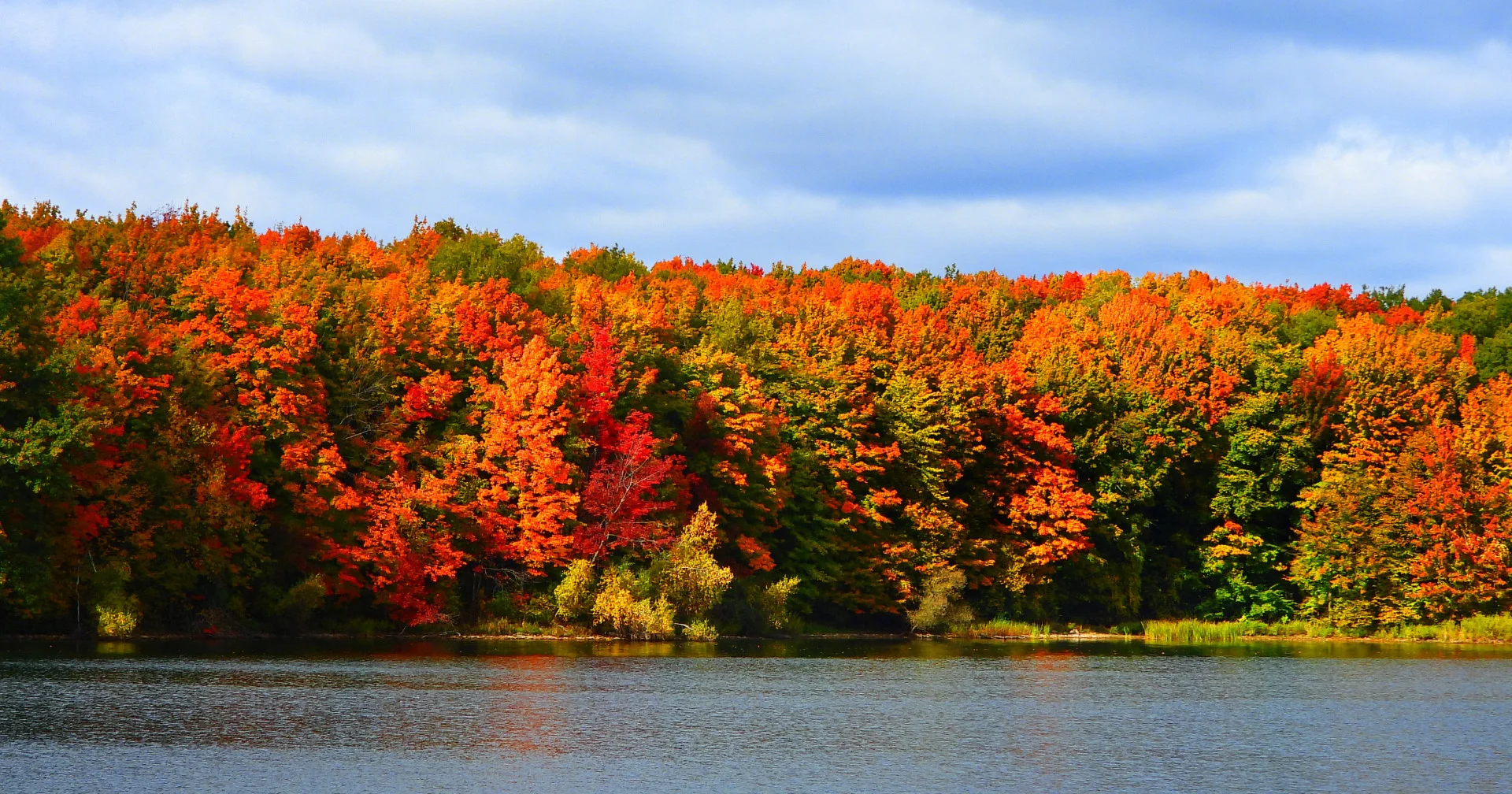
Gorgeous fall colours at the Long Sault Parkway in Long Sault Ontario photographed October 16th with the St Lawrence River in the foreground. (Calvin Hanson/UGC)
During this feedback loop, the green colour gradually fades from the leaves. Revealed at the end are the natural yellow and orange colours of the leaves, caused by pigments called xanthophylls and carotene. These pigments were always there, but their colours were masked by the intense green light reflected by the chlorophylls.
Reds and purples, on the other hand, come from different chemicals, known as anthocyanins. Unlike the xanthophylls and carotene, anthocyanins are not present in the leaf in any large quantities until late summer. These are actively produced by the leaves as the growing season winds down.
Brilliant or dull? It depends on the weather
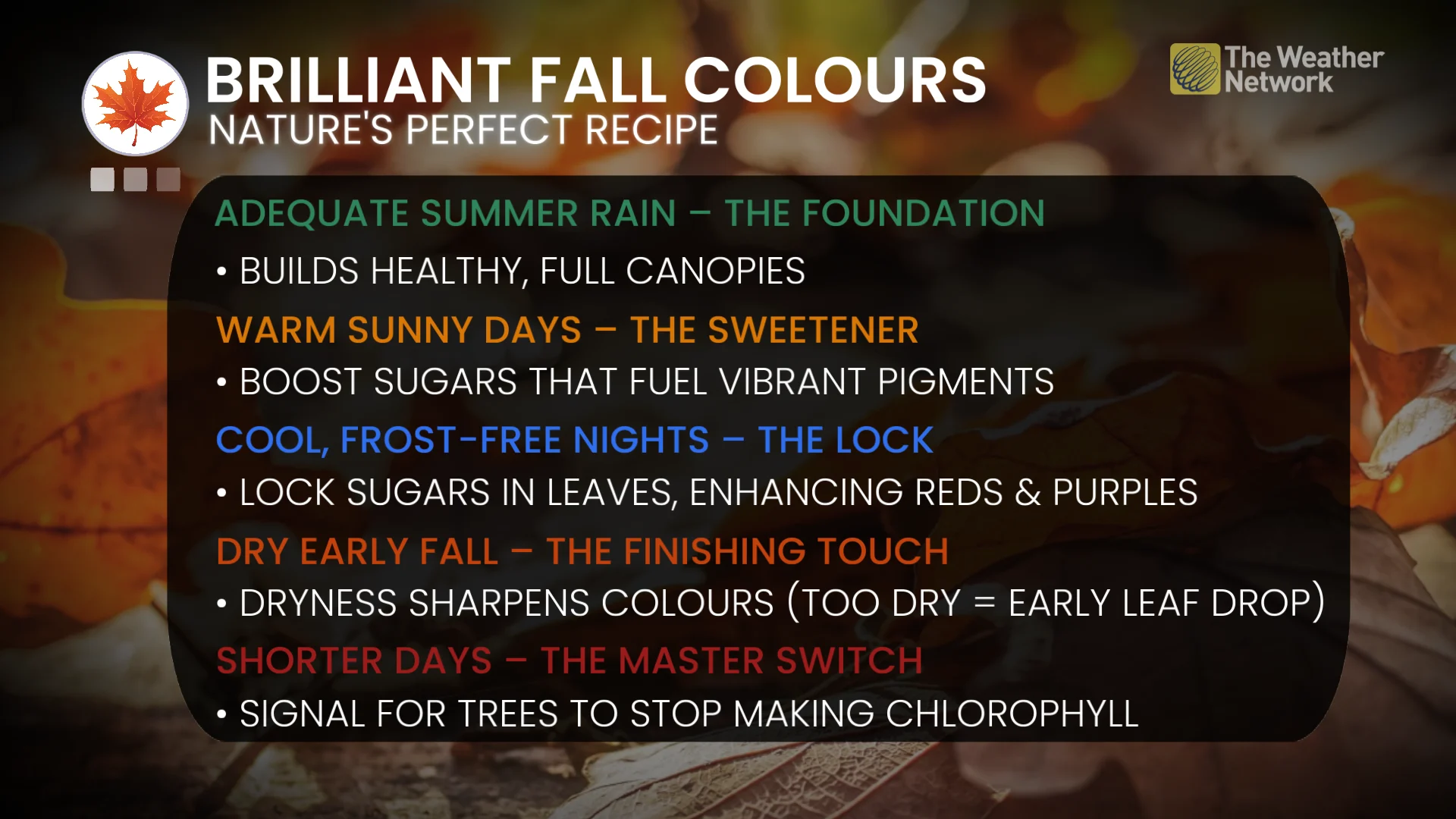
Exactly how vivid the fall colours are in your area depends on the weather throughout the summer and beginning of fall.
Fall 2026: Meteor shower season is about to begin!
While there is a definite recipe for the most vivid fall displays (see above), other factors can step in to dull the show.
Long stretches of cloudy weather, too much or too little rain, flooding, drought, and extreme temperatures are just some of the weather conditions that can add to tree stress.
The more stress a tree suffers throughout the growing season, the duller its leaf colours will be in the fall.