Warmer air settles on the Prairies, but brings freezing rain, wind threat

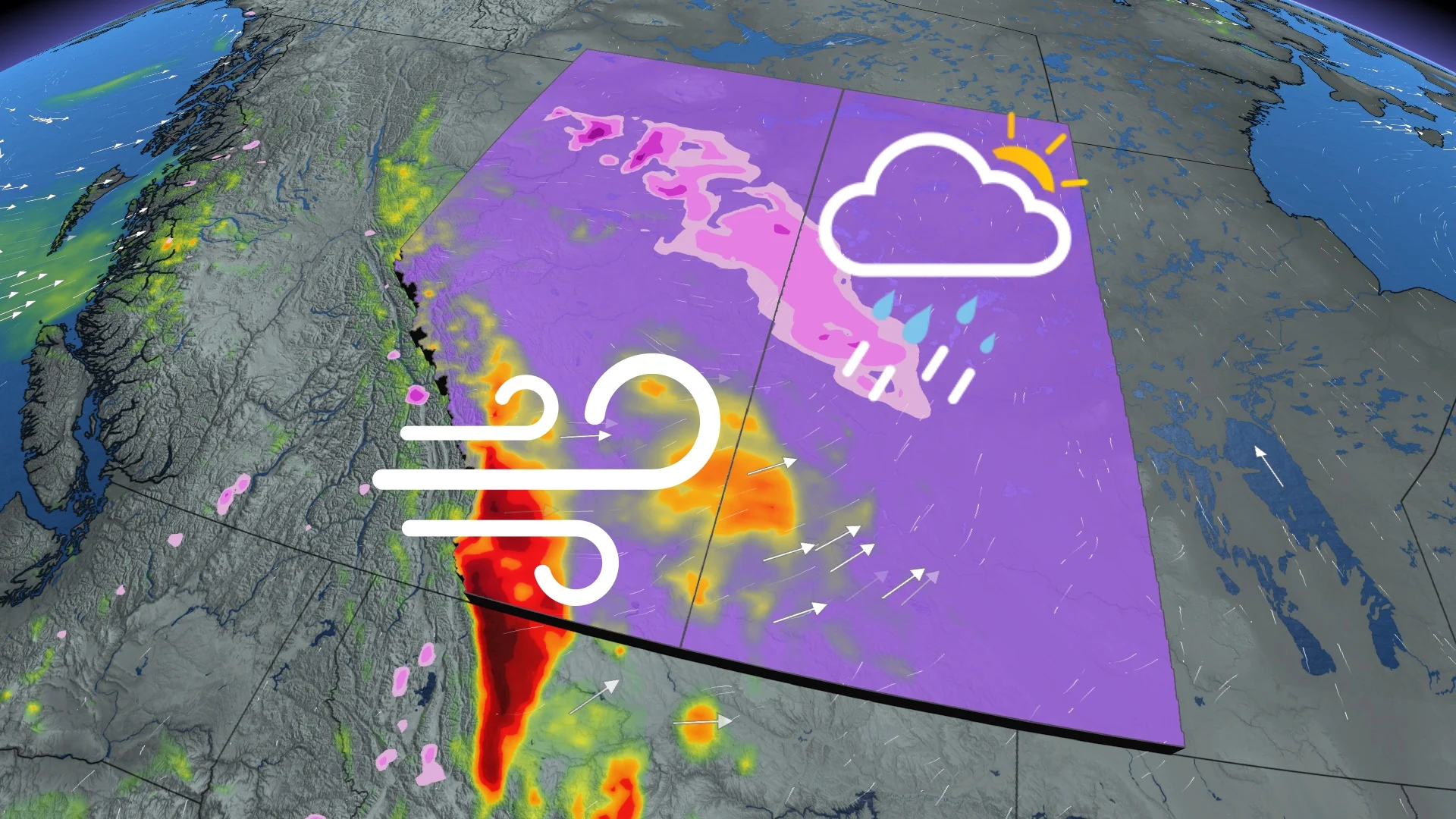
A noticeable warm-up across the Prairies is expected throughout the weekend and into early next week. However, the warmth comes with caveats: Freezing rain for much of the region this weekend, and on Monday for some areas, along with powerful wind gusts for some locales
Get ready to finally thaw out on the Prairies after an extremely long period of frigid cold.
When compared to the recent cold, the spring-like warm-up coming will feel remarkable. But, with the warmer air comes the risk of freezing rain for much of the region through the weekend. Expect difficult travel the areas that see the frozen precipitation.
RELATED: Embrace the Calgary warm-up with this charity hot chocolate fest
As well, some intense wind gusts are expected for southern Alberta on Saturday, and again on Sunday night for areas closer to the Montana border. Gusts could exceed 100 km/h on Saturday, especially for parts of Highway 2 near Claresholm, Alta.
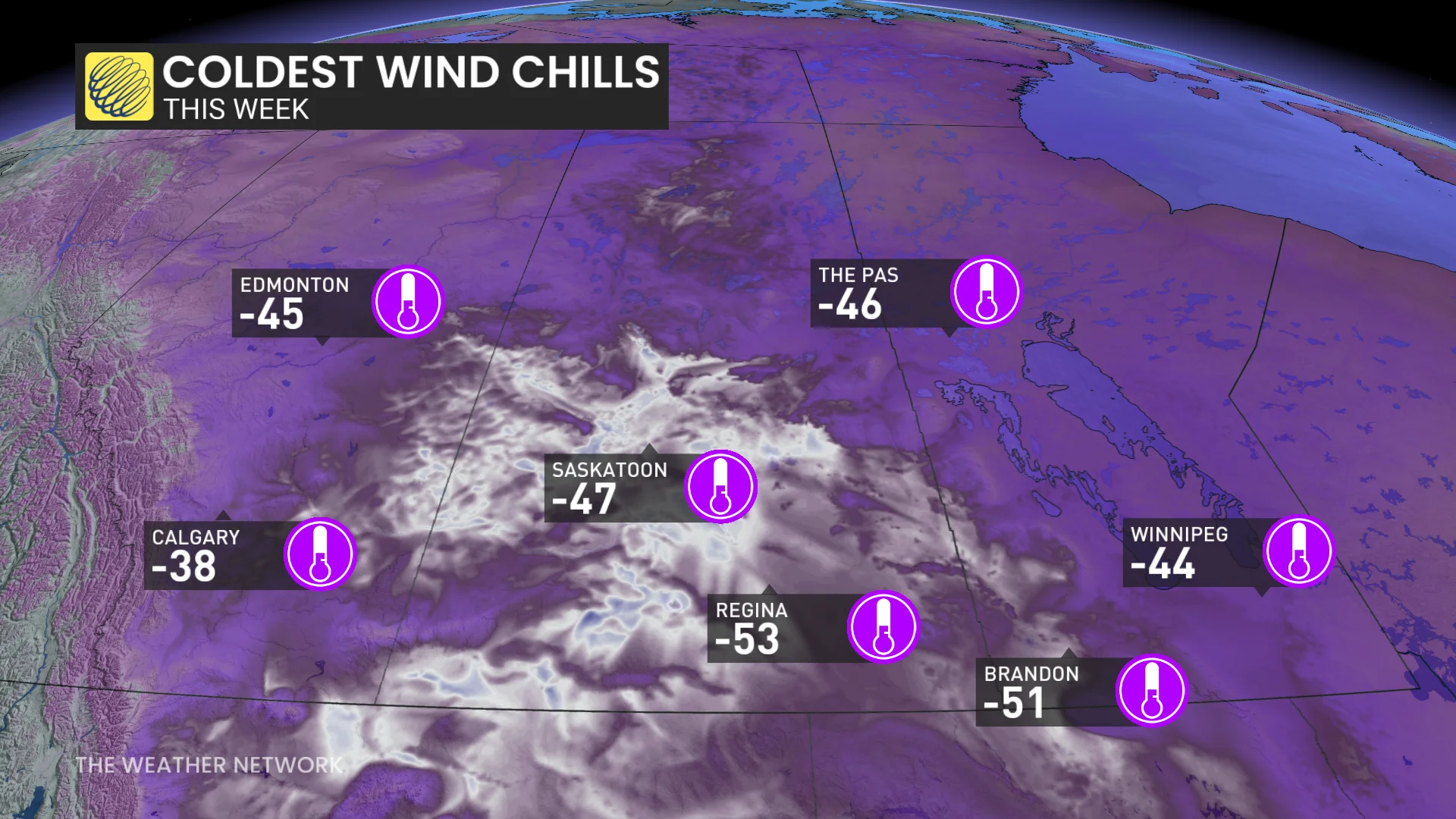
At one point, extreme cold warnings spanned more than 3,000 km, from the Prairies down to Texas.
This weekend: Bitter cold eases, replaced by warmth and freezing rain threat
A blocking pattern off the coast of B.C. is decaying, and will allow for the return of onshore Pacific flow. That will bring a rapid change from below seasonal temperatures, to well above seasonal by the end of the week and weekend.
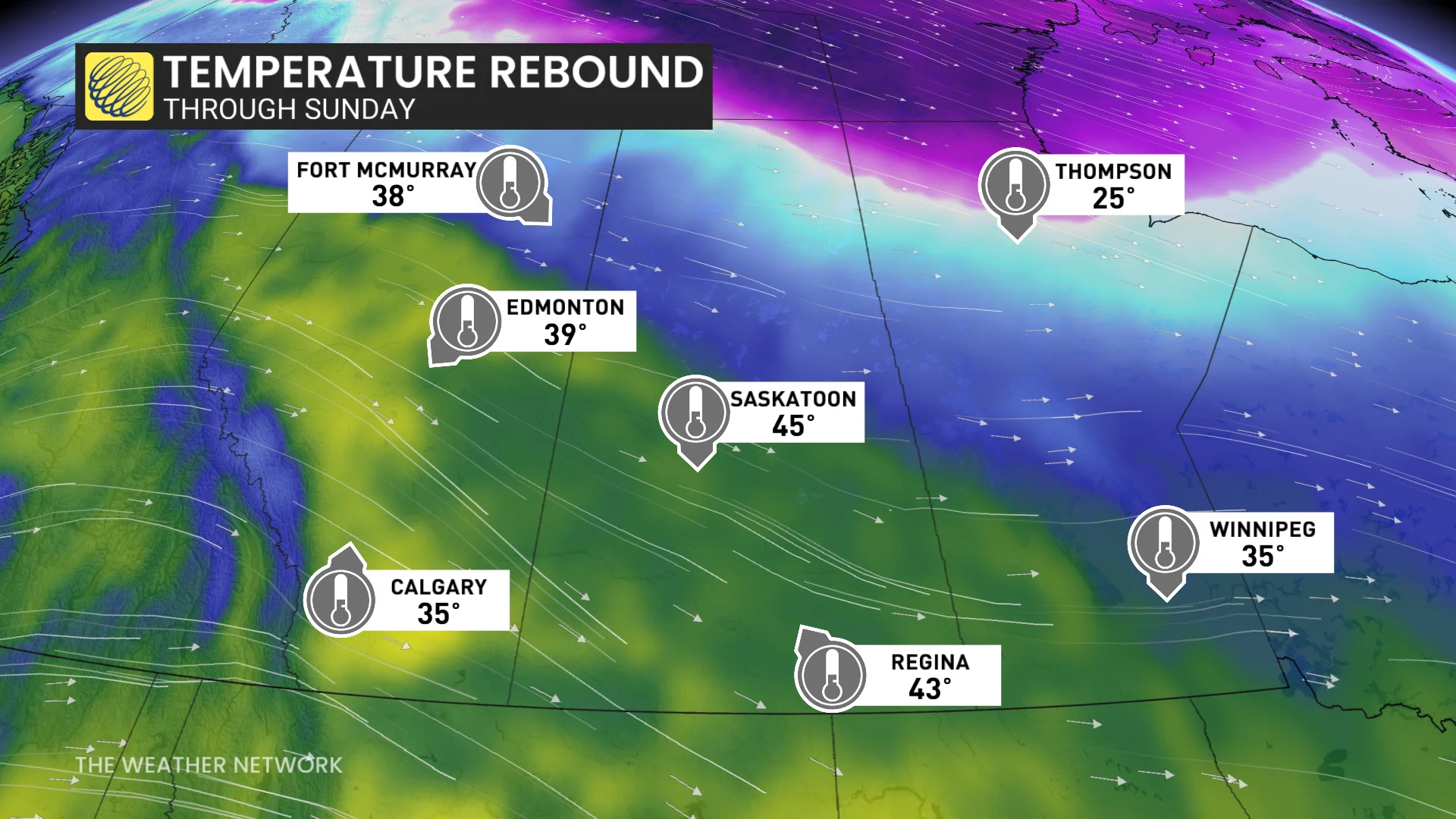
Warmer air started to flow into Alberta on Thursday, with high temperatures finally cracking the freezing mark by the weekend. These will be the first temperatures above zero for many in Saskatchewan and Manitoba in over a month's time.
Across southern sections of Alberta, daytime highs could actually near or reach double-digit values by Saturday.
This will be a major temperature rebound, with 40-degree increases for places like Saskatoon and Regina, Sask. In Calgary, Alta., a 35°C warm-up is on the way.
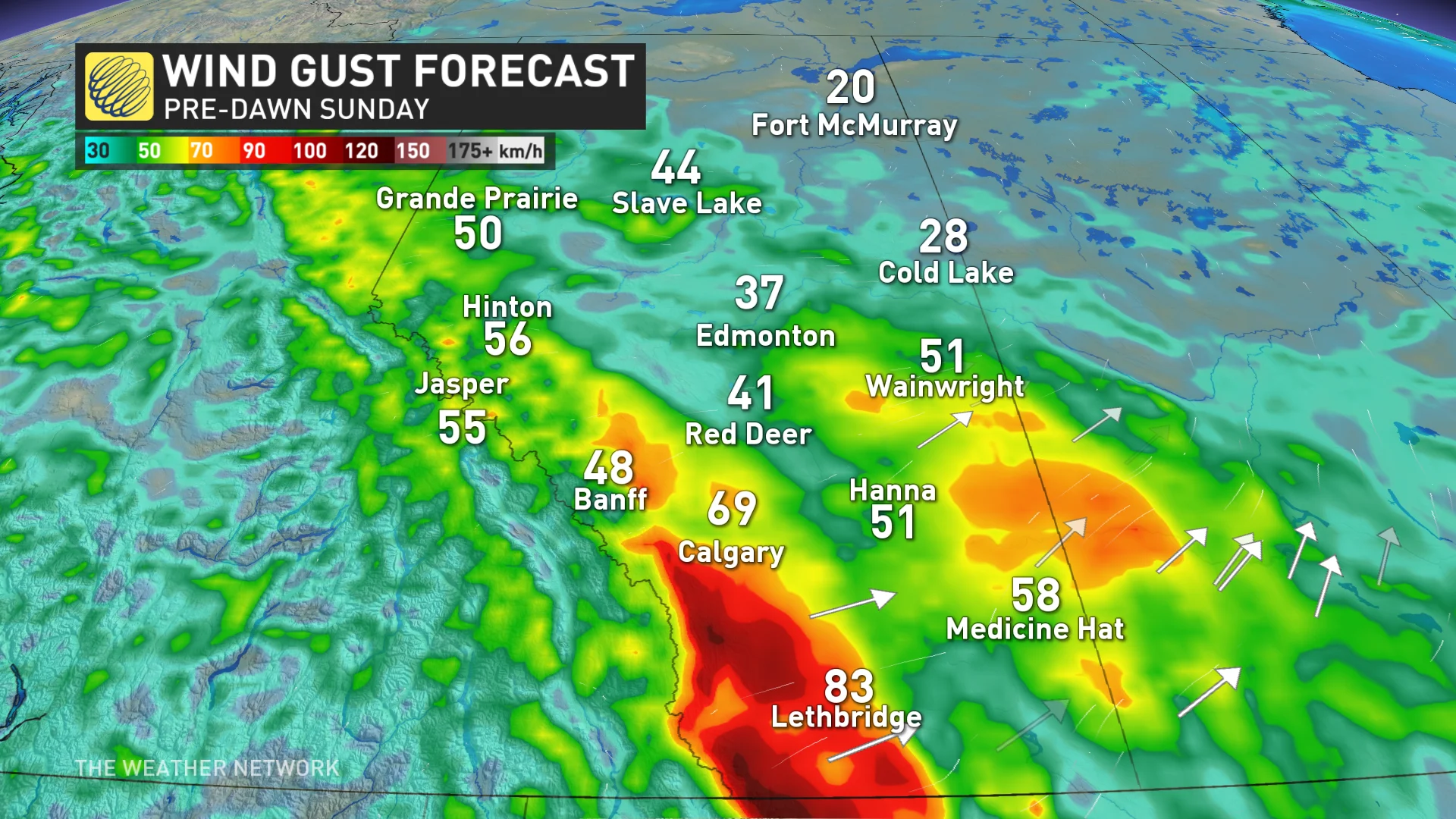
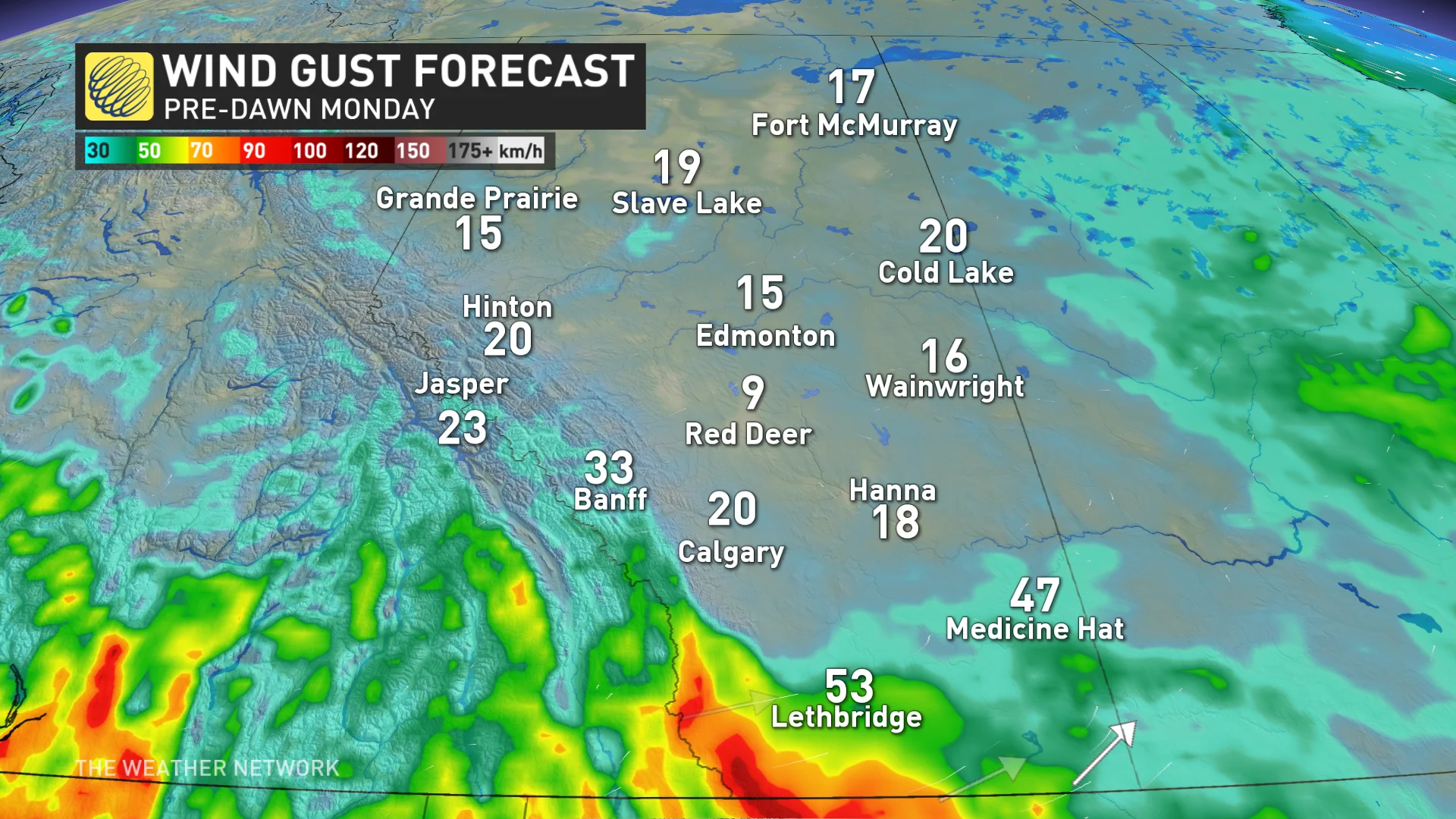
The warm-up will be greeted by blustery wind gusts in southern Alberta on Saturday. Downsloping winds strengthen through the day Saturday and peak at night. Gusts exceeding 100 km/h will reach parts of Highway 2 near Claresholm, Alta.
Multiple chances of freezing rain, more blustery wind gusts
As the milder air flows in along a boundary across northern areas this weekend could create slick road conditions as freezing rain develops.
The boundary will develop overnight Saturday into Sunday morning, and with the extreme cold that the region has experienced over the past week, icy conditions could develop across northern Alberta along the Yellowhead Highway, flowing into Saskatchewan and Manitoba on Sunday.
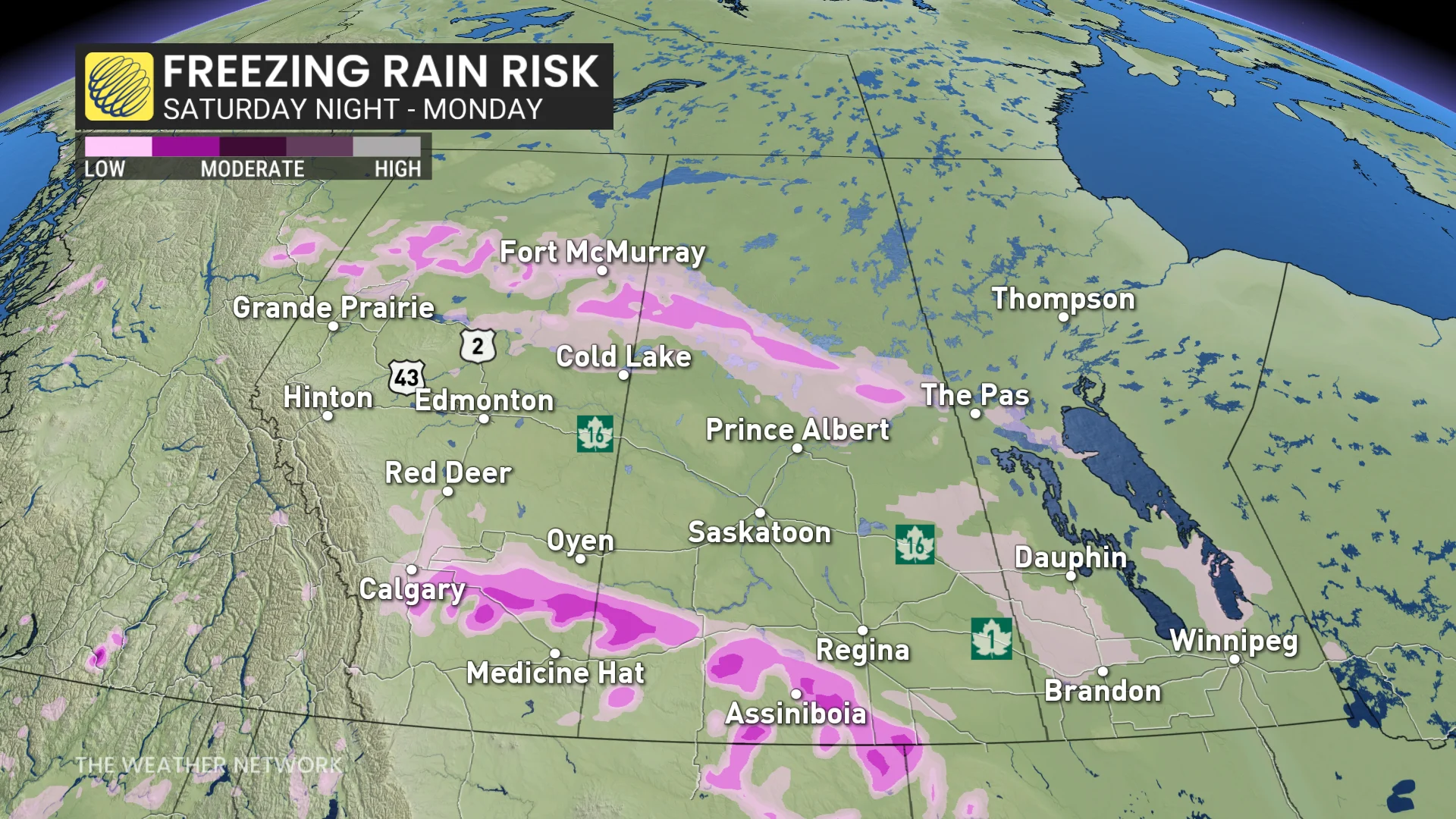
Grand Prairie, Edmonton, and Lloydminster, Alta., will be the first to feel the effects of the precipitation on Saturday night and into Sunday. Those in Saskatoon and Regina, Sask., will start to see the precipitation on Sunday morning. As the boundary line continues moving through the region, Brandon, Winnipeg and Dauphin, Man., will see precipitation begin in the evening on Sunday.
While this won't be an ice storm, this is the perfect setup for icy roads and freezing rain to develop.
A second boundary will then bring another freezing rain risk on Monday from Calgary to Swift Current, though there will be more warm air this time.
While there will be a band of light snow, and even a little bit of light rain mixed in, the freezing rain or drizzle presents the biggest hazard, especially to motorists. Travel plans may need to be adjusted during this time.
As well, another round of 100 km/h wind gusts will occur Sunday overnight and Monday morning but will be mostly confined to the Montana border.
Stay with The Weather Network for more forecast information and updates on your weather across the Prairies.