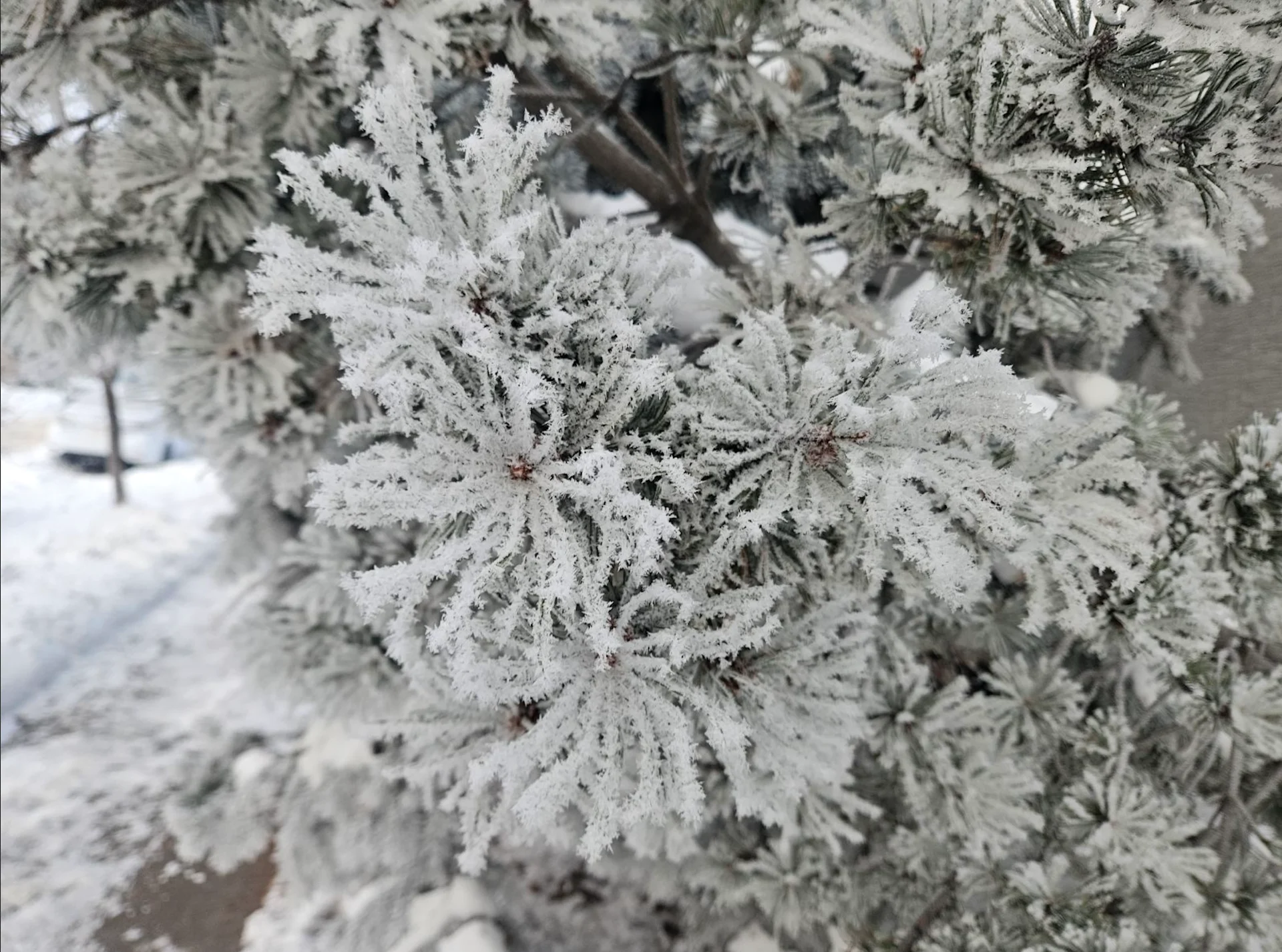
Warm winds finally end Alberta’s epic rime ice event

Trees, fences, and bushes sparkle in winter’s icy magic, but are you looking at rime ice or hoar frost? Learn the difference between these two stunning, natural phenomena, how they form, and what makes each unique in a true winter wonderland.
It wasn’t exactly Frank Sinatra’s “Summer Wind," but nonetheless, a warm chinook breeze came “floatin’ in” to the Calgary, Alta., region on Tuesday morning, putting an end to a rime ice event that had southern Alberta looking like a true winter wonderland.
Heavy, freezing fog lingered in the Calgary region for several days over the holiday period, prompting numerous fog advisories, which eventually gave way to a deep freeze in the area as the new year began.
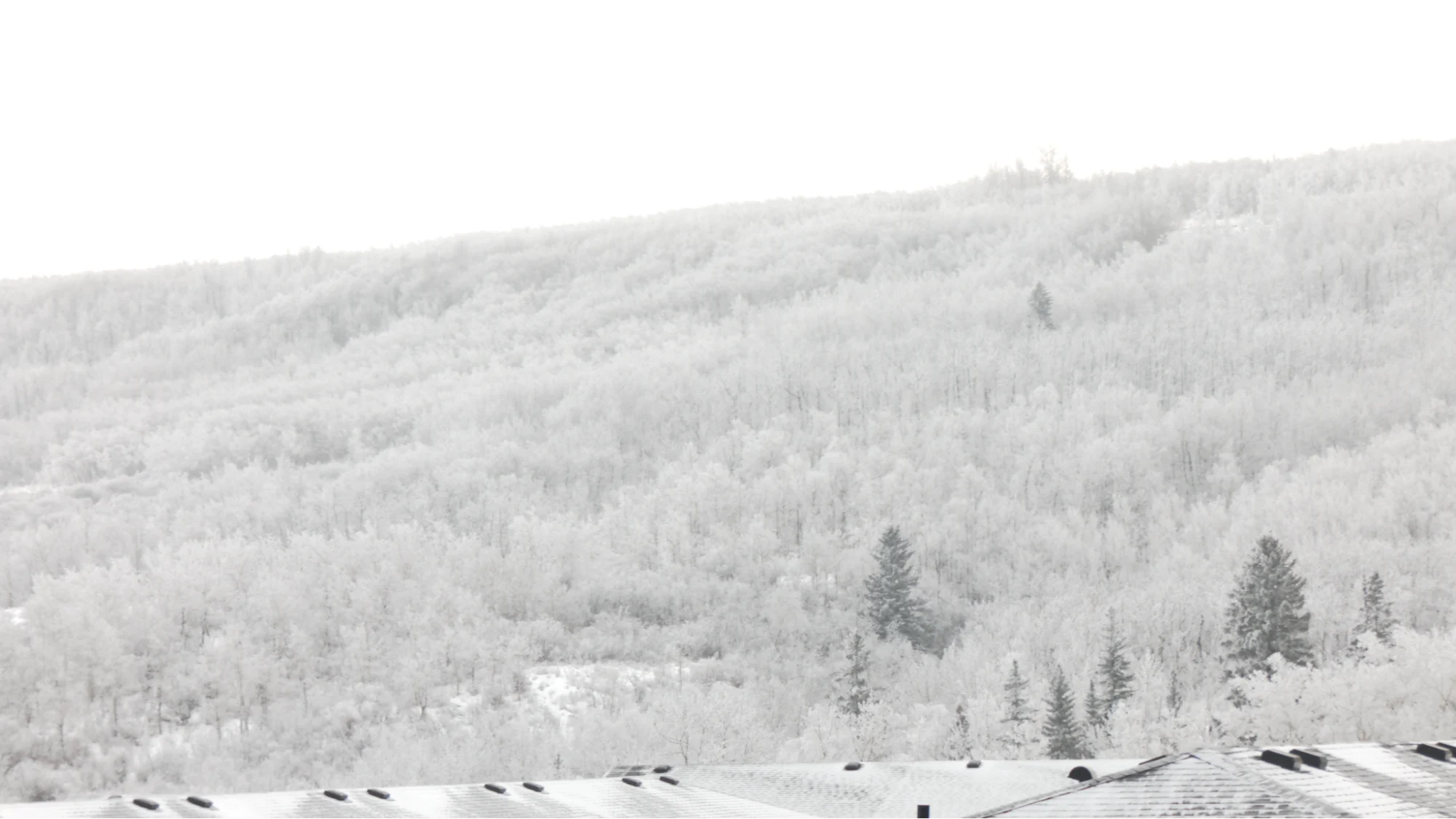
Several days of heavy fog led to a dramatic dusting of white ice covering trees, plants and fences across Calgary, Alta., and area. (Connor O'Donovan/The Weather Network)
The result of that fog, and a bit of wind, was thick and spectacular rime ice sprouting out from nearly every surface in sight. The magical weather phenomenon made picture-worthy scenes out of typically mundane objects including tree branches, fences and more.
While it generated a lot of excitement online, the weather event also generated a bit of confusion.
Should this dusting of nature’s icing sugar be called “rime ice?" Or, “hoar frost”?
The Weather Network meteorologist, Tyler Hamilton, breaks down the differences between the two similar phenomena, and explains why Albertans just witnessed the former.
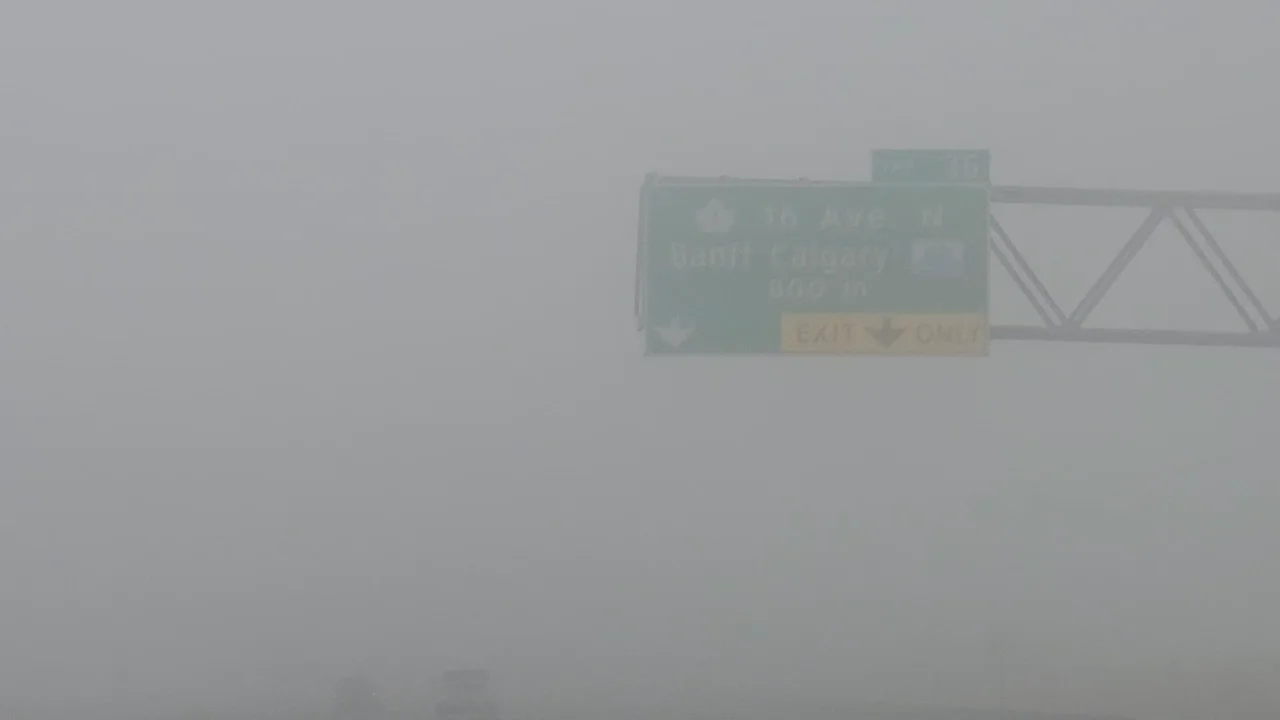
Heavy fog led to travel advisories in southern Alberta over the holidays. Then, like a magical spell, the fog lifted and revealed a stunning landscape of white. (Connor O'Donovan/The Weather Network)
“For rime ice, you need freezing frog, a necessary ingredient for this type of ice formation,” says Hamilton.
“The wind direction really is key. You need a wind blowing with rime ice, and it’ll form on that windward side."
Rime ice, he explains, forms when tiny, super-cooled water droplets suspended in the air are blown onto cold surfaces like trees. Once ice crystals begin to form on a surface, more moisture is blown in, and the formation grows into the wind.
It can be identified by its unidirectional growth pattern.
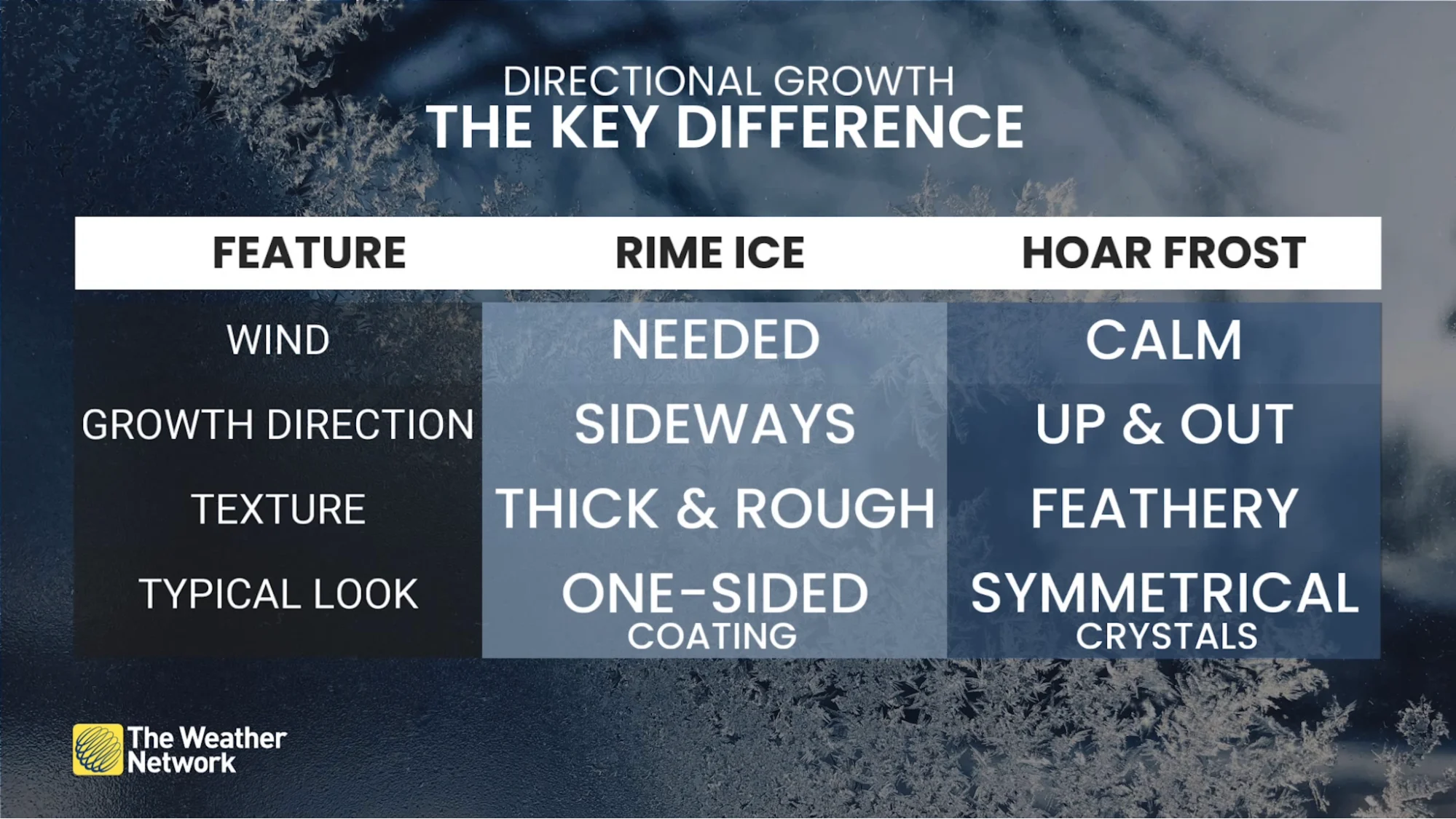
Rime ice versus hoar frost explainer. (The Weather Network)
Historical weather data shows several hours of freezing fog over the holidays, proving the origin of the stunningly wintry display.
Hoar frost, meanwhile, forms on cold, clear, humid nights.
In cloudless conditions, objects like plants can more easily radiate heat, cooling down faster than the air around them.
Water vapour skips the liquid phase. Instead, the molecules lock directly onto subzero surfaces in the hexagonal lattice structure that makes ice crystals so recognizable.
Identifying hoar frost is as easy as taking a breath.
“That’s the difference-maker, the hoar frost is super fragile,” Hamilton says.
“Even your breath can disrupt those ice crystals.”
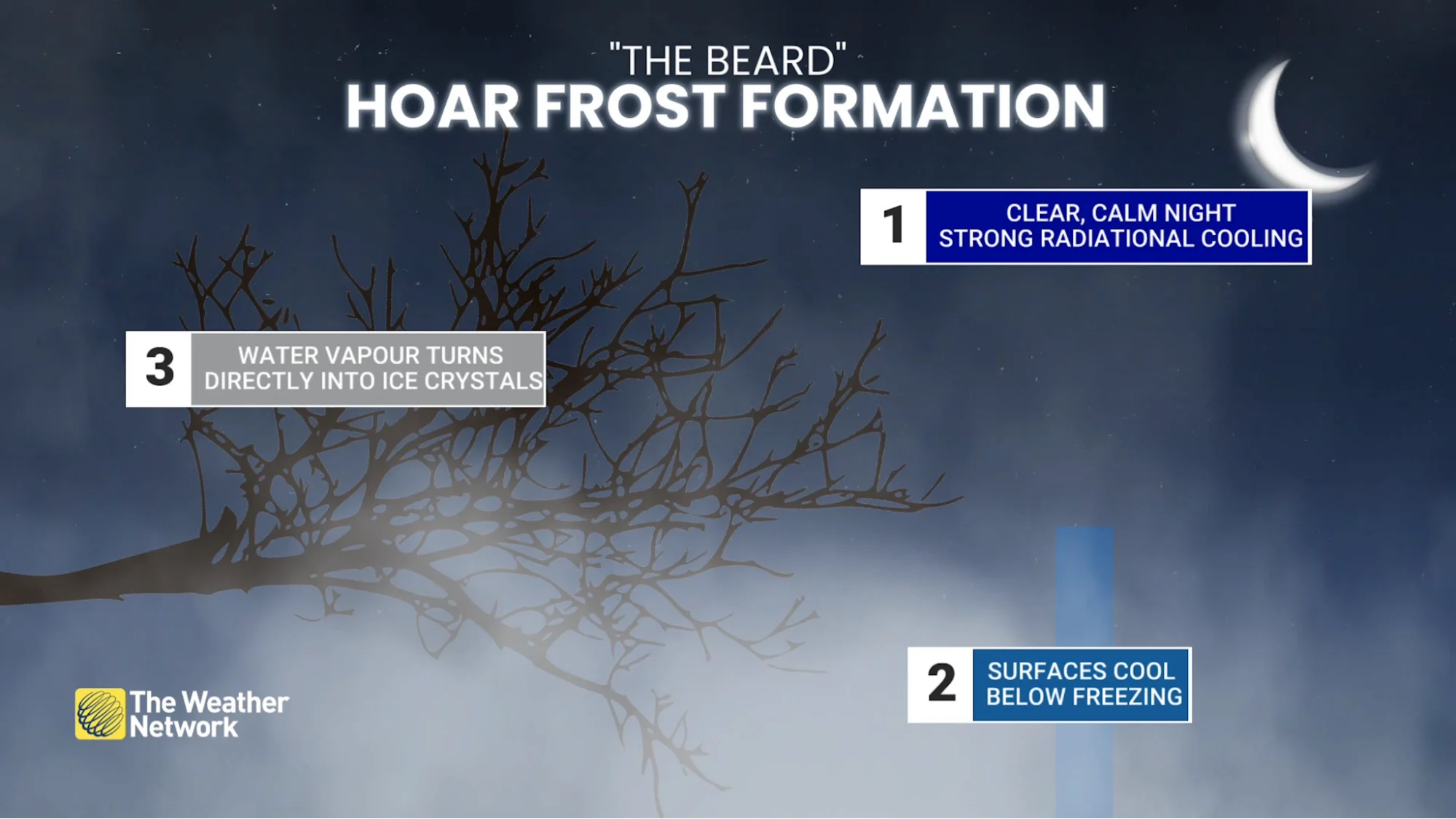
Hoar frost explainer. (The Weather Network)
But, alas, just like the summer wind, both rime ice and hoar frost are fickle friends.
Warming temperatures and winds that gusted near 50 km/h Tuesday morning made quick work of Mother Nature’s frosted tips.
However, Albertans who aren’t huge fans of the cold and ice can take solace in a pattern change that should, relatively speaking, make conditions feel summer-like indeed.