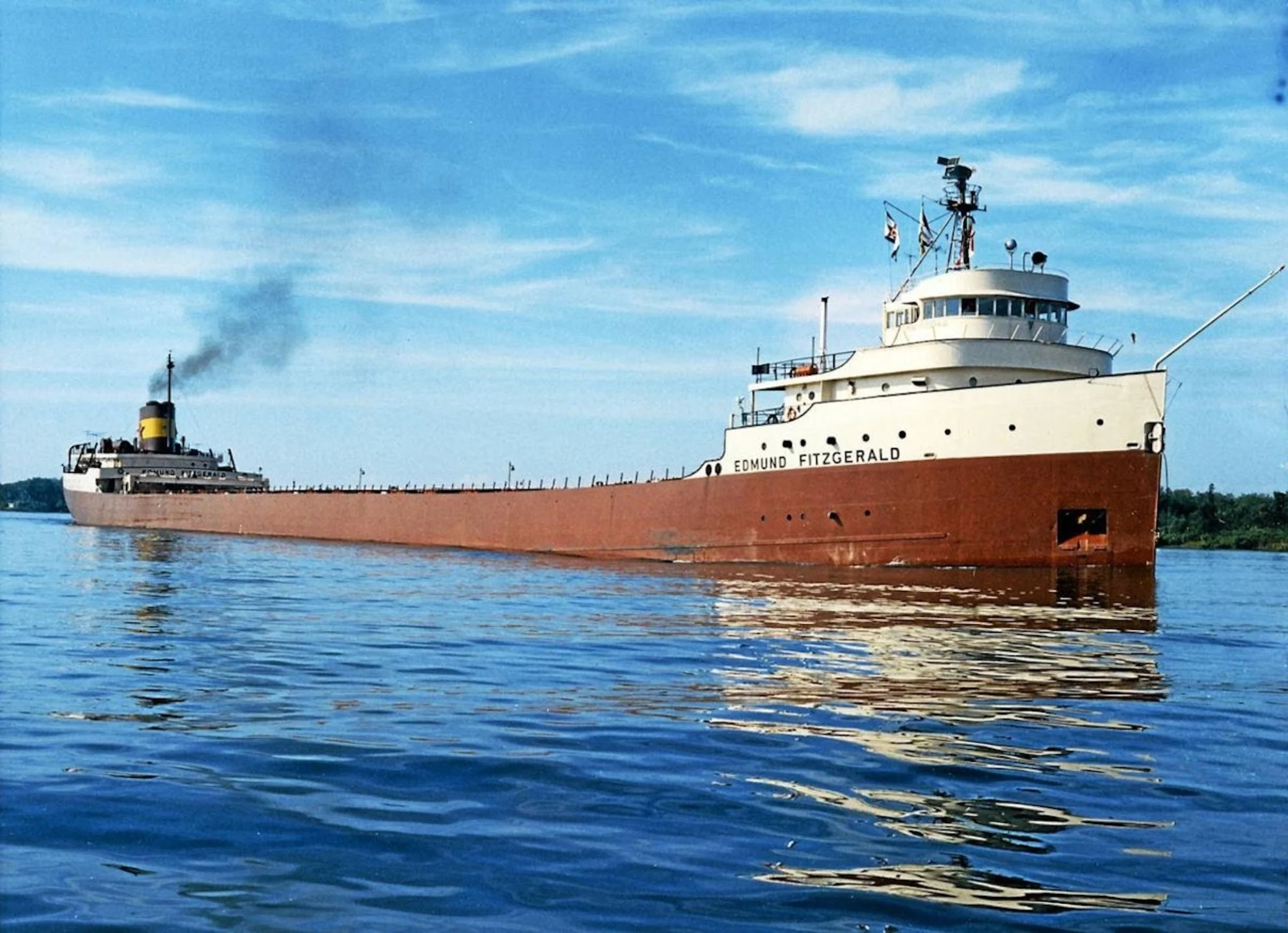
The major storm behind Gordon Lightfoot's 'The Wreck of the Edmund Fitzgerald'

Shortly after 7:10 p.m. on Nov. 10, 1975, the Edmund Fitzgerald suddenly sank in Canadian (Ontario) waters 530 feet (160 metres) deep after encountering a severe storm on Lake Superior.
The SS Edmund Fitzgerald was an American Great Lakes freighter and was the largest ship on North America's Great Lakes when it launched on June 7, 1958. For 17 years, Edmund Fitzgerald carried taconite iron ore from mines near Duluth, Minn., to iron works in Detroit, Mich., Toledo, Ohio and other Great Lakes' ports.
On Nov. 9, 1975, it was carrying a full cargo of ore pellets to embark on what would be its ill-fated voyage from Superior, Wis., near Duluth, en route to a steel mill near Detroit. Along the way, it joined a second freighter, the SS Arthur M. Anderson.
The next day, on Nov. 10, the two ships were caught in a severe storm on Lake Superior, with near hurricane-force winds and waves up to 35 feet (11 metres) high. Shortly after 7:10 p.m., Edmund Fitzgerald suddenly sank in Canadian (Ontario) waters 530 feet (160 metres) deep, about 17 miles (27 kilometres) from Whitefish Bay near the twin cities of Sault Ste. Marie in Michigan and Ontario.
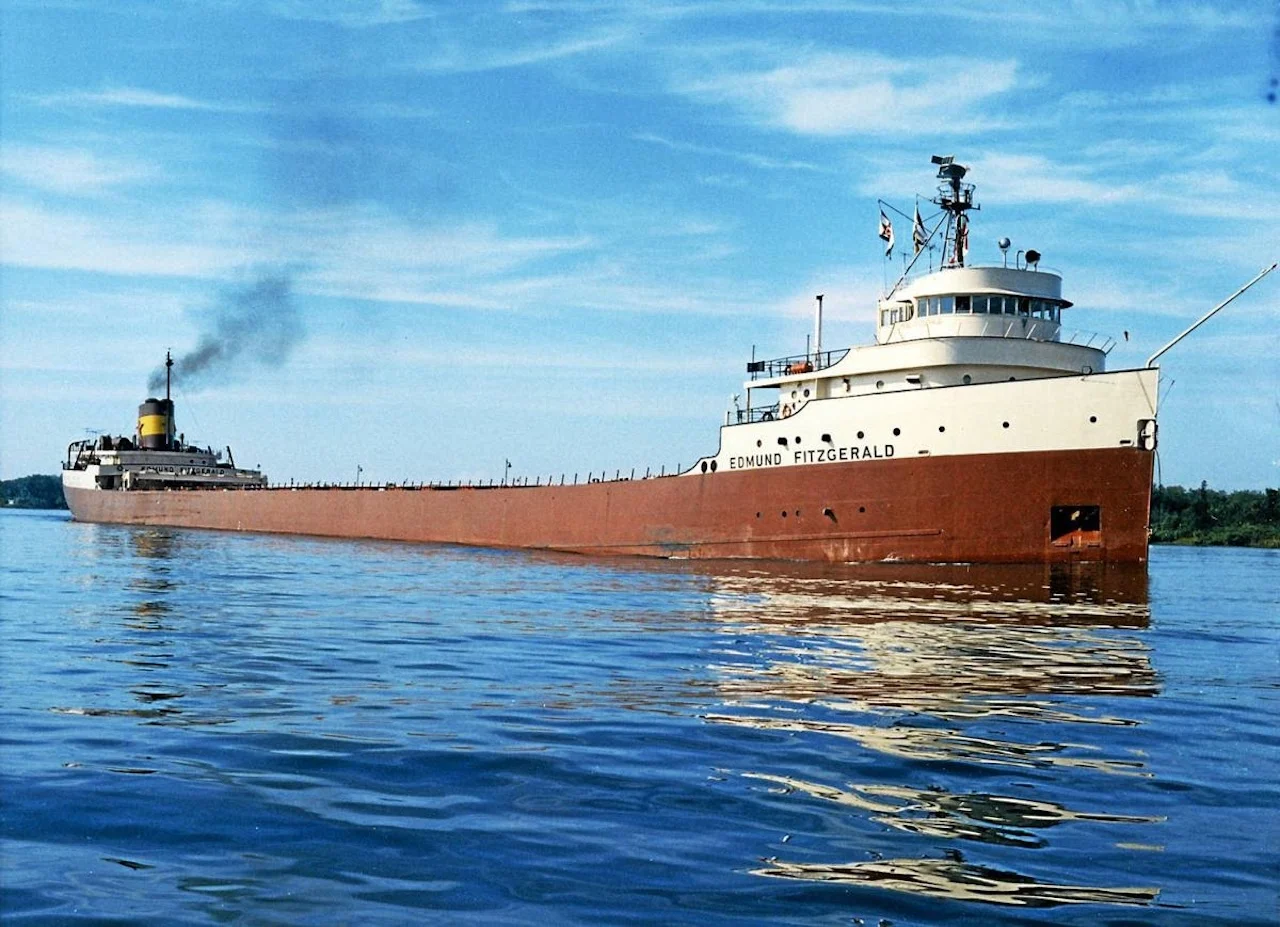
Edmund Fitzgerald. (Great Lakes Historical Society/Submitted to The Weather Network).
Canadian singer-songwriter Gordon Lightfoot recorded "The Wreck of the Edmund Fitzgerald" on his 1976 album, Summertime Dream, after reading an article in an issue of Newsweek. The single hit No. 1 in Canada and reached No. 2 on the Billboard Hot 100 chart in the United States.