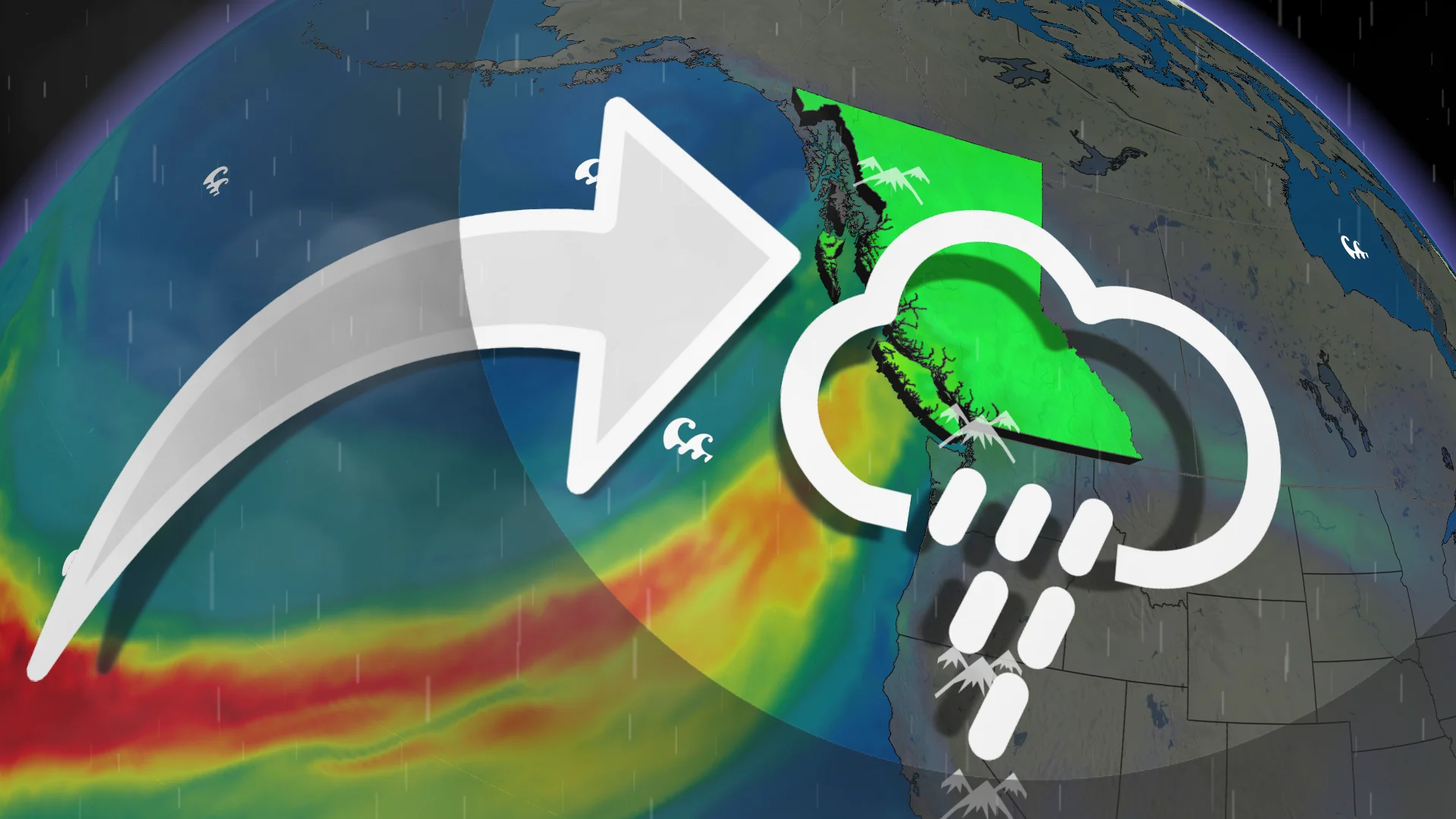
100+mm: Strongest storm of the month hits British Columbia with rain, winds

A stream of Pacific moisture has reached the West Coast, leading to an infiltration of heavy rainfall and potent wind gusts
The strongest storm so far this month is rolling across British Columbia to kick off the week, bringing gusty winds and locally heavy rain for some areas.
This final system is needed to salvage any hope of a normal precipitation month after a relatively dry September throughout the region.
WATCH: Inside the eye of Polo as it grows into a historic hurricane
Atmospheric river arrives
An atmospheric river carrying moisture direct from southeast Asia hit the B.C. coast to start the week.
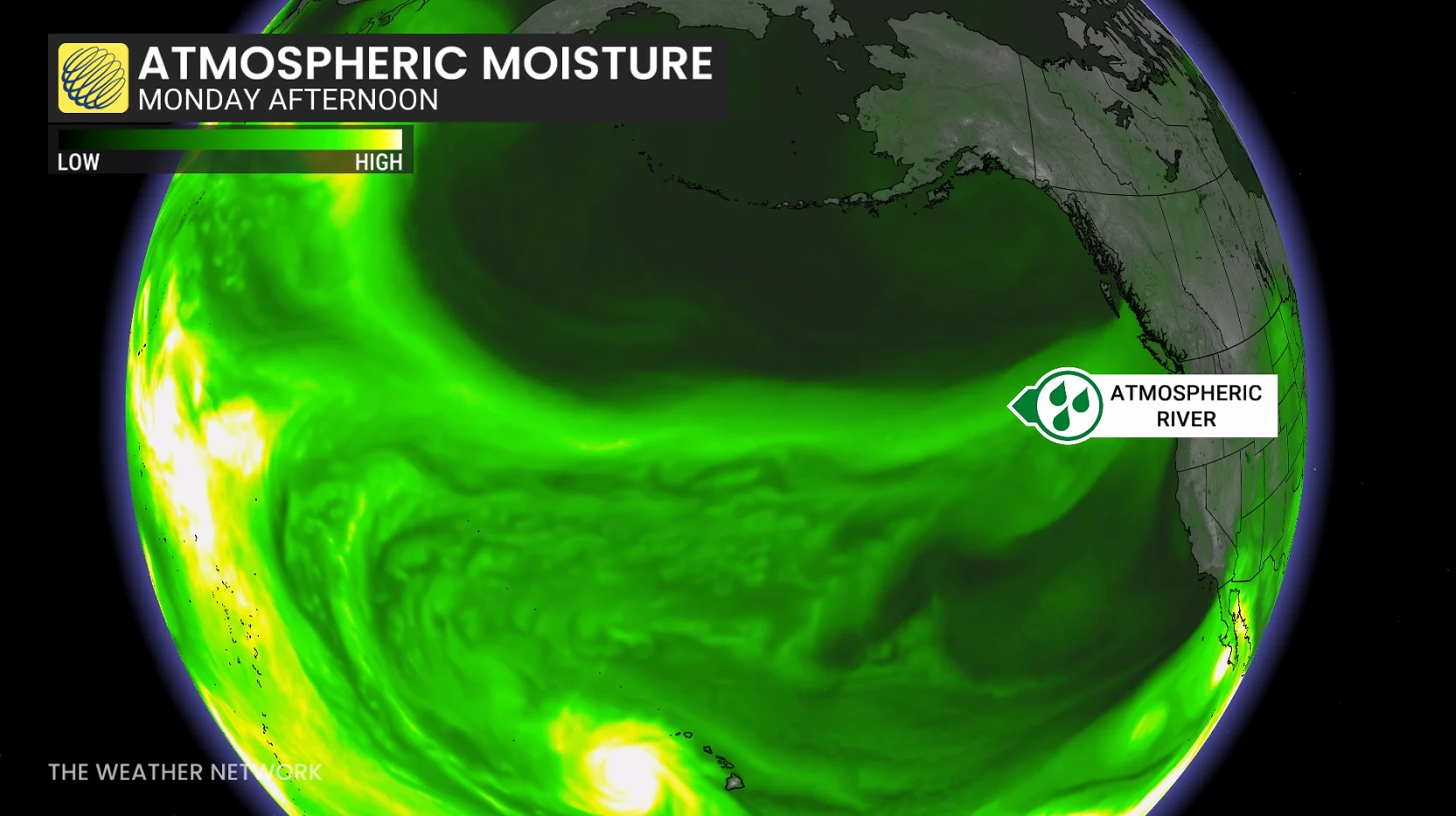
This atmospheric river will rank as an AR-2 for the Central Coast and western Vancouver Island, with an AR-1 expected just about everywhere else. In general, AR-2 brings mostly beneficial rains with a risk for localized flooding.
These rankings, which range from AR-1 to AR-5, measure the intensity and duration of water vapour transport to estimate the impacts of an atmospheric river.
Heavy rain, gusty winds expected
Heavy rain will spread to western Vancouver Island by Monday evening as a weak, surface low develops off the northwestern tip of the island.
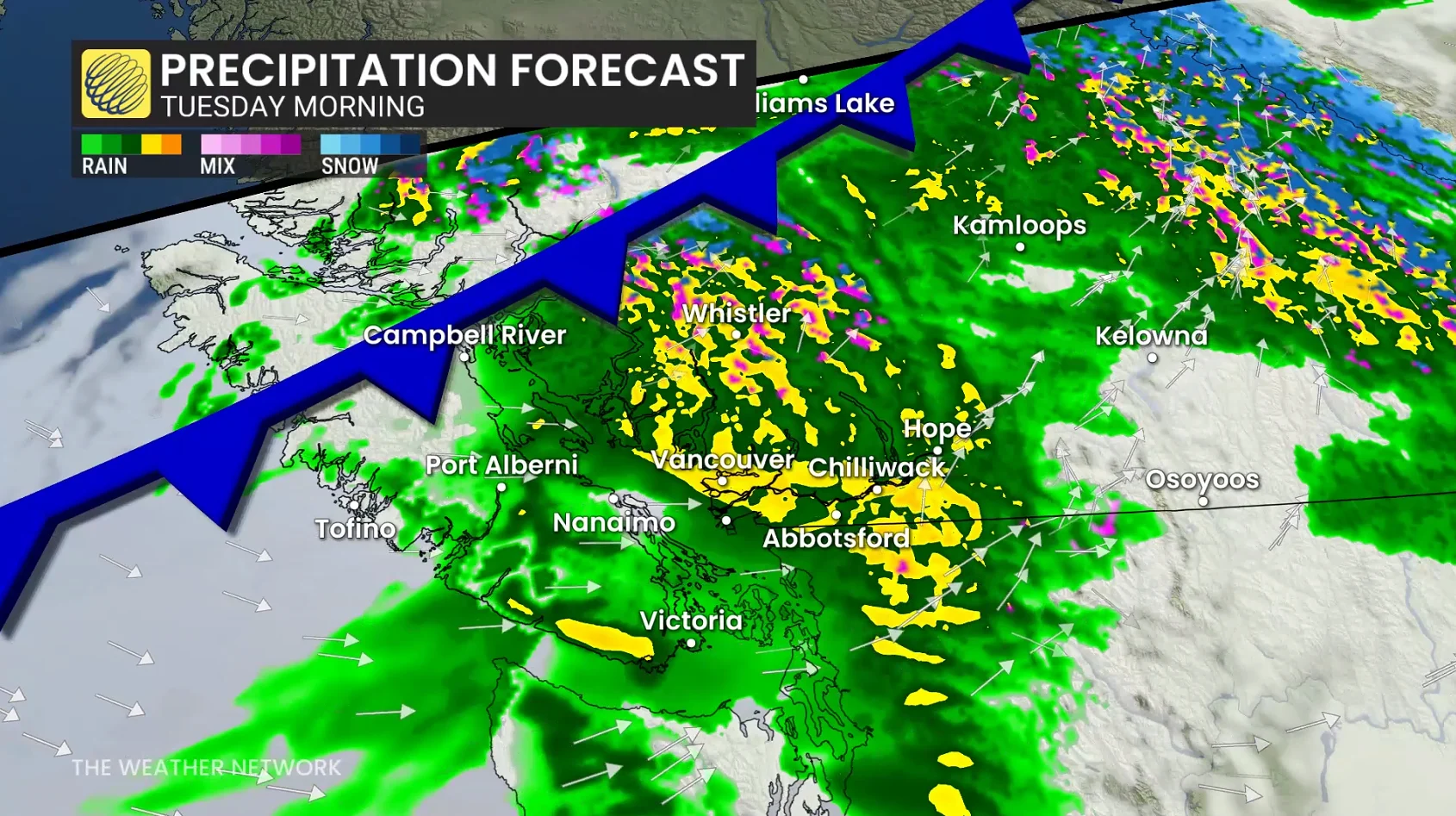
Rainfall rates up to 10 mm per hour are possible on western Vancouver Island during the event’s peak on Monday night. The strongest winds are expected through pre-dawn Tuesday, with minor power outages possible.
We’ll see the heaviest rainfall spread over the Lower Mainland early Tuesday morning, significantly slowing down the morning commute. Showers will linger into Tuesday afternoon as the frontal system slides south of the international border.
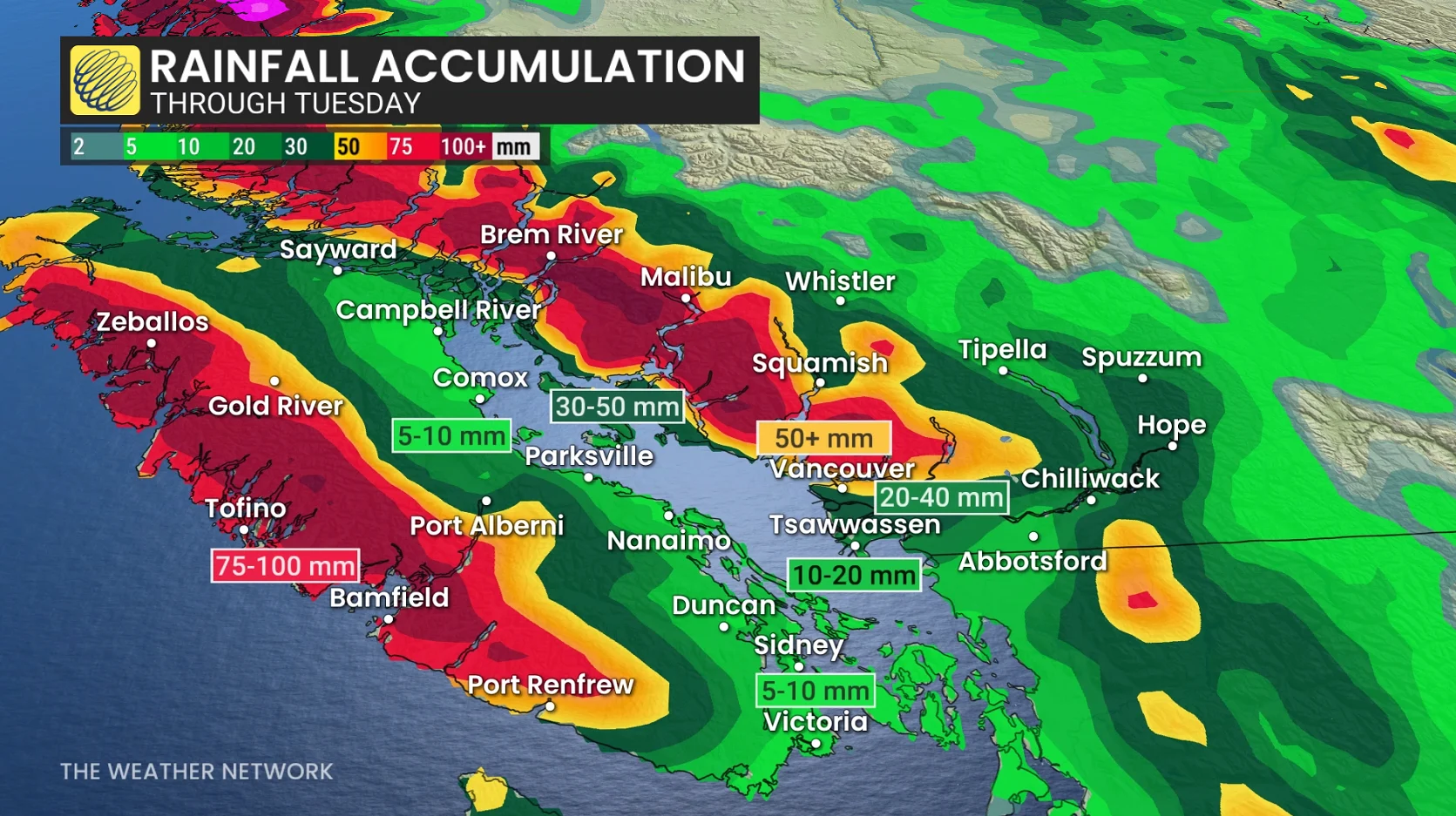
Rainfall totals will vary widely depending on proximity to the mountains.
20-40+ mm of rain is in the forecast for much of Metro Vancouver, with 40-60 mm likely near the mountains. Localized totals of 50-100+ mm are possible on western Vancouver Island and the Central Coast, while communities beneath the rain shadow on eastern Vancouver Island may only pick up 5-10 mm of accumulation