
Storm parade hits B.C. with ample rainfall and alpine snowfall

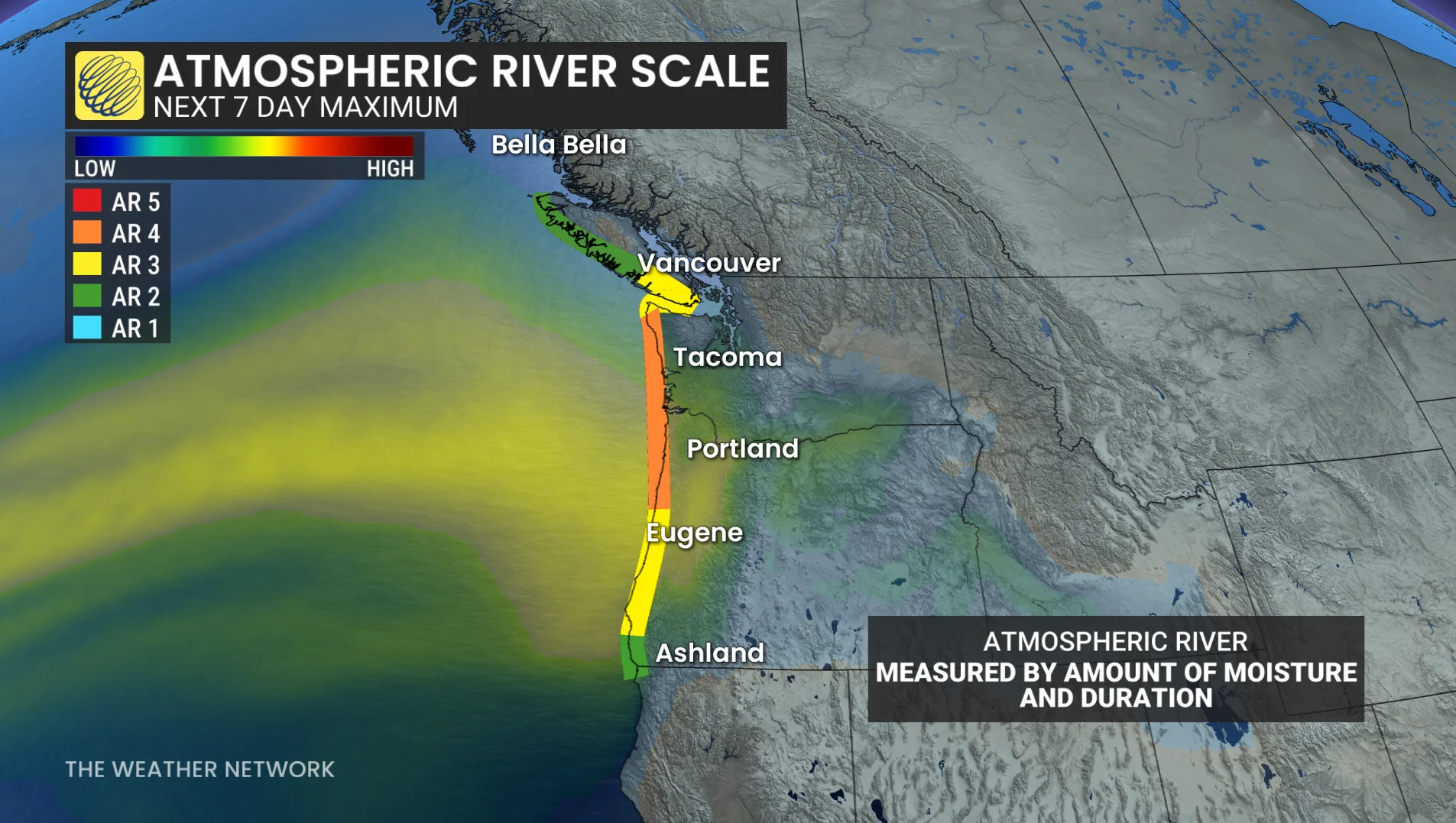
A potent series of atmospheric rivers originating across southeastern Asia will funnel torrential rainfall and alpine snow across B.C. through Wednesday.
A significant stream of moisture, courtesy of multiple, potent atmospheric rivers, continue to inundate B.C. with additional rounds of heavy rainfall and alpine snow.
The robust atmospheric rivers could reach AR-2 and AR-3 intensity in B.C. as it washes over parts of the U.S. Pacific Northwest, too, as a AR-4 event.
DON’T MISS: Atmospheric rivers becoming so intense we need to rank them like hurricanes
Given the prolonged and persistent rainfall moving into the region, residents are advised to watch for pooling and ponding on area roadways. River flooding is also possible as local waterways struggle to keep up with the excess runoff.
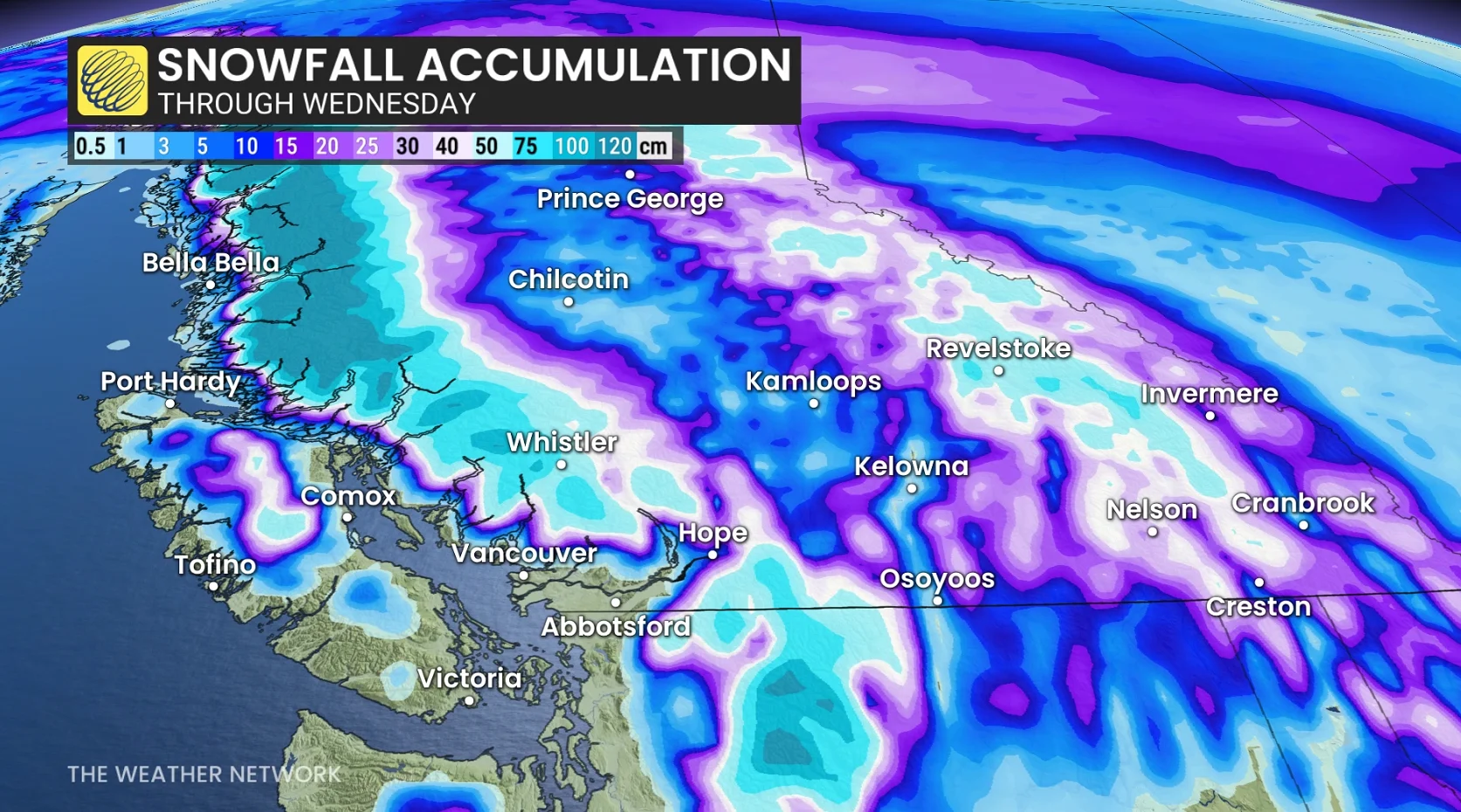
As well, expect hazardous travel along the mountain passes as they face copious amounts of snowfall.
Heavy rain, snow continues as multiple atmospheric rivers push through
A deep trough of air over the Gulf of Alaska is directing heavy Pacific moisture toward the West Coast.
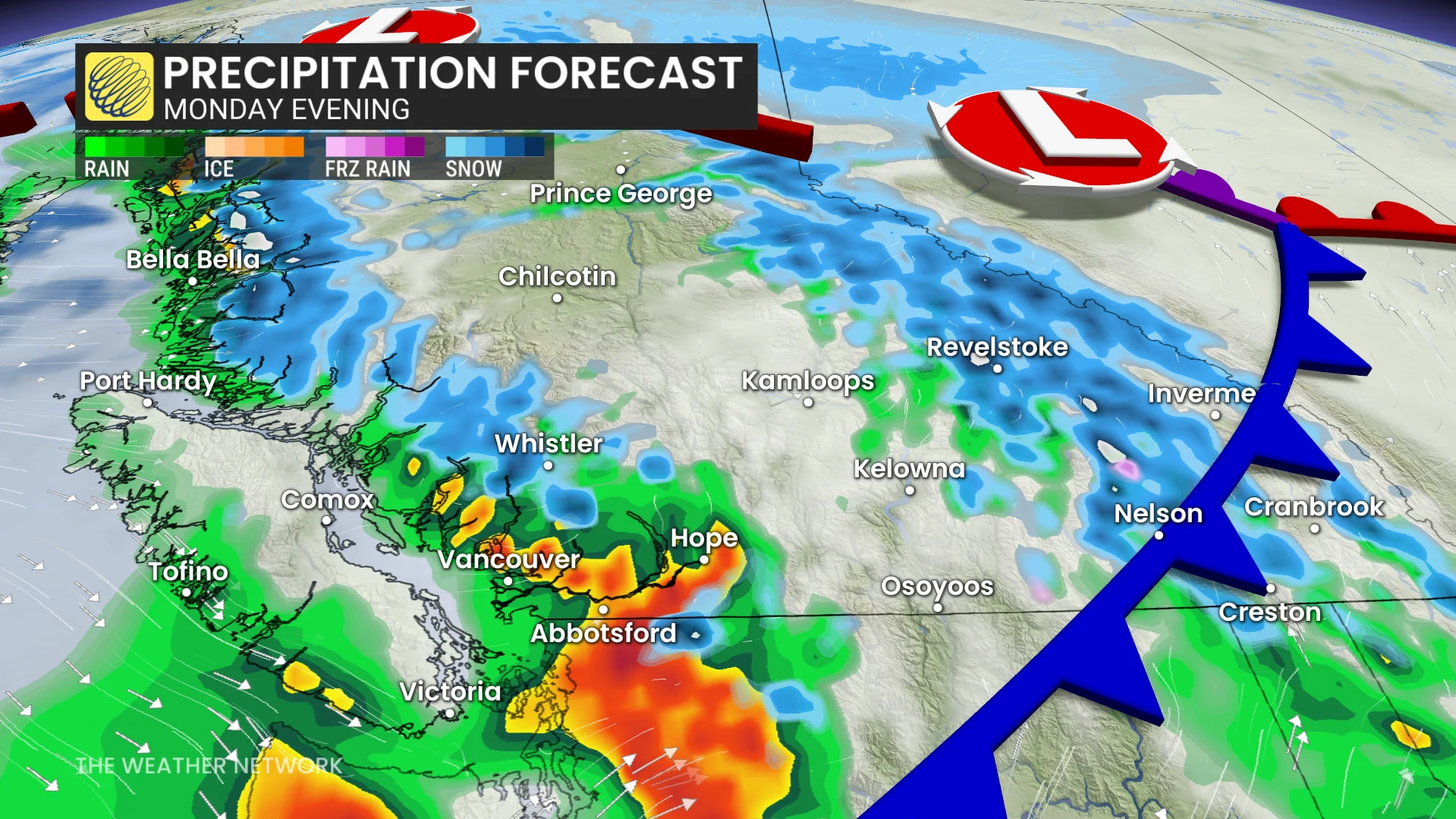
Through the pre-dawn hours on Tuesday morning, the heaviest rainfall continues to target western Vancouver Island and higher elevations north of the Fraser River across Metro Vancouver.
Heavy rainfall will be concentrated in the Fraser Valley where rainfall rates peak at over 5 mm an hour.
The atmospheric river sag south into Oregon, giving a break to the region.
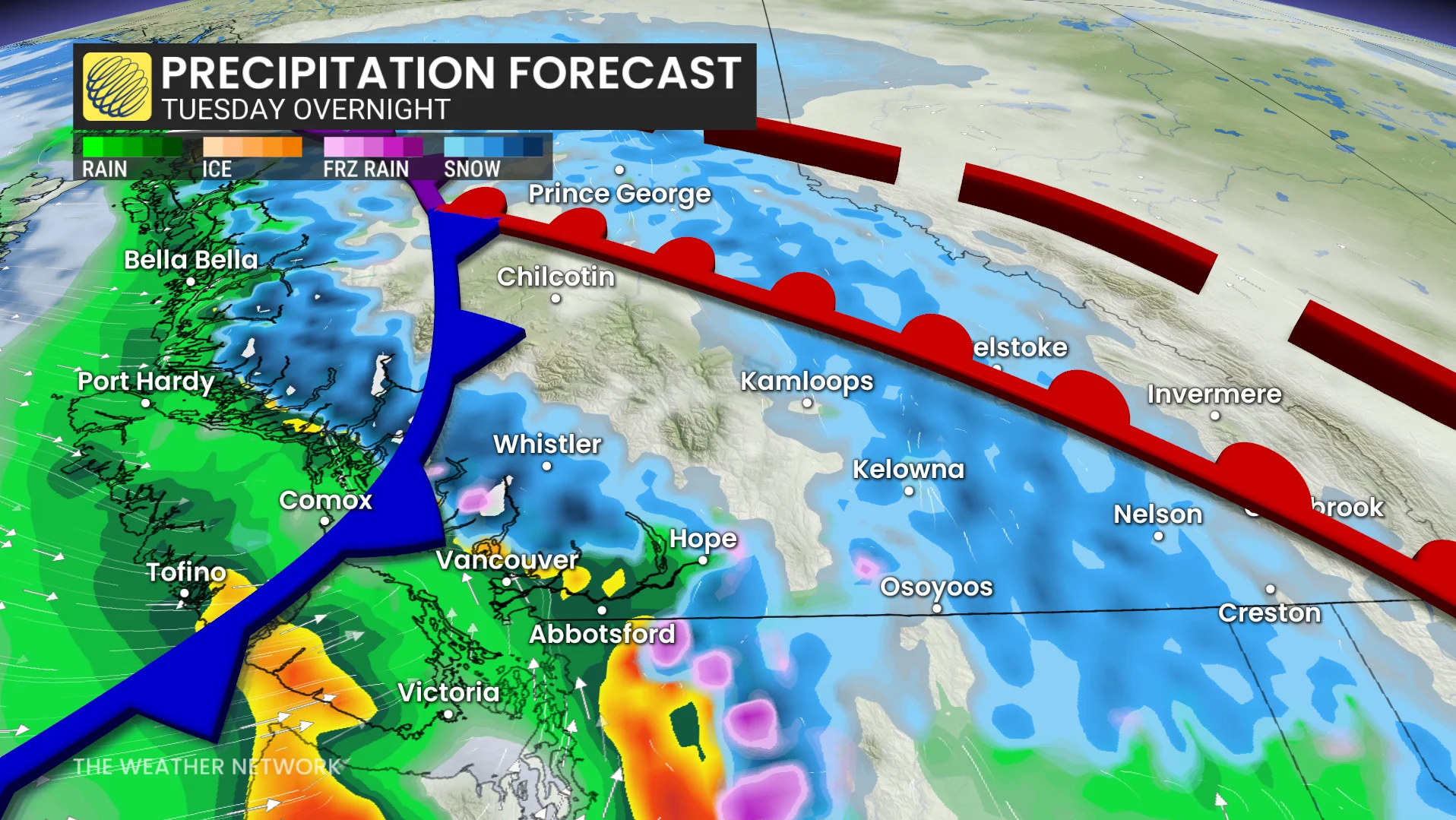
As well, the freezing level stays elevated into the pre-dawn hours on Tuesday, limiting heavy snowfall to mountain peaks versus typical pass travel.
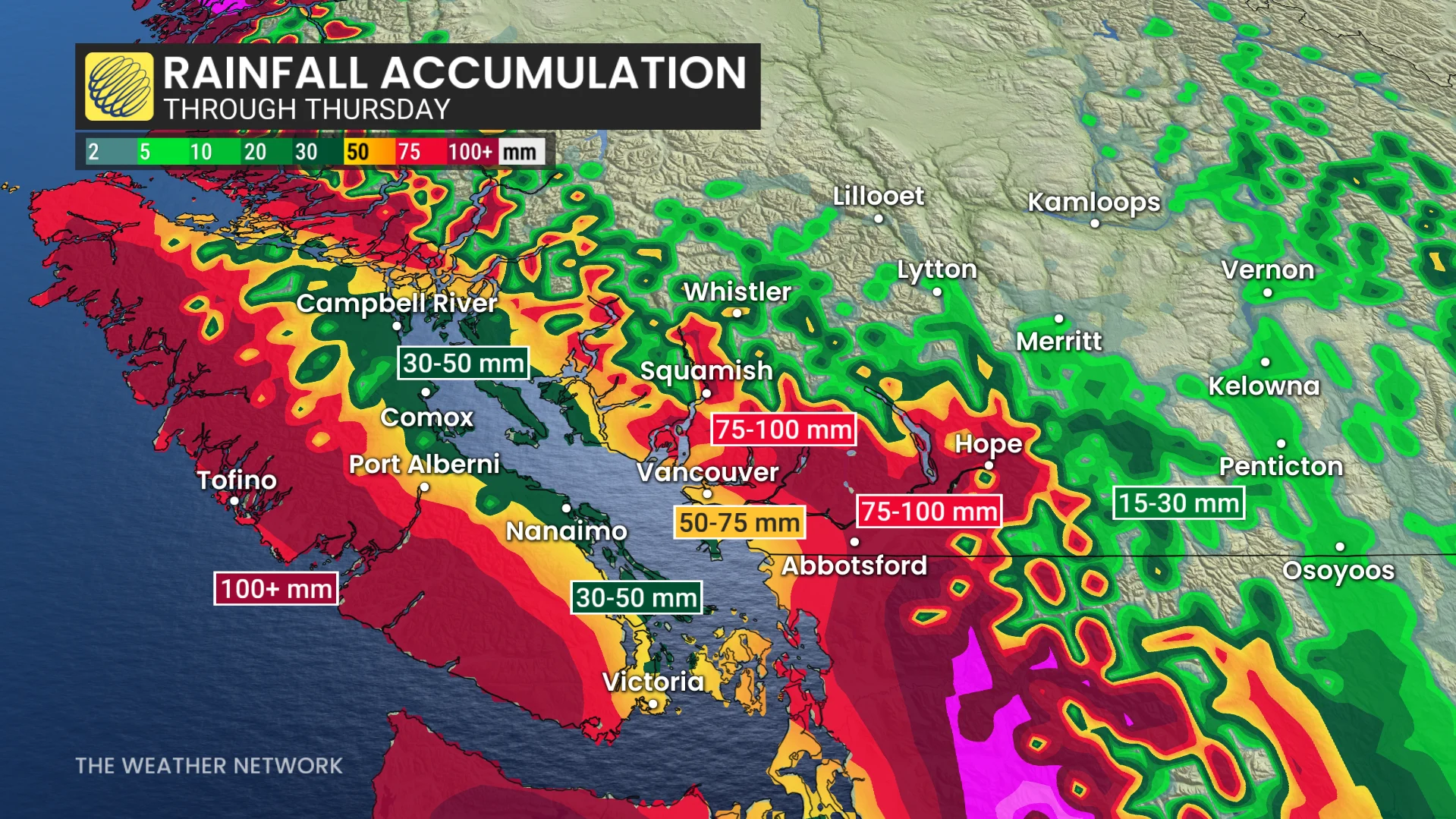
Rainfall totals with the first wave likely reach upwards of 50 mm for North Vancouver and the Fraser Valley. Western Vancouver Island is likely recording more than 75 mm of rainfall, as well.
The worst travel routes in B.C. over the next 24 hours show heavy accumulation:
Pine Pass: 25-45 cm
Kootenay Pass (via Paulson): 25-35 cm
Rogers Pass: 20-30 cm
The next atmospheric river will reloads Tuesday night into Wednesday. By Tuesday night, the next wave of moisture arrives across the South Coast, producing rainfall rates of 3 mm to 5 mm an hour.
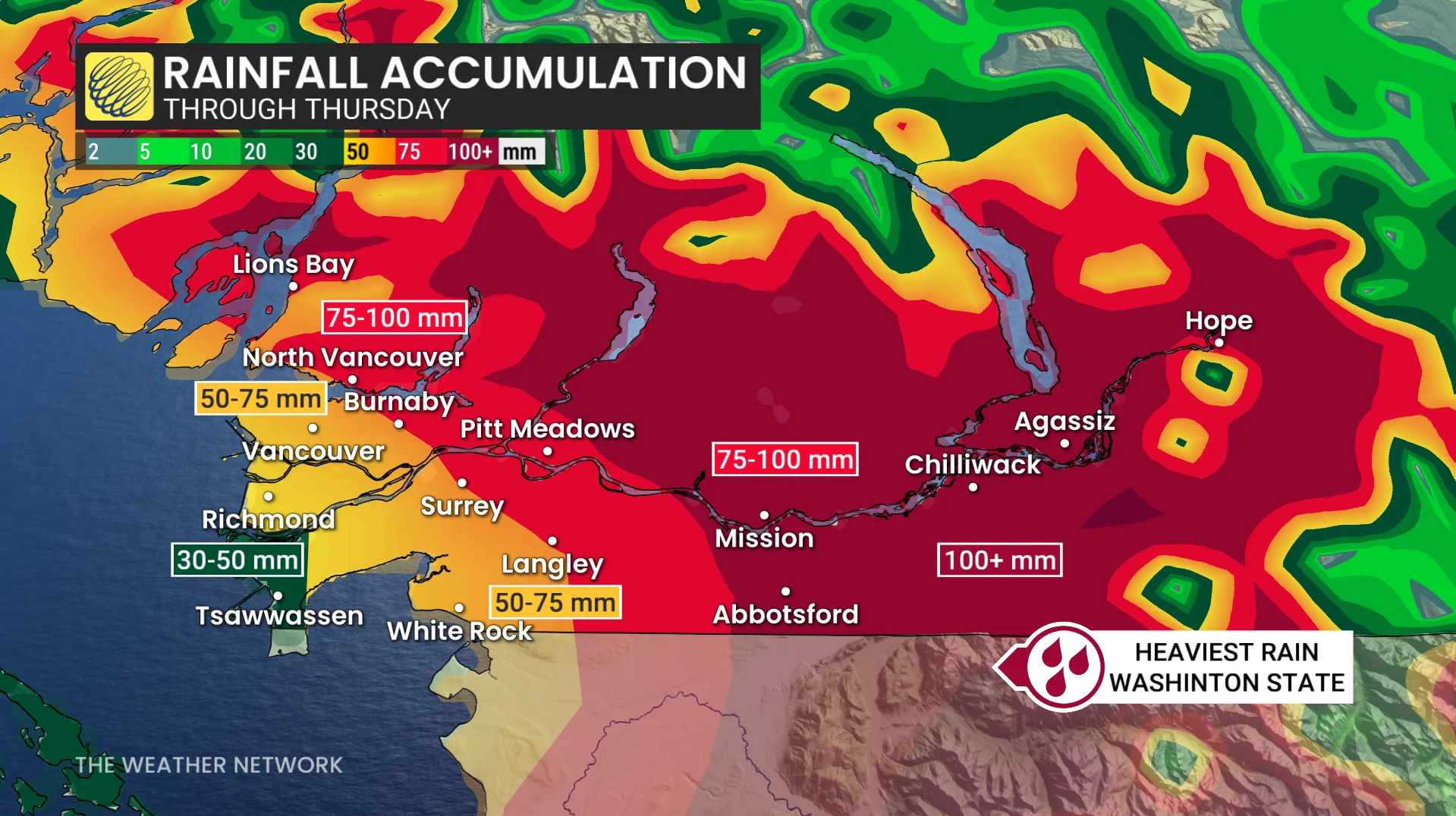
On Wednesday morning, the atmospheric river is targeting Washington state and the Fraser Valley, with continued, heavy rainfall.
24-hour rainfall totals:
Eastern Fraser Valley: 50-75+ mm
Vancouver: 20-40+ mm
Greater Victoria: 15-25 mm
Although, by later Wednesday morning, a minor drying trend is forecast in the rain shadow. Another slug of moisture moves ashore later Wednesday into Thursday morning.
WATCH: Atmospheric river drenches portions of Vancouver Island with heavy rain
Flood risk
Central Coast: High streamflow advisory. Rivers and watersheds across northeastern Metro Vancouver will have the highest return periods (Port Coquitlam and Maple Ridge) at around five-year return periods. Farther east into the Fraser Valley, the Chilliwack River near Chilliwack Lake is forecast to have a 20-year return period flows.
Below-normal precipitation in November and early December means the watershed has the capacity to deal with the increased flows
DON'T MISS: Here are Canada's worst winter roads and the riskiest times to drive
Given the prolonged and persistent rainfall moving into the region, residents are advised to watch for pooling and ponding on area roadways. River flooding is also possible as local waterways struggle to keep up with the excess runoff.
Luckily, a dry pattern over the past week will give some breathing room for the watershed.
Freezing levels will be highly volatile
South Coast:
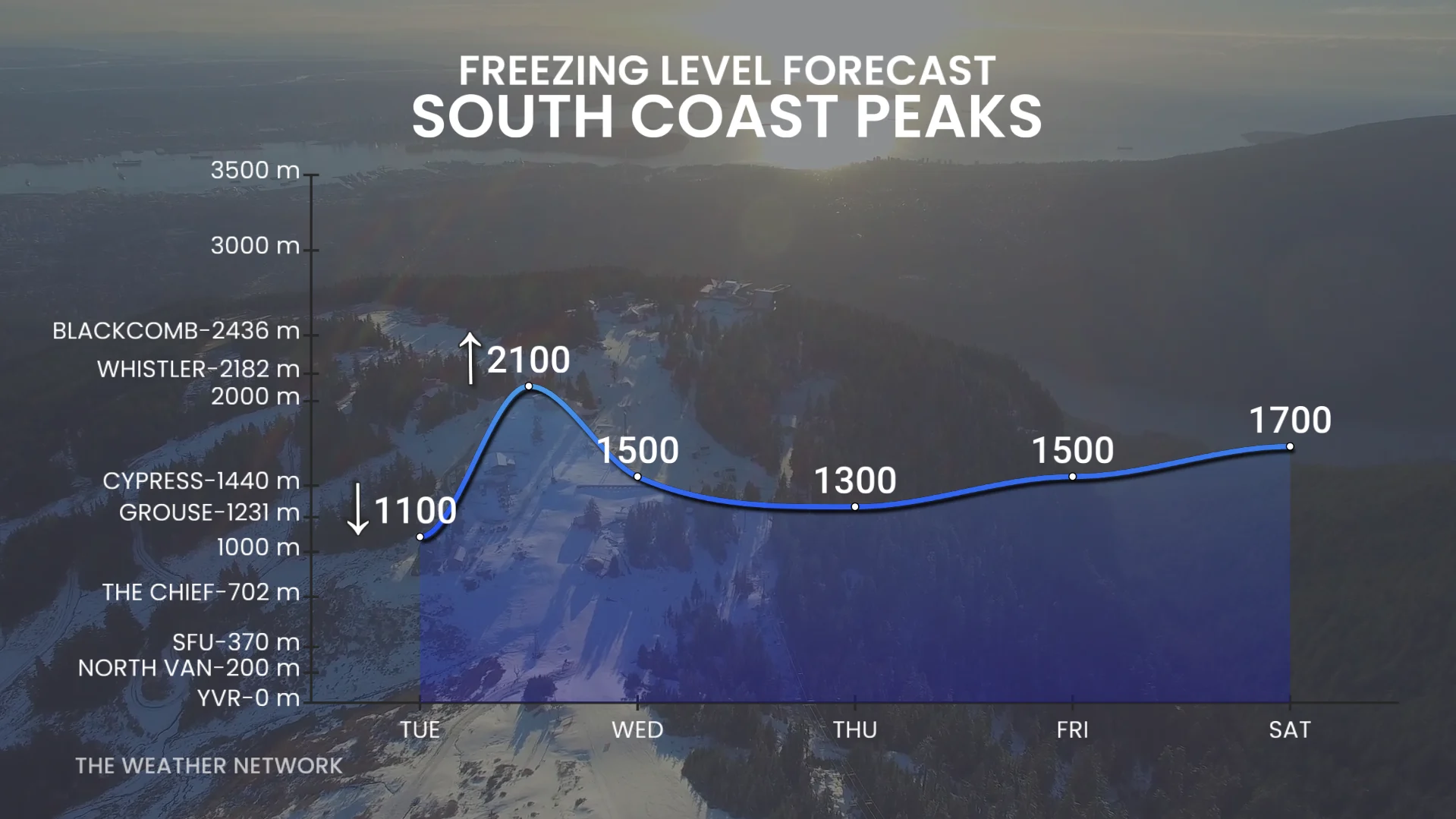
Tuesday: falling to 1100 metres
Tuesday night: spiking to 2000+ metres
Wednesday night: Falling below 1500 metres
Extreme temperature contrasts: Pacific versus Arctic air
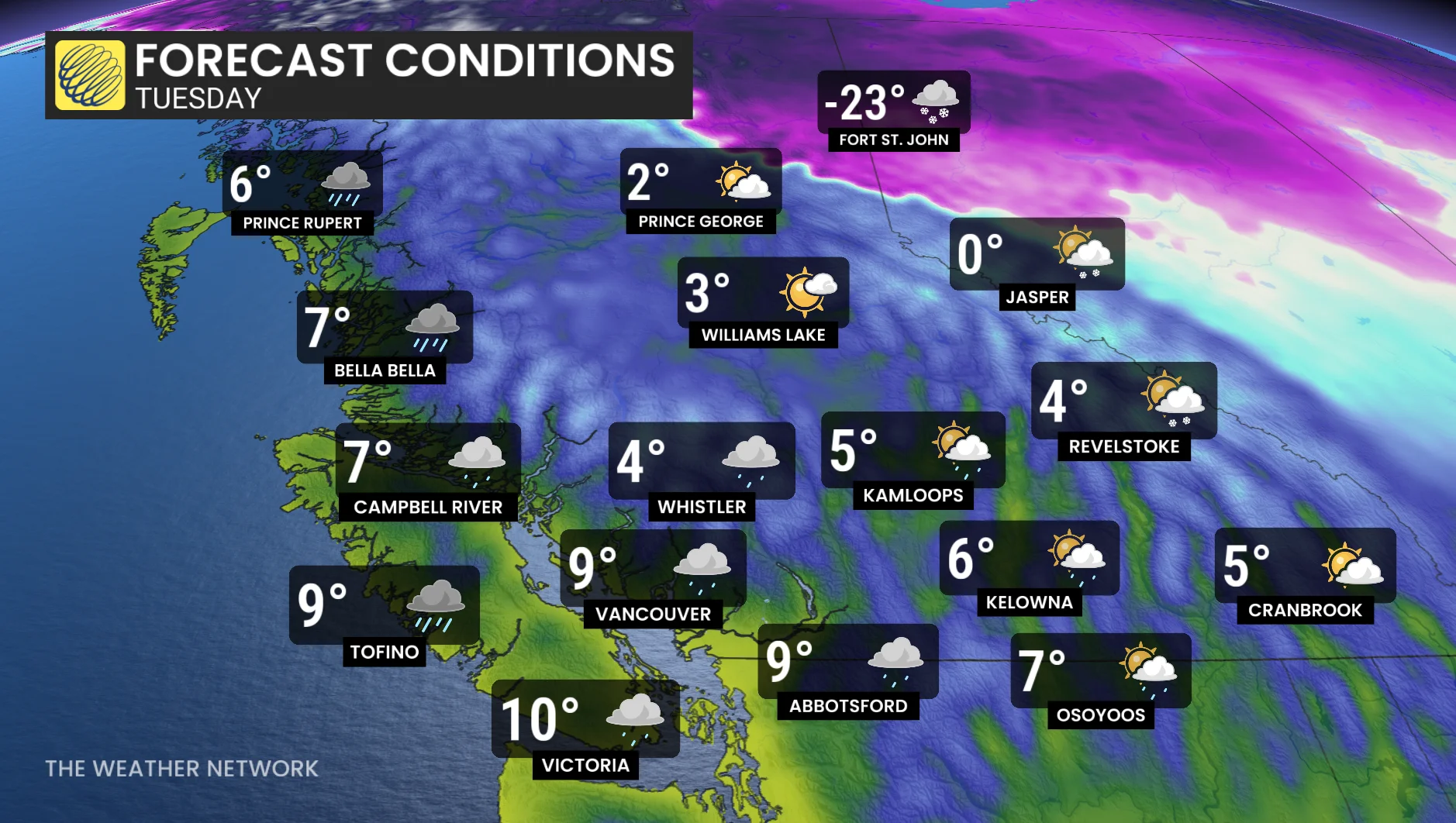
On Tuesday, there will be a massive temperature gradient across central and northern B.C., where Fort. St. John sits at -23°C, while Prince George is 2°C.
Pacific air has settled on the windward side of the Rockies, while Arctic dense air has pooled on the leeward side.
Beyond, above-seasonal temperature will continue to dominate across southern B.C. through mid-December and passed that. No persistent frigid weather is in sight.
A very active pattern will continue for the South Coast region well into the second half of December, with above-normal precipitation totals. Very heavy snow is forecast for the alpine regions, but snow levels will often be on the high side of normal with rain at the bases of the ski areas.
Stay with The Weather Network for the latest on conditions across British Columbia.