Southern Quebec faces dangerous flooding risk through Monday

Heavy rains could lead to flash flooding across southern Quebec through Monday
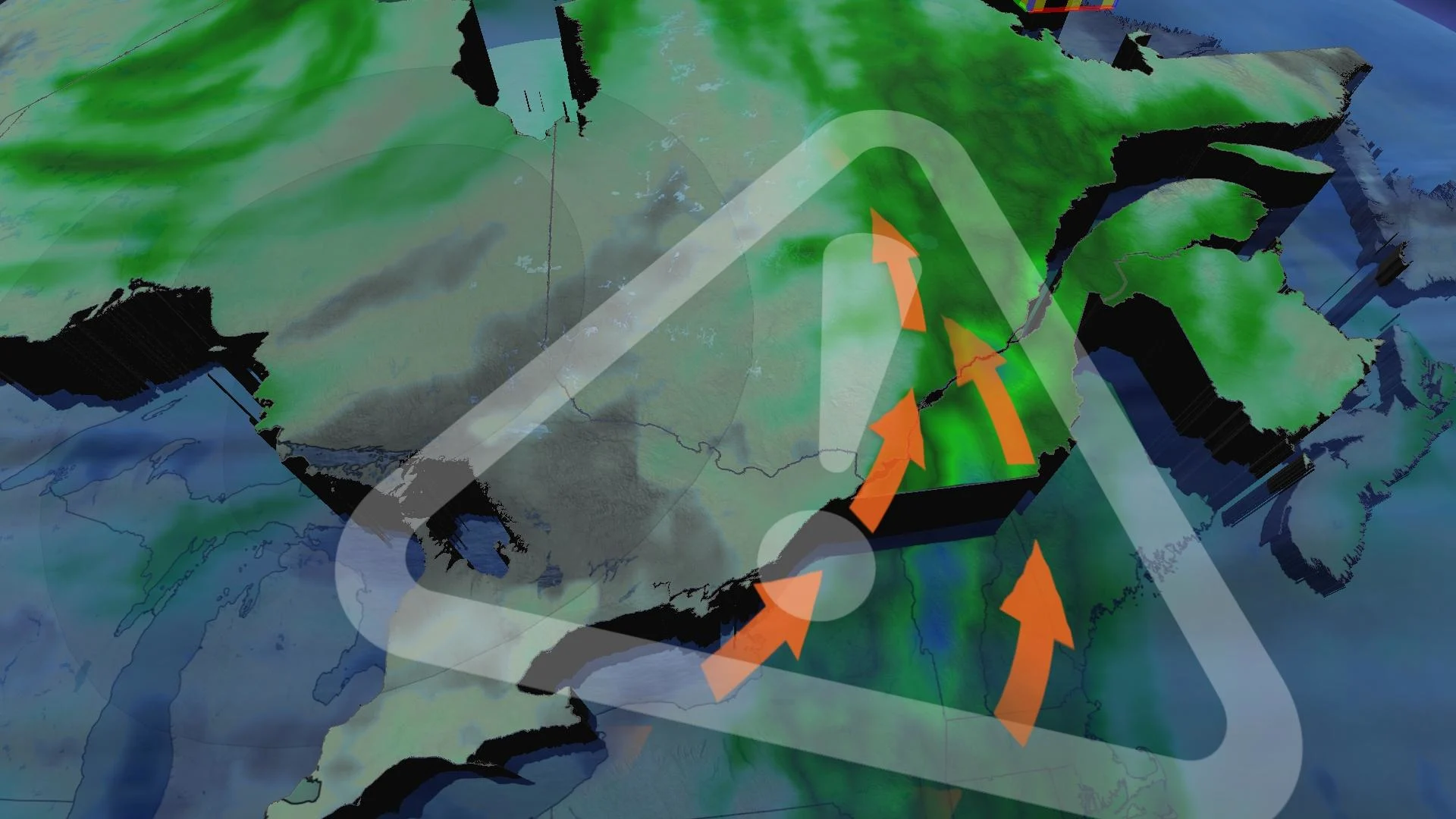
A vast reserve of tropical moisture parked over southern Quebec could lead to a risk for flash flooding this week.
Use extreme caution while travelling through the region over the next couple of days. Do not try to drive or walk through floodwaters. Even a small amount of moving water can carry a person or vehicle downstream.
DON'T MISS: Get ahead of disaster: Six tips to manage flooding
We're witnessing a classic flooding setup develop across New England and southern Quebec. An upper-level trough dipping over the region is providing ample lift to support widespread showers and thunderstorms over the region.
At the same time, a tremendous amount of tropical moisture streaming into the region from the south will boost precipitation totals. This moisture aloft acts like a reservoir that showers and storms can tap into and produce heavy rainfall rates.

Environment and Climate Change Canada (ECCC) has issued rainfall warnings for all of southern Quebec as rain that began on Sunday will only intensify as we begin the work week.
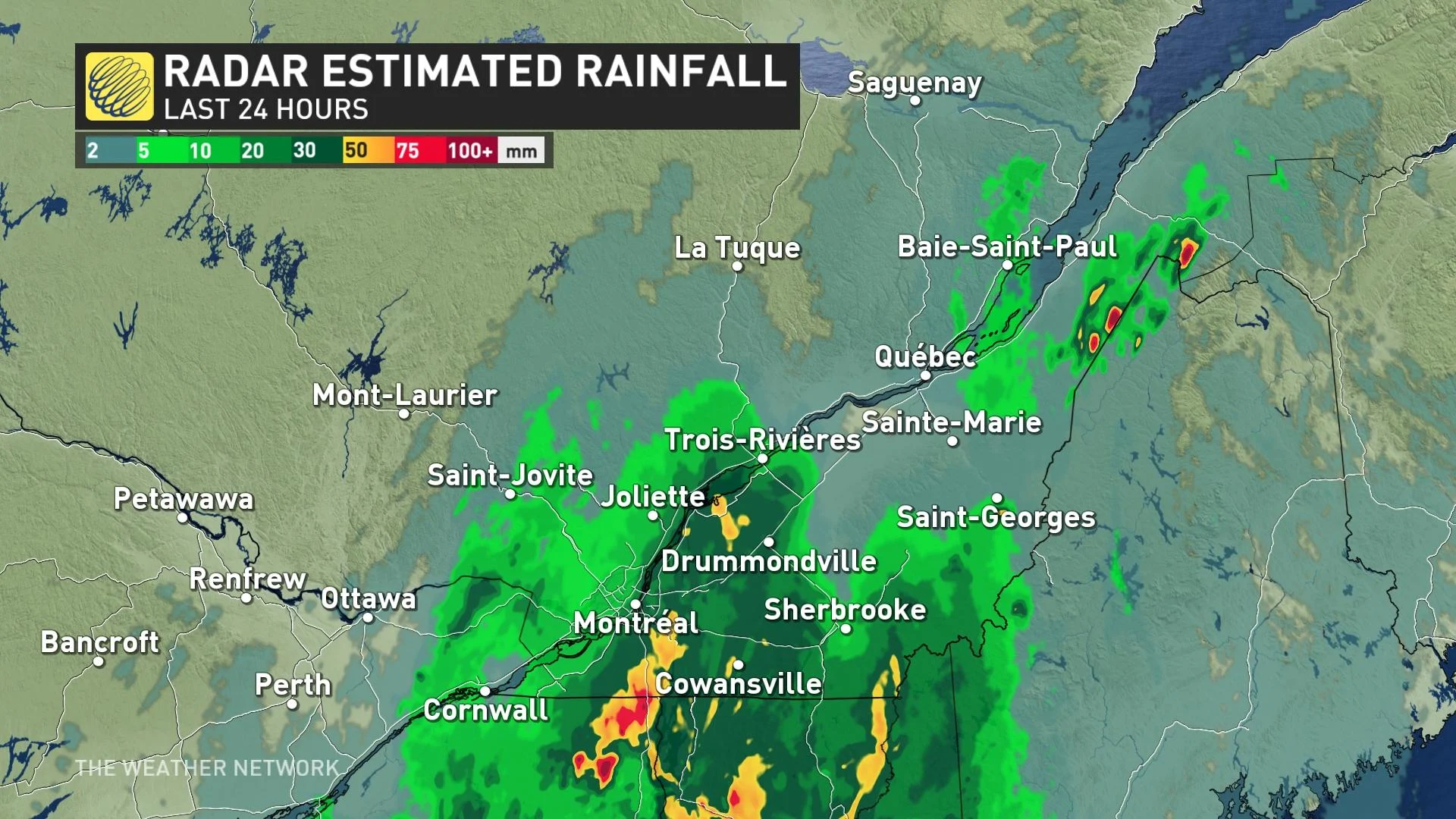
Rainfall totals of 50-75+ mm are likely across the Eastern Townships through Wednesday morning, with totals of 100+ mm possible in some localized areas. Folks across Metro Montreal could see 30-50 mm of rain through the first half of the week.
Already, some hefty totals have been reported. Over the past 24 hours, Melbourne, a small township two hours east of Montreal, has racked up 62 mm of rainfall.
"The ground is near saturation locally and could have little ability to absorb these rainfall amounts," ECCC said in its rainfall warning.
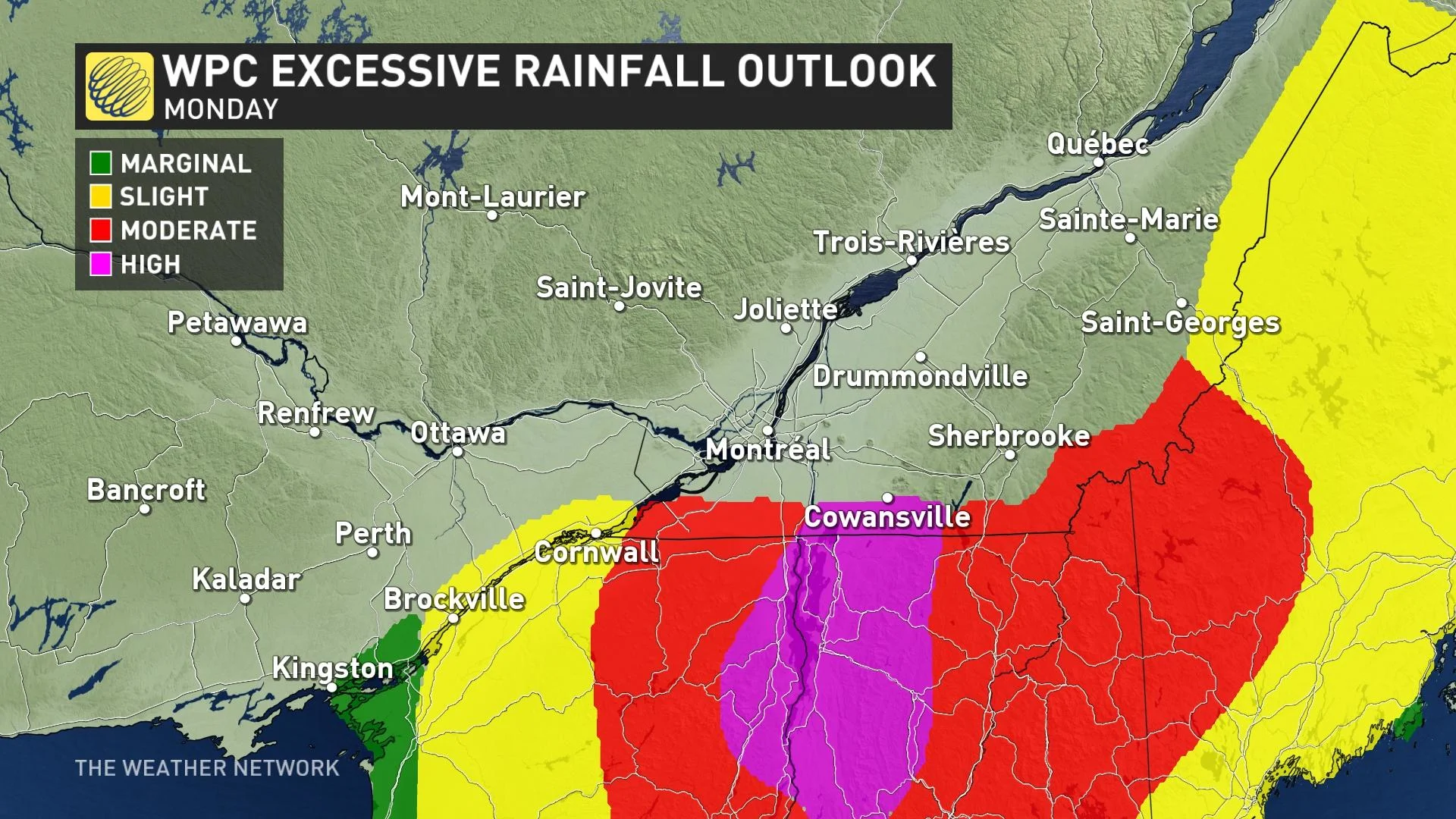
South of the border, the U.S. Weather Prediction Center (WPC) issued a rare high risk for excessive rainfall on Monday across eastern New York state and Vermont, a threat area that extends right to the international border along Quebec’s Eastern Townships.
The WPC reserves high risk designations for days where forecasters are confident that heavy rainfall will lead to widespread and potentially destructive flash flooding.
The agency’s statistics across the U.S. show that one-third of all flood-related deaths, and two-thirds of all flood-related damages, occurred within these high-risk areas between 2010 and 2020.
WPC forecasters had strong words for residents of northeastern New York and Vermont, just south of the international border.
"As everything continues to play out largely as expected, there are likely to be scattered Flash Flood Emergencies declared, along with mudslides and widespread flash flooding of not only small creeks and streams, but also the larger rivers," the WPC said.
The American agency added: "The widespread flooding is expected to be analogous to the 2011 Irene remnants event for this area, though this time no tropical storms are associated with this rainfall."
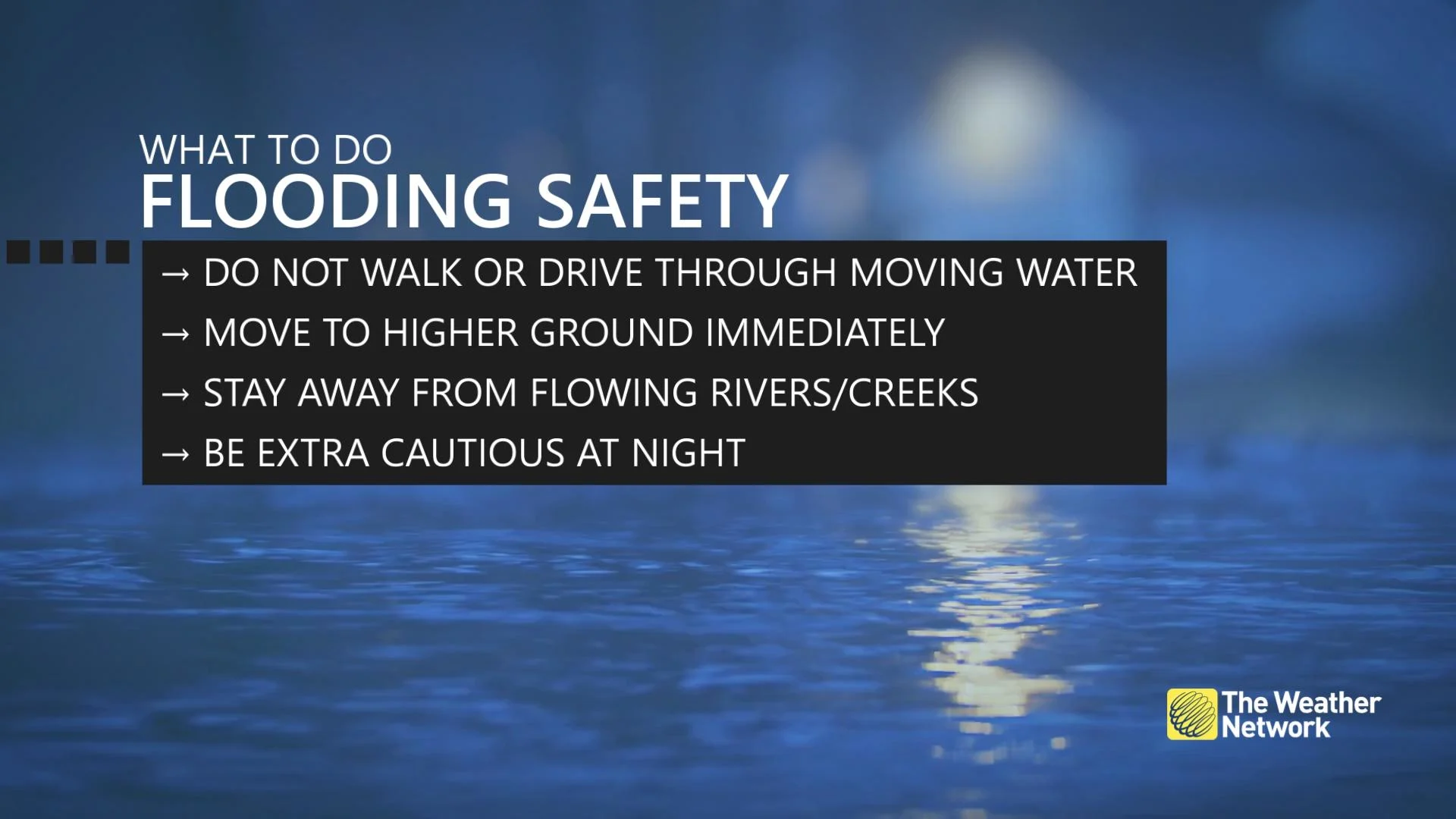
Flash flooding is one of the deadliest weather disasters you're most likely to encounter. It only takes a small amount of moving water to lift up and sweep away vehicles and pedestrians.
RELATED: Dramatic rescue shows why you shouldn't drive in flood water
It's impossible to tell the depth of water covering a roadway until it's too late, and the potential for washouts may mean there's no longer a road underneath the floodwaters.
The heavy rainfall will enhance the risk for landslides in areas with rugged terrain. Recent rains already triggered one devastating landslide in Rivière-Éternité near Saguenay on July 1.
Stay with The Weather Network for the latest on the flood potential in Quebec.