B.C. mountain snowpack sitting on a house of cards

Ice crystals in hoar frost have a difficult time bonding to the rest of the snowpack, and as more snow accumulates, the stress builds on this now increasingly avalanche-prone layer.
A thin, crystalline structure is becoming increasingly buried in the high elevation snowpack in British Columbia.
The culprit, also known as hoar frost, is exceptionally beautiful, but this hidden danger presents a real threat in the alpine.
Mid-February provided the perfect weather conditions to develop this type of frost.
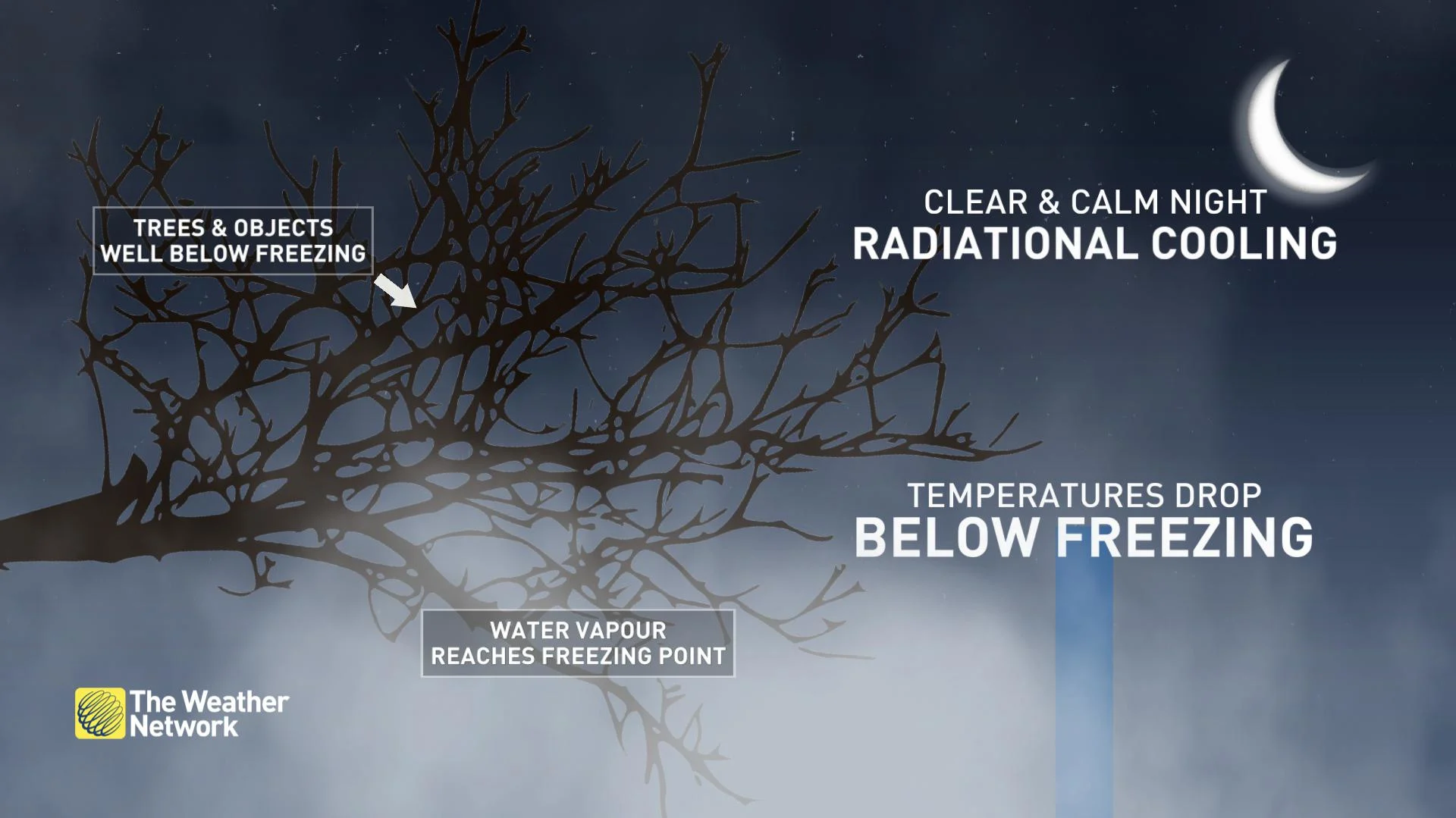
The frosty recipe:
light winds
clear skies
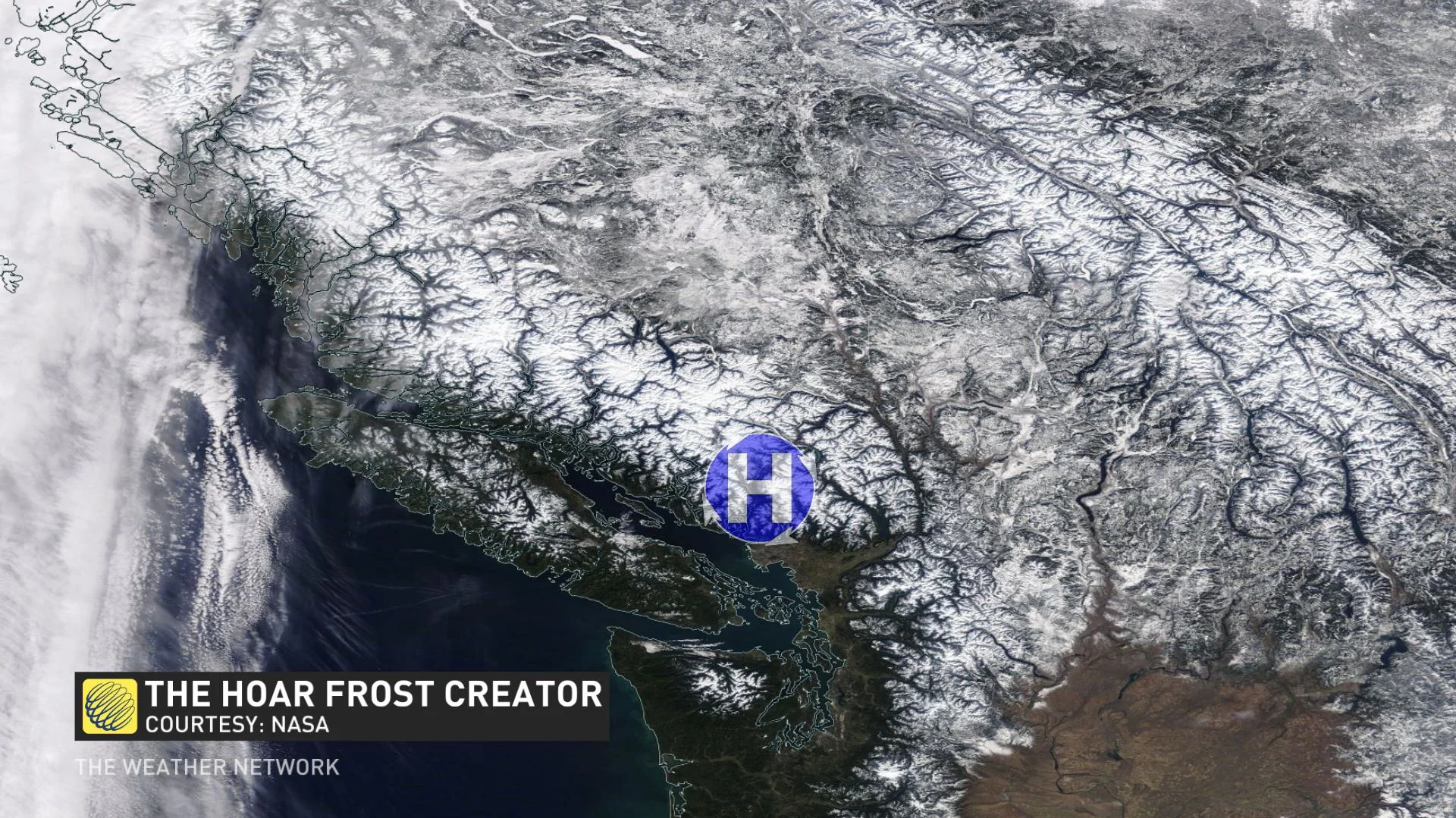
Take a look at the satellite imagery responsible for this weak layer in the snowpack – a beautiful (and well-deserved) region of high pressure migrated over the Pacific Northwest by the middle of February.
Why is this frosty layer considered a weak layer?
The meteorologists at Avalanche Canada used a 'house of cards' analogy, where the cards are the snowpack with the wobbly base being the ice crystals.
These ice crystals have a difficult time bonding to the rest of the snowpack, and as more snow accumulates, the stress builds on this now increasingly avalanche-prone layer.
The best advice is to avoid steep terrain and stick to terrain angles less than 30 degrees. Although trees can present a hazard to skiers and boarders, they do add stability to a snowpack.
Did you know?
Trees protect against some freeze-thaw cycles, and also provide shelter from the wind; consequently, making the snowpack more resilient. Even the tree itself can add strength to the snowpack, the same way rebar adds strength to concrete, strengthening the snowpack when it's under tension.
The forecast:
The avalanche danger is expected to remain elevated over the coming days, considerable or higher anticipated particularly above the tree-line.
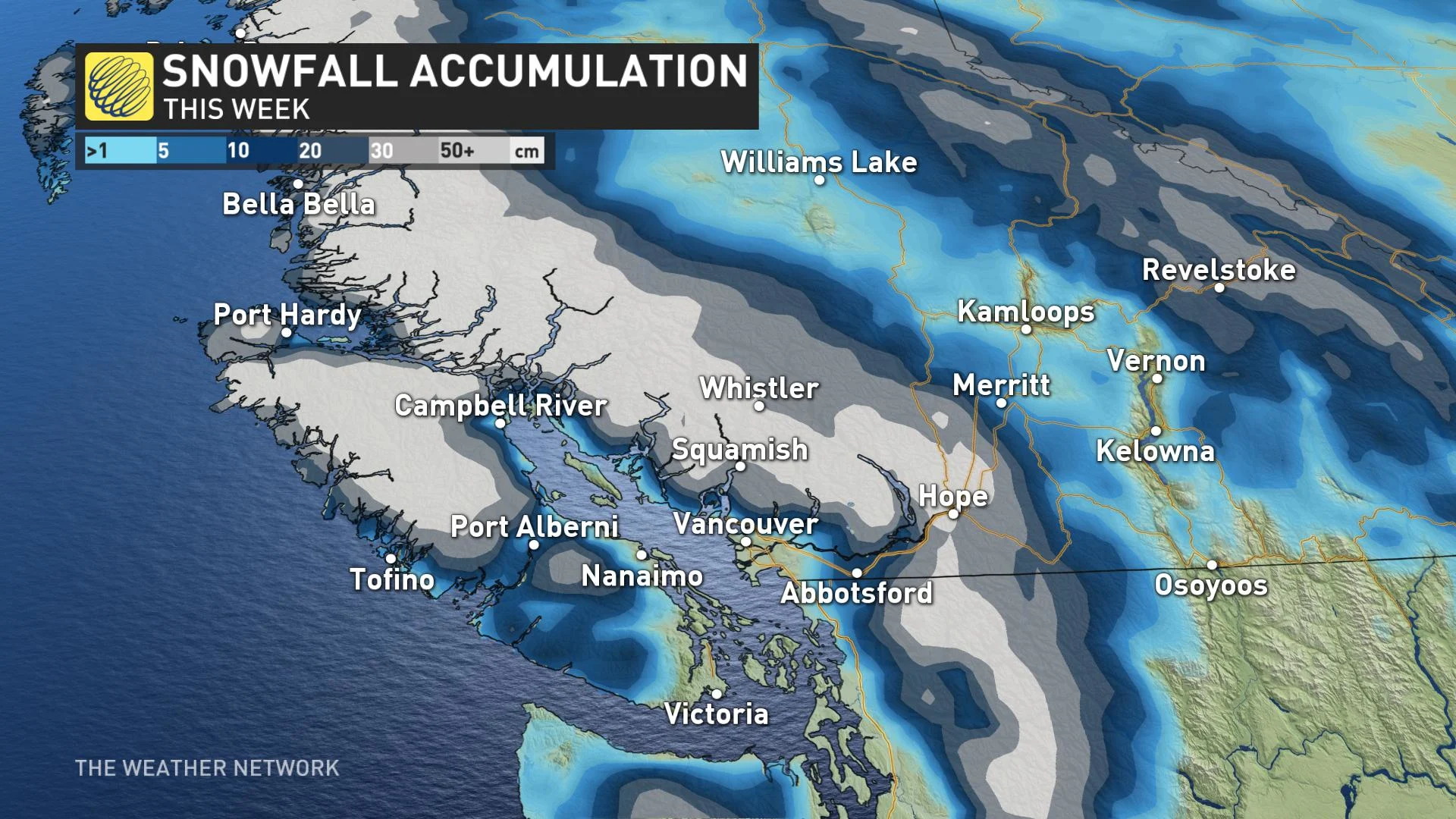
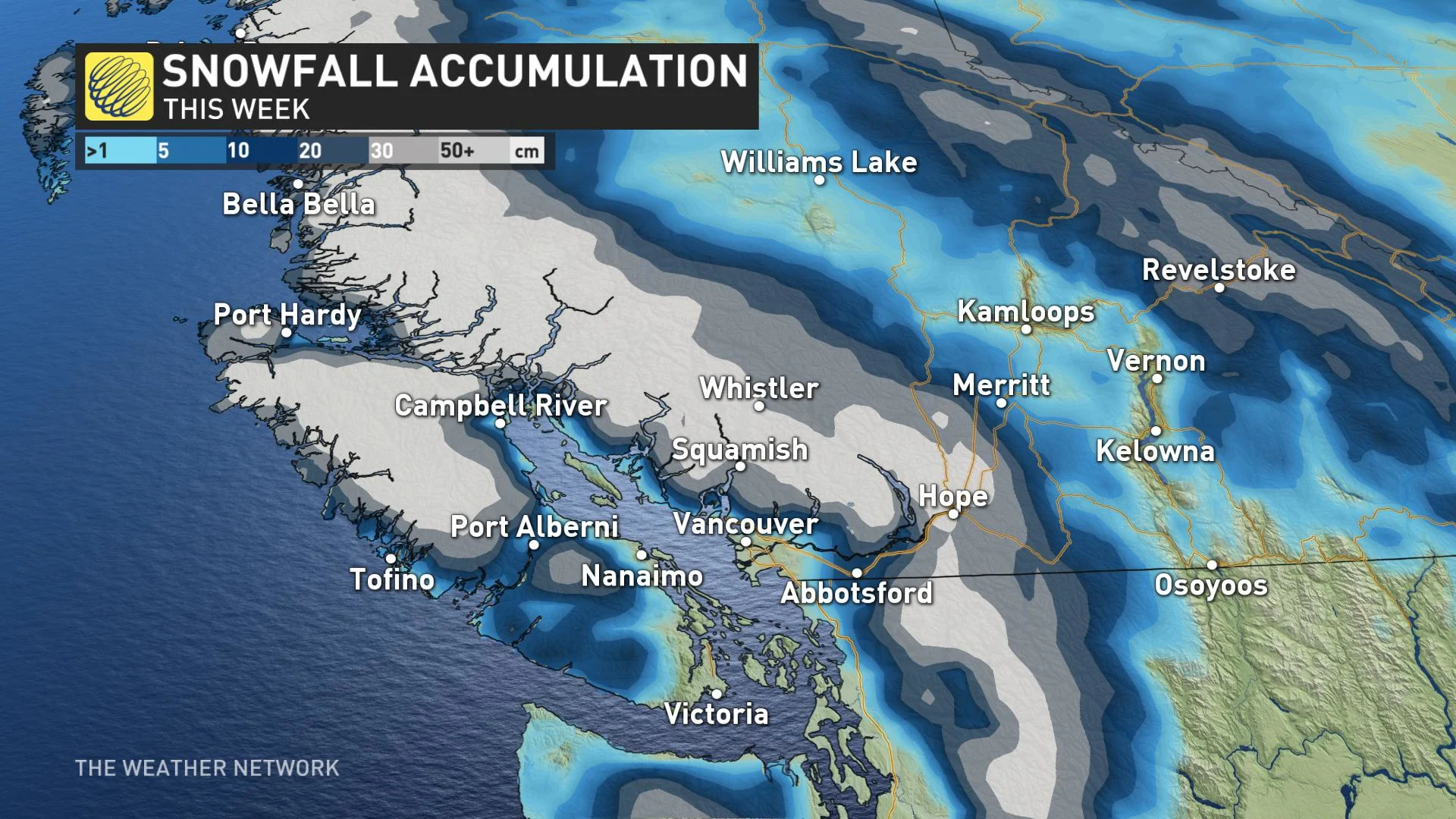
Forecast snow amounts this week will push above 50 cm for higher terrain, continually adding stress to the already weak snowpack for the foreseeable future.