Rare May nor’easter may approach record territory over East Coast

The system spinning into the East Coast late this weekend could come close to breaking records in some spots
It's unusual to see a full-fledged nor'easter on the East Coast so late in the season.
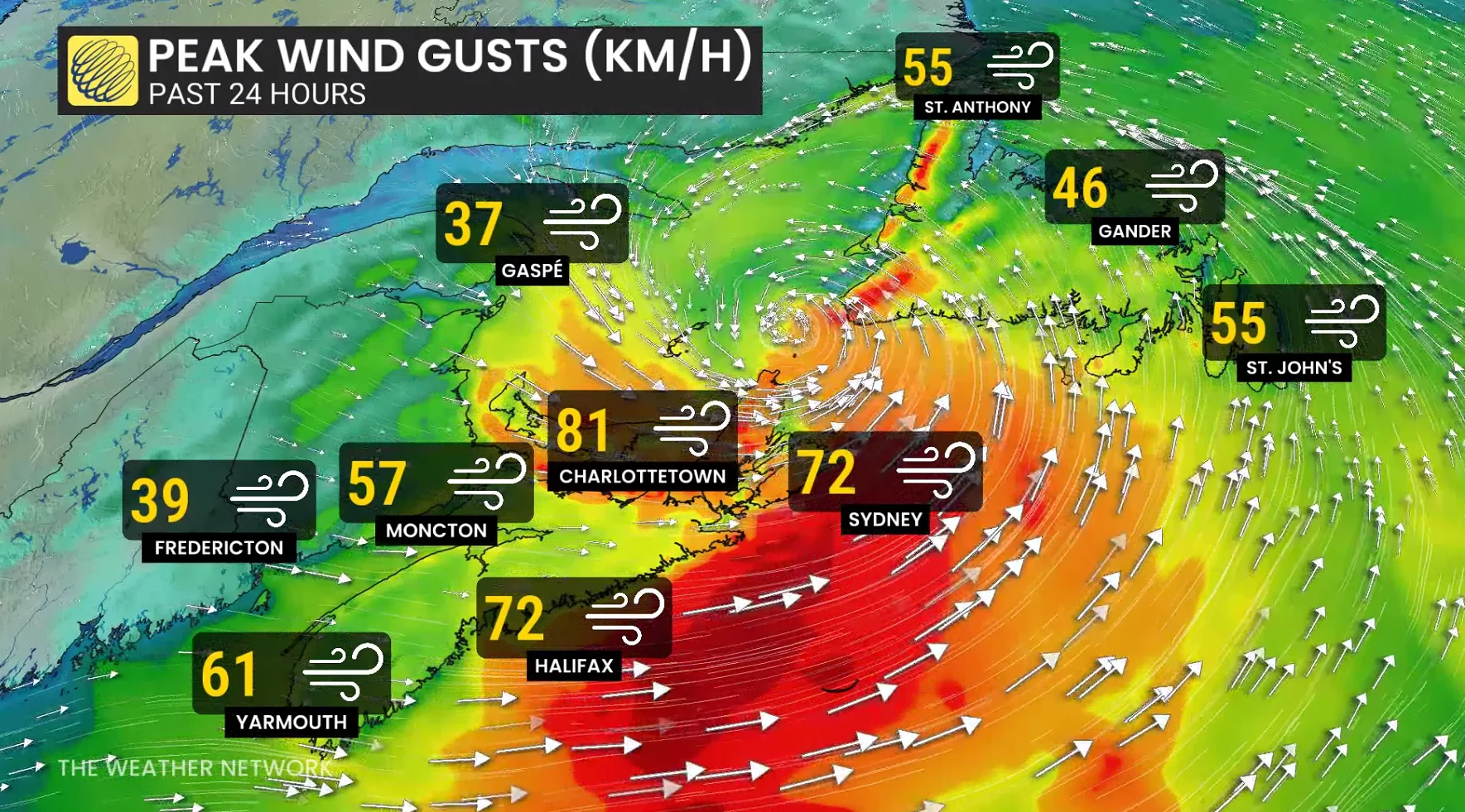
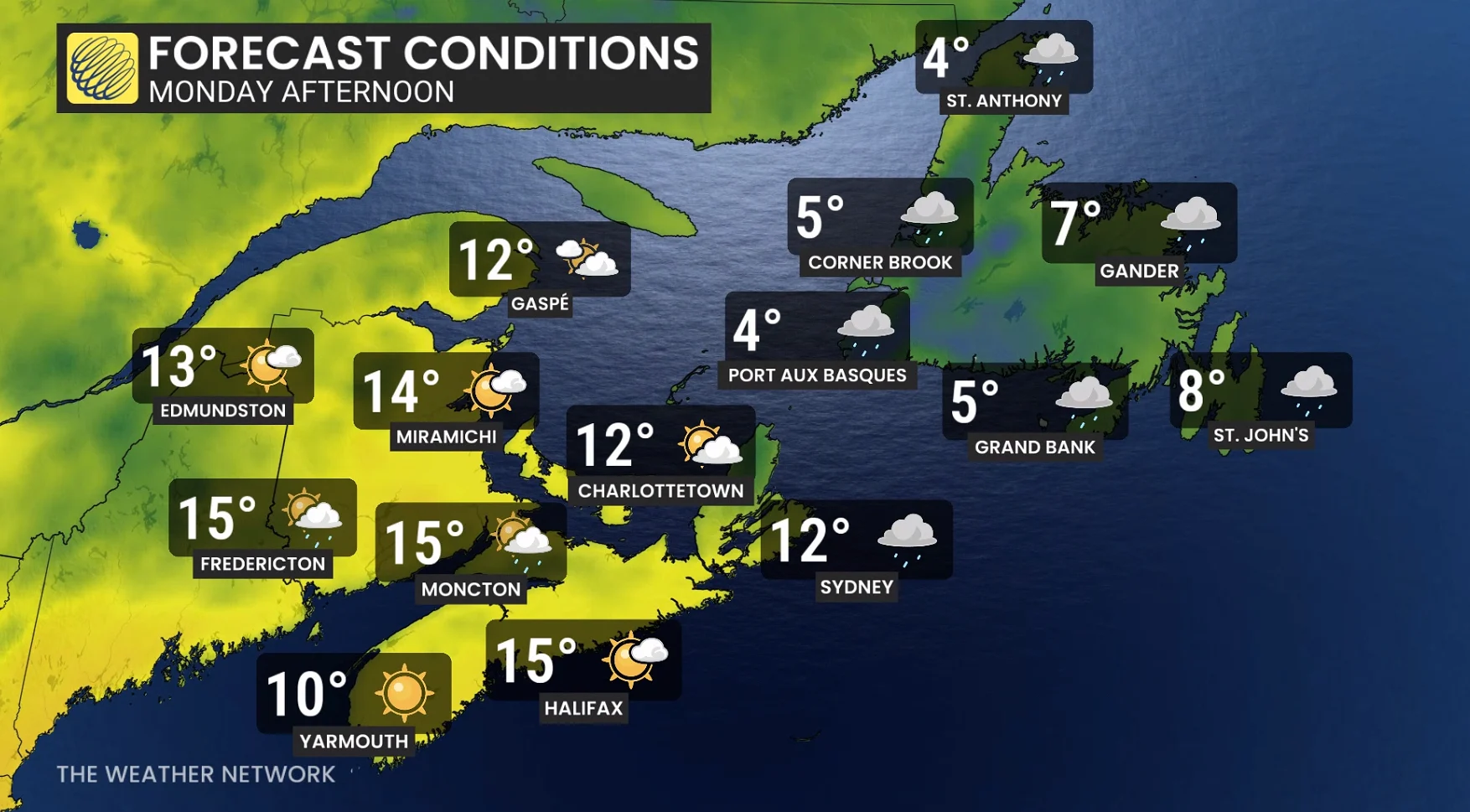
As the early-May storm arrived late Sunday into Monday, residents across Atlantic Canada experienced heavy rain, high winds and possibly even snow.
This storm was so powerful that it threatened records in some areas.
DON’T MISS: Snow, wind, and rain: Rare May nor'easter targets Atlantic Canada
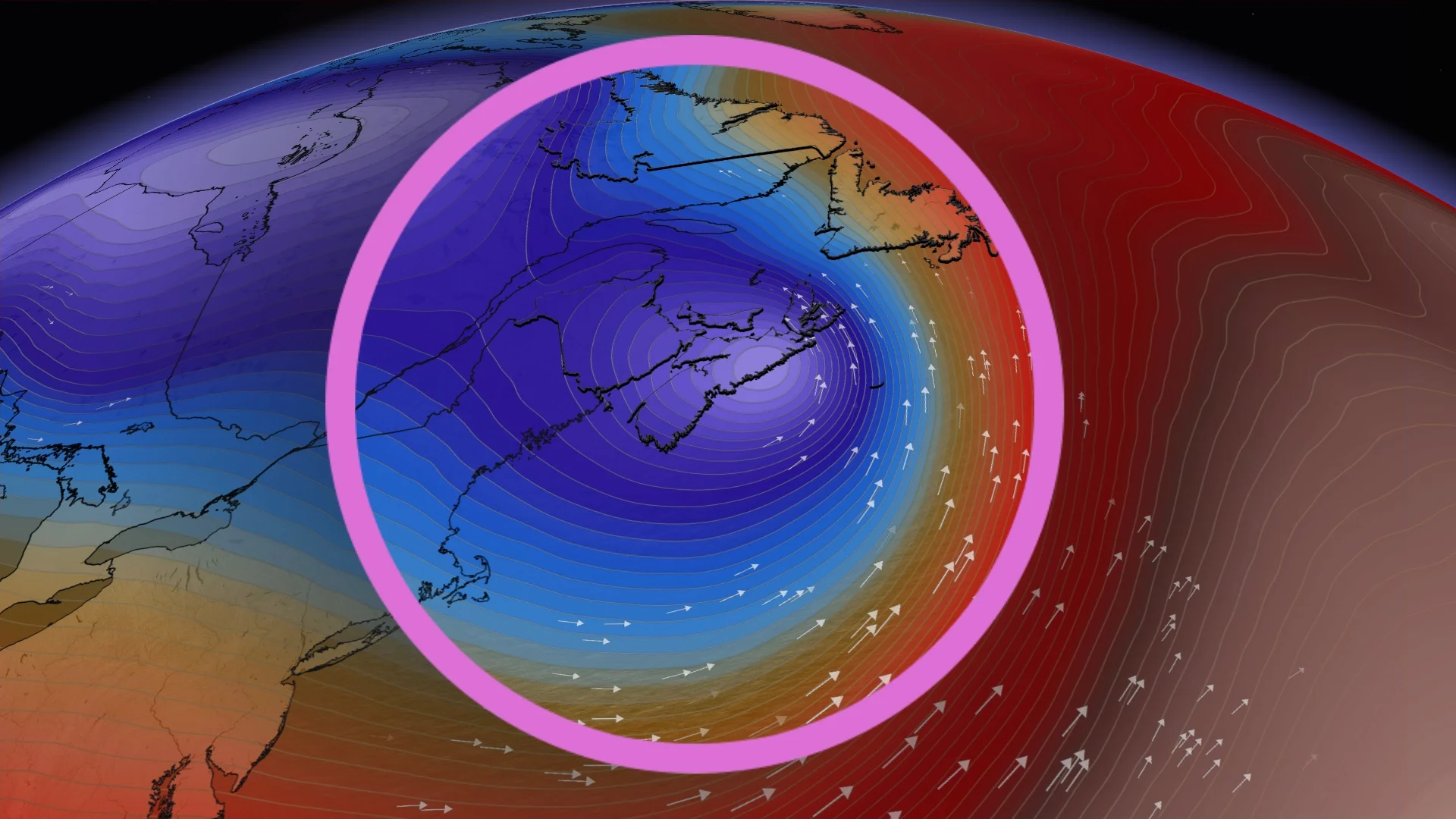
Winds in the jet stream high above the western Atlantic Ocean were gusting at over 200 km/h. These winds spread out as they approached the Maritimes, creating a void in the upper levels that surface air rushed upward to fill.
This vast evacuation of air from the surface was responsible for the formation and rapid deepening of the low-pressure system that served as the nor'easter on Sunday night and Monday.
Forecasters projected a minimum central pressure of 975 mb as the low passed near Cape Breton on Sunday night, potentially resulting in some of the lowest barometric pressure readings ever recorded in this region in May.
Here’s a look at some existing low-pressure records for May:
St. John’s: 977.8 mb
Stephenville: 979 mb
Sydney, N.S.: 974.6 mb
Halifax: 982.5 mb
Charlottetown: 980.8 mb
Sydney was expected to get within one or two millibars of its all-time monthly low pressure record. Otherwise, the majority of those records were expected to stand unless the storm's path changed abruptly.
Strong low-pressure systems are less common in late spring and summer, when the jet stream pulls north and hotter temperatures rule the day. In the coming weeks and months, attention will shift to the tropics in search of powerful low-pressure centres.