Rainfall expected to ease increasing wildfire risk in the Maritimes

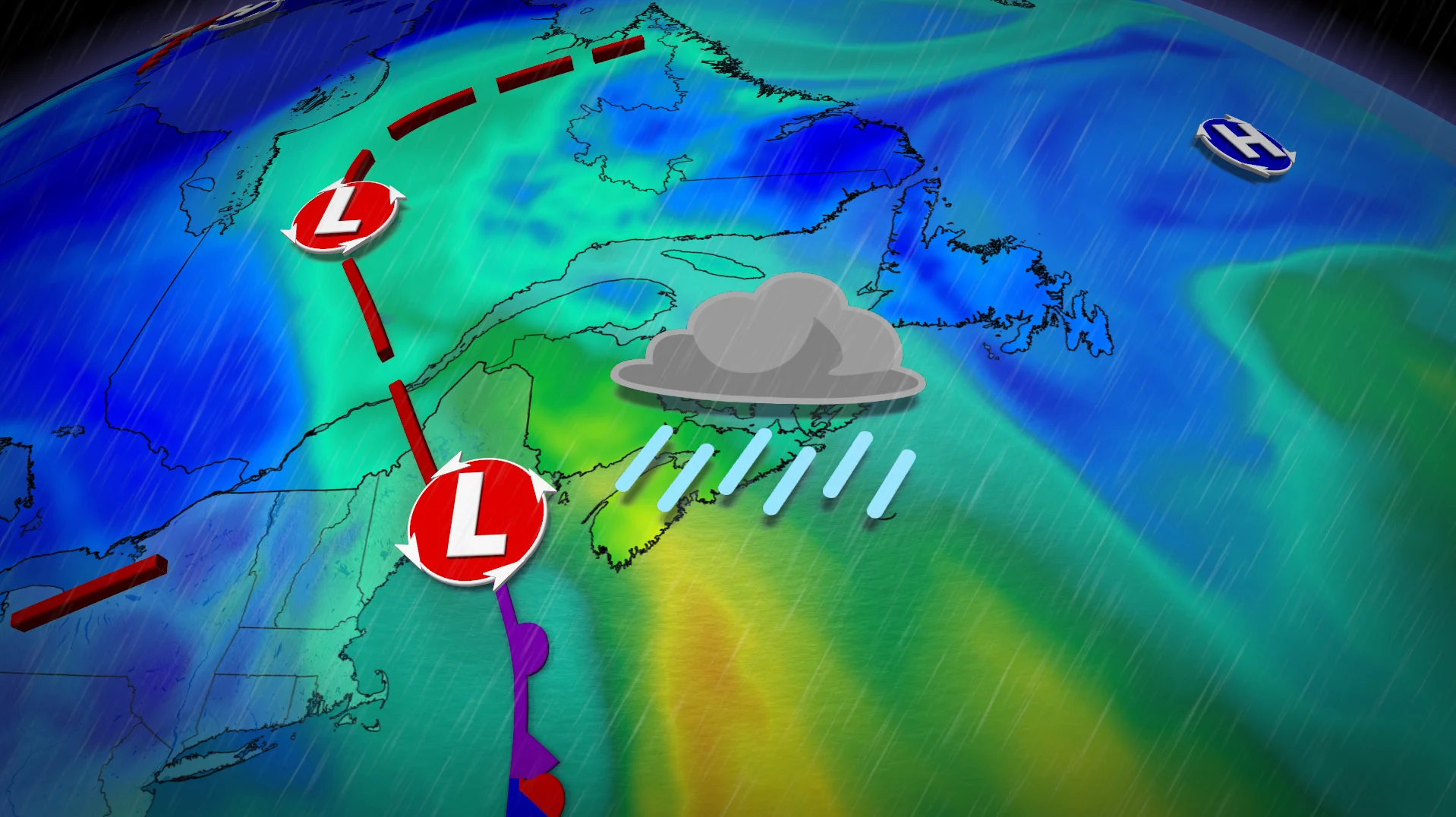
A frontal system will bring significant rainfall to parts of Atlantic Canada through Friday, reducing the wildfire risk but potentially raising already high river levels near the Saint John River
A frontal system is set to move through the Maritimes beginning Thursday, with the bulk of rainfall anticipated Friday, offering relief from the increasing wildfire risk. Newfoundland is forecast to see lighter rain on Saturday as the system moves eastward.
DON'T MISS: Canada’s late-week temperature shift: March chill vs. early-summer warmth
Weather Highlights:
30–50 mm of rain expected Thursday to Friday in New Brunswick and Nova Scotia (up to 60 mm in western Nova Scotia)
5–10 mm expected Saturday for Avalon and northern Newfoundland; 15–30 mm for southwestern areas
Wildfire and flooding risks: High Saint John River levels continue, while dry conditions increase wildfire risk across New Brunswick
Rainfall to address wildfire risk across Atlantic Canada
This time of year often combines wildfire and flooding risks, with high river levels coexisting alongside rapidly drying grounds during sunny and mild periods.

Currently, areas near the Saint John River remain at or near flood levels, while much of New Brunswick faces a high to extreme fire susceptibility index due to dry conditions away from watercourses.
A significant rain event will bring relief, starting late Thursday and continuing through Friday.
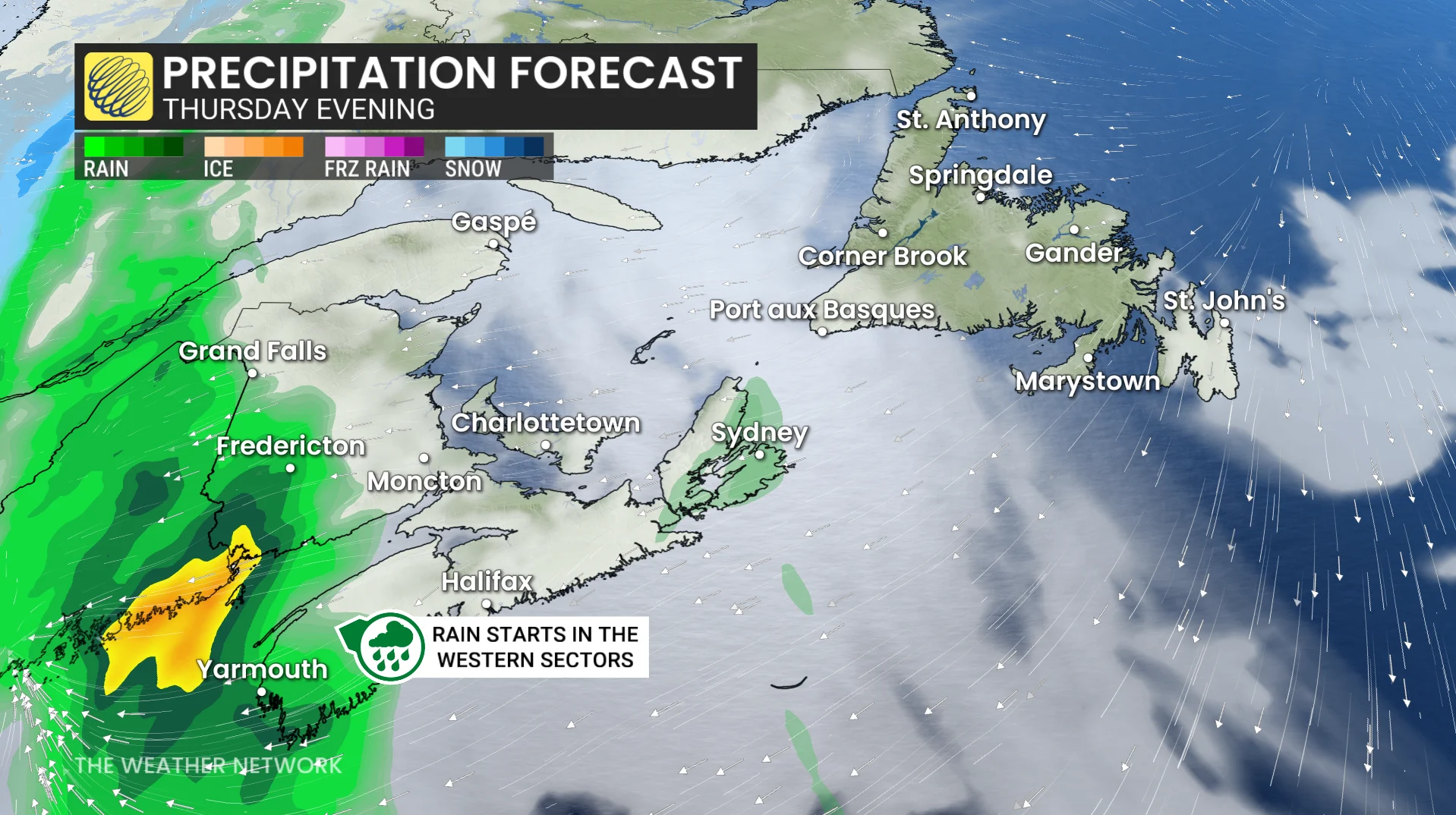
New Brunswick and Nova Scotia can expect to see between 30–50 mm, with up to 60 mm of rain forecast in western Nova Scotia. Meanwhile, PEI and Cape Breton will see between 15–30 mm.
The rainfall is expected to reduce wildfire risks, but river levels may rise further through the weekend.
RELATED: 2026 Wildfires: Which parts of Canada are most at risk?
By Saturday morning, the rain will shift into Newfoundland. The Avalon Peninsula and northern Newfoundland is forecast to see between 5–10 mm. Southwestern Newfoundland is in line for 15–30 mm of rain.

The system will weaken as it moves further east, leading to lower precipitation totals for northern and eastern Newfoundland. Notably, no snowfall is expected across the Maritimes or Newfoundland with this system.