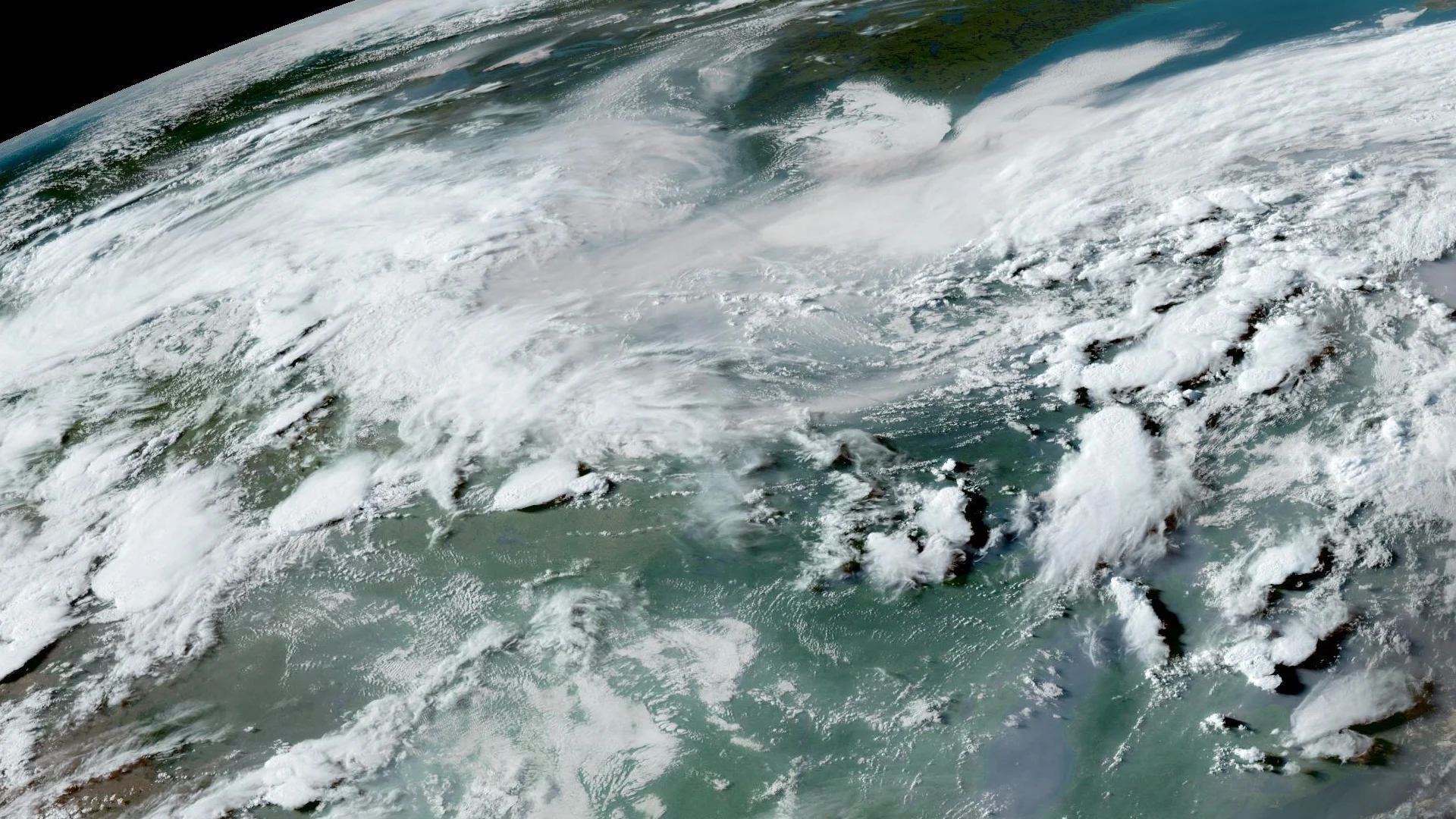
Prepare for poor air quality as thick smoke returns this weekend

A system approaching the region will wrap thick smoke onto the southern Prairies and portions of southern Ontario into this weekend
Hazardous air quality is a persistent story on the Prairies this summer as extensive wildfires burn throughout Saskatchewan and Manitoba.
Conditions will be favourable for thick smoke to cause poor air quality across much of the Prairies and portions of Eastern Canada heading into Friday and this weekend.
Folks living with chronic respiratory conditions should prepare to stay indoors at times this weekend as the wildfire smoke swings through the region.
DON’T MISS: Canada's 2025 wildfire burn area exceeds size of the Greater Toronto Area
Winnipeg saw its smokiest month on record in July, recording 189 hours of smoke throughout the month.
That trend continued Thursday as the city’s Air Quality Health Index (AQHI) peaked at 10+ during the afternoon hours. Winnipeg Airport reported visibility as low as 2 km between 4:00 p.m. and 5:00 p.m. local time.
Conditions won’t improve much across the region heading into this weekend.
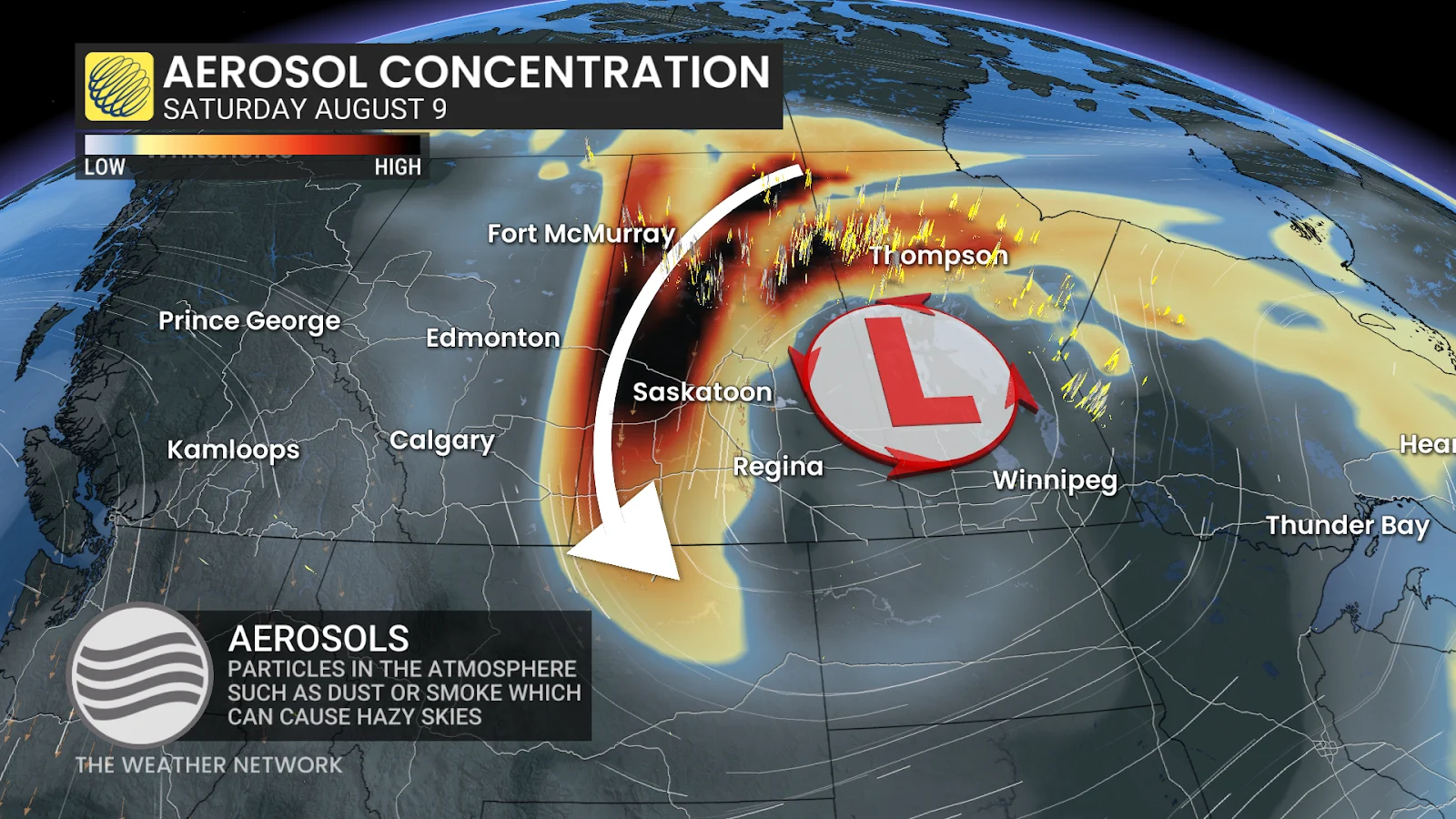
Shifting winds and a low-pressure system arriving over the next couple of days will allow smoke to circle back onto the southern Prairies and into portions of Eastern Canada rather than venting north toward the Arctic.
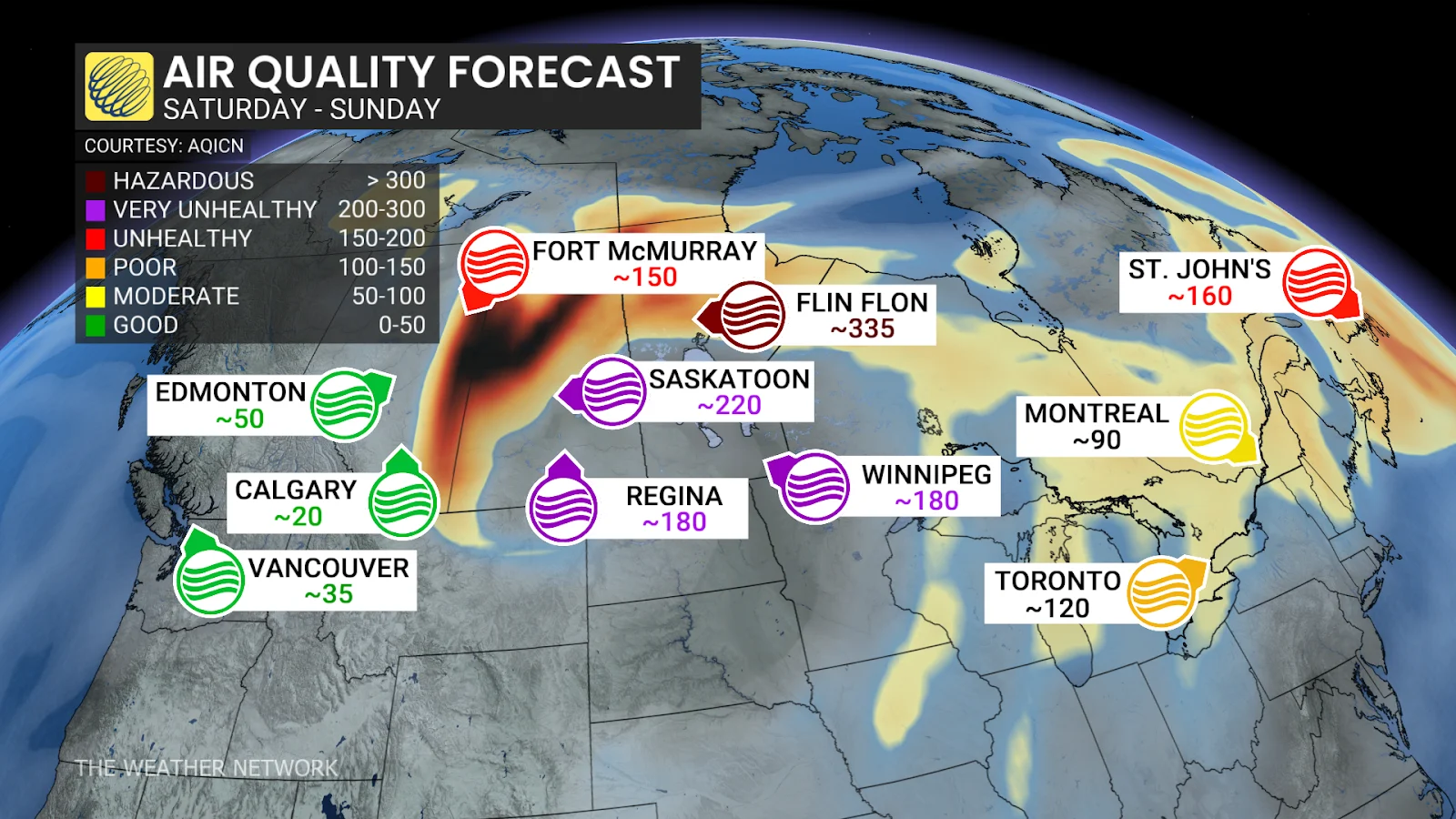
Many locations in southern Saskatchewan and southern Manitoba will likely see their worst day of air quality this weekend, with northern Ontario following behind by next week. The thickest smoke and most hazardous conditions will stick close to the active fire zones, but expect unhealthy air quality to sink as far south as Regina and Winnipeg this weekend.
One bright spot is that the worst of the air quality won’t stick around for long. Westerly winds arriving on the back side of the low-pressure system will draw in fresher air from the Pacific, clearing much of the smoke out of the southern Prairies.
Communities across southern Ontario should escape this round of smoke as southerly winds pump high heat and humidity into the region in the days ahead.