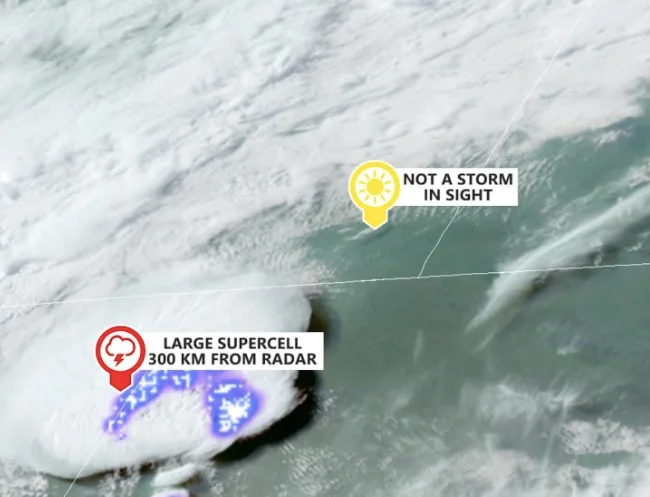
Phantom storms haunt the Prairies and can confuse storm chasers

There are several strategies that storm chasers can use to avoid being fooled by range folding streaks.
Radars send out hundreds of pulses a second, but sometimes they get a little confused and create an unusual streak signature.
Radar stations emit pulses of energy that hit objects within the close, unambiguous range, typically within 200 km or so. But, the radar’s energy doesn't magically hit a wall at this distance; it continues into the ambiguous radar range – and it's where things can get a little weird.
RANGE FOLDING, EXPLAINED
The storms on Monday were so far away from the CASFW Prairie radar, over 300 km, that by the time the radar sent out more pulses, the first return from the North Dakota supercell hadn’t returned to the radar station yet.
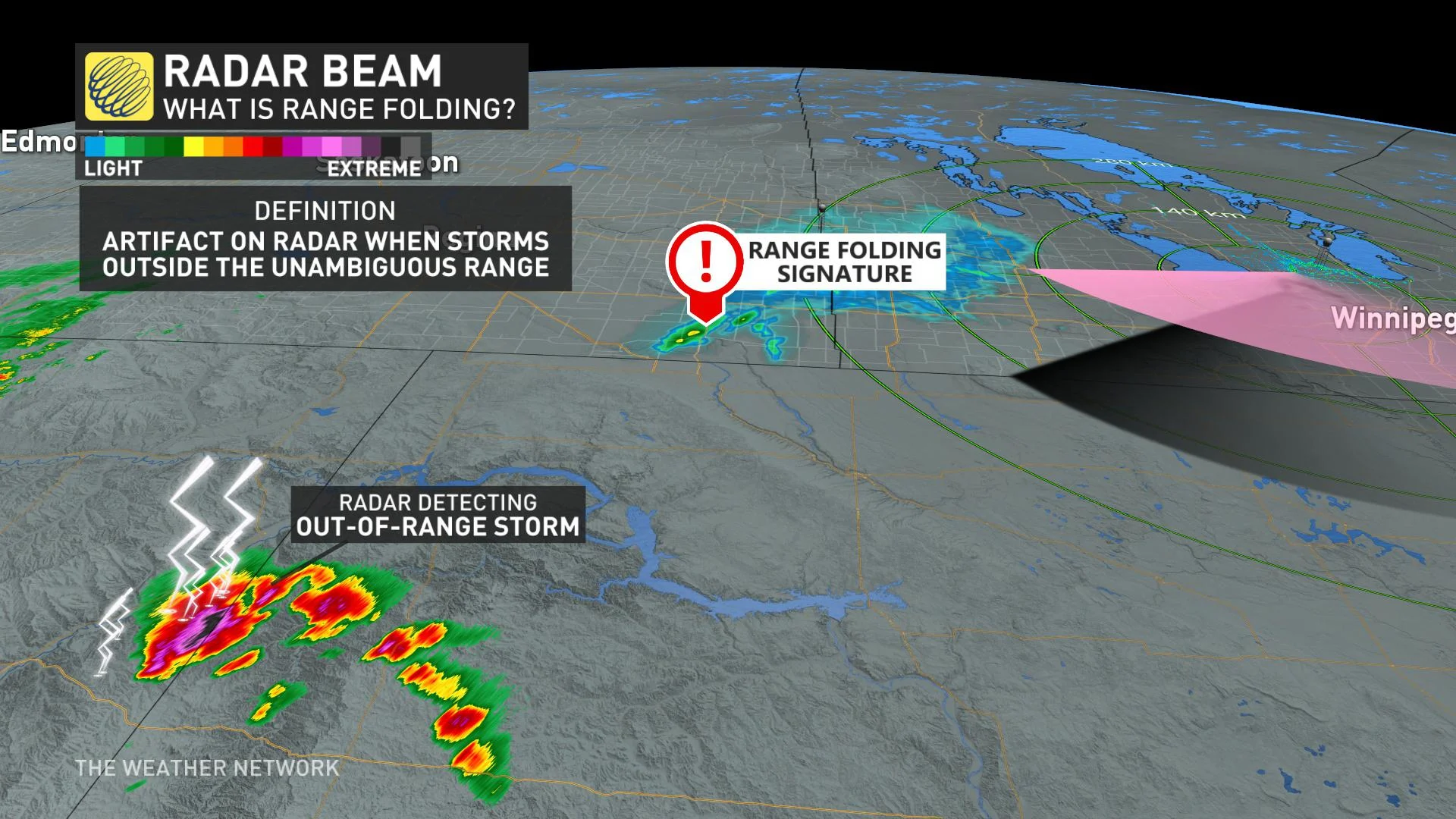
Think of it like getting lapped on a track, creating a lagging radar return artifact. The radar receives the pulse at the wrong time and incorrectly interprets the location on the plot, creating a phantom storm that might even tempt the most veteran storm chaser.
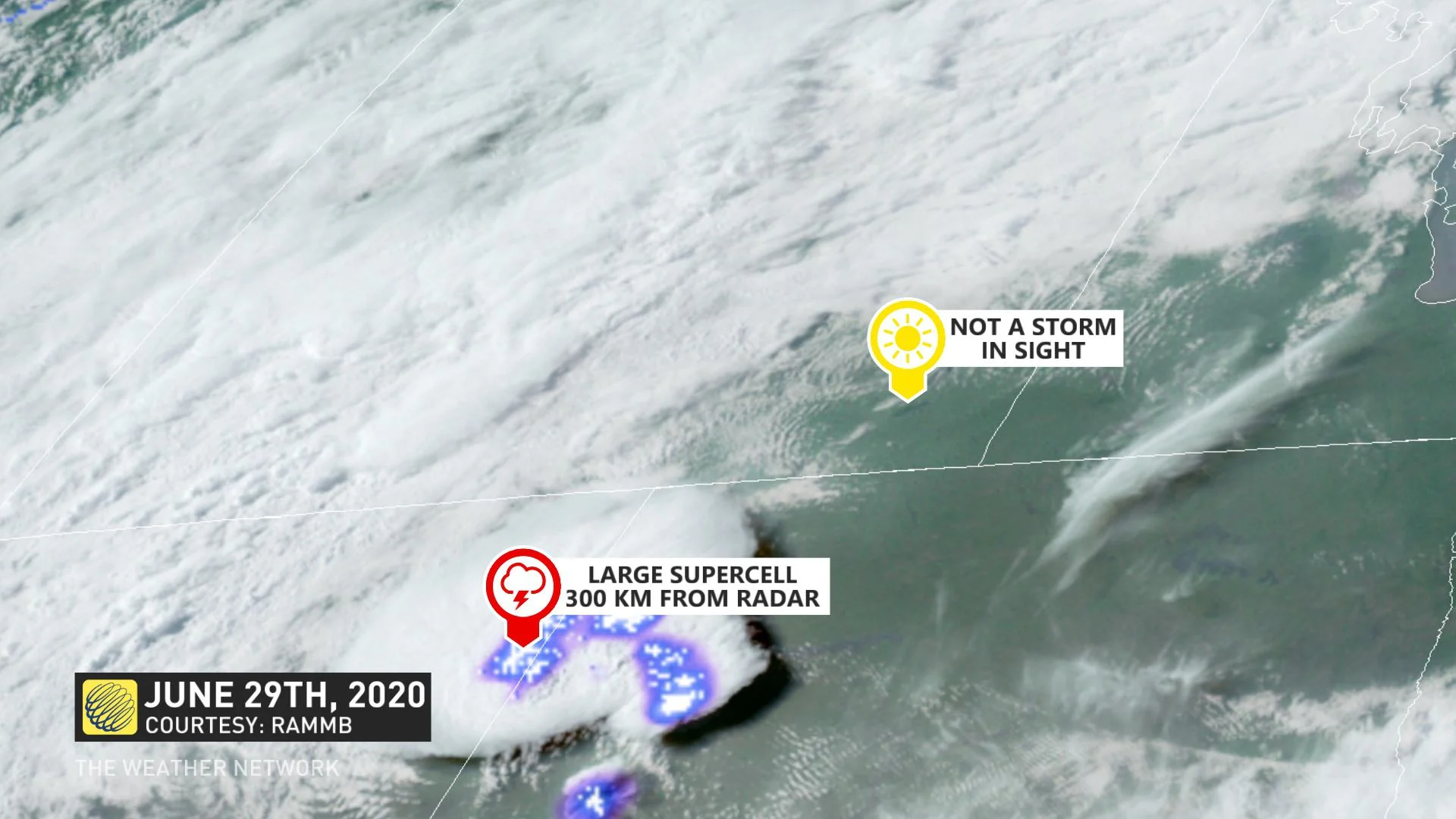
To avoid these range folding streaks on the radar, a meteorologist can look at a different tilt or elevation on the radar, check satellite imagery, or always visually check to see if there's any precipitation outside.
Old-school, indeed.