New clues in hiking disaster that spawned numerous conspiracy theories

The 1959 incident is infamous for both the lack of clues to its cause, and the bizarre impacts on its Russian victims.
Hikers and skiers sometimes get lost in the mountains. Sometimes they don’t make it back alive. It’s a fate most lovers of the backcountry strive to avoid, but consider a plausible, if avoidable, risk.
But one case, the Dyatlov Pass Incident of 1959, was so peculiar, and marked by details that ranged from puzzling to gruesome, that it’s since fuelled numerous conspiracy theories – though new research released this week by scientists in Switzerland suggests the explanation may be very simple.
In late January of that year, a group of 10 experienced hikers left for a two-week sojourn in the Ural Mountains of the then-Soviet Union. One turned back soon after. The rest lost their lives on the night of February 1st, with searchers gradually finding their bodies scattered over a wide area over the coming weeks.
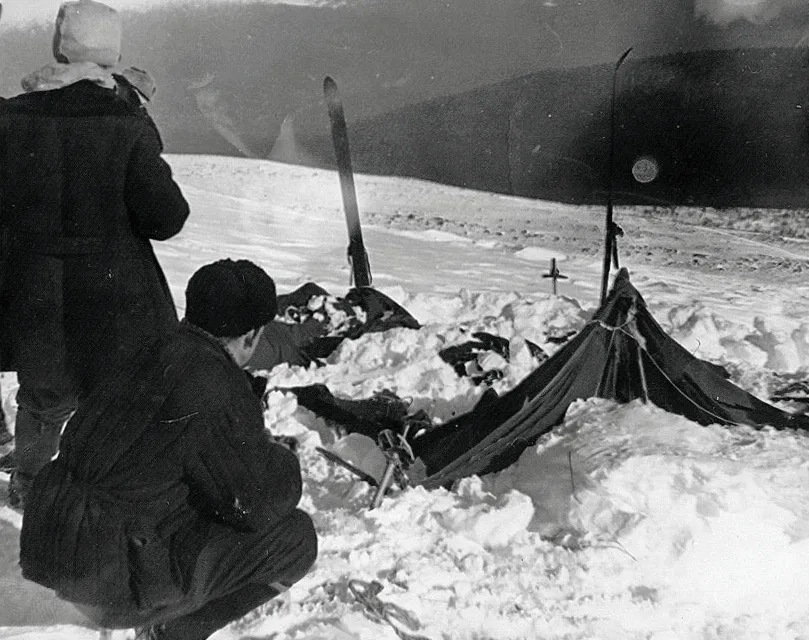
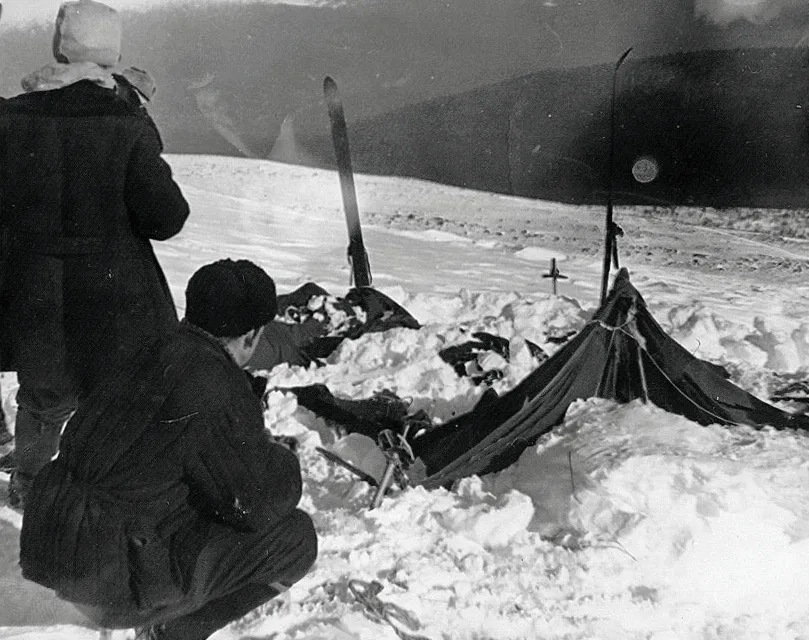
Soviet investigators examine the remains of the ill-fated party's tent. Source: Wikimedia Commons
That’s what’s certain. What hasn’t been certain is exactly what happened to them.
To start with, the group’s tent was found badly damaged, and they had apparently been forced to cut their way out of it. Their bodies were found scattered some distance away. Most showed signs of hypothermia, several had suffered serious physical injuries, and some were found in bizarre circumstances: two were partially undressed (in the middle of the brutal Russian winter) and several of the bodies had suffered gruesome, unexplained mutilations (the BBC has a more in-depth description).
The various explanations of what happened range from the mundane to the bizarre, including “infrasound-induced panic, animals, attacks by Yetis or local tribesmen, katabatic winds, a snow avalanche, a romantic dispute, nuclear-weapons tests,” and others, according to the researchers.
The avalanche explanation seems the most straightforward, but investigators at the time nixed it, saying the injuries weren’t consistent with avalanche victims and the slope where they were camped wasn’t steep enough.
However, the research team, from Switzerland's Ecole Polytechnique Fédérale De Lausanne, noted the expedition had first cut into the snowy slope to create a windbreak for their tent, hours before their apparent deaths. The researchers say the night of February 1st, 1959, featured katabatic winds in that area, which typically race down mountain slopes and could have caused snow to build up in the area.

Image credit: Gaume/Puzrin, École polytechnique fédérale de Lausanne
"If they hadn't made a cut in the slope, nothing would have happened. That was the initial trigger, but that alone wouldn't have been enough,” Prof. Alexander Puzrin, one of the lead researchers, said in a release. “The katabatic wind probably drifted the snow and allowed an extra load to build up slowly. At a certain point, a crack could have formed and propagated, causing the snow slab to release.”
The scientists say the models they developed during their investigation will be used to further understanding of natural avalanches, but they are otherwise ambivalent about whether their findings conclusively solve the decades-old mystery, and make any presumptions about the outlandish condition of some of the bodies.
"The truth, of course, is that no one really knows what happened that night. But we do provide strong quantitative evidence that the avalanche theory is plausible," Puzrin says.
The findings were recorded last month in Nature Communications Earth & Environment.